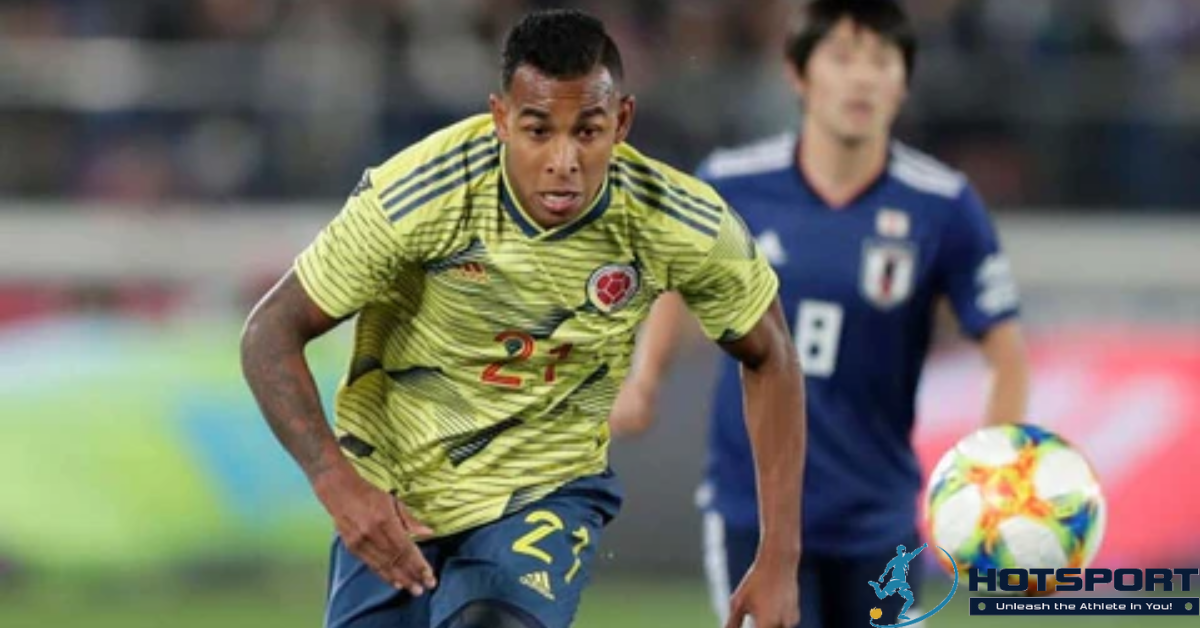
Sebastián Villa is one of those names that echoes across the pitches with an irresistible mix of pure talent and controversies that mark an era. Born in Bello, Colombia, on May 19, 1996, the 29-year-old forward stands out for his impressive speed, sharp dribbles, and game-deciding ability that made him an idol at one of South America’s most traditional clubs: Boca Juniors. At 1.79 meters tall and with his right foot as his main weapon, Villa plays preferably on the left, cutting inside and surprising goalkeepers with precise shots. His career, full of titles and twists, reflects the essence of South American football: passion, glory, and inevitable controversies.
But who is this Colombian who, in 2025, is once again the target of speculation in markets like Argentina, Brazil, and even Saudi Arabia? In this report, we dive into Villa’s career, from his humble roots to the hot negotiations that could define his future. With fresh updates from November and December 2025, we explore not only the numbers but the human impact of a player who dreams of the 2026 World Cup.
Colombian Roots: From Envigado to Tolima Sebastián Villa’s story begins on the streets of Bello, an industrial city in the Antioquia department where football is more than a sport—it’s an escape and an identity. Son of a modest family, Villa grew up kicking a ball on makeshift fields, inspired by idols like James Rodríguez and Falcao García. At 15, he joined the youth ranks of Envigado FC, a Colombian talent factory that has already produced names like James himself.
His professional debut came in 2015, but it was at Deportes Tolima, where he transferred in 2016, that Villa truly began to shine. At just 20 years old, the young forward played 47 matches, scoring eight goals and providing assists that caught the eye of international scouts. His highlight in Colombia was winning the Copa Colombia in 2014—yes, he made it in time to participate in the victorious campaign, even as a newcomer to the squad. “Tolima gave me the confidence to dream big,” Villa would say years later in an interview with the newspaper El Colombiano.
In that period, Villa wasn’t just speed; he had game vision. His high-speed dribbles and precise crosses earned him the nickname “Colombian arrow,” which stuck with him. In 2017, at 21, he was already worth about €2 million on the market, attracting looks from Europe and Argentina. It was Boca Juniors, however, that bet big: $4.7 million to take him from Tolima. A move that would change the destiny of both.
The Golden Era at Boca Juniors: Titles and Instant Idol Arriving at Boca is like stepping into a boiling cauldron. Villa landed in Buenos Aires in January 2018 and, under Guillermo Barros Schelotto, it didn’t take long to fit in. His official debut came against River Plate in the Superclásico—irony of fate, his potential future rival. But it was in the 2018 Libertadores that he exploded: decisive goals against Libertad and Palmeiras turned him into a xeneize hero.
Between 2018 and 2023, Villa built an enviable resume: two Argentine titles (2019-20 and 2020), two Copa Argentinas (2019 and 2021), two Copa de la Liga Profesional (2020 and 2022), and one Supercopa Argentina (2018). In 138 games for Boca, he scored 25 goals and provided 18 assists. His speed was lethal on counterattacks, and he became the ideal partner for strikers like Benedetto and Ábila. “Sebastián is a lightning bolt down the wing,” praised coach Russo in 2019.
Internationally, Villa debuted for the Colombian national team in September 2018 against Venezuela, scoring in a 2-1 win. He played in the 2019 and 2021 Copa Américas, but injuries and controversies kept him out of the 2022 World Cup cycle. Still, with 12 caps and three goals for La Tricolor, he dreams of the 2026 World Cup in the US, Mexico, and Canada—a goal guiding his current choices.
At Boca, Villa wasn’t just numbers; he was passion. Fans chanted his name at La Bombonera, and he repaid with dazzling plays. But paradise feared didn’t last long.
Controversies: The Turbulent End at Boca and the Search for Justice What elevates stars also brings them down. In 2021, Villa was involved in a gender violence allegation by his ex-girlfriend, Daniela Cortés. The case gained worldwide attention, dividing opinions in Argentina and Colombia. In 2023, Argentine justice sentenced him to two years and one month in suspended prison for minor injury and threats. Villa has always denied the more serious accusations, alleging manipulation, and appealed the decision.
The controversy soured his relationship with Boca. In 2023, he was sidelined from the first team, training separately while negotiating an exit. Accusing the club of “constructive dismissal,” Villa sued Boca in July 2025, seeking over 236 million Argentine pesos and $2 million in compensation. “They marginalized me without reason,” he declared in an interview with TyC Sports. The litigation is still ongoing, but it marked the end of an era: Villa left Boca without playing again. Boca, in turn, countersued him in late 2024 for breach of contract.
Seeking a fresh start, he signed with Beroe in Bulgaria in August 2023—a short and discreet stint, with just five games. He returned to Argentina in July 2024 with Independiente Rivadavia of the Primera División, on loan with an option to buy. There, away from the spotlight, Villa rebuilt his image.
Renaissance at Independiente Rivadavia: Goals, Assists, and Gratitude Independiente Rivadavia, from Mendoza, is a modest club compared to Boca, but Villa turned the “Leproso” into a surprise in Argentine football. Arriving in July 2024, he played 60 matches until November 2025, scoring 10 goals and providing 16 assists. His speed helped the team avoid relegation and even dream of cups. A highlight was the 2025 Copa Argentina victory, where Villa was decisive in the round of 16 against Talleres and scored the winning penalty in the final against Argentinos Juniors on November 5, 2025, securing the club’s first major title and a spot in the 2026 Copa Libertadores. He was named the tournament’s best player.
“I gave everything for these colors,” he said upon bidding farewell to president Daniel Vila in November 2025. Despite a contract until June 2026, Villa confirmed his departure on November 26, prioritizing a bigger leap. The club is asking between $5 and $15 million for his pass—recent reports specify $8 million—a value reflecting his current form: 29 years old, experienced, and hungry.
On the pitch, Villa showed maturity. His dribbles remain sharp—averaging 2.5 per game, per Opta—and he adapted to a more collective style. Off it, he invested in philanthropy in Colombia, visiting communities in Bello to encourage young athletes. “Football took me off the streets; now, I give back,” he told El Espectador.
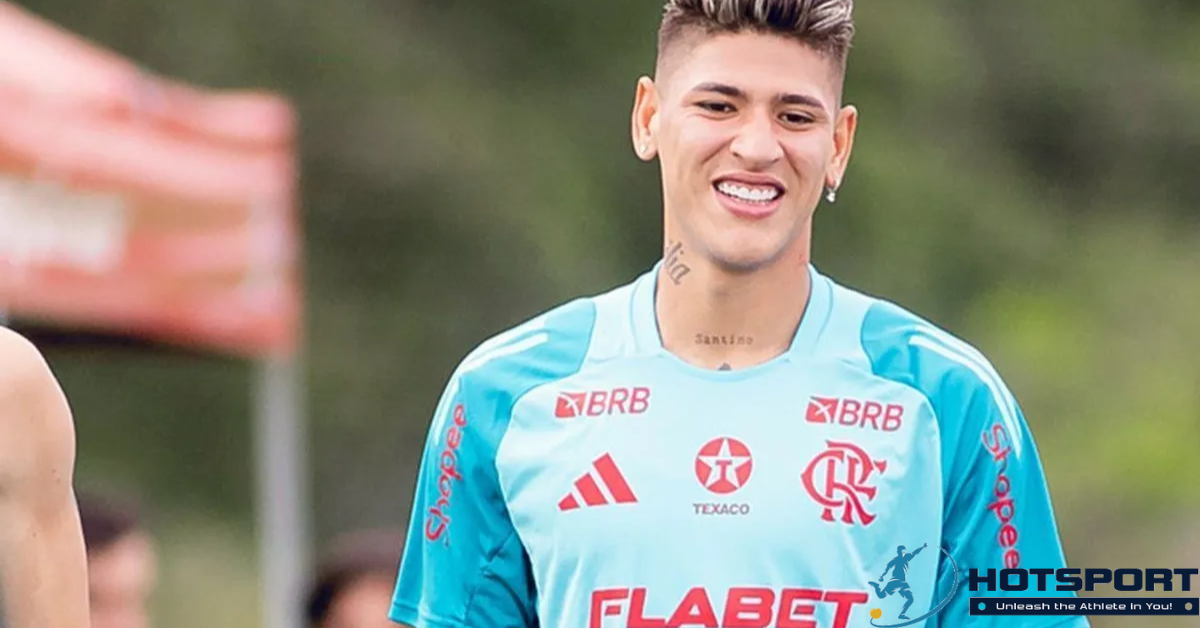
2025 Updates: Confirmed Exit and Transfer Frenzy December 2025 brings Villa back into the spotlight. After confirming his exit from Rivadavia on November 26, the Colombian traveled to Medellín to evaluate proposals. His agent, Go Pro Sport, is managing a varied slate: Flamengo and Grêmio from Brazil lead the race, attracted by his playmaking for the Libertadores. “Brazilian football opens doors for me to the national team,” Villa admitted in an interview with Rádio Nihuil, citing the 2026 World Cup as motivation.
Rumors of River Plate stirred Buenos Aires in November—Marcelo Gallardo, El Millonario‘s coach, reportedly asked for info, with Mendoza’s club demanding $8 million. But sources close to the player denied it: “Nothing with River; focus on Brazil,” an advisor leaked. Other interests come from Saudi Arabia, promising fortunes, and from Atlético Nacional and Millonarios in Colombia for a return to his roots.
On X (formerly Twitter), the buzz is intense. November posts mention “Flamengo eyeing the Colombian convicted of gender violence,” echoing the 2023 conviction. But Villa hits back: “Past mistakes made me stronger; today, I’m just football.” His goal? Return to Néstor Lorenzo’s Tricolor, which called him sporadically in 2025. With the 2024 Copa América behind him, he knows he needs to shine at a big club.
Legacy and Horizon: From Controversial to Example of Resilience Sebastián Villa divides opinions: for some, a talent wasted by scandals; for others, a warrior rising from the ashes. His legacy at Boca is undeniable—goals at La Bombonera that still move hearts. At Rivadavia, he proved versatility, helping an underdog compete with giants.
Looking ahead, 2026 could be the year of redemption. A deal with Flamengo or Grêmio would put him in the Conmebol spotlight, paving the way for Colombia at the World Cup. At 29, Villa has gas for another decade. “I want to be remembered as the guy who never gave up,” he confided recently.
In a football where heroes fall and rise, Sebastián Villa is a living reminder that speed isn’t just in the feet—it’s in life. His next chapter? Only time will tell, but one thing is certain: wherever he goes, he’ll carry his hunger for the ball and for overcoming. South America thanks him.