Introduction – Crystal Palace vs. City
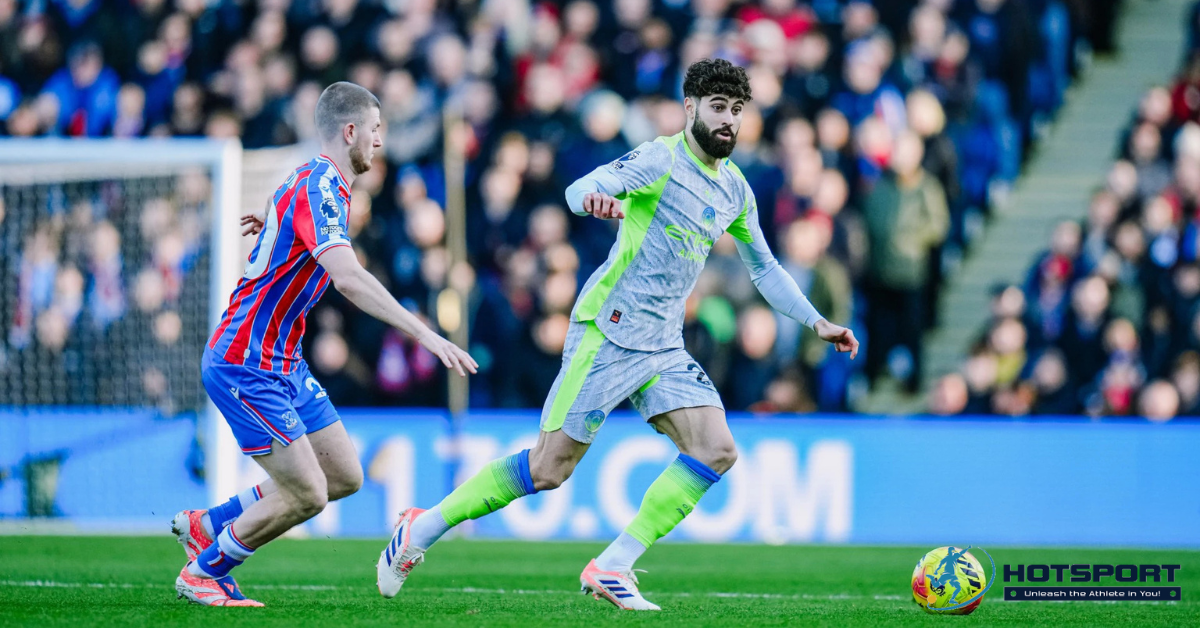
The Crystal Palace vs. City match, played on December 14, 2025, for the 2025/26 Premier League, was a true reflection of the competitive demands of English football. Playing away from home, at the traditional Selhurst Park, Manchester City won 3-1, in a match that required patience, emotional control, and efficiency in decisive moments.
More than the score, the game represented a test of maturity for Pep Guardiola’s team. In a season marked by strong balance among the title contenders, winning away games against organized teams has become an absolute necessity for those who wish to lift the trophy at the end of the championship.
From the opening whistle, it was clear that City would have to contend with a hostile environment, a physically intense team, and a crowd that pushed Crystal Palace throughout the match. This context made the duel even more relevant within the narrative of the season.
Erling Haaland’s leading role, scoring two goals, reinforced the importance of having decisive players in high-pressure games. In matches where the team struggles collectively, individual brilliance often defines the outcome.
The Crystal Palace vs. City match also reinforced a fundamental characteristic of great champions: the ability to suffer, react, and decide at the right moment, even away from home.
Premier League context – The strategic importance of Crystal Palace vs. City
Before the match even started, Manchester City arrived under pressure due to the string of good results from their main direct competitors. The margin for error at this stage of the 2025/26 Premier League is minimal, and each round carries strategic weight.
The league is currently extremely competitive, with several teams vying for the top spot. For City, any slip-up away from home could mean losing ground that would be difficult to recover later on.
Crystal Palace, meanwhile, were in mid-table. Playing at home against one of the giants of European football was seen as an opportunity to pick up points and strengthen their campaign in front of their own fans.
Historically, Selhurst Park has often been a problematic stadium for visiting teams. Palace’s physical intensity and the constant support from the stands frequently even out theoretically unequal matches.
Within this context, the Crystal Palace vs. City match took on a fundamental role in shaping the round’s outcome and the narrative of the title race.
Pre-match expectations – Crystal Palace vs City
Manchester City
Manchester City took to the field with a clear plan: absolute control of the game through possession, constant movement, and high pressure after losing the ball. Guardiola knew that patience would be essential against a defensively-minded opponent.
The expectation was for a long game, with few immediate openings, requiring quick ball movement and precise decision-making in the final third of the pitch. Haaland was seen as a key player in converting attacking volume into goals.
Another point observed before the match was the team’s defensive performance away from home. City had been struggling in defensive transitions, and adjustments were made to reduce risks.
The emotional aspect was also worked on. Away games, in hostile environments, often test the team’s concentration for the full 90 minutes.
Crystal Palace
For Crystal Palace, the match demanded absolute discipline. The plan was to reduce the spaces between the lines, protect the area, and avoid individual duels in dangerous zones.
The team relied on physical intensity, long balls, and quick transitions as their main offensive weapons. Scoring first would be crucial to changing the course of the game.
The coaching staff knew it would be impossible to compete in terms of ball possession, so the strategy revolved around efficiency and making the most of the few opportunities created.
The support of the fans was seen as an important emotional factor, especially in the opening minutes of the match.
Lineups and tactical organization
Manchester City started in a 4-3-3 formation, but with constant variations during the attacking phase. The full-backs pushed forward, transforming the system into a 3-2-4-1, pushing Palace back into their own half.
The midfield played a key role in controlling the tempo. The ball circulation was designed to gradually wear down the opposing defensive block.
Crystal Palace responded with a compact 4-5-1 formation, prioritizing short defensive lines and constant coverage of the flanks.
Tactically, the match became a battle between patience and resilience, with City searching for openings and Palace trying to withstand the onslaught of attacks.
Over time, physical exhaustion began to directly affect the home team’s performance.
First half – Territorial dominance and patient build-up
City started the match imposing possession and territorial control. Palace adopted a defensive posture, dropping back from the opening minutes.
Despite dominating possession, City struggled to create clear chances initially due to the opponent’s well-organized defensive setup.
The constant ball circulation gradually eroded Palace’s resistance, leading them to make positional errors as time went on.
The first goal came as a result of Haaland’s persistent attacking play and spatial awareness, as he capitalized on a precise cross to finish efficiently.
After opening the scoring, City slowed the pace, prioritizing control and avoiding dangerous transitions.
Second half – Palace react and City mature.
Crystal Palace returned more aggressively after the break, pushing forward and pressing City’s build-up play.
The bolder approach resulted in a goal that momentarily tied the score, igniting the stadium and bringing tension to the game.
Manchester City, however, responded with maturity. The team regained control of possession and slowed the pace of the game before attacking again.
Haaland once again appeared at the decisive moment, putting City back in the lead with composure and precision.
In the final minutes, with Palace exposed, City exploited the spaces and scored the third goal, ending the match.
Individual analysis – Highlights of Crystal Palace vs City
Erling Haaland was the star of the game. Besides scoring two goals, he actively participated in attacking plays and kept the opposing defense on the edge of the box.
City’s midfield delivered a solid performance, maintaining control and reducing errors under pressure.
Defensively, City showed improvement by managing the situation better after conceding the equalizing goal.
At Crystal Palace, the collective effort was evident, but technical limitations weighed heavily in the decisive moments.
The difference in individual quality ended up being decisive for the final result.
Complete statistics and advanced numbers – Crystal Palace vs City
| Statistic | Crystal Palace | Manchester City |
|---|---|---|
| Goals | 1 | 3 |
| Ball possession | 30% | 70% |
| Finishing touches | 11 | 23 |
| Shots on target | 3 | 12 |
| Great opportunities created | 1 | 7 |
| xG (Expected Goals) | 0.92 | 3.28 |
| Accurate passes | 332 | 702 |
| Passing accuracy | 75% | 91% |
| Corner kicks | 4 | 10 |
| Correct intersections | 6 | 15 |
| Actions in the opponent’s area | 20 | 49 |
| Recoveries in the attacking third | 8 | 18 |
| Mistakes committed | 16 | 9 |
| Yellow cards | 2 | 1 |
| Goalkeeper saves | 9 | 2 |
Direct impact on the Premier League table.
With the victory, Manchester City remained fully in contention for the 2025/26 Premier League title.
Away games like Crystal Palace vs. City often decide championships, as they demand consistency and maturity.
For Crystal Palace, the defeat does not compromise their main objectives, but it highlights the need for greater offensive efficiency.
The result reinforces the competitiveness of the championship and the high level of demand placed on title contenders.
Post-match tactical analysis – What Crystal Palace vs. City revealed on the pitch
After the final whistle, Crystal Palace vs. City left important tactical lessons for both sides. Manchester City demonstrated, once again, its ability to adapt its playing style without losing its identity. Even against a compact defensive block, the team maintained patience and positional discipline.
City’s ball circulation wasn’t just sterile. There was variation in pace, alternating between positional attacks and well-timed bursts of speed. This behavior was essential in disrupting Palace throughout the game, especially in the second half, when physical fatigue began to take its toll.
Another important point was the occupation of the flanks. City managed to create numerical superiority at various times, forcing Palace to choose between closing down the penalty area or protecting the wings. This indecision opened up crucial spaces for goals.
On Crystal Palace’s side, the defensive organization worked well for much of the game, but they lacked the ability to adjust their defensive block after conceding the first goal. The team stuck to their initial plan for too long, even when the situation demanded changes.
From a collective perspective, the match reinforces how tactical details and game reading make all the difference when facing an elite team.
Physical management and intensity – A decisive factor in Crystal Palace vs City.
Physical fitness played a decisive role in the outcome of Crystal Palace vs. City. While City maintained high intensity throughout the 90 minutes, Palace showed a noticeable drop in performance after the midpoint of the second half.
Manchester City knew how to manage their energy. At specific moments, they slowed the pace, valued possession, and forced their opponents to chase the ball. This physical control is a direct result of planning and squad depth.
Palace, on the other hand, felt the pressure of playing much of the game without the ball. The constant need for defensive recovery and cover ended up creating gaps at the decisive moment of the match.
The difference became clear after Palace’s equalizing goal. Despite the emotional boost, the team couldn’t sustain the pressure for long, while City quickly regained control.
This physical aspect is often decisive in the Premier League and was evident once again in this match.
Haaland’s role beyond goals.
Although the two goals are the main highlight, Haaland’s performance in Crystal Palace vs. City goes beyond the numbers. His constant movement trapped the opposing defensive line and opened up spaces for the midfielders to make runs.
Haaland was also important in the off-the-ball game. He pressed the opposition’s build-up play, forced errors, and helped City regain possession in high areas of the pitch.
On several occasions, his mere presence in the penalty area forced Palace to retreat further than they would have liked, reducing their counter-attacking options.
This type of silent influence doesn’t always show up in basic statistics, but it’s fundamental to understanding why City manages to maintain control even in difficult away games.
This performance reinforces how much Haaland has become a structural piece, and not just a finisher, within Guardiola’s system.
Crystal Palace vs City and the psychological aspects of the game.
From a psychological standpoint, Crystal Palace vs. City was an excellent study in contrasts. Palace showed courage in seeking the equalizer and pushing the game into a moment of emotional instability for their opponent.
However, City’s reaction was immediate and cool-headed. There was no desperation, no long balls, or loss of organization. The team maintained its structure and waited for the right moment to attack again.
This emotional control is typical of teams accustomed to competing for titles. Even after conceding a goal, City didn’t become disorganized or hastily alter their game plan.
For Palace, the challenge remains to transform positive emotional moments into consistency throughout the match. The goal gave hope, but the lack of control afterward proved costly.
In long championships, this type of mental maturity is often as important as technical skill.
What does the result indicate for the rest of the season?
The Crystal Palace vs. City result offers clear signs for the remainder of the 2025/26 Premier League season. For City, it confirms that the team is prepared for demanding matches, even away from home.
Victories like this aren’t as exciting as blowout wins, but they’re the ones that weigh most heavily in the final championship standings. Winning when the game isn’t flowing is a characteristic of championship-winning teams.
For Crystal Palace, this game serves as a benchmark. The team showed organization and competitiveness, but needs to improve in managing critical moments.
The match also reinforces the trend of a long season decided by details, where every point earned away from home can be decisive.
Conclusion – Crystal Palace vs. City and the champion’s mentality
The Crystal Palace vs. City match was more than just an away win. It was a clear demonstration of Manchester City’s winning mentality in an extremely demanding season.
Even facing a hostile environment, the team showed patience, tactical intelligence, and decision-making ability. Haaland symbolizes this spirit: he doesn’t appear often, but he decides a lot.
Emotional maturity after conceding the equalizer was crucial. City didn’t lose their composure, regained control, and finished the game efficiently.
This type of performance usually separates championship-winning teams from those that merely compete. In long leagues like the Premier League, winning difficult away games is the real difference-maker.
While the title race promises to be long and intense, Manchester City has made it clear that it is prepared for every challenge that comes its way.
FAQs – Frequently Asked Questions about Crystal Palace vs City
1. What was the score in Crystal Palace vs. City?
Manchester City won 3-1 .
2. Who scored the goals for Manchester City?
Erling Haaland scored two goals, being the standout player of the match.
3. Where was the game played?
At Selhurst Park , Crystal Palace’s stadium.
4. Did City dominate the entire game?
They had territorial and statistical dominance, but experienced moments of balance.
5. Did Crystal Palace have real chances to equalize?
Yes, after the goal in the second half, but they couldn’t withstand the pressure.
6. Was Haaland the best player of the match?
Yes. Besides the goals, he was decisive in key moments.
7. Does this result impact the title race?
Yes. It keeps City very close to the Premier League leaders.
8. Did Palace play badly?
No. They were competitive, but they felt the technical difference.
9. Did City show defensive improvement?
Yes, especially in managing their emotions after conceding a goal.
10. Are away games decisive in the Premier League?
Yes. Consistency as a visitor often defines champions.