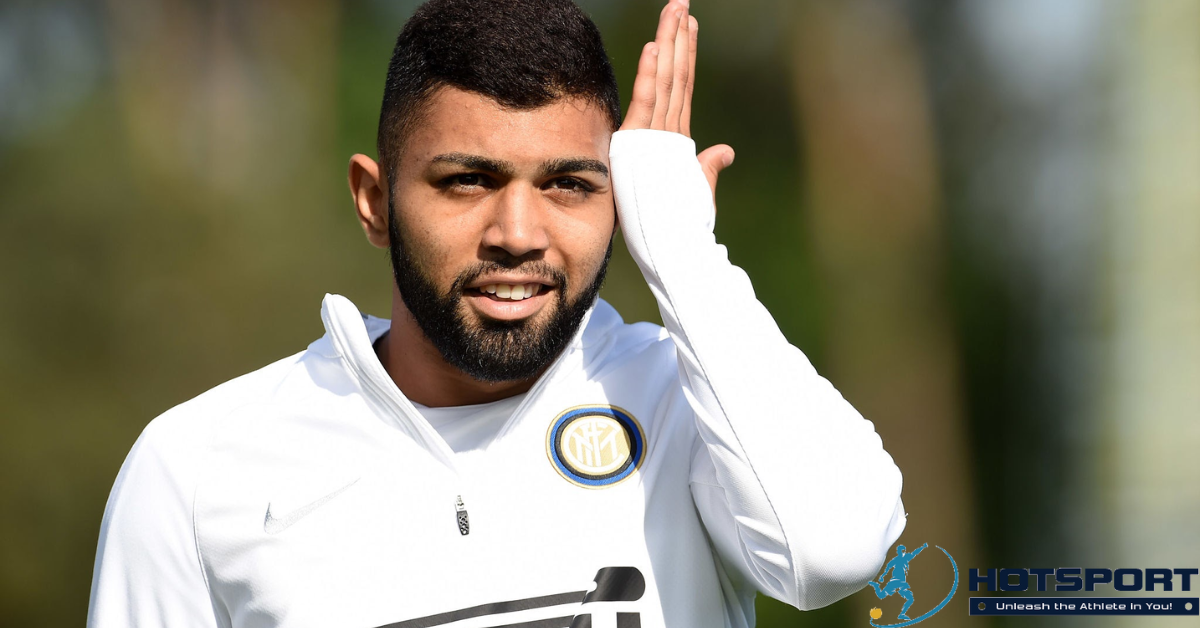
Gabriel Barbosa, or simply Gabigol, is one of those names that echoes in Brazilian stadiums like a goal-scoring roar. Born on August 30, 1996, in São Bernardo do Campo, in the ABC Paulista region, he grew up amid the noise of factories and the dream of dribbling through life with a ball at his feet. At 29 years old, in December 2025, Gabigol remains a polarizing figure: loved for his boldness on the pitch, criticized for controversies off it. His story is a script of highs and lows, unforgettable goal-scoring feats, and moments of overcoming adversity. In this article, we dive into the journey of this striker who, despite recent stumbles—like the penalty miss in the Copa do Brasil semifinal against Corinthians this week—continues to inspire fans across the country.
Early Steps: From São Bernardo to Santos
Gabriel’s childhood was no fairy tale. From a humble family, he split his time between school and street futsal, where his speed and goal-scoring instinct caught attention. At eight years old, he was spotted by Santos FC scouts during a local tournament. “He was a skinny kid, but with a ball at his feet, he turned into a lion,” recalled a former youth coach in an interview years later. Joining Santos’ youth academy, Gabigol racked up over 600 goals in youth competitions—a number that already marked him as a potential successor to idols like Pelé and Neymar.
His professional debut came in 2013, at 16, in the Copa do Brasil against Grêmio. He came on in the second half and, within minutes, scored his first professional goal. It was the spark: the boy from São Bernardo was no mere promise; he was reality. In 2014, he established himself as a starter, ending the year as Santos’ top scorer with 21 goals and the Copa do Brasil’s with six. The Vila Belmiro crowd began chanting “Gabigol” like a mantra. The following year, 2015, he broke Neymar’s record in the national cup with eight goals. At 18, he was already compared to legends. The 2016 Campeonato Paulista sealed his rise: top scorer of the tournament and selected for the ideal team, with performances blending refined technique and a touch of irreverence.
Shining at Santos: The Boy Who Became a Man
At Santos, Gabigol wasn’t just numbers; he was pure emotion. In 2015, he helped the team reach the Copa do Brasil final, where, despite the loss to Palmeiras, his performance captivated Brazil. He dribbled defenders as if they were training cones, finished with surgical precision, and celebrated with an energy that was contagious. “Playing for Santos is like flying,” he said in a press conference at 19. That phase earned call-ups to the under-20 national team and hungry glances from Europe. But before leaving, he left a legacy: 56 goals in 112 games for Santos across youth and professional levels, plus a Paulista title in 2016, where he shone with 11 goals.
The pressure of being the “new Neymar” weighed heavy, but Gabigol handled it his way: training hard and responding on the field. His move to Inter Milan in August 2016 for 27.5 million euros was seen as the natural step toward a global career. Santos fans cried, but knew he would return greater.
Challenges in Europe: Bitter Lessons
Europe, with its tactical and cold football, tested Gabigol’s limits. At Inter Milan, under Frank de Boer and later Stefano Pioli, he struggled for space. In 26 games, just one official goal, against Bologna in Serie A. Cultural adaptation, minor injuries, and fierce competition left him on the bench. “It was tough, but it taught me patience,” he reflected years later. Loaned to Benfica in 2017, he scored one goal in the Taça de Portugal but remained below expectations. At 21, far from home, he questioned his path.
His return to Santos on loan in 2018 was like a balm. Gabigol exploded: 27 goals in 52 games, top scorer in the Campeonato Brasileiro with 18, Copa do Brasil with four, and Paulista again. Santos didn’t win titles, but he regained confidence. Those months were crucial: they proved Brazilian talent could shine on any pitch, as long as the context was right. And the perfect context arrived in 2019, with Flamengo.
Epic Return to Brazil: Flamengo, the Perfect Stage
The loan to Flamengo in July 2019 changed everything. Under Jorge Jesus, Gabigol found a team that valued his speed and instinct. In the Carioca, he helped win the title. In the Brasileirão, he finished as top scorer with 25 goals, leading Mengão to the trophy. But the pinnacle was the Libertadores: nine goals, including the two in the historic comeback against River Plate in the final in November 2019. Those 45 minutes in Lima immortalized his name. “I live for moments like this,” he shouted, trophy in hand.
Bought permanently for 18 million euros in 2020, Gabigol became a rubro-negro idol. He won Cariocas in 2020, 2021, and 2024; Supercopas in 2020, 2021, and 2022; Recopa in 2020; and another Copa do Brasil in 2024. Top scorer in the 2021 Libertadores with 11 goals, he is Flamengo’s all-time leading scorer in the competition (30 goals) and in the 21st century (160 goals). In 304 games for the club, 161 goals—sixth on the all-time list. His partnership with Bruno Henrique and Arrascaeta formed a lethal trio, and his provocative celebrations became his trademark.
The Doping Case Storm: Fall and Redemption
Not everything was glory. In March 2024, the blow came: a two-year suspension for attempted fraud in an anti-doping test from April 2023. Accused of tampering with the test, Gabigol vehemently denied it. “It’s a mistake I didn’t commit,” he declared. With a stay granted in April 2024 by the Court of Arbitration for Sport (CAS), he continued playing for Flamengo, scoring eight goals in 38 matches and helping in the Copa do Brasil. But the shadow lingered.
In July 2025, victory in the appeal: CAS overturned the punishment, allowing full return. “It was a trial that strengthened me,” he said, relieved. The controversy, added to a 2021 arrest for gathering in a casino during the pandemic (resolved with a fine), humanized his image: a flawed star, but resilient.
New Chapter at Cruzeiro: Challenges and Highlights in Belo Horizonte
Leaving Flamengo at the end of 2024, Gabigol signed with Cruzeiro for four years until 2028, on a free transfer. Mineirão welcomed him as a savior. Debut in the 2025 Mineiro: hat-trick against Itabirito, four goals in a rout. Top scorer for the team in the state league, he scored in the semis and in the Brasileirão against Mirassol. Until October, he had important goals, aiding the Celeste campaign.
But 2025 wasn’t all euphoria. With the arrival of Leonardo Jardim, he lost starting spot to competitors like Matheus Pereira. In Série A, he fluctuated: wins against Ceará and tough draws. The low point came this week, December 15: in the Copa do Brasil semifinal, penalty miss against Corinthians, saved by Hugo Souza, eliminating Cruzeiro. “It hurts, but football is like that. I’ll take the next one with more strength,” he vented post-match. Still, in 2025, he played around 40 games for Cruzeiro, with 15 goals and assists showing his relevance. At 29, he seeks reconquest.
Brazilian National Team: Olympic Gold and Unfinished Dreams
For the Seleção, Gabigol shone in youth levels: top scorer at COTIF in 2014 and Olympic gold in Rio 2016 with two assists. Senior debut came in the 2016 Copa América Centenário with a goal. He scored in World Cup qualifiers and the 2021 Copa América (silver), but sparse call-ups under Tite and Dorival left him as a reserve. “I want to return and be decisive,” he said in 2025. With the 2026 World Cup on the horizon, his form at Cruzeiro could open doors.
Legacy and Prospects: Beyond the Goals
With 563 games and 259 goals in his career so far, Gabigol is the sole top scorer in two consecutive Brasileirões (2018-2019), record holder in Copas do Brasil, and pioneer in double national top-scorer honors in the same year. His style—bold, provocative, unpredictable—divides opinions but unites fans. Off the field, he invests in social projects in São Bernardo and dreams of family: married to influencer Rafaella Santos (Neymar’s sister), father of two children.
For the future, 2026 promises: regaining protagonism at Cruzeiro, aiming for Mineiro titles, and perhaps a World Cup call-up. The missed penalty? Just one chapter. Gabigol is one of those who turns the game in stoppage time.
In summary, Gabriel Barbosa is not just a player; he is a living narrative of Brazilian football: raw talent, exposed mistakes, and hard-earned redemption. As long as the ball rolls, he keeps chasing the next goal roar. And Brazil, cheering—or jeering—with passion.