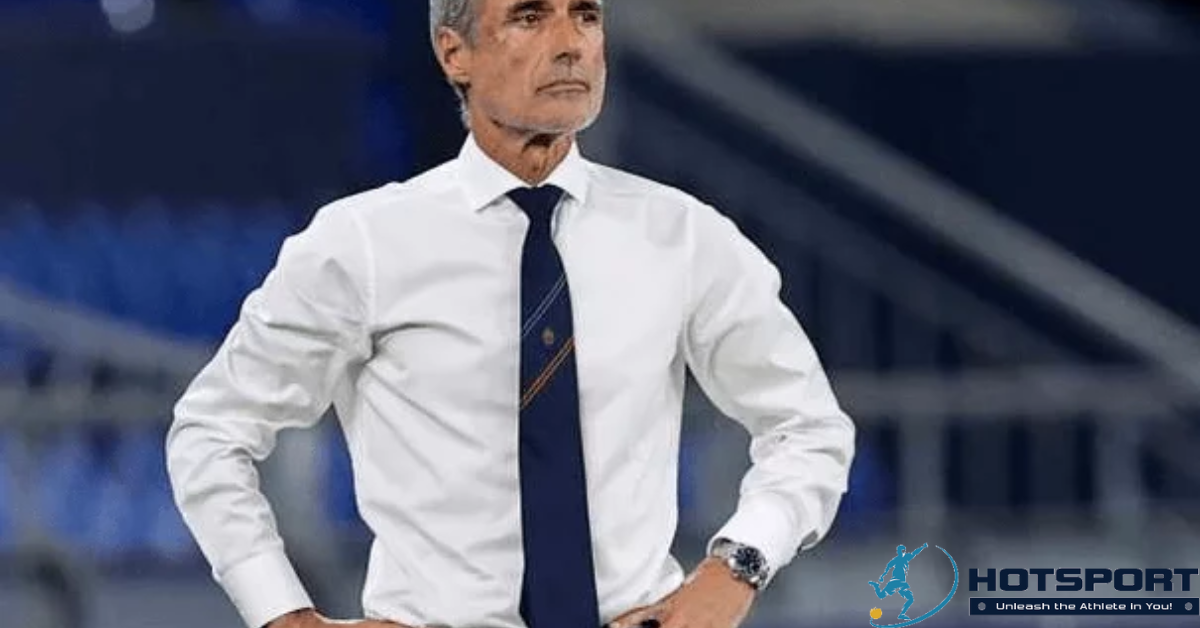
Luís Manuel Ribeiro de Castro, born on September 3, 1961, in Oliveira de Azeméis, in Portugal’s Aveiro district, is a figure who embodies dedication to football in all its facets. As a former player, primarily a right-back, and now an internationally renowned coach, Castro has built a career defined by perseverance, tactical innovation, and achievements across different continents. His journey, which began on the modest pitches of Portugal’s lower divisions, has evolved to the elite fields of Europe, Asia, and South America. At 64 years of age in December 2025, he continues to shape the sport, now at the helm of Al Wasl in the United Arab Emirates, where he seeks new challenges in a rising league. This article explores the life and legacy of Luís Castro, highlighting his development as a professional and the lessons he imparts to global football.
Early Steps: From Player to Coach
Luís Castro’s journey in football began early, as is common with many Portuguese football legends. The son of a humble family, he joined the youth ranks of Sporting CP, one of the country’s giants, but was unable to establish himself in the first team. Instead, he pursued a playing career with smaller clubs. Between 1980 and 1994, he represented teams such as FC Felgueiras, Salgueiros, and Leça FC, competing in the Second League and regional divisions. Known for his defensive tenacity and precise crosses as a right-back, injuries and fierce competition prevented him from consistently reaching the Primeira Liga.
Upon retiring as a player, Castro did not distance himself from the game. Instead, he immersed himself in youth development. In 1996, he took charge of the youth teams at Leixões SC, where he began to develop his philosophy of play. Influenced by the Portuguese school of football, which emphasizes ball possession and technical development, he prioritized the holistic education of players. “Football is not just about winning; it is about building character,” he often stated in early interviews. This period was pivotal: in 2003, he was invited to manage Leixões’ first team, marking his debut in professional senior management. Despite inconsistent results, including a battle against relegation in the 2006-07 season, Castro demonstrated an ability to motivate limited squads—a quality that would define his career.
Rise in Portugal: Establishing Himself as a Strategist
Castro’s consolidation as a coach came with Rio Ave FC in 2011. Taking over during a crisis, he transformed the Vila do Conde club into a competitive team in the Primeira Liga. In the 2013-14 season, he led the team to a historic eighth-place finish, playing an attacking style of football that captivated fans and critics alike. His hallmark was a fluid 4-3-3 formation, featuring advancing full-backs and versatile midfielders. It was at this point that Castro began to be regarded as an innovator capable of maximizing the potential of squads without star players.
In 2015, FC Porto appointed him to manage their B team in LigaPro. The result was remarkable: in the 2015-16 season, Porto B won the national title for the first time in the competition’s history. Although ineligible for promotion, victories over traditional clubs such as Varzim and Chaves drew significant attention. After this success, Castro briefly returned to Rio Ave in November 2016 before moving to GD Chaves in 2017, where he secured survival from relegation and instilled a robust defensive identity. His return to Vitória de Guimarães in 2018 marked the peak of his time in Portugal. In the 2018-19 season, he guided the team to the semi-finals of the Taça de Portugal and a fourth-place finish in the league, earning a spot in the Europa League. Over 62 matches in charge (34 wins, 14 draws, and 14 losses), Castro left a legacy of stability. However, the pursuit of new horizons led him abroad, and in December 2019, he signed with Shakhtar Donetsk in Ukraine—a bold move that tested his adaptability in a high-intensity football environment.
International Success: Shakhtar and the Ukrainian Surprise
Castro’s tenure at Shakhtar Donetsk from 2020 to 2022 proved to be a turning point. Tasked with succeeding Luís Felipe Scolari, he inherited a squad brimming with talented Brazilian and Ukrainian players under immense pressure. In the 2020-21 UEFA Champions League, Shakhtar stunned the football world by defeating Real Madrid 2-0 in Ukraine and drawing 2-2 at the Santiago Bernabéu. Players such as Tetê and Solomon excelled under his management, with Castro employing a high-pressing game and rapid transitions.
Shakhtar won the 2020-21 Ukrainian championship convincingly, securing 25 victories in 32 matches with a 78% win rate and 77 goals scored. The Russian invasion in 2022 interrupted this successful cycle, suspending competitions. Castro demonstrated resilience by keeping the squad cohesive through remote training sessions during the conflict. His departure in May 2022 was amicable, paving the way for his move to South America.
The Brazilian Era: Botafogo and the Carioca Title
Brazilian football, with its passion and unpredictability, seemed the ideal destination for Castro. In June 2022, he took charge of Botafogo in Rio de Janeiro, a club fighting relegation in Série A. Implementing his European-influenced style, which blended possession with Brazilian flair, he oversaw the integration of key signings such as defender Adryelson and midfielder Eduardo. The highlight came in the 2023 Taça Guanabara, with convincing victories over Flamengo and Vasco, culminating in a 2-0 win over Vasco in the Campeonato Carioca final—the club’s first state title in 12 years. Castro quickly became an idol among Botafogo fans. In Série A, the team finished 11th but showed significant defensive improvement, reducing goals conceded by 30%. He departed in July 2023 for a new challenge in Saudi Arabia.
Adventure in Saudi Arabia: Al Nassr and the Challenge with Ronaldo
Joining Al Nassr in July 2023 placed Castro in the global spotlight. Replacing Rudi Garcia, he managed a star-studded squad featuring Cristiano Ronaldo, Sadio Mané, and Marcelo Brozović. Early success came with a 2-1 victory over Al Hilal in the final of the Arab Club Champions Cup. In the 2023-24 Saudi Pro League, Al Nassr finished second with 82 points, though trailing the unbeaten Al Hilal by 14 points. Ronaldo, who scored 35 goals that season, praised Castro for granting him the freedom to perform. However, after 14 months and 58 matches (35 wins), Castro left the club in September 2024 amid mounting pressure following inconsistent results.
A New Chapter: Al Wasl and Prospects for 2025
On June 4, 2025, Luís Castro signed a two-year contract with Al Wasl FC of the UAE Pro League. The Dubai-based club, traditional but without recent titles, views the Portuguese coach as an opportunity for revival. As of November 2025, the team sits in third place in the league, with Castro implementing his preferred 4-2-3-1 formation and featuring players such as Fabio Cardoso. A 3-1 victory over Al Ain in October signals positive momentum.
Legacy and Influence: A Coach Beyond Borders
Luís Castro is more than a winner—with titles in Portugal, Ukraine, Brazil, and Saudi Arabia—and a developer of character. His overall win rate, exceeding 55% across more than 500 matches, reflects remarkable consistency. Influenced by mentors such as José Mourinho, he emphasizes the collective. While critics have noted occasional tactical rigidity under pressure, his supporters highlight his cultural adaptability.
In an increasingly globalized game, Castro exemplifies the modern coach: versatile, resilient, and forward-thinking. As 2025 progresses and Al Wasl aims for the AFC Champions League, one question remains: what will be the next trophy in Luís Castro’s career? If his journey teaches anything, it is that the Portuguese coach consistently defies expectations.