Introduction – Manchester United vs West Ham
The Manchester United vs. West Ham match, played at Old Trafford on December 4, 2025, carried everything a Premier League game usually delivers: urgency, pressure, high expectations, and the feeling that any detail could decide the outcome. For United, the mission was to recover ground in the table and prove to the fans that the team has the real strength to compete for something bigger in the season. For West Ham, mired at the bottom of the standings, the duel was about survival and reaffirming their identity.
The atmosphere before kickoff already made the importance of the game clear. Old Trafford was packed, the atmosphere electric and demanding, expecting a dominant performance. The team had an obligation to translate volume of play into results, something that had been a recurring problem. The fans wanted aggression, intensity and, above all, effectiveness. The squad knew this. The coach knew this. And so did the opponent.
On the other side, West Ham arrived with humility, but fully aware that United were vulnerable at strategic moments. The London team relied on defensive compactness, quick transitions and, above all, set pieces, their most dangerous weapon. It wasn’t just another game: it was a real chance to snatch points where few manage to.
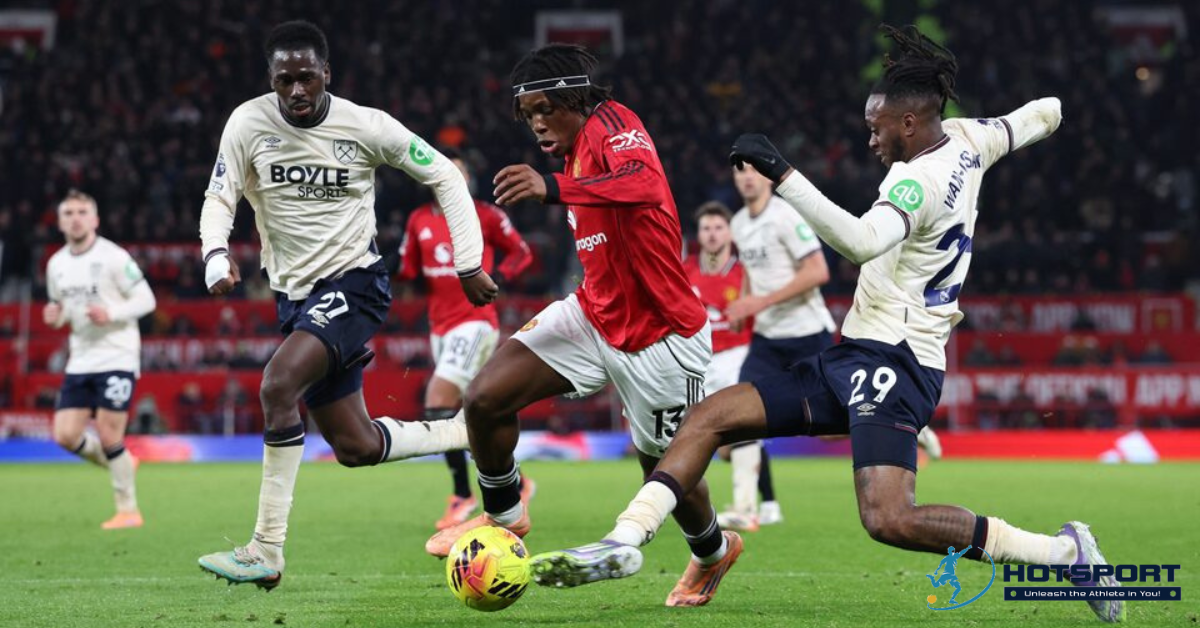
The first half reflected United’s recent history: possession, territorial control, shots from medium range, and little purpose inside the box. The second half started more lively, with United finally finding space to break through the opposition’s resistance until Dalot opened the scoring and seemed to be heading towards victory. But football doesn’t forgive those who slow down. The team retreated, managed the game more than they attacked, and paid the price. West Ham’s late equalizer once again exposed the team’s emotional and collective fragility in decisive moments.
This game, more than the score, showed clear patterns that have been repeating themselves throughout the season. Therefore, understanding this match in depth helps to comprehend the current state of United and the fighting spirit of West Ham. It’s a true snapshot of how both teams are heading into the remainder of the 2025/26 Premier League season.
Pre-match – Club context and what was at stake: Manchester United vs West Ham
Manchester United’s situation
Manchester United came into the match needing points to get closer to the top four. With inconsistent recent campaigns, the pressure for a convincing home win was immense. The team needed to demonstrate a balance between game control, attacking aggression, and finishing precision. The fans demanded nothing less than a dominant performance—and a victory.
Despite being the favorites, there were warnings: previous games had shown the club’s difficulty in converting possession into goals, and defensive weaknesses, especially in transitions and aerial balls. The responsibility was twofold: to attack efficiently and protect the goal against surprises.
West Ham United’s situation
For West Ham, the situation was urgent. With only 12 points and still in the relegation zone, every match felt like a final. The team relied on pragmatism, defensive discipline, and seizing a real chance to leave Old Trafford with something. The pressure was immense, but desperation could turn into strength—the ambition to survive put character to the test.
The London club’s strategy was clear: control the opponent’s pace, exploit set pieces and quick transitions, and maintain a solid defense. The objective was not to dominate possession, but rather to survive and, if possible, come away with a positive result.
The match – Dynamics, decisive moments and outcome: Manchester United vs West Ham
First half – United dominate but don’t create any real danger.
The first 45 minutes showcased quick passing, attempts to penetrate the defense, and offensive pressure from Manchester United. The ball circulated, passes were exchanged frequently, and there seemed to be absolute control of the match. The tactic aimed to dominate the midfield and exploit the flanks to reach the opponent’s penalty area.
However, West Ham resisted. Their compact defensive formation, strong marking, central coverage, and attention to opposing infiltrations effectively neutralized the home team’s attacks. When shots did come, they were from outside the box or lacked clear space to finish. The visiting goalkeeper had little to do – and the defense effectively contained the game. The first half ended goalless, with the feeling that they had territorial dominance, but this didn’t translate into real offensive danger.
Second half – Goal by Dalot, defensive disorganization, and a late equalizer.
The final stage began with United maintaining their offensive rhythm. The movement was intense, with changes in the attacking front and tactical variations. In the 58th minute, the goal arrived. A shot from outside the area by Casemiro deflected off the defense, fell to Diogo Dalot, who instinctively finished with precision and put the Red Devils ahead. A relief for the fans—it seemed like a chance to consolidate the comeback.
With the lead, Manchester United slowed down their attacking pace, began to manage possession, and tried to control the game with more passes and less risk. But this strategy proved to be a mistake. The retreat allowed West Ham to gain ground, reorganize their lines, and look for opportunities to counter-attack. The pressure from the visitors increased.
In the 83rd minute, from a corner kick, Soungoutou Magassa took advantage of a rebound inside the area and calmly equalized. A great goal, a reaction from the visitors, and disappointment at Old Trafford. Incredulous, many fans watched the point slip away.
In the final minutes, United tried to react, but lacked the necessary purpose or creativity. The moral defeat was complete, and the draw was sealed.
Detailed statistics – Manchester United vs West Ham
| Statistic | Manchester United | West Ham United |
|---|---|---|
| Final score | 1 | 1 |
| Goals | Dalot (58′) | Magassa (83′) |
| Total shots | 17 | 11 |
| Shots on target | 4 | 3 |
| Ball possession | ~64.9% | ~35.1% |
| Corner kicks | 6 | 6 |
| Accurate passes | 549 | 305 |
| Passing accuracy | ~82% | ~71% |
| Touches in the opponent’s penalty area | 42 | 28 |
| Goalkeeper saves | 1 | 3 |
| Big chances created | 1 | 0 |
| Mistakes committed | 13 | 9 |
These numbers reveal the core of United’s problem: although they dominated the game — possession, circulation, passes, territorial dominance — they failed to convert intensity into concrete chances inside the area, nor maintain defensive solidity while managing the lead. On the other hand, West Ham were efficient when necessary: little possession, but good use of their plays, they defended pragmatically and sought the equalizer with conviction.
Tactical analysis: mistakes and successes Manchester United vs West Ham
Where Manchester United faltered
- Poor advantage management: After the goal, the excessive retreat to manage possession spread the defense out, reduced the offensive momentum, and allowed the opponent to grow into the game.
- Lack of penetration inside the penalty area: Plays often went wide — crosses, shots from outside the box, little offensive presence inside the six-yard box.
- Offensive predictability: The attempt to attack down the flanks and with crosses made West Ham’s defensive job easier. Lack of variation.
- Anxiety in the final minutes: When the equalizer came, the lack of emotional control became clear. The pressure from the fans and the desperation to turn the game around left the team vulnerable.
West Ham’s successes and merit in the draw.
- Compact and organized defense: The defensive block remained well aligned, blocking spaces and preventing infiltrations — especially in the first half.
- Survival and transition strategy: Focused on recovering, the team waited for the right moment, withstood pressure and, from a corner kick, showed composure and purpose to equalize.
- Fighting mentality: The team fought until the end, believed in a draw, wasn’t intimidated by the stadium or the opponent — and was rewarded for it.
- Efficiency with minimal resources: Without possession, without volume, but with determination, West Ham showed that in football, the ball doesn’t always dominate — those who dominate are the ones who decide.
Impact of the result – Immediate consequences Manchester United vs West Ham
For Manchester United
The draw represents the continuation of a worrying pattern: playing well, dominating statistics, but failing in decisive moments. The team remains vulnerable, especially when it chooses to manage the game after taking the lead. Fan confidence fluctuates, and the pressure for change grows.
Furthermore, the opportunity to get closer to the top four was lost. The club needed the three points to regain momentum in the standings — now, it remains out of the direct fight for a place in European competitions.
For West Ham United
A point earned away from home is worth a victory. The result provides breathing room in the fight against relegation and boosts the team’s confidence. The defensive approach and composure in crucial moments renew hopes for a comeback.
It’s also a message to the rest of the Premier League: even teams with smaller budgets and squads can fight and surprise if they focus on organization, strategy, and a warrior mentality. For West Ham, the draw is fuel.
What to expect in the next rounds – Challenges and warnings
- Manchester United needs to rethink its post-goal mentality: relying on game control to win has proven ineffective. It’s urgent to recover its attacking spirit and offensive instinct.
- The team should look for variations in attack — infiltrations in the middle, presence in the box, less reliance on crosses — to avoid predictability.
- West Ham needs to use this draw as leverage: maintain defensive focus, capitalize on opportunities, and continue fighting point by point. Every result away from home can be decisive.
- The 2025/26 Premier League season remains unpredictable. The fight for the top spot and to avoid relegation promises drama until the very end — and games like this could define the season’s outcome.
Conclusion – Manchester United vs West Ham
The 1-1 draw between Manchester United and West Ham was not just another Premier League result. It encapsulates United’s structural problems and, at the same time, highlights West Ham’s resilient character. The feeling at the final whistle was completely opposite for the two sets of fans: frustration for the Red Devils and relief for the Hammers.
For Manchester United, the match serves as a clear warning: statistical dominance doesn’t win games. They lack composure, creativity in crucial areas, and the ability to control their emotions when ahead. The team has possession, occupies the field well, and creates rhythm, but still struggles to convert their superiority into goals. When they score first, they retreat too early, fueling the opposition’s pressure and losing the ability to finish the game. The lack of offensive variation remains a critical point. The team needs to reinvent its attacking style to avoid relying on individual brilliance or long-range shots.
From a defensive standpoint, United still shows a disconnect in the most crucial moments. Conceding a goal from a set piece at home in the final minutes is symptomatic of a team that has yet to acquire mental consistency. In a league as competitive as the Premier League, details like this cost valuable points and change the narrative of the entire season.
West Ham emerges stronger. Not because of their offensive performance, which was limited, but because of their ability to resist, compete, and make the most of the few opportunities they created. This is a point that carries moral weight and could serve as a turning point in the fight against relegation. The disciplined attitude, defensive solidity, and never-give-up mentality show that the team still has the stamina to turn the game around off the pitch.
The duel also reinforces a recurring lesson in English football: the Premier League doesn’t forgive those who relax. No advantage is secure, no team is too small, and any mistake can change the course of the match. For United, the game is a reminder that status and possession don’t guarantee victory. For West Ham, it’s proof that discipline, courage, and focus can overcome technical limitations.
If you follow the Premier League and want to stay up-to-date with in-depth analysis, updated scores, and reactions to the hottest matches of the season, keep browsing the National Football section. Follow, participate, and always stay one step ahead.
FAQs – Frequently asked questions about Manchester United vs West Ham 2025
What was the final score of the match?
1-1, with goals from Diogo Dalot for Manchester United and Soungoutou Magassa for West Ham.
Who scored the goals?
Dalot scored in the 58th minute; Magassa equalized in the 83rd minute.
What was the ball possession like?
Manchester United dominated with approximately 64.9% possession; West Ham had around 35.1%.
How many shots on goal did each team have?
United: 17 shots in total. West Ham: 11 shots on goal.
How many shots on target?
United: 4. West Ham: 3.
How many corner kicks did each team have?
6 corner kicks for each side.
Why didn’t United win even playing at home?
They lacked attacking purpose and defensive control after conceding a goal. The decision to manage the result allowed the opponent to grow and equalize.
Does a draw complicate West Ham’s fight against relegation?
Actually, it helps — taking a point away from home strengthens confidence and brings hope of recovery.
What does United urgently need to fix?
Creativity in the penalty area, attacking aggression, and defensive consistency throughout the game.
Does this game indicate that the 2025/26 Premier League will be unpredictable?
Yes — results like this show that the favorite doesn’t always win. Strategy, mentality, and efficiency make all the difference.