Introduction – Real Madrid vs Manchester City
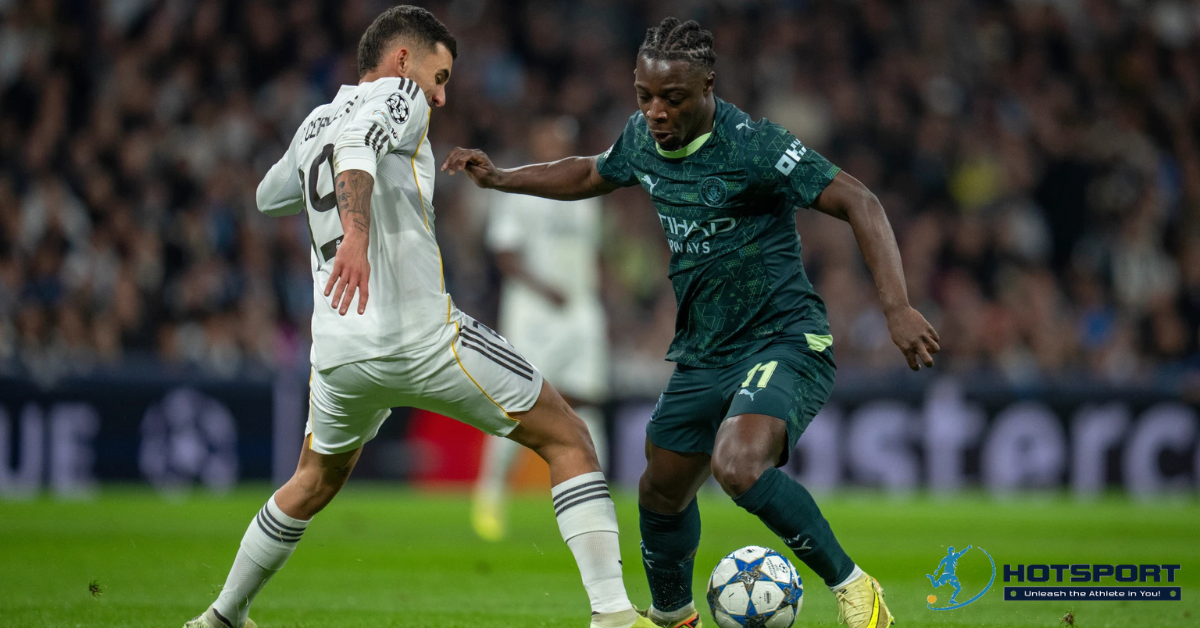
The duel between Real Madrid and Manchester City, played on December 10, 2025, at the Santiago Bernabéu Stadium in Madrid, was not just another group stage match of the 2025/26 Champions League. It was an encounter loaded with context, recent history, accumulated pressure, and a direct impact on the future of both teams in the competition.
The Bernabéu welcomed over 78,000 fans on a cold night, typical of December in the Spanish capital, but with a completely different internal atmosphere: tension. Real Madrid had been going through difficult weeks, accumulating criticism and inconsistent performances in the national league and the Champions League. The atmosphere had shifted from expectation to doubt. Xabi Alonso’s name circulated daily in the press—not as a promising player, but as a target of distrust.
The game had special significance because Real Madrid arrived under pressure after poor results. Their previous Champions League defeat had put the club in an uncomfortable position in the group. Any slip-up at the Bernabéu would mean a real risk to their qualification. It was the typical game where a victory could ease the emotional burden, while a defeat had the potential to trigger a crisis.
On the other side was Manchester City, a constant contender for the European title, who saw the match as a chance to reaffirm their strength. Pep Guardiola’s team — now in a new phase of the project, with a restructured squad — treated the trip to Spain as a test of character. City wanted to control the game from the start, impose their style of play, and make it clear that they have the ability to win in any stadium, including one of the most symbolic in world football.
The recent history between Real Madrid and Manchester City adds another layer to the rivalry. In recent years, the teams have starred in memorable knockout clashes, with high scores, historic comebacks, and matches that have become legendary. City recently eliminated Real on their way to titles and finals; Real, in turn, has already knocked City out in decisive moments of the Champions League. Each encounter seems to write another chapter in this recent, yet already weighty, rivalry.
Furthermore, the match pitted two of Europe’s most valuable squads against each other, led by stars who shape modern football: Haaland, Vinícius Júnior, Rodri, Bellingham, Bernardo Silva, Rúben Dias, Rodrygo, among others. It was more than just a game—it was a spectacle involving two styles, two philosophies, and two clubs accustomed to winning at the highest level.
The final result, City’s 2-1 comeback victory, directly affected Real Madrid’s structure and further strengthened City’s position in Europe. Understanding this game requires looking at the details: the atmosphere, the tactical plans, the phases of the match, the individual choices, the reasons for the comeback, and the emotional impact that lingered after the final whistle.
Pre-match – Expectations, Pressure and the Scenario of Real Madrid vs Manchester City
Real Madrid’s expectations
Real Madrid arrived at the match under pressure. Recent games had created a tense atmosphere: inconsistent results, criticism from the fans, and speculation about Xabi Alonso’s future. For many, the match against City would be a turning point. A victory would bring relief and breathing room. A defeat would intensify the crisis—exactly what ended up happening.
Internally, there was an expectation that Real Madrid would take advantage of the Bernabéu’s strength. The team sought to regain confidence through a great game, facing an opponent that usually raises the level of matches. The internal atmosphere was one of total accountability. Important players, such as Vinícius Júnior, Rodrygo, and Bellingham, were challenged to take on a more prominent role.
Tactically, Xabi Alonso devised a plan based on intensity down the flanks and quick transitions. The idea was to take City out of their comfort zone, forcing errors in their build-up play. But the execution alternated between good moments and notable flaws, especially in defensive recovery.
Finally, Real Madrid was dealing with the pressure of facing a rival that had recently eliminated them in the decisive stages of the Champions League. The recent history between Real Madrid and City had created a modern rivalry, and the Bernabéu knew that this game could define the club’s European path for the season.
Manchester City’s expectations
City entered the Bernabéu with a different kind of pressure — that of confirming their status as one of the strongest teams in Europe. A victory was important to secure qualification, but also to send a message: the team remains competitive, even away from Manchester.
Before the game, the message was clear: control emotions, impose possession, and capitalize on every Real Madrid mistake. The team had great confidence in Haaland’s decisiveness and the maturity of the midfield. Nico O’Reilly, who is in excellent form, was internally identified as a player who could break lines—and his influence was clear in the equalizing goal.
Mental preparation was also important. Playing at the Bernabéu demands personality, and City demonstrated that from the first minute. Even after conceding the opening goal, there was no loss of control. The team stuck to their game plan and turned the game around in the first half.
City knew that this Real Madrid vs. City clash could define not only the league table, but the narrative of the Champions League. And they treated the game as such.
Lineups & Tactics – The blueprint for the Real Madrid vs. Manchester City match
Real Madrid started with a basic formation close to a 4-3-3, but which varied to a 4-2-3-1 depending on Bellingham’s height. The objective was to create numerical superiority in midfield and free up the wingers for individual duels. Vinícius and Rodrygo alternated positions, trying to exploit gaps between City’s full-backs and centre-backs.
The problem was that Real Madrid relied too much on individual plays. The team’s collective play didn’t flow as it should have. The midfield, despite its talent, struggled to pressure City in the right areas and failed to close down the spaces between the lines. This allowed City to build up calmly.
Manchester City entered the game with their traditional structure based on possession, continuous circulation, and rational occupation of space. The team varied to a 3-2-4-1 formation with the full-back cutting inside during the attacking phase. O’Reilly, on the right wing, was key in creating imbalances.
Defensively, City pressed at the right moments and compacted the team when necessary. The plan was clear: deny depth and force Real to play with their backs to goal. This strategy worked for much of the game.
The tactical clash revealed an important difference: while Real Madrid sought intensity, City sought control. And control, in big matches, almost always wins.
First Half – City’s frantic start and comeback
The first half was marked by distinct phases. Real started better, spurred on by the crowd. In the opening minutes, they managed to pressure City’s build-up play and force unusual errors. Real’s intensity was rewarded in the 28th minute when Rodrygo pounced on a rebound, controlled the ball, and finished with precision to open the scoring. The Bernabéu erupted, believing in a night of affirmation.
But City didn’t lose their composure. The team stuck to the plan and reorganized their build-up play. Gradually, they began to find space between Real’s lines. The Madrid midfield dropped too far back, allowing City to control possession and push Real back.
The equalizer came in the 35th minute, in a well-worked move that ended with O’Reilly on the rebound, finishing with precision. This goal immediately changed the atmosphere of the game. Real lost their composure, while City gained confidence.
The turnaround came eight minutes later, in a play that defined the match. Haaland was fouled in the penalty area after a challenge and converted with power and composure. City’s 2-1 lead emotionally demoralized Real Madrid and silenced the Bernabéu.
The half-time whistle blew with a clear feeling: City seemed to be in control.
Second Half – English control, Spanish frustration
The second half was marked by City’s maturity and Real’s anxiety. The English team slowed the pace, controlled possession, and alternated between periods of pressure and periods of waiting. It was a game of management—something City executes with precision.
Real Madrid tried to react by speeding up the flanks, but lacked coordination. Vinícius had flashes of brilliance, but was isolated. Bellingham dropped too deep to help in the build-up. Rodrygo lost depth after the goal. The team seemed disorganized and emotionally unstable.
City, in turn, took advantage of Real’s desperation. They created good transitions, worked calmly, and almost extended their lead with two attacks from Haaland. The English defense performed well, neutralizing crosses and closing down spaces inside.
As time went on, Real Madrid lost intensity. City, even without extending their lead, kept the game under control. The final impression was clear: the first-half comeback decided the match, but the second half confirmed the English team’s collective superiority.
Full statistics – Real Madrid vs Manchester City
| Statistic | Real Madrid | Manchester City |
|---|---|---|
| Goals | 1 | 2 |
| Finishing touches | 10 | 17 |
| Shots on target | 4 | 7 |
| Ball possession | 46.7% | 53.3% |
| Corner kicks | 3 | 6 |
| Passing accuracy | 87% | 90% |
| Accurate passes | 520 | 610 |
| xG (Expected Goals) | 1.1 | 2.4 |
| Absences | 13 | 9 |
| Cards | 2 | 1 |
| Goalkeeper saves | 5 | 3 |
| Duels won | 48% | 52% |
The numbers reflect what was seen on the pitch: a Real Madrid that was competitive at times, and a Manchester City that was much more consistent and dominant.
Impact of the Real Madrid x Manchester City duel on the group and the future
For Real Madrid
The defeat deepens the crisis. The team is accumulating inconsistent results and losing confidence. The pressure on Xabi Alonso is mounting. The fans are questioning the intensity, organization, and choices. The team needs to react immediately or faces a real risk of early elimination.
The Real Madrid vs. City match symbolizes many of the club’s current problems: lack of consistency, defensive lapses, and emotional instability.
For Manchester City
The victory puts City in an extremely comfortable position in the group. Beyond the points, the team gains morale, confidence, and a sense of control over the season. Haaland is in excellent scoring form. The midfield is functioning well. The team seems ready to fight for the title again.
The game at the Bernabéu reinforces the image of a City team capable of dominating any opponent.
For the Champions League group
City’s victory rebalances the landscape and puts pressure on their direct rivals. Real now needs to win its next games to avoid further complicating its qualification chances.
Individual analysis – who decided the matchup
City Highlights
- O’Reilly: intelligent, technical, decisive.
- Rodri: master of the midfield.
- Haaland: unbeatable physical presence.
Real Madrid Highlights
- Rodrygo: opened the scoring and tried to create chances.
- Bellingham: He fought, but was left isolated.
- Lunin: prevented a bigger score.
Key points that explain the result.
- City’s collective organization.
- Uncontrolled emotion from Real Madrid after the draw.
- Superior tactical execution by the English.
- Difference between midfielders.
- City’s ability to play in hostile environments.
Consequences for the group – direct impact on the table.
- City are very close to securing early qualification.
- Real Madrid’s dependence on results has increased, and they are on high alert.
- The other games in the group also gain importance.
Psychological consequences – something changes within the clubs.
Real Madrid
- Fans are losing patience.
- The cast is showing signs of anxiety.
- Xabi Alonso enters the danger zone.
Manchester City
- Gain confidence.
- It confirms maturity.
- They show strength even away from home.
Conclusion – Real Madrid vs. Manchester City: comeback, control, and crisis
Manchester City’s victory at the Bernabéu was not just a result. It was a clear demonstration that, in contemporary European football, planning, stability, and emotional control make a decisive difference in high-level matches.
Real Madrid showed glimpses of its identity — especially in Rodrygo’s goal — but is going through a turbulent period. There’s a lack of consistency, a lack of tactical adjustment, and, above all, a lack of composure to manage difficult moments. The team remains competitive, but needs to rediscover its rhythm. The pressure on Xabi Alonso is growing because Real is failing to translate individual talent into collective structure.
Manchester City, on the other hand, showed something rare: total adaptation to the Bernabéu environment. External pressure, a packed stadium, a goal conceded—nothing derailed the team. City played with the maturity of champions, with patience, with good reading of the game, and with composure. This type of attitude usually separates champions from mere participants.
The tie is wide open, but Real Madrid enters the second leg needing to perform better both emotionally and athletically. City, on the other hand, holds a technical, psychological, and strategic advantage.
The duel is far from over, but one thing is clear: the return match will be a premature final.
FAQs – Real Madrid x Manchester City
1. What was the score of Real Madrid vs. Manchester City?
City won 2-1.
2. Who scored the goals in the match?
Rodrygo scored for Real Madrid. O’Reilly and Haaland scored for City.
3. Is Real Madrid in crisis?
Yes. The defeat increases the pressure and makes Xabi Alonso’s situation more delicate.
4. Was Haaland decisive?
Yes. Besides the penalty goal, he was a constant presence in attacking plays.
5. Is City practically qualified?
Yes. The victory leaves the team in a very comfortable position in the group.
6. Does Real still have a chance to advance?
Yes, but they need to react immediately.
7. Who dominated the match?
City had more control, possession, chances, and consistency.
8. Did the first half decide the game?
Yes. City’s comeback completely changed the game.
9. How was Real Madrid’s defensive performance?
It was inconsistent, with positioning errors and poor compactness.
10. Is City a title contender?
With the current level of football, yes.