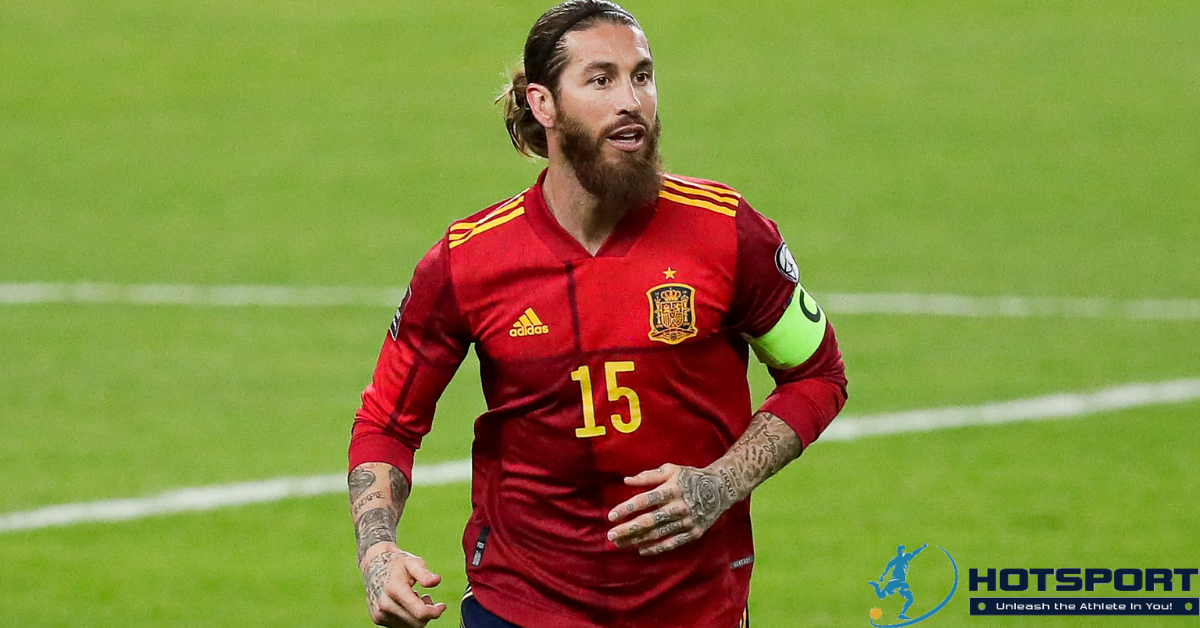
Sergio Ramos García is one of those names that echoes through stadiums like a battle cry. Born on March 30, 1986, in the small town of Camas, near Seville, Spain, he became one of the most iconic center-backs in football history. With his pinpoint headers, fierce leadership, and a goal-scoring instinct few defenders dare to dream of, Ramos isn’t just a player—he’s a living legend. Over nearly two decades, he lifted trophies that many train their entire lives just to touch: four UEFA Champions Leagues with Real Madrid, two European Championships, and one World Cup with Spain. But what makes Ramos a phenomenon goes beyond statistics. It’s the grit, the controversies, the impossible comebacks. At 39 years old, in December 2025, he has just left Monterrey in Mexico as a free agent and is already whispering about plans to return to Europe. This is the story of a man who turns defeats into fuel and victories into eternity.
In football, where time is merciless, Ramos defies the rules. He has scored over 130 goals as a defender—a feat that places him alongside giants like Bobby Moore or Franz Beckenbauer, but with an Andalusian temperament that makes him unique. His career is a mosaic of glory and controversy: the hero of the “Décima” in 2014, the captain who lifted Spain to the top of the world in 2010, and the veteran who, even at 39, still dreams of more battles. In this feature, we dive into the journey of this Spaniard who, with tattoos on his body and fire in his chest, continues to inspire generations.
Childhood and Early Career: Roots in Camas
It all began on the dusty streets of Camas, a working-class town on the outskirts of Seville. Son of Pedro Ramos, a mechanic, and Esperanza García, Ramos grew up in a humble family where football was more than a sport—it was escape and a shared dream. At age seven, he was already kicking a ball at Camas CF, the local club, showing a determination that impressed coaches. “He was skinny, but ferocious,” recalls an old childhood teammate in past interviews. At 10, his talent took him to Sevilla FC’s youth academy, the pride of the region.
In Sevilla’s academy, Ramos stood out quickly. He trained like a madman, alternating between center-back and right-back, learning to read the game with the intuition of someone born for it. In 2003, at 17, he moved up to Sevilla Atlético, the B team, in Spain’s third division. His professional debut came in February 2004 against Recreativo de Huelva in the Copa del Rey. At 17 years and 11 months, he came on in the second half and showed what would become his trademark: hard tackles and sharp game vision. In the 2004-05 season, he played 33 matches for the first team, scoring two goals in La Liga. His performances attracted immediate attention. Sevilla, then on the rise under Joaquín Caparrós, saw him as the future. But destiny had bigger plans: Real Madrid, the Merengue giant, paid €27 million for him in 2005—a record for a Spanish defender at the time. Ramos left for Madrid at 19, leaving behind his Sevillian roots but carrying Andalusian pride in his heart.
Rise at Sevilla: First Steps on the Big Stage
Before shining at the Bernabéu, Ramos forged his character at the Ramón Sánchez-Pizjuán. His debut season with Sevilla’s first team was a whirlwind. He played as a right-back, but his versatility was already evident: he headed like a giant at 1.84m and intercepted passes with surgical precision. In the 2004-05 UEFA Cup, he scored his first European goal against Spartak Moscow—a reminder that he wasn’t just defense, but an offensive weapon. Sevilla finished eighth in La Liga, but Ramos played 40 matches in total, showing maturity beyond his years.
Those early years shaped the Ramos the world would come to know: aggressive, yet loyal to the team. He helped the club qualify for continental competitions for the first time in decades, planting seeds for the glory that would follow, like the three consecutive UEFA Europa Leagues. When he left Sevilla in 2005, fans cried—but they knew he would return, as he indeed did years later. That short but intense spell was the springboard to eternity.
The Golden Era at Real Madrid: Captain, Hero, and Legend
Real Madrid is where Ramos became immortal. Arriving in 2005 as Florentino Pérez’s bet during the Galácticos era, he inherited the No. 4 shirt from club legend Fernando Hierro. Initially playing as a full-back, under Fabio Capello he evolved into a central defender, forming a fearsome partnership with Pepe that terrorized strikers. In 16 seasons, from 2005 to 2021, he played 671 matches and scored 101 goals—absurd numbers for a defender. He became captain in 2015, leading with an iron fist and an exposed heart.
The trophies? A treasure chest. Five La Liga titles (2007, 2008, 2012, 2017, 2020), two Copa del Reys, and four Champions Leagues—2014, 2016, 2017, and 2018. Ah, 2014—the “Décima”! In the 90th minute of the final against Atlético Madrid, with the score at 1-0 to the Colchoneros, Ramos rose highest and equalized with a header. Extra time came, and Real turned it around to 4-1. “It was the goal of my life,” he would later say. In the other three, he lifted the trophy as captain, scoring in semifinals and round-of-16 ties, always in crucial moments.
But Ramos wasn’t just trophies. He broke disciplinary records—26 red cards for Real, the most expelled player in the club’s history—but that only added to his myth. Controversies with rivals like Messi or Suárez? Part of the package. On the pitch, his tactical reading, aerial strength, and leadership inspired. Off it, tattoos like the one of Christ or the map of Spain told his personal story. He left the Bernabéu in 2021 without the farewell he deserved, but the mutual love never died. Today, at 39, rumors link him back—but that’s a conversation for later.
Spanish National Team: International Glory and Farewell
For Spain, Ramos is the most-capped player ever: 180 appearances from 2005 to 2021, with 23 goals. He debuted at 18 against China and became a pillar of the golden era. Under Vicente del Bosque, he was captain from 2010. He won Euro 2008 in Austria and Switzerland, scoring in the semifinal against Russia. In 2010 in South Africa, the World Cup: Spain lifted the trophy for the first time, with Ramos neutralizing strikers like Klose and Forlán.
Euro 2012, on home soil, was the pinnacle: unbeaten, back-to-back European champions, with him as the wall. He played in four World Cups and three Euros, but injuries and technical decisions kept him out of Euro 2020 and the 2022 World Cup. He retired from La Roja in February 2023, in tears: “I leave with my chest puffed out.” His legacy? Spain’s golden age owes much to his grit.
Adventure at PSG and Return to Sevilla: New Horizons
Leaving Real in 2021 hurt, but PSG was waiting. He signed for two years, reuniting with Messi, Neymar, and Mbappé. He played 58 matches, scored 6 goals, and won two Ligue 1 titles (2022, 2023). But injuries and cultural adaptation limited his shine. In 2023, he returned to Sevilla, his home. At 37, he played 37 matches, scored 7 goals, including in the Champions League. It was an emotional farewell, reclaiming his roots.
New Chapter at Monterrey: The Mexican Challenge
In February 2025, at 38, Ramos crossed the Atlantic to Monterrey in Liga MX. Named captain immediately, he played 34 matches in 2025 and scored 8 goals. He led the team in the expanded Club World Cup, becoming the oldest player to score in the tournament at 39. But the 2025 Apertura ended in the semifinals against Toluca, with a farewell goal—the oldest in Mexican league playoff history. He left as a hero, but without a title.
Personal Life and Legacy: Beyond the Pitch
Married to journalist Pilar Rubio since 2019, he has four sons: Sergio Jr., Marco, Alejandro, and Máximo Adriano. He lives between luxury—a farm of Andalusian horses—and philanthropy, as a UNICEF ambassador. His more than 20 tattoos tell personal battles and victories. Ramos has released Amazon documentaries and even music singles, like “CIBELES” in 2025. His legacy? Teaching that football is passion, not perfection. Over 100 goals as a defender, 22 trophies at Real, inspiration for young defenders.
Recent Updates: Ramos’ Future in December 2025
In December 2025, Ramos is a free agent. His contract with Monterrey expired after the Apertura elimination, and he confirmed: “This was my last game here.” He scored against Toluca at 39 years and 251 days, breaking a Liga MX record. “I want to continue in Europe,” he said, with eyes on Milan, where he could reunite with former teammates. At 39, injuries test him, but the hunger remains. Rumors of a Real Madrid return resurface—a perfect farewell? The world is watching. Ramos doesn’t stop: he reinvents himself.
Conclusion: Eternal in the Hearts of Fans
Sergio Ramos isn’t just football; he is resilience. From Camas to the world, he built an empire of memories. At 39, free and hungry, he proves that legends don’t age—they evolve. Let the next chapter come.