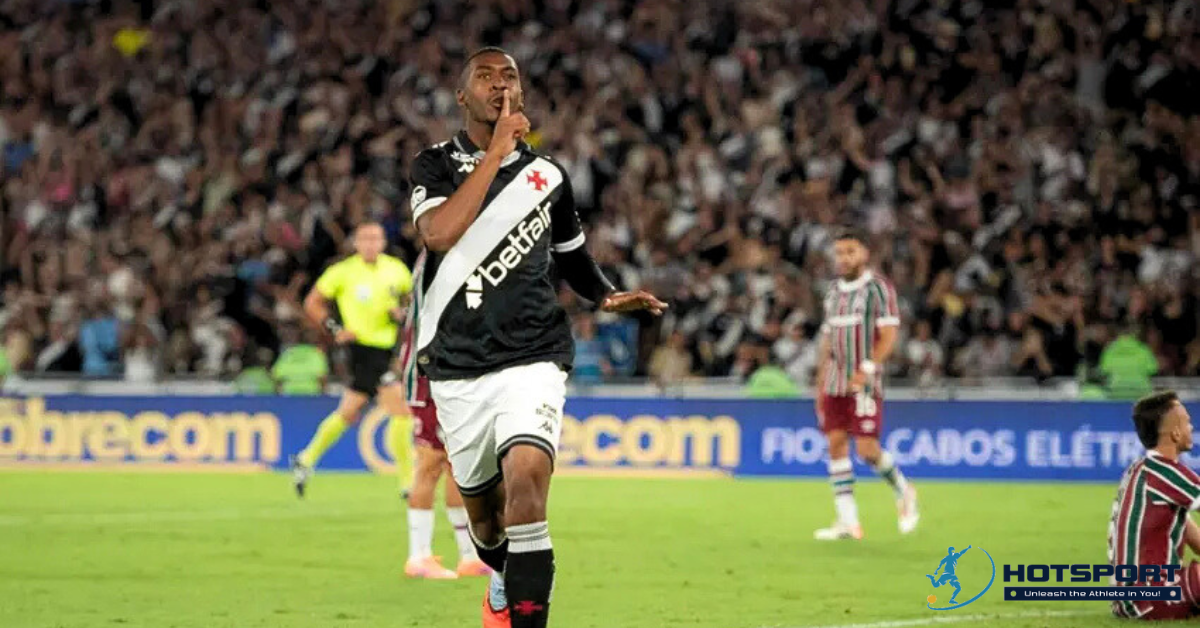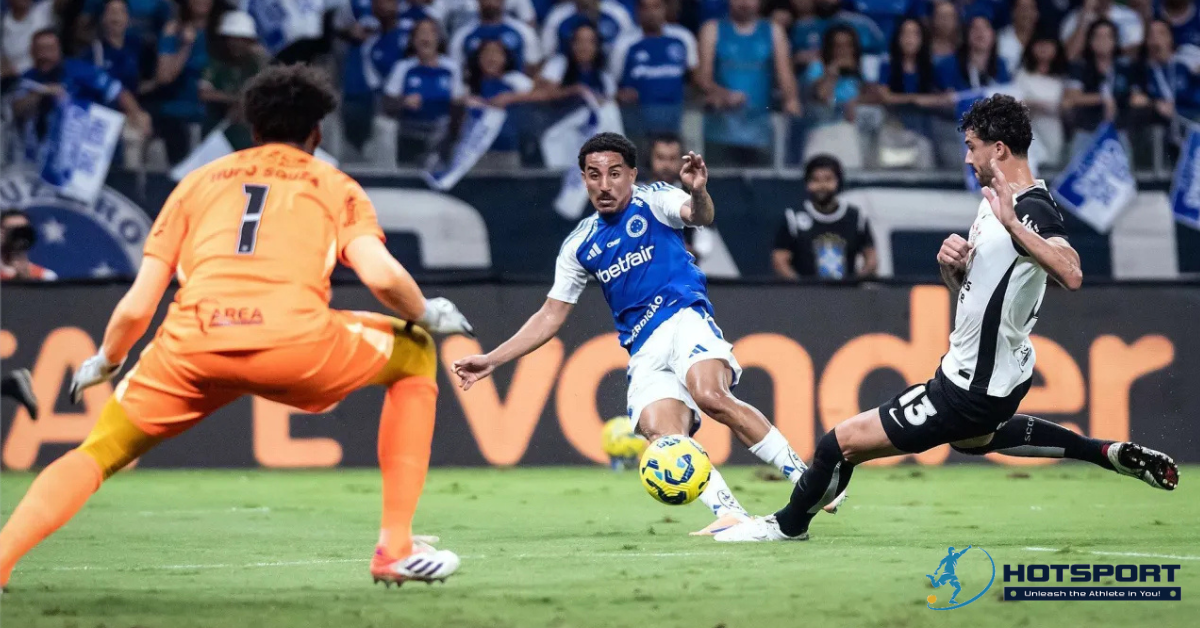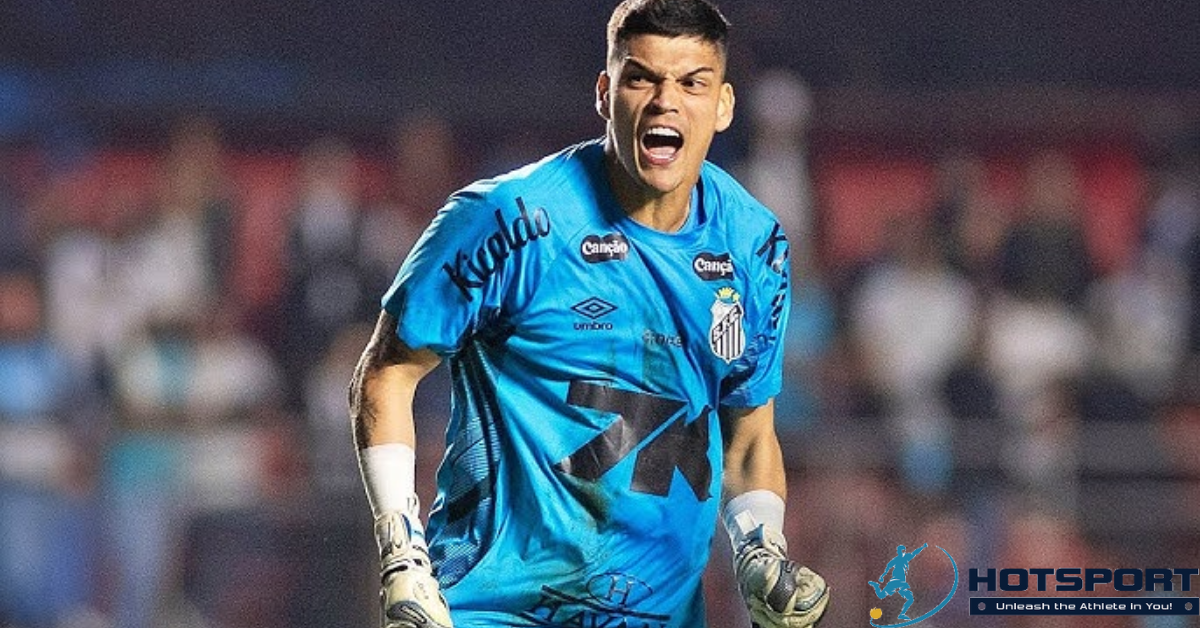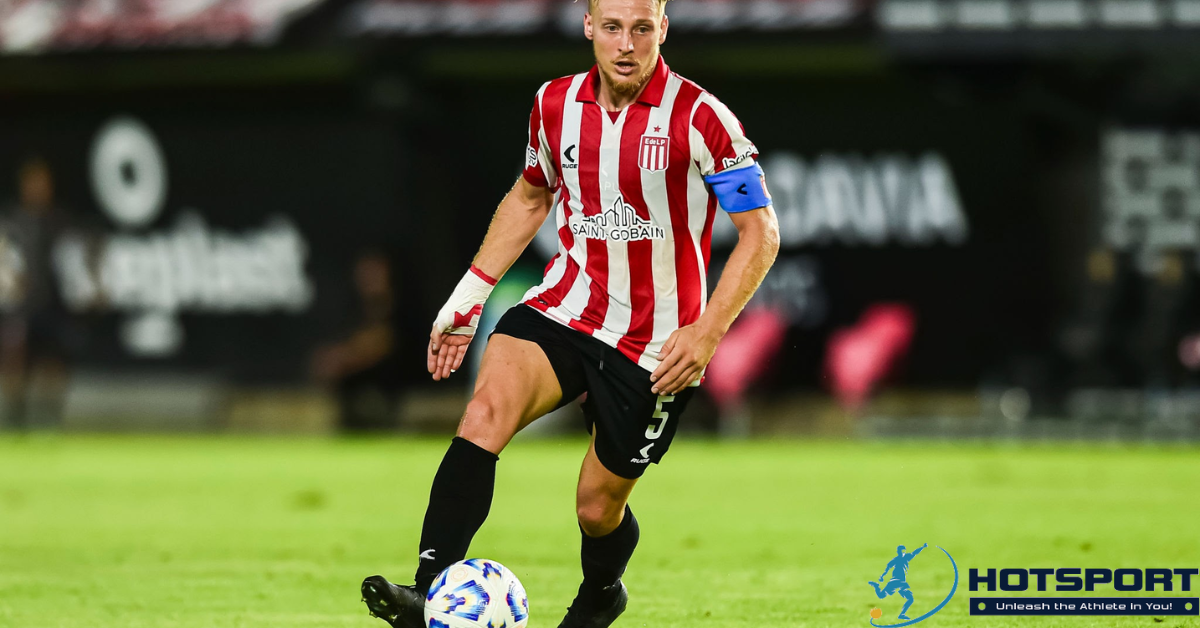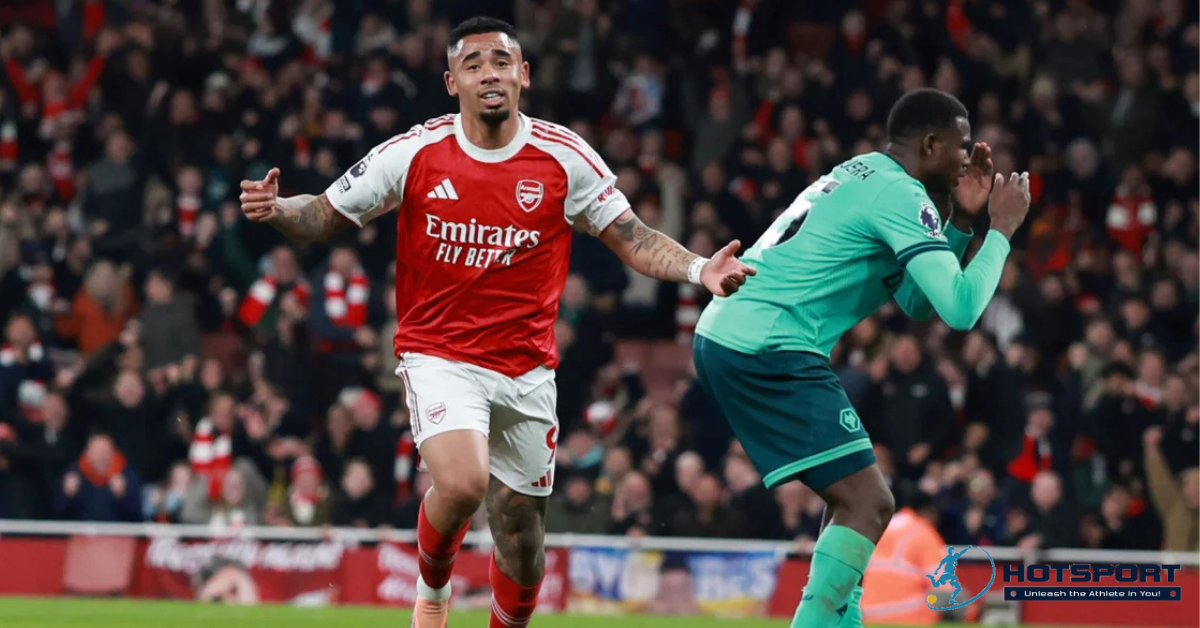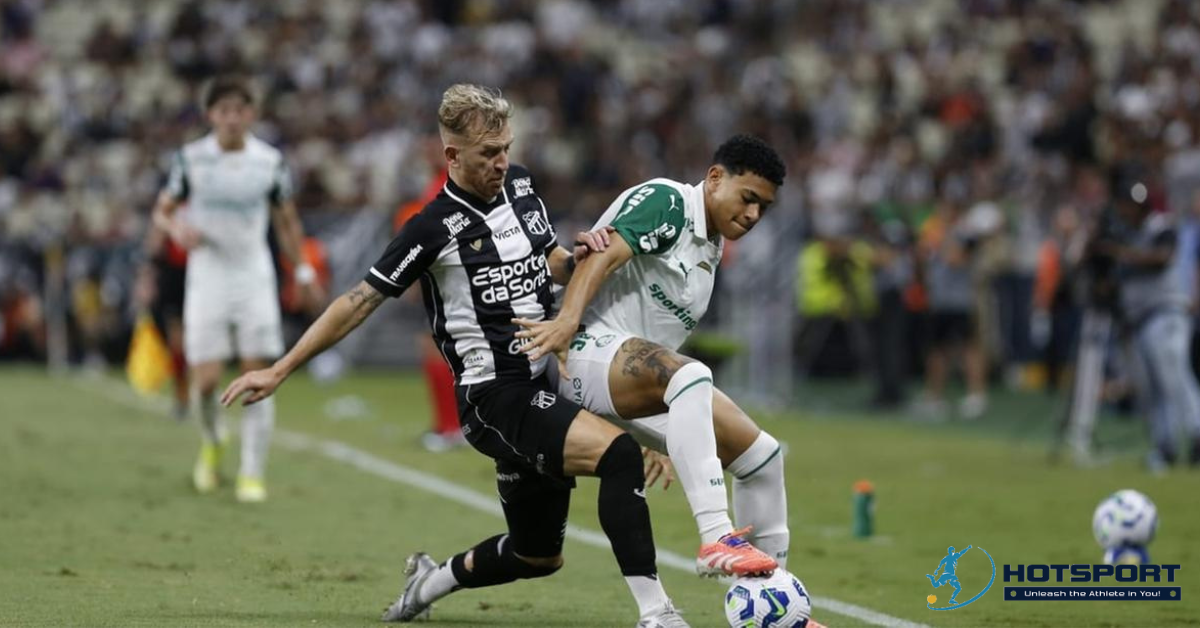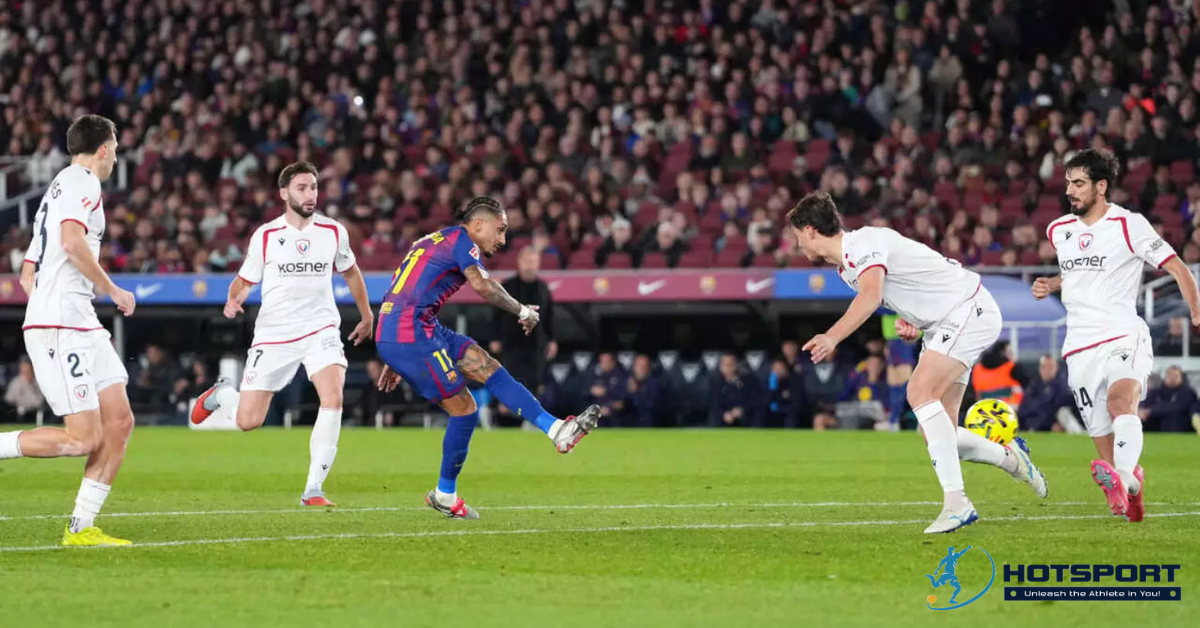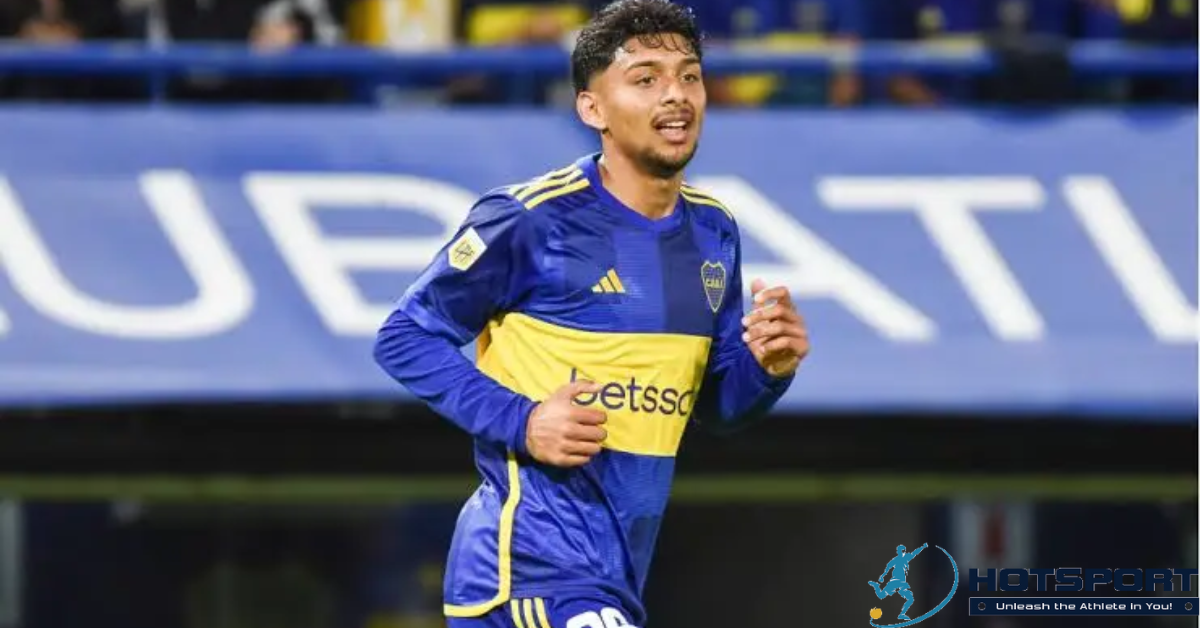
Lautaro Díaz arrived in Brazilian football as a promising talent seeking new challenges, and in just a few months he has already become a key piece in the Santos squad. Born in Buenos Aires, the 27-year-old Argentine brings with him a résumé of South American titles and the typical grit of players forged in Argentina’s youth academies. On loan from Cruzeiro until July 2026, Díaz has shown versatility in attack, scoring decisive goals and helping the Peixe through a season full of ups and downs. With the Brasileirão reaching its climax and the fight against relegation still on, his adaptation to the intense rhythm of Brazilian football has been one of Santos’ bright spots. In this article, we dive into the journey of this center-forward who is steadily carving out his place on the national stage.

Early Steps in Buenos Aires

Lautaro Ariel Díaz was born on May 21, 1998, in the heart of Buenos Aires—a city that breathes football on every corner. Son of Roberto Osvaldo Díaz, a former player who represented Argentina at the 1979 Copa América, Lautaro grew up surrounded by stories of impossible dribbles and wonder goals. From an early age, the boy showed a natural inclination for the sport: at age 10 he was already training in the youth ranks of Estudiantes de Buenos Aires, a modest third-division club with a strong tradition of producing tough, resilient talents.

His professional debut came on May 8, 2019, against All Boys in the Primera B Metropolitana. It was a 2-1 defeat, but the 20-year-old stepped onto the pitch with the determination of someone who knows rare opportunities cannot be wasted. That year he played just three matches, yet Estudiantes earned promotion to the Primera Nacional, Argentina’s second division. Lautaro was not a regular starter, but his speed and excellent positioning inside the box were already turning heads.

2021 proved a turning point. In January he scored his first professional goal, securing a 2-1 victory over Ferro Carril Oeste. Across three seasons with Estudiantes, he made 26 appearances and scored two goals—enough to attract interest from bigger clubs. To gain more experience, he was loaned to Villa Dálmine, another second-division side, for 2021 and 2022. There, the Argentine truly exploded: seven goals in 31 matches, showing clear improvement in finishing and game reading. His short, sharp dribbling and ability to escape markers in tight spaces became a talking point in Argentine dressing rooms. At 24, Lautaro Díaz was ready to fly higher—and his destination was Ecuador.

Breakthrough at Independiente del Valle

In June 2022, Independiente del Valle—the Ecuadorian club renowned for developing South American gems—signed Lautaro on a one-year loan. It was the defining moment of his career. The Quito-based side, already runners-up in the 2019 Copa Sudamericana, saw him as quality depth in attack. He did not disappoint. In the Ecuadorian league he went goalless in his first 11 appearances, but it was in the 2022 Copa Sudamericana that Díaz truly shone.

He scored five goals in the competition, including one in the final against São Paulo in Guayaquil. Independiente won 3-1, and Lautaro was named man of the match—a performance that launched him into regional stardom. His humble celebration, pointing to the sky in tribute to his father, went viral across social media. In November, the club triggered his buyout clause, and from January 2023 he was officially theirs.

2023 and 2024 were years of consolidation. In the domestic league he scored four goals in 23 games in 2023, plus three more in cup competitions. On the continental stage he remained lethal, adding six goals and helping the team win the Recopa Sudamericana and the Ecuadorian Supercopa. In total for Independiente del Valle: 63 matches, 19 goals—numbers that reflect a mature player capable of deciding knockout ties. His physical resemblance to England’s Jack Grealish earned him affectionate nicknames in the Ecuadorian press, but it was his football that did the talking: a versatile forward comfortable as a center-forward or out wide, always with vision for the killer pass.

The Brazilian Adventure: From Cruzeiro to Santos

The leap to Brazil came in July 2024 when newly promoted Cruzeiro invested in Díaz on a four-year contract. The Raposa saw him as the ideal creative spark for their attack, blending Argentine heritage with Brazilian flair. His debut was promising: one goal and several assists in 18 Brasileirão appearances during 2024, contributing to hard-fought wins. However, muscle injuries and competition from players like Arthur Gomes kept him on the bench for much of the year.

2025 was more complicated. With only six appearances and no goals in the Campeonato Mineiro and early league games, Díaz lost his place in Paulo Autuori’s plans. The solution arrived in September: a loan to Santos, another giant rebuilding itself, until July 2026. The Peixe, battling to stay in Série A, needed attacking depth, and the Argentine donned the number 19 shirt carrying the weight of the Vila Belmiro on his shoulders.

His Santos debut came on September 14 against Atlético-MG, ending in a 1-1 away draw. Since then, Díaz has integrated quickly. In 21 Brasileirão appearances up to December 2025, he has scored three goals and provided two assists in 1,109 minutes played. His goals came at crucial moments: one against Flamengo in a thrilling 3-2 win at Allianz Parque (where he ran 11 km and had three shots on target), and another in a 1-0 victory over Palmeiras, heading home the winner in the 34th minute.

Recent Highlights at Santos and in the Copa do Brasil

December 2025 has been intense for Lautaro. On December 3, away to Juventude at the Alfredo Jaconi, Santos won 3-0 in a must-win game for survival. Díaz was substituted in the second half by Zé Rafael, but his high pressing forced errors that led to goals from Neymar and Guilherme Augusto. It was his 12th start of the season, earning him an overall rating of 6.9.

The following day, December 4, he shone in the Copa do Brasil semifinal against Bahia. The VAR awarded Santos a penalty after a foul on Díaz inside the box; Neymar stepped up, converted, and completed his hat-trick to send the Peixe comfortably through to the final. Though he didn’t score, the Argentine was instrumental in the build-up: 18 touches, two successful dribbles, and one chance created. “Lautaro is a warrior, just like every Argentine,” praised coach Juan Pablo Vojvoda after the game, highlighting his commitment despite being one yellow card away from suspension—along with Neymar and others.

These matches show a Díaz on the rise: 3.32 xG from 21 shots, 33% shot accuracy. Compared to other Série A center-forwards, he excels in aerial duels (58% success rate) and defensive contribution (30% above league average), proving he is far more than just a finisher—he is a complete forward. Across the entire 2025 season (Cruzeiro + Santos): 27 appearances, four goals, three assists—modest numbers, but hugely impactful in such a balanced league.

Playing Style: Speed, Vision, and Grit

What makes Lautaro Díaz special is his adaptability. At 1.81 m and predominantly right-footed, he combines Argentine physicality with the agility of a winger. His short-space dribbling recalls his Villa Dálmine days, while his box positioning echoes his father Roberto. At Santos, Vojvoda often uses him as a “false 9,” dropping deep to create space for Neymar and Barreal. Critics note he still needs to improve consistency in front of goal—14% conversion rate in 2025—but his assist rate (one every 370 minutes) is widely praised.

Off the pitch, Díaz is low-key. Married with a young daughter, he shuns the spotlight, preferring extra training sessions and video analysis. His Instagram account, with over 150,000 followers, focuses on family and football—no flashy lifestyle. He takes the constant Grealish comparisons in good humor: “I play for the team, not for the pose,” he told Globoesporte in October.

The Future: Establishing Himself in Brazil?

With his Cruzeiro contract running until 2028, the Santos loan could be the springboard to a more stable career. If the Peixe avoid relegation—and the three points against Juventude were a big step—Díaz will have earned renewed trust. There are already whispers of interest from clubs like Fluminense, but his focus remains on the present: the Copa do Brasil final and the final rounds of the Brasileirão.

At 27, Lautaro Díaz is entering his prime and ready to explode. His journey from Buenos Aires to Vila Belmiro is proof of persistence. In Brazil, where football is a collective passion, he has found a home—and perhaps the stage for a lasting legacy. If he keeps this form, 2026 could be the year the name Díaz rings out once again, this time with a distinctly Brazilian flavor.

Trending Post

National Football

Introduction – Vasco vs. Mirassol

The match between Vasco and Mirassol, played on December 2, 2025, for the 37th round of the Brasileirão Série A, went down in history as the final stretch of the season. For Vasco da Gama, it was an opportunity to breathe a sigh of relief, recover morale in front of their own fans, and ensure a peaceful end to the year. For Mirassol, it was a chance to crown a remarkable campaign with the coveted direct qualification for the 2026 Libertadores Cup.

Expectations were high. Many anticipated an open game, with intensity from both sides—Vasco trying to regain confidence, Mirassol focused on avoiding setbacks. But, at the same time, there were also concerns: Vasco’s inconsistent offense in recent games and Mirassol’s already demonstrated defensive consistency made the match unpredictable.

The atmosphere in the stadium reflected this duality: hope and tension on the Rio side; confidence and planning on the São Paulo side. The rivalry wasn’t just in the names, but in the circumstances: 90 minutes could change destinies.

In the end, the score confirmed what football often shows when efficiency speaks louder than volume: Mirassol knew how to take advantage of its opportunities; Vasco, despite trying, failed at the decisive moment. The defeat reignites the drama of relegation and gives the club from the interior the chance to shine continentally.

Pre-game analysis – Context, club status, and the significance of the Vasco x Mirassol match.

Vasco da Gama’s situation

Vasco arrived with 45 points and the urgent need to translate their volume and dominance into concrete results. The fans expected a reaction, and the club sought to end the year with dignity. Their recent home record was unstable, and the pressure for offensive efficiency was high. Any defensive error or missed opportunity could be costly.

The team’s preparation took into account offensive mobilization — ball possession, active full-backs, and constant circulation. The coach emphasized the need for precise finishing and defensive awareness, especially on aerial balls or transitions, areas in which Mirassol usually performs well.

Furthermore, there was psychological pressure: the fans, who had been quite critical recently, expected composure, decisive plays, and results. Vasco could no longer afford to make mistakes.

Mirassol’s situation

For Mirassol, the game had a historic flavor. With 66 points in a solid campaign, the São Paulo club arrived with tranquility, balance, and the conviction that it could secure a direct spot in the 2026 Libertadores Cup. The away strategy was simple: defend with organization, exploit counter-attacks, and take advantage of the few chances that arose.

The team arrived confident, with a good defensive run and quick transitions. Their tactical maturity was already proving to be a key advantage. The opponent was applying pressure, but the team showed cohesion, focus, and execution. The mission was clear: to dominate in the opponent’s half without leaving room for error.

For Mirassol fans, that was the game of consecration. A victory would guarantee not only a continental spot, but national respect. Internal and external motivations aligned — working with patience, discipline, and ambition.

The game – Pace, decisive plays and outcome: Vasco x Mirassol

First half – Vasco controls the game, but doesn’t create any real threat.

From the start, Vasco sought to impose their rhythm. Possession was slightly higher (51.3% vs 48.7%). The ball circulated, the team exchanged passes and attempted infiltrations down the wings, looking for spaces in the opposing defense. But, gradually, it became evident that territorial dominance did not seem to translate into real danger.

Mirassol, in turn, maintained compactness, reviewed coverage, and prioritized transitions. The marking was organized, the defensive line was attentive, and the visitors showed patience, waiting for the right moment. The tactic set the pace: Vasco dominated possession; Mirassol held the defensive reins.

Throughout the first half, the main scoring chances came from shots outside the box and crosses from the side. The visiting goalkeeper was rarely tested, confirming that Vasco’s problem was not only offensive inefficiency, but also a lack of real aggression inside the penalty area. The half ended goalless, with a clear feeling that the draw didn’t represent justice for the team that had been dominating, but also that the game was still far from having a winner.

Second half – The punishment for away efficiency

After the break, Vasco maintained their offensive posture. They pressed, looked for crosses, and corner kicks—they had 10 corner kicks in their favor, compared to only 1 for Mirassol. The fans believed that a goal would come. The expectation was for a natural comeback.

But football showed its unforgiving side. In the 70th minute, in a quick transition, Mirassol opened the scoring. Perfect execution: they hit the back of the net. Frustration set in. Vasco tried to react—with changes of pace and increased pressure. But the chances didn’t materialize clearly. The finishing missed the target; the opposing defense quickly reorganized.

Late in the game, at 90+2, the second goal sealed the score. The visitors finished calmly, composedly, and purposefully. Vasco 0 x 2 Mirassol. The São Januário stadium fell silent. The difference between what is attempted and what is achieved was laid bare.

Complete statistics – Volume, possession, efficiency and lethality Vasco x Mirassol

StatisticVasco da GamaMirassol
Final score02
GoalsRenato Marques (70′), Carlos Eduardo (90+2′)
Ball possession51.3%48.7%
Total shots148
Shots on target54
Corner kicks101
Goalkeeper saves25
Shots inside the penalty area63
Shots outside the penalty area65
Passing accuracy~84%~83%
Yellow cards23

These statistics clearly paint a picture of the game: Vasco dominated possession, pressed, and attacked—but couldn’t be lethal. Mirassol, with less possession, was more clinical: when they had the chance, they converted. In football, efficiency often triumphs over statistical dominance.

Impact of defeat — Immediate consequences and reflections

For Vasco da Gama

The defeat is a heavy blow. Instability returns in full force. Even with 45 points, Vasco remains vulnerable. The lack of offensive efficiency—especially when dominating and pressing—becomes a worrying pattern. The fans’ confidence wavers. The pressure for urgent answers increases.

More than just points, Vasco is losing momentum. Home advantage, often seen as a key factor, is proving fragile. The team will need to react in the final rounds, and with consistency: there will be no room for error. The margin for error is drastically reduced.

For Mirassol

For Mirassol, the victory is a watershed moment. The campaign is becoming historic. The direct qualification for the 2026 Libertadores Cup is more than a dream—it’s the confirmation of a job well done. The team takes center stage, gains visibility, and deserves national respect.

Furthermore, the result reinforces a playing philosophy: collective play, efficiency, patience, and pragmatism. It wasn’t about dominating the game, but rather knowing how to take advantage of ideal moments. And Mirassol did that with excellence.

Post-game reaction and statements

The Vasco coach admitted frustration, but acknowledged that the team “played a very good game.” According to him, the problem wasn’t the team’s approach or offensive strategy—it was the lack of decisiveness and marking errors that led to the goal conceded. He highlighted that Mirassol, in its few chances, was precise; while Vasco lacked finishing and defensive awareness. ge +1

On Mirassol’s side, the discourse was one of humility and focus. Collective effort, tactical discipline, and game reading were cited as decisive factors. The away victory, against a historical giant, reinforces the club’s credibility. The campaign is gaining momentum, and the team is establishing itself as a benchmark of efficiency in this Brazilian Championship.

Historical context and comparisons – What changes for the season?

  • The result ends Vasco’s run of home games, exposing weaknesses in crucial matches. In 2025, the team showed inconsistency at São Januário — something that is detrimental in moments of pressure.
  • For Mirassol, this represents the consolidation of a medium-term project: proving that a smaller club can compete for a continental spot with planning and dedication. A direct spot in the Libertadores represents a leap in confidence and visibility.
  • In the context of the 2025 Brazilian Championship, Vasco’s stumble reignites the relegation battle and increases the tension for the final rounds. Mirassol, in turn, confirms that Brazilian football still has room for well-structured and organized surprises.
  • The match reinforces an old lesson: possession and volume don’t guarantee victory. Effectiveness, pragmatism, and collective intelligence—regardless of tradition—can decide destinies.

Extra sections – What to watch for in the next rounds and final predictions

Risks and priorities for Vasco in the final rounds.

  • Adjusting offensive efficiency: converting volume into goals is essential. Forwards need to get back to finishing inside the box.
  • Defensive organization: the positioning error in the first goal was decisive. Cohesion is necessary, especially on aerial balls and during transitions.
  • Emotional control: the pressure from the fans and the anxiety about results can be detrimental in the final rounds.
  • Points away from home: Vasco needs to score points away from home to ensure safety — especially if home advantage ceases to be a deciding factor.

What should Mirassol aim for now that they’ve secured their spot?

  • Maintain humility and focus: the spot is guaranteed, but the club can further consolidate its rise with consistency.
  • Strengthening the squad: with the Libertadores Cup on the horizon, it will be important to reinforce the team (if necessary) to compete at a high level.
  • Long-term strategy: the triumph shows that planning and teamwork work. The club can gain national prominence and attract investment.
  • Take advantage of the visibility: the achievement exposes the club, opens doors to sponsors, investments, and institutional growth.

Conclusion – Vasco vs. Mirassol: lessons in efficiency, a warning for the future, and a new protagonist.

The Vasco vs. Mirassol match ended 0-2, but the score carries a greater significance than the numbers alone. Vasco dominated possession, exchanged passes, and pressed, but couldn’t capitalize. Mirassol, with patience, focus, and efficiency, seized their chances, capitalized on their opponents’ mistakes, and secured a victory with the weight of a crowning achievement.

For Vasco, the defeat represents more than just three lost points—it signifies instability, uncertainty, and the urgent need to react. The season, which seemed to be on track, is back on shaky ground. For Mirassol, it’s confirmation that it’s possible to compete for top spots with planning, teamwork, and strategy. The spot in the 2026 Libertadores Cup is living proof that smaller clubs also have a voice.

Football, in its essence, continues to show: impressive volume of play, but those who capitalize on their opportunities are the ones who decide the outcome. And today, Mirassol was lethal.

If you’ve been following the Brazilian Championship closely, the final stretch promises drama, twists and turns, and intense decisions. Stay with us and keep up to date with all the analysis, results, and developments.

FAQs – Frequently asked questions about Vasco x Mirassol

  1. What was the final score of the match?
    Vasco 0 x 2 Mirassol.
  2. Who scored the goals?
    Renato Marques at 70′ and Carlos Eduardo at 90’+2′.
  3. How was possession?
    Vasco dominated with 51.3% compared to Mirassol’s 48.7%.
  4. How many shots on goal were taken by each side?
    Vasco had 14 shots, with 5 on target; Mirassol had 8 shots, with 4 on target.
  5. What did Vasco lack to win?
    Offensive effectiveness, precision in finishing, and defensive focus at crucial moments — especially on the first goal conceded.
  6. With the victory, what did Mirassol achieve?
    A direct spot in the group stage of the 2026 Copa Libertadores and national exposure.
  7. Does the defeat put Vasco at risk of relegation?
    The instability is increasing, and the club needs to react in the final rounds to guarantee its survival.
  8. Did Mirassol play well or was it pure efficiency?
    It was pure efficiency: with strategy and capitalizing on chances, they achieved the result they needed.
  9. How many corner kicks did Vasco have?
    10 corner kicks compared to only 1 for Mirassol.
  10. What does Vasco need to fix now?
    Improve their finishing inside the penalty area, correct defensive errors, and maintain emotional consistency towards the end of the season.

Introduction – Fortaleza vs. Atlético-MG and the fight for survival

The Fortaleza vs. Atlético-MG match, played on November 30, 2025 at the Castelão stadium, had a rare emotional and sporting significance. For Fortaleza, it wasn’t just another round of the Brazilian Championship. It was the kind of game that defines direction, that stirs up the locker room, that rekindles or extinguishes hopes. The team was experiencing tense days, surrounded by the concrete threat of relegation and pressured by a fanbase that still believes, but demands intensity and an immediate response.

Atlético-MG arrived in a more comfortable, but not exactly stable, situation. The team was trying to consolidate a competitive position in the standings and had been seeking consistency. Although the away game required caution, there was enough confidence to believe in a positive result.

In the opening minutes, it was clear that the atmosphere was tense. Fortaleza came out with energy, tactical precision, and an aggressiveness unseen in previous matches. They pressed, accelerated, and sought to disrupt Atlético’s possession. Atlético tried to lower the tension, work the ball, and calm the game down, but Leão’s impetus was greater.

Pochettino’s goal in the 40th minute summed up the spirit of the game: decisiveness, courage, and necessity. From then on, the script changed. Fortaleza protected their lead with discipline, while Atlético struggled to convert their high possession into real chances.

Pre-game context – double pressure felt: Fortaleza vs. Atlético-MG

Fortaleza: survival, morale, and fan expectations.

Fortaleza arrived at this round facing a real risk of relegation. Morale was shaken: inconsistent results, pressure from the fans, and the awareness that each match would be a final. The responsibility fell on everyone: management, coaching staff, players, and fans. In such a delicate moment, the psychological factor was crucial. The atmosphere at the Castelão stadium reflected this tension: demands, expectations, and the urgency for a response on the field.

For the coach and players, the premise was clear: intensify marking, accelerate the offensive pace, and pursue the goal with determination. The front line needed to be aggressive, and the midfield needed to maintain balance, with quick transitions and defensive support.

Atlético-MG: avoid slipping up away from home

For Atlético-MG, the match represented a test of patience and control. Playing away from home against a team under pressure could create opportunities for surprises. Galo preferred to manage the pace, build up patiently, and avoid defensive lapses—mainly due to the opponent’s emotional instability. The strategy relied on experience, possession control, and efficiency in converting chances.

But in football, motivation and context often weigh as much as technique and strategy.

First half – Fortaleza comes out to press, Galo tries to control the game. Fortaleza vs Atlético-MG

From the opening minutes, Fortaleza showed attitude: they pressed the opponent’s build-up play, looked for quick transitions, and tried to cause problems down the flanks. Their high and aggressive marking aimed to force errors and create space for shots on goal.

Atlético-MG, in turn, sought to adjust. They tried to maintain possession, work the midfield, and avoid taking unnecessary risks. The idea was to build up patiently, without exposing themselves, trying to wait for the right moment to attack.

But Fortaleza persisted. In the 40th minute, in a well-worked play through the middle, Pochettino appeared well at the edge of the area and, with his left foot, hit a powerful shot into the corner — 1-0. A goal that reflected not only technique, but the desire of a team that needed to win.

The first half ended with Fortaleza in the lead, a deserved result. Atlético, despite having more possession, hadn’t managed to translate control into clear chances. Fortaleza, with less of the ball, showed presence.

Second half – Solid defense, nervousness from Atlético Mineiro, and a search for a comeback.

At the start of the second half, Atlético-MG tried to push up the field and apply pressure. They looked for speed on the wings and attempted crosses—a strategy to exploit their attacking speed.

Fortaleza, playing deeper, focused on defensive compactness and quick counter-attacks. The objective: to withstand pressure and move the ball forward whenever possible.

Atlético Mineiro had more possession, attempted infiltrations, and switched the offensive sector, but ran into Fortaleza’s defensive organization. With each attack, Fortaleza’s defense and midfield responded with precision, interceptions, and tackles.

Furthermore, nervousness began to set in. The demands of the fans, combined with the pressure to get a result, made Atlético impatient. The plays became predictable, the passes imprecise, and opportunities were rare.

In the end, Fortaleza held onto their lead. The 1-0 victory solidified not only the scoreline, but also the confidence of those fighting to stay in the league.

Detailed statistics – Fortaleza vs Atlético-MG

StatisticStrengthAtlético-MG
Goals10
Total shots159
Shots on target44
Ball possession34%66%
Accurate passes311634
Pass accuracy (%)~81%~87%
Corner kicks92
Expected Goals (xG)~1.80~0.63
Goalkeeper saves43

Data interpretation: Despite having less possession and fewer passes, Fortaleza was more efficient in its finishing and more direct in its attacking approach. The superiority in xG demonstrates that the result favored the team that made better use of its chances. Atlético-MG dominated possession, but failed to convert that control into real danger for the opposing goal.

Tactical analysis — How Fortaleza won where many others couldn’t.

  1. High pressure and tight marking: Fortaleza neutralized Atlético Mineiro’s midfield, making it difficult for them to build attacks and intercepting passes. This prevented the opponent from creating clear offensive plays.
  2. Quick and purposeful transitions: upon winning the ball, Fortaleza tried to accelerate the attack, exploiting space behind the defensive line. This verticality led to the goal and kept Atlético on the defensive.
  3. A courageous and organized defense: when Atlético Mineiro had possession, Fortaleza’s defensive system maintained compactness, a good attacking line, and effective coverage—especially on the flanks and in midfield, neutralizing crosses and infiltrations.
  4. Limited efficiency in attack: even with few shots on goal, the team made good use of their opportunities. The directness of their attacks was key to transforming intimidating dominance into victory.

Impact of victory – What changes for Fortaleza vs. Atlético-MG

For Fortaleza

  • The victory rekindles hopes of escaping the relegation zone. With eight unbeaten games and three consecutive wins, the team finds a breath of fresh air. Confidence returns to the group and the fans. The emotional atmosphere after the game tends to further unite the squad and the stands, vital in the final stretch.
  • Defensive solidity and a return to fighting spirit provide a foundation for the challenges ahead.

For Atlético-MG

  • The defeat represents a loss of control and opportunities. The team will have to react quickly to maintain chances of achieving bigger goals this season.
  • The inability to convert possession into clear chances highlights the need for adjustments, both in creation and in finishing.
  • There is a risk of psychological burnout, since away games demand absolute focus — especially when the opponent is playing with renewed energy.

For the 2025 Brazilian Championship

  • Fortaleza’s victory adds extra tension to the fight against relegation. It makes the final stretch more unpredictable and competitive.
  • For Atlético-MG and other mid-table teams, this match serves as a warning: ball possession doesn’t guarantee results. Efficiency and focus are essential.

Conclusion – Fortaleza vs. Atlético-MG: grit, redemption, and renewed hope

Fortaleza’s victory over Atlético-MG was not just a favorable result. It was an emotional, technical, and competitive statement from a team that refuses to accept relegation as its fate. The 1-0 score represents more than just numbers: it’s proof that the team still has the stamina, strength, and ability to react even under extreme pressure.

Fortaleza was intense, focused, and resilient. They weren’t intimidated by their opponent’s superior technical ability, they didn’t become disorganized when the opposition had possession, and they didn’t lose their composure when the game demanded calmness. They played with heart, but also with a clear plan. The fans felt this and regained their belief.

For Atlético-MG, the night exposed a problem that plagues talented teams: control without decisiveness. The volume of passes and possession didn’t produce enough danger. It’s a direct warning for the final stretch of the championship.

At Castelão, what we saw was a pure example of how emotional contexts, extreme need, and total commitment can alter the course of events. Fortaleza’s victory reignites the flame and creates a strong narrative for the upcoming rounds: the fight continues, and the Lion is alive.

If you want to follow more complete analyses, tactical guides and in-depth coverage of the Brasileirão, visit our National Football category and stay up to date on everything.

FAQs – Frequently Asked Questions about Fortaleza vs Atlético-MG 2025

  1. What was the score of the match?
    Fortaleza won 1-0.
  2. Who scored the goal?
    The goal was scored by Tomás Pochettino, in the 40th minute of the first half.
  3. What was the ball possession like?
    Atlético-MG had around 66% possession, while Fortaleza had approximately 34%.
  4. How many shots did Fortaleza have?
    There were 15 shots in total, 4 of them on target.
  5. And Atlético-MG? How many chances did they create?
    Galo had 9 total shots, 4 on target, but couldn’t convert them.
  6. Does this result help Fortaleza get out of the relegation zone?
    Yes — the victory provides breathing room, confidence, and improves their points tally, bringing the club closer to escaping the relegation zone.
  7. What did Atlético-MG lack to win?
    Offensive creativity, efficiency in finishing, and more determination in decision-making inside the opponent’s penalty area.
  8. Did Fortaleza play offensively or defensively?
    They combined both: they went out to press, but knew when to retreat and protect their lead in the second half.
  9. Was there a defensive highlight for Fortaleza?
    Yes — the defense performed solidly, neutralized opposing attacks, and maintained concentration until the final whistle.
  10. Is this a turning point for Fortaleza?
    It could be. The confidence and the point gained give them morale for the upcoming decisive matches.

In a year marked by twists and turns in South American football, Jorge Carrascal has emerged as one of the most dynamic figures on the continent. Born in the sweltering streets of Cartagena, Colombia, this 27-year-old carries the tenacity of someone who grew up dreaming of the pitch. With his sharp vision and unpredictable dribbling, he has become an essential player for Flamengo, particularly in the club’s historic victory in the 2025 Copa Libertadores. But who is this midfielder who, under the scorching sun of Lima, lifted the continental trophy for the second time in his career? Let us explore the journey of a talent that blends Colombian tradition with the fast-paced rhythm of Brazilian football.

Early Steps: From Cartagena to the European Dream

Jorge Andrés Carrascal Guardo was born on May 25, 1998, in Cartagena de Indias, a port city where the Caribbean Sea sets the rhythm of life. The son of a humble family, he traded street games for the youth ranks of CD Heroicos, a local club that served as a springboard to Millonarios, a powerhouse in Colombia’s capital. At the age of 16, in 2014, Carrascal was already playing for Millonarios in the Categoría Primera A. His initial appearances were modest—only three matches with no goals—but his unmistakable spark was evident.

Destiny called him to Europe in 2016. At just 18, he signed a five-year contract with Sevilla FC in Spain and was immediately loaned to the club’s reserve team, Sevilla Atlético, in the Segunda División. His time there was limited to a single appearance, but exposure to professional European football instilled discipline in him. “It was a new world, with intense training and constant pressure,” Carrascal later recalled in an interview. This brief stint on the Iberian Peninsula served as a prelude to a journey that would take him to four different countries, proving that talent knows no borders.

The Breakthrough in Ukraine: Discovering the Taste of Victory

His true awakening came in Ukraine, where he was loaned to Karpaty Lviv in July 2017. What began as a temporary move became a longer stay. In the 2017-18 season, he played 22 matches in the Ukrainian Premier League, scoring six goals and drawing attention with his speed and creativity in the attacking midfield. In April 2018, he was named the league’s Player of the Month, a recognition that resonated even in his native Colombia.

The following season, 2018-19, saw his goal tally drop to zero in 16 appearances, but the Ukrainian period was formative nonetheless. “There, I learned to cope with the cold, homesickness, and the responsibility of being a foreigner who has to prove himself twice over,” he confided. This resilience prepared him for his next chapter: a loan to River Plate in Argentina in 2019. Under Marcelo Gallardo, Carrascal made his debut with a goal against Argentinos Juniors and, across 10 matches, contributed two goals. River Plate won the Primera División in 2021, and after becoming a permanent signing in 2020, he made 44 league appearances and scored three goals. It was at the Monumental de Núñez that he first experienced playing for a giant club with a fanbase that turns stadiums into cauldrons.

The Russian Adventure: Growth Under Pressure

Russian football presented a trial by fire. In 2022, Carrascal was loaned to CSKA Moscow, where he made 11 appearances and scored one goal in the Premier League. The club exercised its purchase option, and he remained until 2023, totaling 26 matches and six goals the following season. It was at Dynamo Moscow, where he transferred in August 2023 with a contract until 2027 (with an extension option), that he found greater stability. Over two seasons, he played 49 matches, scored seven goals, and was voted the club’s Player of the Month for March 2024 by the fans.

The harsh Russian winter and compressed schedule forged a more mature Carrascal. “Football there is physical and direct, but it helped me improve my game-reading ability,” he explained. In the 2024-25 season, he shone with seven goals in 26 matches, but his desire to return to South America grew. Rumors of dissatisfaction with the climate and distance from his family surfaced, and in June 2025, reports emerged of a preliminary agreement with Flamengo for the FIFA Club World Cup. The transfer was finalized on August 2 for €12.5 million, with a contract until June 2029. At 27, Carrascal returned to the continent where he had previously excelled, now bearing the weight of the red-and-black shirt.

Impact at Flamengo: From a Quiet Arrival to Libertadores Hero

His arrival at Flamengo was like a tropical storm. Under Filipe Luís, the former full-back turned manager, Carrascal competed for a spot in the attacking midfield alongside players like Arrascaeta and Everton Cebolinha. In his initial phase through November 2025, he accumulated 16 matches across all competitions, scoring three goals and providing four assists. In the Brasileirão, he played 12 matches, scoring two goals and delivering four assists—solid numbers for a newcomer.

His defining moment came in the 2025 Copa Libertadores. Carrascal was a key figure in the knockout stages, particularly the semifinals, where his vision dismantled opposing defenses. In the final on November 29 at Lima’s Estadio Monumental, Flamengo faced Palmeiras in an epic showdown. With the score locked at 0-0 for much of the match, Danilo headed the winning goal in the 72nd minute, securing a 1-0 victory. As an undisputed starter, Carrascal ran tirelessly across the pitch, enduring hard fouls from Veiga and Piquerez while delivering precise passes to the forwards. “He was the engine of the team, with passes that sliced through lines and dribbles that relieved pressure,” Filipe Luís praised after the match.

This triumph marked Flamengo’s fourth continental title (1981, 2019, 2022, and now 2025) and Carrascal’s second South American honor, following the 2019 Recopa Sudamericana with River Plate. In the locker room, he led an exuberant celebration—a blend of Caribbean rhythms and samba—that infected his teammates and went viral on social media. “That’s the Colombian way of celebrating: with joy and without fear,” he said as he lifted the trophy amid Peruvian fireworks.

Not everything was smooth; in November, a rib injury—an osseous edema without fracture, caused by a collision in a match against Sport—sidelined him for several weeks. However, he returned stronger, demonstrating his resilience. With two rounds remaining in the Brasileirão, Flamengo remains in contention for the title, and Carrascal dreams of a double.

Playing Style: Creativity and Versatility on the Pitch

What makes Carrascal special? Standing at 1.80 meters and predominantly right-footed, he operates as a central attacking midfielder but drifts to the flanks or even as a second striker. His strength lies in his creativity: vertical passes that break defensive lines, short dribbles in tight spaces, and a dangerous long-range shot. At Flamengo, Filipe Luís has praised his “quick decision-making near the penalty area,” a skill honed in Russia.

Frequently compared to compatriot James Rodríguez, Carrascal is more physical and less reliant on the spotlight. His assist rate—four in 12 Brasileirão matches—reflects a team-oriented player who elevates those around him. Critics have pointed to occasional inconsistencies in big matches, but his performance in the Libertadores final silenced many doubters. “He is the modern number 10: technically gifted, with the lungs to press high,” summarized an Argentine analyst.

The Colombian National Team: National Pride and a Promising Future

Carrascal made his senior debut for Colombia in September 2022 in a friendly against Guatemala (4-1). As of November 2025, he has earned 21 caps and scored two goals: one against South Korea in 2023 and another against the United States in 2024. He was a substitute in key matches as Colombia finished as runners-up in the 2024 Copa América under Néstor Lorenzo.

In youth international competitions, he shone with five appearances and one goal for the under-17 team in 2015, and seven matches with three goals for the under-23 side in 2020. “Representing Colombia is what drives me,” he says. With a Libertadores title to his name, Carrascal gains credibility ahead of the 2026 World Cup qualifiers, where Colombia seeks direct qualification.

Personal Life: Roots That Inspire

Off the pitch, Carrascal maintains a low profile. Raised in Cartagena by a mother who sold fruit in the market, alongside his siblings, he has often said, “She taught me that effort comes before talent.” Married and the father of a young son, he balances fame with regular visits to Colombia, where he supports social projects in underprivileged neighborhoods. Managed by GBG Global, he maintains partnerships such as with Adidas, maintaining a scandal-free image focused on football.

The Horizon: A Rising Star

With the Libertadores title freshly won, Carrascal sets his sights on the December 2025 FIFA Club World Cup and the Brasileirão. His market value, estimated between €5.7 million and €7.7 million, could surge with further trophies. For Colombia, he represents a link between generations: the heir to Carlos Valderrama and a partner to Luis Díaz.

Jorge Carrascal is more than just a player; he is proof that persistence and passion build legacies. From the Caribbean to the Maracanã, his story continues to inspire. And who knows? The next chapter may be written on the stage of a World Cup.

NBA

Related News

MLB

Adam Bareiro arrived in Brazilian football as a bold gamble for Fortaleza, but he quickly turned into a cornerstone of the Ceará-based club. Born on July 26, 1996, in Asunción, Paraguay, the 1.84 m right-footed center-forward is now 29 and carries a career defined by overcoming setbacks and constant adaptation. Wearing the number 27 shirt for the Leão do Pici, he has not only found a home but also a stage to shine in one of the world’s most competitive leagues. In 2025, Bareiro has been the standout performer in a campaign that pulled Fortaleza out of the relegation zone, delivering decisive goals and assists that echo through packed stadiums in Fortaleza.

His football story began on the dusty streets of Itauguá, where he grew up idolizing Paraguayan legends like Roque Santa Cruz. As the younger brother of Freddy Bareiro—a former striker who played for clubs like San Lorenzo and Universidad Católica—Adam inherited the goal-scoring gene early. The road, however, was far from easy: injuries, loans, and moments of doubt tested his resilience. Today, under Argentine coach Martín Palermo, he is living his best moment, contributing to victories that keep the dream of survival alive. Let’s dive into the journey of this Paraguayan who is steadily winning over Brazilian fans.

First Steps in Paraguayan Football: From Olimpia to Nacional

Adam Bareiro’s professional career took off in 2015 when he signed with Olimpia, one of Paraguay’s giants. At 19, the young striker barely saw the pitch—just one goalless appearance—but the club saw promise in him. To gain experience, he was loaned to River Plate Asunción in 2016, where he played four matches and began to feel the weight of competitive pressure.

His real breakthrough came at Nacional Asunción between 2017 and 2018. There, Bareiro exploded: 26 goals in 69 appearances. His speed, sharp positioning, and pure striker’s instinct caught everyone’s eye. He was the player who decided matches with precise long-range shots or clever hold-ups on the edge of the six-yard box. During that period, Nacional fought for top spots in the Paraguayan Primera División, and Bareiro became a local idol, with fans chanting his name at the Arsenio Erico stadium.

Those numbers didn’t go unnoticed. In 2018, Mexican club Monterrey paid around US$2 million for him. It looked like the big leap forward, but his time with the Rayados was a harsh lesson. With only seven appearances and one goal for the first team, Bareiro was sent out on a series of loans: San Lorenzo (Argentina), 11 matches and two goals in 2019–2020; Alanyaspor (Turkey), 37 matches and five goals in 2020–2021; and Atlético San Luis (Mexico), another 11 matches and two goals in 2021. Each spell taught him something: in Turkey he learned to handle physical defenders; in Argentina he felt the heat of La Bombonera in a clásico.

Loans and Consolidation: San Lorenzo and River Plate

His return to San Lorenzo on loan in 2022 marked a turning point. Under Rubén Darío Insúa, Bareiro enjoyed his best South American spell: 26 matches and 10 goals. He became the focal point of the attack, linking brilliantly with veterans. Goals against rivals like Boca Juniors and River Plate put him on the Argentine media radar. In 2023–2024, after being signed permanently, he kept the momentum with 26 appearances and five goals, helping the Ciclón compete for silverware in the Copa Sudamericana.

But 2024 brought turbulence. Transferred to River Plate for US$3.5 million, Bareiro expected to shine. Instead, in 11 games he scored zero goals. The pressure of the Monumental, minor injuries, and competition from Miguel Borja kept him on the bench. It was a frustrating year, with River’s demanding fans calling for more intensity. To reignite his career, he was loaned to Al-Rayyan in Qatar in early 2025: 10 matches and three goals in the Stars League proved the talent was still there.

These ups and downs forged Bareiro’s character. “That’s football—one day you’re king, the next you’re learning again,” he told Argentine newspaper Olé, reflecting on the loan spells. His work ethic—extra training sessions and a strict diet—kept him relevant and set the stage for Brazil.

Arrival at Fortaleza: Adaptation and Palermo’s Miracle

In July 2025, Fortaleza paid €1.5 million to bring Bareiro from River Plate, signing him until December 2027. Fans, desperate for a lethal number 9, greeted the Paraguayan with skepticism. Under Renato Paiva, he played seven games without scoring. The team was sinking in the relegation zone, leaking goals and lacking ideas up front.

The turnaround came with Martín Palermo’s arrival in August. The Boca legend saw exactly what he needed in Bareiro: aerial dominance, excellent hold-up play, and lethal finishing inside the box. “Adam has the instinct we were missing,” Palermo said after a training session. Since then, the Paraguayan has been an undisputed starter. In 20 appearances for the Leão up to November, he scored six goals—top scorer in the Palermo era—and provided crucial assists.

Standout moments? A hat-trick against Bahia in November, turning a 0-2 deficit into a 3-2 win; a last-gasp penalty winner against Red Bull Bragantino; and a pinpoint assist for Pochettino against Atlético Mineiro that secured a heroic draw. He contributed to a goal in six straight matches, alternating finishes with key passes. His chance-conversion rate sits at 18%—above the Série A average.

Fortaleza, once racking up defeats, now dreams big. Under Palermo, they are unbeaten at home since September and have won eight of their last 15 games. Bareiro doesn’t just score—he leads: 3.76 fouls won per match show his fight, and six yellow cards reflect total commitment.

Paraguay National Team: Caps and the World Cup Dream

Bareiro debuted for the Albirroja in 2023 under Gustavo Alfaro. In eight caps through 2024 he is yet to score, but his performances have been solid—appearances in the Copa América and 2026 World Cup qualifiers. He came off the bench against Brazil and Argentina, holding up balls and creating space. “I want to be the guy who scores the goal that gets us to the World Cup,” he told ABC Color.

In 2025, with the national team rebuilding under Eduardo Berizzo, Bareiro was called up for September friendlies but missed October’s matches due to a muscle injury. Still, his versatility—able to play as a lone striker or second forward—keeps him in contention. Paraguay, currently second in CONMEBOL qualifying, see him as the ideal partner for Julián Álvarez or Julio Enciso.

Current Moment: Victory Over Corinthians and a Decisive Year-End

Update to December 2025: on the night of December 3, Fortaleza beat Corinthians 2-1 at a packed Castelão in front of 40,000 fans. Bareiro started, pressing the Corinthians defense relentlessly and was substituted early in the second half as a precaution due to a slight ankle twist—nothing serious. The win lifted Fortaleza out of the relegation zone to 16th place with 43 points, meaning survival is now in their own hands heading into the final round against Botafogo.

“This victory is for the fans who never gave up on us,” Bareiro posted on Instagram alongside a photo hugging Palermo. His Brasileirão stats so far: 18 appearances, 6 goals, 0 direct assists but undeniable impact. In 711 minutes played, he completes 1.2 successful dribbles per game and has picked up 4 yellow cards. His current market value is estimated at €3.6 million, and rumors already link him with European clubs for 2026.

Off the pitch, Bareiro is settling into Brazil: he lives in an apartment in the Meireles neighborhood with the beach nearby and is learning Portuguese through online classes. “Cuscuz is better than chipá,” he jokes, blending cultures.

Personal Life: Family, Faith, and a Brother’s Legacy

Adam keeps a low profile: married to a Paraguayan woman, father to a three-year-old daughter, he balances family and football. His Catholic faith guides him—he wears a cross necklace during matches. His retired brother Freddy, who hung up his boots in 2022, remains his mentor: “He taught me never to give up.” Together they dream of Paraguay at the 2026 World Cup.

Conclusion: Bareiro’s Bright Future in Brazil

Adam Bareiro is not just a signing—he has become the symbol of Fortaleza’s resilience. From an Asunción kid to a hero at the Castelão, his journey inspires. With Palermo, he could finish 2025 as the club’s top scorer and the key to survival. The Brasileirão, with all its intensity, has found a warrior in this Paraguayan. And the fans? They already sing: “Adam, king of the box!” His chapter in Brazil is just beginning—and it promises many more pages of glory.

Gabriel Taliari has been one of the most consistent figures in Brazilian football in 2025. Freshly turned 28, the Juventude striker scored the winning goal in a 1-0 victory over Santos on the night of December 3—a strike that kept the Gaúcho club’s faint hopes of avoiding relegation alive in Série A. That goal, a precise long-range shot, not only reignited the fans’ faith inside the Alfredo Jaconi stadium but also underlined just how indispensable Taliari has become for the Papo. Born in Arceburgo in southern Minas Gerais and raised in Mococa in São Paulo’s interior, he embodies the dream of countless kids who kick barefoot balls on dusty streets deep in Brazil’s heartland. His story is one of persistence, clutch goals, and a passion that overflows in every match.

In a season full of ups and downs for Juventude—who ultimately finished 19th and were relegated to Série B—Taliari shone with 8 goals and 4 assists in 32 league appearances. His impact goes far beyond the stat sheet: he was the team’s top scorer and the player who attempted the most shots (2.3 per game). Off the field, rumors of interest from clubs like Vasco, Fluminense, and even teams abroad have intensified thanks to his recent form. But to understand the present-day Gabriel, we have to go back to his roots.

Childhood and First Kicks

Gabriel Pereira Taliari was born on April 13, 1997, into a humble family in Arceburgo, a small town of just over 35,000 people surrounded by coffee farms and green pastures. Shortly after his birth, the family moved 40 km away to Mococa in search of better opportunities. It was on the tree-lined streets and makeshift fields of that São Paulo town that young Gabriel discovered football. “I played all day, non-stop,” he recalled in an interview on Juventude’s official website. The nickname “Bill”—a nod to the legendary Pelé—came naturally from friends who saw in him a natural dribbler and born finisher.

At age 15, in 2012, Taliari joined the youth academy of local club Radium Futebol Clube in Mococa. That same year he finished as top scorer in the São Paulo state Under-15 championship, posting numbers that caught the eye of bigger scouts. “That’s when I realized this could become my profession,” he said. Radium, known for feeding talent to São Paulo’s bigger clubs, served as his launchpad. In 2015, at just 18, he stepped up to the senior team of EC São Bernardo in the Paulista second division. His debut was quiet, but his first professional goal soon arrived—a calmly taken penalty in a 1-1 draw against Mauaense.

Those early years shaped Taliari’s character. Far from the spotlight, he learned to cherish every chance. At São Bernardo he played 25 matches and scored 5 goals—numbers that took him to Capivariano in 2016. There he split his days between training and informal jobs to help support the family. “Football wasn’t guaranteed, so I worked as a mechanic’s assistant,” he revealed to O Estado de S. Paulo newspaper. It was at Capivariano that he exploded in youth competitions: top scorer of the 2017 Copa São Paulo de Futebol Júnior with 4 goals and a standout in the Paulista Under-20 championship.

The Challenges of Going Pro and First Titles

The leap to full professional football came hard and fast in 2017, still with Capivariano in Paulista Série A2. Despite the team’s relegation, Taliari scored 5 times in 12 games, displaying a goal-scoring instinct that blended speed and tactical intelligence. His versatility—able to play as an attacking midfielder or center-forward—set him apart. On loan to Água Santa for that year’s Copa Paulista, he added another 2 goals in 11 appearances, cementing his reputation in São Paulo’s interior.

2018 was the turning point. Playing in Paulista Série A3 with Capivariano, he became the division’s top scorer with 16 goals in 21 matches (21 goals across all competitions)—a record that put him on the radar of elite clubs. In April, Athletico Paranaense signed him on loan. His Série A debut against Fluminense was nerve-wracking, but he showed grit in three goalless appearances. In the reserve team he scored once in 12 games. The highlight came in 2019: in the Campeonato Paranaense, Taliari was a key piece in Athletico’s state-title triumph. His stunning bicycle-kick goal in the 3-0 semifinal win over Rio Branco became iconic—an acrobatic finish that went viral and won Paranaense hearts.

Still in 2019, on loan to Mirassol for the Copa Paulista, he led the club in scoring with 10 goals in 23 matches, including a memorable hat-trick. “Mirassol gave me the confidence to play without fear,” he said. At the end of the year he moved to Ituano, where the pandemic extended his contract. Between 2020 and 2021 he played 45 games and scored 10 goals, including one in Série C against Água Santa and a decisive strike against Ponte Preta. His adaptation to professional life was clear: intense training, strict diet, and mental focus.

Overcoming Injury and a Triumphant Return

Not everything was smooth. In 2021, on loan to Brusque in Série B, Taliari opened his account with a penalty against Avaí, but a serious knee injury—torn ACL and meniscus—kept him out for months. “It was the hardest moment. I thought about quitting,” he admitted on a ge.globo podcast. Recovery was grueling: daily physiotherapy, nights of pain, and the fear of being forgotten. Brusque extended his contract, and he returned in July 2022, playing 16 matches and scoring once. The lesson? Resilience.

2023 was a year of moving around: 3 goals for Santo André in the Copa Paulista; 5 in Série C and 3 in other competitions for CSA. The high point came at year-end on loan to Juventude in Série B—6 goals in 11 games, including a hat-trick that helped secure promotion to the top flight. “Juventude welcomed me like family,” he said. In January 2024 the deal was made permanent until December 2026 for around €170,000.

Shining at Juventude and the 2025 Breakthrough

At Juventude, Taliari found a home. In the 2024 Série A he scored 4 goals in 21 appearances, helping the club stay up. But 2025 was his coming-out party. With 8 goals and 4 assists, he became the offensive engine of a team that fought relegation until the final whistle. Highlights included a brace in a 2-0 March win over Vitória and crucial assists against Fortaleza and Atlético-MG. His chance-conversion rate reached 34%, and he led the squad in successful dribbles (1.9 per game).

The December 3 match against Santos encapsulated his season. With Juventude needing an unlikely win to keep survival hopes alive, Taliari curled a magnificent free-kick into the top corner in the 26th minute. The stadium erupted, and social media lit up with praise. “Taliari is the guy who makes things happen,” tweeted journalist Fernando Campos of CazéTV. After the game he dedicated the goal to the fans: “They deserve this. We’ll fight until the final whistle.”

Off the pitch, Taliari stays involved in social projects in Mococa—visiting youth academies and donating equipment. Married and father to a 3-year-old daughter, he balances family life with the pressures of the sport. His agent at Elite Sports Management downplays immediate exit rumors, but the market is buzzing: Vasco and Fluminense are monitoring, attracted by his excellent value (market value around €900,000).

A Legacy in the Making and a Bright Future Ahead

Gabriel Taliari is more than statistics—he is inspiration. From a small-town kid to the 2018 Paulista Série A3 top scorer, from an injured unknown to Juventude’s hero, his journey mirrors Brazilian football itself: unpredictable yet full of fight. With 208 appearances and 65 career goals so far, he dreams of the Seleção—a call-up he came close to in youth national teams. “I want to leave a legacy of overcoming obstacles,” he says.

In 2026, with Juventude in Série B, Taliari could be the cornerstone of a rebuild or move on to new challenges. Wherever he goes, his story continues to motivate. On the pitch or on the streets of Mococa, the “Bill” from Arceburgo proves that talent plus persistence breaks down barriers. And Brazilian football is grateful for yet another chapter in this saga.

André Henrique da Silva Martins, better known simply as André Henrique, is one of the names generating the most excitement in Rio Grande do Sul football in recent years. Born on December 17, 2001, in Guanambi, deep in the interior of Bahia, the 23-year-old embodies the classic Brazilian talent that emerges from youth academies and fights for a spot at the very top. Standing 1.89 m tall with an imposing physical presence, he plays primarily as a centre-forward but is also comfortable as a second striker or even on the right wing. Naturally right-footed, André combines power, pace, and a clinical finishing instinct—qualities that have made him an important piece in the Grêmio squad since arriving in 2023 and continuing to build a story of resilience and growth.

In an increasingly competitive football landscape where pressure for instant results is relentless, André Henrique stands as an example of patience and determination. His journey—from the dusty pitches of Brazil’s Northeast, through smaller clubs in São Paulo and Santa Catarina, to landing in Porto Alegre—mirrors the dream of thousands of young Brazilian players. At Grêmio, he has already lifted state titles (the 2024 Campeonato Gaúcho and the 2025 Recopa Gaúcha) while facing challenges that have tested his character. Now, with the 2025 Brasileirão entering its final stretch, the striker finds himself at a crossroads: surrounded by transfer rumors abroad and the possibility of staying under new club management.

The Early Steps: From Bahian Roots to Professional Breakthrough André Henrique’s story began far from the spotlight in Guanambi, a town of around 90,000 inhabitants in southwest Bahia. Coming from a humble family of modest means, he grew up playing street football and in local academies, where his height and natural ability with the ball turned heads from an early age. At 14 he moved to Salvador to join Bahia’s youth system, but his real path to professionalism opened in São Paulo with Capivariano, a club renowned for developing talent.

In 2020, at just 18, André made his professional debut for Capivariano in the Paulista Série A3. He played only a handful of games but scored his first professional goals and caught scouts’ attention. In 2021 he moved to América-MG, where he continued in the youth ranks before making his first-team debut in Copa do Brasil matches. At the Coelho he learned what it takes to compete at a higher level, facing more organized defenses and handling the pressure of a rising club.

The real turning point came in 2022 when he signed with Marcílio Dias of Itajaí (Santa Catarina) for the Campeonato Catarinense Série B. There André exploded: in 15 matches he scored nine goals, finished as the competition’s top scorer, and helped the club earn promotion to the state’s top division. His performances attracted Hercílio Luz, another Santa Catarina side, who signed him for the 2022 Série C. With the Tubarão he played 22 games, scored five goals and provided key assists, cementing his status as one of Brazilian football’s brightest prospects. Those years at smaller clubs were crucial—he learned to manage minutes, deal with minor injuries, and adapt to different styles, all while keeping the dream of reaching a big club alive.

Arrival at Grêmio: From Bench Player to Key Piece 2023 marked the major turning point in André Henrique’s career. In April, freshly promoted Grêmio—still rebuilding after the traumatic 2021 relegation—signed him on loan from Hercílio Luz. The idea was to bolster the attack with a young, inexpensive player while the club restructured under Renato Gaúcho. André arrived quietly but soon showed his versatility. To date he has played 61 matches for the Tricolor, scoring nine goals and providing five assists—modest numbers, but valuable in a squad full of big names.

Initially he was the third-choice striker behind players like Diego Costa and later Luis Suárez. In 55 of those appearances he started on the bench, coming on to change the tempo or protect leads. In the 2023 Gauchão, for example, he started only two matches. His patience paid off in December 2023 when Grêmio triggered the purchase option for R$ 6.4 million, acquiring 70% of his economic rights. He signed a contract until the end of 2026, a clear vote of confidence in the Bahian’s potential.

His finest moment came in the 2024 Gauchão. With Suárez recovering from injury, André earned more minutes and played a key role in the state-title triumph, scoring in decisive games against Juventude. He also left his mark on the 2025 Recopa Gaúcha, heading the goal that sealed victory over Brasil de Pelotas. Those collective successes won over the fans, who affectionately nicknamed him the “Bahian Giant” for his physical presence and fighting spirit.

2025 Season: Surprise Rise and Brasileirão Challenges The 2025 Brasileirão has been a season of ups and downs for André Henrique. By late November he had played 34 matches and scored three goals—one a header in the August Gre-Nal that set the Arena do Grêmio alight. His five assists, however, have arguably been more impressive, showing vision beyond just finishing. In September, local media reported a surprise surge: in just 12 days he went from third-choice to undisputed starter after injuries and departures of teammates like Martin Braithwaite and Cristian Pavón.

Under Mano Menezes, André thrived in a system that favors long balls and aerial play, perfectly suiting his 1.89 m frame. He was decisive against Fortaleza and Cruzeiro with shots from distance and hold-up play for the midfielders. Yet Grêmio’s inconsistency—still fighting for a Libertadores spot—pushed him back to the bench in November. Recent games, such as the 3–2 defeat to Botafogo on November 22, saw him start but manage only one shot on target. Against Vasco he came off the bench with little impact.

ESPN stats show a player on the rise: 31 shots in the league, 13 on target, and a 72% pass-completion rate. Off the pitch he remains low-key; in interviews he speaks little but always praises veterans like Kannemann and Edenílson, who mentor him. His Instagram (@andrehenrique_11), with over 50,000 followers, is filled with training photos and family moments—he keeps the focus on football.

Latest Updates: Transfer Rumors and the Fluminense Match As the 2025 Brasileirão reaches its climax in December, André Henrique is at the center of a whirlwind of news. On the night of December 2, in the 37th-round clash against Fluminense, he had a goal disallowed by VAR in the 50th minute of the first half—a first-time finish from a Renê cross ruled out by the tightest of offside calls, leaving the fans frustrated. Grêmio lost 1–0 after conceding early, and André left the pitch visibly downcast but determined ahead of the final match against Corinthians.

The real buzz, however, is happening behind the scenes. Turkish club Göztepe, currently fourth in the Süper Lig, have made a lucrative offer, first reported by journalist Diogo Rossi. The bid is large enough to clear a Grêmio debt with Girona (Spain) that triggered a FIFA transfer ban, and it would quadruple André’s salary from roughly R$ 150,000 to nearly €100,000 per month (around R$ 600,000). Sources say the player is open to the move, seeing it as a chance to develop in a more competitive league.

However, the incoming Grêmio administration, led by newly elected president Odorico Roman for 2026, has put the brakes on the deal. In recent meetings, both the interim board and the future council decided to keep the striker, viewing him as a favorite of Mano Menezes and a cornerstone for next season. “André is our future,” a club official reportedly said, prioritizing stability after a financially turbulent year. With 80% of his rights now owned by Grêmio, the club is weighing counter-offers, but André has privately expressed frustration at being a frequent substitute and has even considered sitting out the final match if the sale progresses.

André’s Future: Europe or Loyalty to the Tricolor Looking to 2026, the coming year will be decisive for André Henrique. If he stays at Grêmio, he could become the undisputed starter as veterans depart and targeted reinforcements arrive. A Libertadores spot would be the perfect stage to showcase the goal-scoring instinct he displayed in 2024. If the Turkish offer—or rumored interest from Brazilian giants like São Paulo—materializes, he could take a major career leap and gain visibility for Brazil’s youth teams or even the senior national side.

Whatever path he takes, his journey is inspiring. From Guanambi to Porto Alegre via Itajaí and Belo Horizonte, André Henrique proves that talent combined with perseverance opens doors. In Brazilian football, where young players face fierce competition, he is a reminder that success comes in measured doses: one goal, one assist, one starting spot at a time. At 23, the Bahian has everything to become a reference—whether wearing the immortal Tricolor jersey or across the Atlantic.

As Grêmio fans pack the Arena in the coming days, chanting for him to stay, André keeps training. That disallowed goal against Fluminense? Just one chapter. The real test lies ahead: proving, goal by goal and match by match, that he belongs at the very top.

International Football

Introduction

Marcos Luis Rocha Aquino, known simply as Marcos Rocha, is one of the most experienced and respected right-backs in Brazilian football. Born on December 11, 1988, in Sete Lagoas, Minas Gerais, he has built a solid career marked by significant titles and decisive contributions at major clubs. Standing at 176 cm and favoring his right foot, Marcos Rocha has stood out for his versatility, speed, and defensive ability, combined with strong support in attack. Over the years, he has played for Atlético Mineiro, Palmeiras, and, more recently, Grêmio, amassing achievements that place him among the greats in his position in Brazil. This article explores his journey, from his early steps to the latest updates as of October 2025, highlighting the key moments that defined his career in the sport.

Early Career

Youth and Football Development

Marcos Rocha grew up in Sete Lagoas, a city in Minas Gerais known for its passion for football. From a young age, he showed talent for the sport, joining the youth ranks of Bela Vista FC, a local club that served as his gateway to professional football. In 2005, at age 17, he was recruited by Atlético Mineiro, one of Brazil’s football giants, where he began shaping his career. At the Galo, as the club is affectionately known, Marcos Rocha found an ideal environment for growth, with experienced coaches and a robust youth setup.

During his early years at Atlético Mineiro, he progressed through various youth categories, refining his technical and tactical skills. His dedication was evident: intense training, a focus on defense, and learning from older players prepared him for the leap to the senior team. This formative phase was crucial, teaching him the importance of discipline and resilience, qualities that would become hallmarks of his career.

First Steps in Professional Football

Marcos Rocha made his debut for Atlético Mineiro’s senior team in 2008, a moment he describes as unforgettable. Initially, he alternated between the bench and sporadic appearances, competing with other talented right-backs. However, his persistence paid off, and by 2010, he established himself as a regular starter. During this period, Brazilian football was undergoing a transition, with clubs investing in young prospects, and Marcos Rocha capitalized on this trend.

His first goals and assists came in the Campeonato Mineiro, where he helped Atlético win regional titles. The experience gained in these early years prepared him for bigger challenges, such as national and international competitions. He learned to handle the pressure of the fans and adapt to different playing styles, which would be vital for his future success.

Career at Atlético Mineiro

Debut and Consolidation as a Starter

At Atlético Mineiro, Marcos Rocha experienced his most formative years as a professional. After his debut, he played over 200 matches for the club, becoming a key defensive piece. His consolidation came in 2012, under coaches like Cuca, who valued attacking full-backs. That year, Atlético won the Copa Libertadores, a historic title for the club. Marcos Rocha was instrumental in this campaign, delivering precise crosses and solid defending against South American opponents.

He also contributed to victories in the Campeonato Brasileiro and the Recopa Sudamericana, showcasing consistency in high-level competitions. His ability to balance defense and attack made him indispensable, and he was often praised for his game-reading skills. During this phase, he faced minor injuries but always returned stronger, proving his resilience.

Titles Won and Memorable Moments

Marcos Rocha’s titles with Atlético Mineiro include the 2013 Copa Libertadores, where the club defeated Olimpia of Paraguay in a penalty shootout, with Rocha playing a key role in crucial matches. He also won the Campeonato Mineiro multiple times (2012, 2013, and 2015) and the Copa do Brasil in 2014. These trophies not only filled his trophy cabinet but also prepared him for the international stage.

A standout moment was the 2013 Libertadores semifinal against Newell’s Old Boys, where Atlético overturned a deficit. Marcos Rocha recalls this match as a test of character, where the team’s unity prevailed. His tenure at Atlético lasted until 2017, when he sought new challenges, leaving behind a legacy of dedication and success.

Time at Palmeiras

Arrival and Adaptation

In 2018, Marcos Rocha joined Palmeiras, a move that surprised many but proved to be a wise decision. Coming from a historic rival, he needed to win over the Palmeiras fans, which he did quickly with solid performances. Under coaches like Luiz Felipe Scolari and later Abel Ferreira, Marcos Rocha adapted to Palmeiras’ style, which emphasized possession and quick transitions.

His arrival coincided with a rebuilding phase for the club, and he soon became an undisputed starter. In his first season, he helped Palmeiras win the Campeonato Brasileiro, marking the start of a victorious era. His adaptation was aided by the quality of the squad, with teammates like Gustavo Gómez and Weverton forming a robust defense.

Achievements and Standout Performances

At Palmeiras, Marcos Rocha reached the peak of his career. He won three Copa Libertadores titles (2020, 2021, and another in subsequent years), two Copa do Brasil titles, the Supercopa do Brasil, and multiple Campeonato Paulista titles. In the 2020 Libertadores final against Santos, his defending was crucial for the 1-0 victory. He also provided assists in key matches, such as in the Recopa Sudamericana against Athletico Paranaense.

His consistency was remarkable: in over 300 matches for the club, he scored important goals and prevented numerous counterattacks. Marcos Rocha was known for his leadership on the pitch, guiding younger players and staying composed under pressure. Occasional injuries sidelined him briefly, but he always returned motivated.

Off-Field Contributions

Beyond his performances, Marcos Rocha engaged in Palmeiras’ social initiatives, participating in campaigns to support underprivileged communities. His humility and professionalism made him a role model for the club’s youth players. He often spoke about the importance of family and faith in interviews, inspiring fans.

Transfer to Grêmio

Motivations and New Contract

In August 2025, Marcos Rocha surprised many by amicably terminating his contract with Palmeiras and signing with Grêmio until the end of 2026. At 36, his motivation was to seek new challenges and contribute his experience to a club undergoing changes. Grêmio, known as the Imortal Tricolor, saw him as a valuable addition to the right-back position, especially after injuries to other players.

The contract was officially announced, with Marcos Rocha expressing gratitude to Palmeiras and excitement for the new chapter. The transfer was viewed as an opportunity for him to end his career at a high level with a club steeped in South American tradition.

Initial Performance at Grêmio

Since joining, Marcos Rocha has played in matches for the Campeonato Brasileiro and other competitions. His debut was promising, with solid defensive displays. However, in October 2025, during a match against Bahia, he suffered an injury early in the game and was substituted by Camilo. Grêmio lost 4-0, and the injury raised concerns, though initial reports suggest it is not severe. Prior to this, he contributed with assists and leadership, aiding the team in key victories.

Brazilian National Team

Call-Ups and Tournament Participation

Marcos Rocha received sporadic call-ups to the Brazilian national team, mainly for friendlies and World Cup qualifiers. His first call came in 2012 under Mano Menezes, where he played in matches against Argentina and other rivals. Although he was not a regular starter in World Cups, he featured in Copa América squads and qualifiers for the 2014 and 2018 World Cups.

His presence in the national team was valued for his experience in big matches. He recalls with pride his time alongside stars like Neymar and Thiago Silva, learning from them.

Impact and Legacy with Brazil

While not a fixed starter, Marcos Rocha contributed in key moments, such as wins in qualifiers. His legacy with Brazil is that of a reliable player, ready to step in when needed.

Playing Style and Characteristics

Marcos Rocha is known for his speed in attacking runs, precise crosses, and tenacious defending. He balances both phases of the game well, being aggressive in defense without compromising organization. His game-reading allows for anticipations, and he is skilled in set pieces. With age, he has refined his tactical intelligence, compensating for any loss of speed.

Personal Life

Off the pitch, Marcos Rocha is a family man, married and a father, who cherishes time with loved ones. A devout Christian, he participates in philanthropic activities in Sete Lagoas. His hobbies include music and travel, and he uses social media to share positive moments.

Legacy and Impact on Brazilian Football

Marcos Rocha leaves a legacy of perseverance and achievements. With over 500 professional matches and continental titles, he inspires young full-backs. His impact extends beyond trophies, embodying the dedication of Minas Gerais in Brazilian football.

Recent Updates

As of October 2025, Marcos Rocha remains active with Grêmio. After his injury against Bahia on October 19, he is in recovery, with expectations of a swift return. The club relies on him for the final rounds of the Campeonato Brasileiro, aiming for a better position in the table. His recent transfer and initial performances reinforce his relevance at 36.

LATEST POST