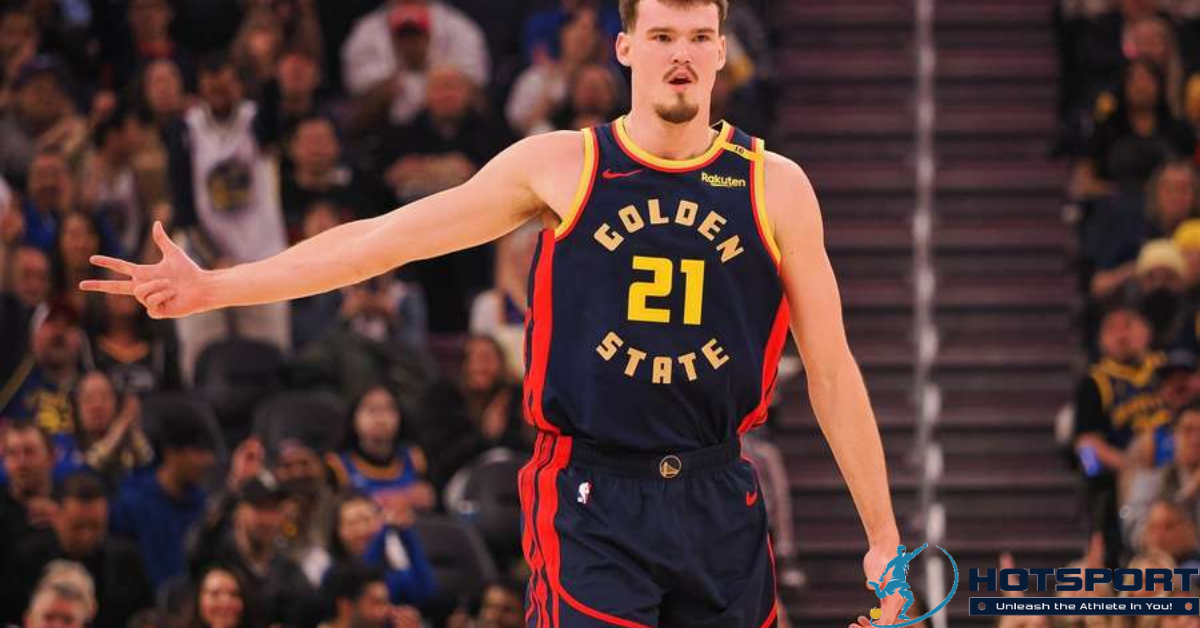
Jalen Williams is one of those players who enters the league as a pleasant surprise and quickly becomes indispensable. With his on-court versatility, rock-solid defense, and ability to impact every facet of the game, he has shaped the future of the Oklahoma City Thunder. Born in 2001, Williams represents the new generation of athletes who combine tactical intelligence with explosive physical gifts. In an era where basketball demands constant adaptation, his journey inspires young players worldwide. This article dives into the life and career of this American wing, showing how he evolved from a modest recruit into a cornerstone of a championship team.

Family Roots and First Steps in Basketball

Jalen Devonte Williams was born on April 14, 2001, in Denver, Colorado, but his childhood was forged under the blazing Arizona sun. At age seven, his family moved to Gilbert, a suburb near Phoenix, where basketball instantly became his passion. Raised by parents who valued education and athletics, Williams grew up in an environment that prized discipline. His father worked various jobs, while his mother focused on the family, always pushing him to chase limitless dreams.

Sports were part of daily life from the start. At eight, he joined the local Sting team, training at the Boys & Girls Club in Guadalupe. On those makeshift courts and in regional tournaments, Williams learned the fundamentals. He was skinny, barely 5’7″, and played point guard—dribbling with agility and dishing precise passes. Then came the growth spurt: between his sophomore and senior years of high school, he shot up six inches, turning into a 6’6″ wing. That physical transformation was pivotal, allowing him to add mid-range jumpers and powerful drives to his arsenal.

The Williams family always emphasized balance. Beyond basketball, Jalen played football and competed in track, building coordination and endurance. “I never thought I couldn’t make it big,” he said recently, reflecting on those early years. That resilient mindset would become the foundation for bigger challenges.

High School Breakthrough: From Point Guard to Prospect

At Perry High School in Gilbert, Arizona, Williams found the perfect stage to shine. As a freshman standing only 5’11”, he was viewed as a promising guard but not a phenom. His coach noticed his ferocious defense—he guarded the opponent’s best player every night, forcing turnovers and stealing balls relentlessly. As his body caught up to his skill, he became an undisputed starter by junior year.

The numbers spoke for themselves: over 20 points per game as a senior, with efficient shooting and plenty of assists. Perry reached the state semifinals thanks in large part to his leadership. Off the court, he was the quiet kid who stayed focused on academics—he kept a high GPA and volunteered at community events. College recruiters took notice, but not as a five-star talent. He received offers from mid-major programs, and choosing Santa Clara University in California felt like the right fit. “It was a place I could grow without overwhelming pressure,” he later recalled.

College: Growth at Santa Clara

Arriving at Santa Clara in 2019, Williams faced the typical freshman transition: faster pace, tougher competition. Playing as a wing-guard hybrid, he started on the bench, but his defense quickly earned him minutes. In his tenth game, coach Jason Ludwig tasked him with guarding the opponent’s best guard—and Williams locked him down.

Over three seasons, he appeared in 84 games, averaging 12.6 points, 3.7 rebounds, and 2.9 assists. His efficiency stood out: 46.9% from the field and 35.2% from three. He earned All-WCC honors twice. In his final 2021-22 season, he exploded for 17.9 points per game, leading the Broncos to a rare NCAA Tournament berth. His mentor Ludwig praised his obsession with improvement: “He put in extra work, studied film, and was always the first in the gym.”

Williams surpassed 1,000 career college points—a rare feat for a mid-major player. His perimeter defense was elite, and his offense flowed naturally. Eligible for the 2022 NBA Draft, he declared, confident his ceiling was sky-high. Scouts compared him to versatile, undervalued wings like Mikal Bridges.

2022 NBA Draft and Immediate Impact with the Thunder

The 2022 Draft changed everything. Selected 12th overall by the Oklahoma City Thunder, Williams joined a promising rebuild alongside Chet Holmgren and Shai Gilgeous-Alexander. OKC saw him as a “connector”—someone who could guard multiple positions and contribute without forcing shots. His Summer League debut was quiet, but preseason practices revealed his potential.

In his 2022-23 rookie year, he played 75 games, averaging 14.1 points, 4.5 rebounds, and 3.3 assists. He earned All-Rookie First Team honors and adapted quickly to coach Mark Daigneault’s defensive system. He guarded wings and bigs alike, using his 6’10” wingspan. The Thunder finished with 40 wins, and Williams was the glue holding the young core together.

Evolution in Subsequent Seasons: From Prospect to Star

In 2023-24, Williams took another leap: 19.1 points per game with improved three-point shooting (34.4%). OKC reached the playoffs, and he shined in the postseason with 18-point averages. His chemistry with Gilgeous-Alexander was electric—perfectly timed passes and blistering transition play. Minor injuries tested him, but resilience won out.

The peak arrived in 2024-25. Averaging 21.6 points, 5.3 rebounds, and 5.1 assists over 69 games, Williams earned his first All-Star selection in January 2025. By season’s end, he added All-NBA Third Team and All-Defensive Second Team honors. In the playoffs, despite criticism for offensive efficiency in the Western Conference semis against Denver, he redeemed himself in the Finals. OKC won its first NBA title since 2012, with Williams as a cornerstone—averaging 20 points while guarding superstars like LeBron James. The championship ring at age 24 cemented his arrival.

Playing Style: Versatility in Action

What makes Williams special is his adaptability. As a small forward, he seamlessly slides between the 2 and 3 spots, mobile enough to chase quick guards or battle stronger forwards. His defense is instinctive—1.6 steals per game last season, plus more blocks than many centers. On offense, he’s highly efficient (48.4% FG in 2024-25), preferring drives and pull-ups over forced shots. His court vision makes him an underrated passer who creates space for teammates.

Critics point to three-point inconsistency (36.5%), but his work ethic fixes flaws fast. “I study the game like chess,” he says. In a high-pace Thunder system, Williams is the balance: he scores, defends, and leads.

Life Off the Court: Family and Legacy

Away from the spotlight, Williams is low-key. Single, he spends free time with family and visits Gilbert whenever possible. He supports basketball programs for underprivileged kids in Arizona and has become a community fixture in OKC through clinics and charity events. His five-year, $241 million extension signed in July 2025 provides long-term security—despite missing out on a bonus clause due to games missed.

2025-26 Season Updates: Triumphant Return

The current season began with a setback: right-wrist surgery (from a 2025 playoff injury) sidelined him for the first 19 games. Even without him, OKC started scorching hot—21 wins in their first 22 games through December 6, posting the best point differential in league history (+16.5). Williams made his season debut on November 28 against the Phoenix Suns: 11 points, 8 assists, 4 rebounds, 2 steals, and 1 block in 29 minutes of a 123-119 win.

He quickly found his rhythm. Against Portland: 16 points, 8 rebounds, 5 assists, 3 blocks. Against Golden State: 22 points on 16 shots plus 6 assists. Though he’s ineligible for postseason awards (having missed 18 games, falling short of All-NBA and extra All-Star criteria), his impact is immediate. With OKC’s payroll swollen by extensions for Gilgeous-Alexander and Holmgren, Williams remains the future. Injuries test the roster’s depth, but his mindset—“correct course at the end,” as he said after the Warriors game—inspires everyone. With OKC eyeing a title repeat, Williams is on pace to eclipse 20 points per game by season’s end.

Jalen Williams’ Bright Future

Jalen Williams isn’t just a player—he’s a symbol of perseverance. From a skinny kid in Gilbert to NBA champion, his journey proves the mid-major path can lead to the very top. At 24, he has years ahead to stack more rings and accolades. Alongside OKC’s unbeatable core, he’s ready to dominate the West for a decade. For basketball fans worldwide, especially in Brazil, Williams represents an achievable dream: talent, hard work, and perfect timing. His impact goes beyond stats—he builds legacies. And as 2025 rolls on, the basketball world can’t wait for the next chapter of this rising star’s story.

Trending Post

National Football

Antoine Griezmann is one of those players who seem made for football. With a sharp game vision, precise dribbles, and a goal-scoring instinct that defies the years, the 34-year-old Frenchman continues to shine on the pitches. Born in Mâcon, in the heart of France, Griezmann is not just a scorer, but a true maestro on the field, capable of creating plays out of nothing and deciding matches with a touch of class. His trajectory, full of ups and downs, reflects the passion he carries for the sport. In a world where European football renews itself every season, Griezmann remains a reference for dedication and pure talent. Let’s dive into the story of this star who, even at 34, dreams of new horizons.

The First Steps: From Mâcon to the Youth Academies

It all began in a small French town called Mâcon, on March 21, 1991. The son of Alain, a former amateur player with Germanic roots, and Isabelle, of Portuguese descent—with a grandfather who played for Paços de Ferreira—Griezmann grew up in an environment where football was more than a game: it was family. Vacations in Portugal at his grandparents’ house planted the seeds of love for the sport. But the initial path wasn’t easy. At the local club UF Mâcon, the skinny and light boy faced rejections. Clubs like Metz and Lyon turned him away because of his stature. “I was too small,” he recalls in old interviews, with a smile that hides his determination.

The turning point came at age 14. In a friendly against the Paris Saint-Germain juniors, Griezmann caught the eye of Real Sociedad scouts. The family took a risk: they moved to San Sebastián, Spain, where he joined the Basque academy. There, far from home, the boy transformed. He learned Spanish, absorbed the local culture, and above all, refined his game. “Real Sociedad gave me wings,” he once said. From the youth team to the senior squad, it was a quick leap. In 2009, at 18, he debuted in Spain’s Segunda División. His speed, peripheral vision, and placed finishes began to emerge. In the 2009-10 season, he helped the team win the division title, scoring six goals in 37 games. It was the harbinger of a talent that would soon explode in the elite.

Rise at Real Sociedad: The Birth of a Star

Real Sociedad, with its passionate fans and the boiling Anoeta stadium, was the perfect crucible for Griezmann to forge his style. In La Liga, starting in 2010, he evolved from prospect to key piece. He played as a left winger, but his versatility allowed him to float across the attack, confusing defenses. Over five years (2010-2014), he accumulated 201 matches and 52 goals—impressive numbers for a 23-year-old.

Iconic moments defined this phase. In 2013, a hat-trick against Celta de Vigo put him on the map. But it was the volley goal against Athletic Bilbao in the 2014 Basque derby that sealed his farewell to the club. The txuri-urdin fans, as the Sociedad supporters are called, still mourn his departure. Offers poured in: Lyon, Saint-Étienne, Manchester United, Arsenal. In the end, Atlético de Madrid, coached by Diego Simeone, won the race for 30 million euros. Griezmann left with a heavy heart, but ready for the big stage. “San Sebastián taught me to be a man,” he confided years later. This stage shaped not only his football but his character: humble, resilient, and always grateful.

The Colchonero Heart: Glories and Challenges at Atlético de Madrid

Arriving at Atlético in 2014 was like entering a demanding family. Simeone, the Cholo, saw in Griezmann the ideal partner for Álvaro Morata and company. In his debut, against Barcelona in the Spanish Supercopa, he scored and lifted the trophy—the first of many. In the 2014-15 season, 22 goals in 54 games. But the peak came in 2018: the UEFA Europa League, with a brace in the final against Olympique de Marseille (3-0). The UEFA and Spanish Supercopas completed the cycle. Griezmann became an idol, with his rochiblanca grit—the warrior soul of the club.

In 2019, however, came the controversy. After a months-long saga, he signed with Barcelona for 120 million euros, the fifth-largest transfer in history at the time. The farewell to Atlético was bitter; fans felt betrayed. At Barça, alongside Messi and Suárez, the world was expected. But things didn’t flow. 35 goals in 103 games, a Copa del Rey title in 2021, but criticism for not fitting into Koeman and Xavi’s schemes. Griezmann, always elegant, admitted: “It wasn’t the right place for me.” In 2021, his return to Atlético on loan—and subsequent purchase for 20 million—was like a reunion of soulmates. Today, with a contract until 2027, he is the club’s all-time leading scorer: 197 goals, surpassing Luis Aragonés in 2024. His partnership with Simeone yielded magical moments, like the goal against Real Madrid in the 2024 Supercopa, which crowned him as the record holder.

The French National Team: From Runner-Up to World Champion

For France, Griezmann is synonymous with consistency. He debuted in 2014 against the Netherlands, in a friendly mixing talent and pressure. At the 2014 World Cup, he was a substitute, but at Euro 2016, he exploded: six goals, Golden Boot, and runner-up after a final loss to Portugal. “It was painful, but it strengthened me,” he said. The peak? The 2018 World Cup. In Deschamps’ France, he scored four goals, including in the final against Croatia (4-2), and took home the Bronze Ball. World champion at 27—the dream of any boy from Mâcon.

The 2021 Nations League and the 2022 World Cup runner-up, with a missed penalty in the shootout against Argentina, completed a cycle of glories and lessons. In September 2024, after 137 games and 44 goals, Griezmann retired from the national team. “I left everything on the field,” he declared in an emotional press conference. His absence leaves a void, but his legacy—Olympic gold in the youth ranks in 2010 and leadership in majors—is eternal.

Life Off the Field: Family, Controversies, and Passions

Griezmann is more than football. Married since 2017 to Erika Choperena, a child psychologist, the couple has three children: Mia (2016), Amaro (2019), and Alba (2021). Family is his safe harbor; Erika, Colombian, brings balance to the star’s hectic life. Off the four lines, he is a fan of video games—FIFA is his vice—mangas like One Piece, and basketball, influenced by his friendship with Tony Parker.

Not everything was perfect. In 2017, a blackface photo as a tribute to the Harlem Globetrotters sparked controversy. Griezmann issued a public apology: “I didn’t mean to offend anyone; I learned from the mistake.” His sister Maude survived the 2015 Bataclan attacks, which marked him deeply. Today, he uses his voice for social causes, like inclusion in sports. Nicknames like “Little Prince” or “Grizi” capture his essence: charming, but grounded.

The Current Moment: Renewal, Goals, and American Dreams

In December 2025, Griezmann is living a transition phase at Atlético. At 34, he renewed until 2027 in June, but with a reduced salary to help the club’s finances under La Liga rules. The 2024-25 season ended with an 18-game goal drought, overshadowed by Julian Álvarez (17 goals) and Alexander Sørloth (20). But the Frenchman responded: in September 2025, he scored the first goal of the 2025-26 season in stoppage time against Real Madrid (5-2), ending a 22-match dry spell and handing the rivals their worst derby loss since 1950. Three days later, his 200th goal for Atlético came against Eintracht Frankfurt in the Champions League (5-1).

In March, he surpassed Messi as the foreigner with the most La Liga games (521). Recently, he came off the bench against Levante, scoring two goals in a 3-1 comeback. Against Inter Milan in the Champions League, he was on the bench, but his mentality impresses: “I have to be professional and an example for my teammates,” he said in November.

Rumors of departure swirl. Griezmann dreams of the MLS: “It’s my goal, but I’m under contract and want more trophies here.” Speculation links him to an “unexpected club” to reunite with former teammates, but he focuses on the present. With 53 games in the last season (16 goals, 9 assists), Griezmann proves that age is just a number. Atlético prepares for the Club World Cup in the US, and he, always smiling, assures: “I’ll give everything on the field.”

Eternal Legacy: Why Griezmann Still Captivates

Antoine Griezmann transcends statistics. His 262 goals in 672 club games, the World Cups, the versatility from winger to false 9—all this places him among the greats. But it’s the heart that wins over: loyalty to Atlético, humility after mistakes, family as an anchor. In a football world of inflated egos, he is the perfect anti-hero—the guy who runs, smiles, and delivers. At 34, with MLS on the horizon, Griezmann reminds us: football is about moments, not endings. And his, still under construction, promise more glorious pages.

Luka Dončić, the young talent born on the streets of Ljubljana, Slovenia, has transformed into one of the greatest stars in world basketball. At just 26 years old, he already carries the weight of a career filled with achievements, from his early days in Europe to the intense spotlight of the NBA courts. His journey is not just one of precise shots and brilliant plays, but of a determination that inspires millions. In this article, we explore the life, accomplishments, and impact of this athlete who has elevated Slovenian basketball to a global level, with recent updates showing why he remains the center of attention.

Origins in Slovenia: An Early Talent

Luka Dončić was born on February 28, 1999, in Ljubljana, the capital of Slovenia—a small country in the heart of Europe that, at the time, was still recovering from its independence from the former Yugoslavia. His father, Sasa Dončić, was a former professional basketball player, and his mother, Mirjam Poterbin, a former volleyball athlete. From an early age, basketball ran through Luka’s veins. At five years old, he was already dribbling a ball bigger than his body, training on local courts with the passion of someone dreaming big.

At 13, Dončić joined Real Madrid, one of Europe’s most traditional clubs. It wasn’t a random choice: the Spanish giant saw a raw diamond in him. In 2015, at just 16, he debuted for the senior team, becoming the youngest player to appear for the club in official competitions. His adaptation was immediate. In the 2017-2018 season, Luka led Real Madrid to the EuroLeague title, earning Finals MVP honors with 15 points, 10 assists, and nine rebounds in the decisive game against Fenerbahce. At 19, he was already the EuroLeague’s top scorer, averaging 14.2 points per game.

Those years in Europe shaped his unique style: a blend of sharp court vision, long-range shots, and an ability to read the game like few others. Dončić wasn’t just a scorer; he was a maestro, distributing the ball with surgical precision. His rise caught the attention of the entire world, especially NBA scouts, who saw in him the next great international talent.

Transition to the NBA: From Dallas to Los Angeles

The 2018 draft marked the turning point. Selected as the third overall pick by the Atlanta Hawks, Dončić was immediately traded to the Dallas Mavericks in a deal involving Trae Young. The move to the United States at 19 wasn’t easy. Far from home, dealing with a new culture and the pressure of a ruthless league, he faced initial criticism about his physical condition and pace of play. But Luka quickly silenced the doubters.

In his rookie season, 2018-2019, he was named to the NBA All-Rookie First Team, with averages of 21.2 points, 7.8 rebounds, and 6 assists per game. From there, it was a meteoric rise. In 2019-2020, he led the Mavericks to the playoffs, where they faced the powerful Los Angeles Lakers of LeBron James and Anthony Davis. Despite the elimination, his performance—with consecutive triple-doubles—announced the arrival of a phenomenon.

The following seasons solidified his status. In 2023-2024, Dončić guided Dallas to the Western Conference Finals, leading in points, rebounds, and assists during the playoffs. His postseason averages of 33.9 points, 9.2 rebounds, and 9.8 assists per game placed him among the greatest in recent history. He accumulated five All-Star Game selections, three First Team All-NBA honors, and a Western Conference Finals MVP award.

But fate had a twist in store. In the middle of the 2024-2025 season, in a blockbuster trade, Dončić was sent to the Los Angeles Lakers. The deal, which involved multiple players and draft picks, aimed to bolster the purple and gold in a post-LeBron James era. Under coach JJ Redick, Luka integrated seamlessly, forming a dynamic duo with Austin Reaves and leveraging the versatility of Rui Hachimura. The Lakers, who had been fighting for relevance, climbed to second in the West with a 15-5 record in the 2025-2026 season, thanks to Dončić’s immediate impact.

Playing Style: The Slovenian Maestro in Action

What makes Luka Dončić so special? It’s not just talent; it’s intelligence. Standing at 2.01 meters with an impressive wingspan, he plays like a classic point guard in a forward’s body. His step-back jumper, a retreating shot that fools defenders, has become his signature. He sees passes others can’t imagine, with an assist rate rivaling legends like Magic Johnson.

Defensively, he has evolved: not the most athletic, but he uses positioning and game-reading to steal balls and block shots. His versatility allows him to guard positions 1 through 4, adapting to any scheme. Off the court, his stoic calm—contrasting his inner fire—makes him a natural leader. Fans have nicknamed him “Luka Magic” for his ability to turn games in clutch moments.

Personal Achievements and Impact on Slovenia

Dončić doesn’t play just for himself; he carries a nation on his back. With the Slovenian national team, he led the country to gold at the 2017 EuroBasket at age 18, earning tournament MVP with 18.2 points per game. It was Slovenia’s first European title, a milestone that boosted national pride. In 2021, at the Tokyo Olympics, he shone with averages of 16.5 points, helping the team advance.

On a personal level, Luka is married to Anamaria Goltes, his childhood sweetheart, and they have a daughter born in 2023. His family life is discreet, but recent sources reveal the couple is expecting their second child, which explains his current absence from the court. Off the basketball court, he invests in philanthropy, supporting sports projects in Slovenia for low-income youth, and serves as an ambassador for global brands like Nike and Jordan.

His impact goes beyond numbers: Dončić has inspired a generation of Europeans to dream of the NBA, proving that talent knows no borders. In Slovenia, courts and academies bear his name, and he is seen as a national hero alongside icons like tennis player Mima Jausovec.

Recent Updates: Absence and Expected Return

The 2025-2026 season has been a fairy tale for the Lakers, with Dončić as the protagonist. In 16 games played so far, he has posted impressive averages of 35.3 points, 8.9 rebounds, and 8.9 assists per game, leading the league in scoring and positioning himself as the MVP favorite. His streak of seven consecutive games with at least 30 points culminated in a 38-point performance against the Phoenix Suns on December 1, despite a 125-108 loss.

He was named Western Conference Player of the Week for the sixth time, alongside Jalen Brunson, highlighting his consistency. On November 29 against the New Orleans Pelicans, he recorded 34 points and 12 rebounds in a 133-121 victory, extending his influence beyond the numbers.

However, personal news interrupted the rhythm. On December 3, 2025, Dončić was announced as absent for the game against the Toronto Raptors on December 4, for personal reasons. Reports confirm he traveled back to Slovenia for the birth of his second child, a moment of family joy. Coach JJ Redick commented: “He’s away for personal reasons. We don’t have an exact date, but we hope he’ll be back soon.” There are speculations he may also miss the matchup against the Boston Celtics on December 5, but he is expected to rejoin the team shortly after.

Luka’s absence hasn’t shaken the Lakers: in four games without him this season, the team has won three, thanks to the brilliance of Austin Reaves and Bronny James. Still, his return is eagerly awaited, especially during a challenging East Coast road trip. With the Lakers in second place in the West, behind only the Oklahoma City Thunder (21-1), Dončić remains the engine of a team chasing a championship.

Legacy and a Bright Future

Luka Dončić is still early in his journey, but his legacy is already undeniable. He has redefined what a European player can achieve in the NBA, paving the way for talents like Giannis Antetokounmpo and Nikola Jokić. His trade to the Lakers, seen by some as risky, proved to be a masterstroke, revitalizing a historic franchise.

Looking ahead, Dončić dreams of a championship ring, something that eluded him in Dallas. With the Lakers, he has the tools: a balanced roster, a visionary coach, and his own genius. Off the court, he plans to expand his foundation in Slovenia, promoting sports as a tool for inclusion.

In a world where basketball evolves quickly, Luka Dončić remains constant: a rare talent, a humble leader, and a devoted father. His story reminds us that the greatest achievements come from simple roots and big hearts. As he celebrates the new life in his family, fans await his return with anticipation—because with Dončić on the court, the impossible becomes routine.

Introduction – São Paulo vs. Internacional

The match between São Paulo and Internacional, played on December 3, 2025, for the 37th round of the Brasileirão Série A, went down in the recent history of the championship. After suffering a 6-0 defeat to Fluminense, São Paulo was facing questioning from fans, the media, and even internally. The match against Internacional represented a chance for immediate redemption: it was the moment to erase the pain of defeat, regain morale with the fans, and, above all, prove that they were still in the fight.

For Internacional, the drama was even more intense. Fighting against relegation, the club sought not only the three points, but also the rebuilding of confidence. The weight of the pressure came from outside — fans, a difficult schedule, a historic rivalry, and the real risk of relegation — and from within: players under pressure, a coaching staff in the process of adapting, and the need for a quick response.

The pitch was shared not just by two teams, but by two worlds of expectation: one desperate for redemption; the other, for salvation. The atmosphere in the stadium was one of tension, anticipation, and fear. Every play could provoke an explosion of euphoria or emotional ruin. Football, as always, promised drama—and delivered much more than just the score.

In the end, the result exposed the difference between those who needed to change and those who needed to survive: São Paulo knew how to react, play intelligently, find the right spaces, and press with intelligence. Internacional, on the other hand, revealed structural and emotional weaknesses. The Tricolor victory rekindles hopes and dramatically complicates the Colorado’s fight to avoid relegation.

Pre-game analysis – Context, club status, and the significance of the São Paulo vs. Internacional match.

São Paulo’s situation

São Paulo arrived at the game with open wounds. The recent thrashing wasn’t just a bad result, but a stain on the club’s history—and every member of the squad felt the weight of it. The pressure was immense: the press, the fans, and even within the locker room there was a sense of urgency. The objective was clear: to react, to show character, dignity, and to prove that the shirt still carried weight.

In the days leading up to the game, the coach intensified training sessions focusing on defensive discipline, compactness, and quick transitions. The strategy also included intense occupation of the wings and infiltrations—more than predictable crosses, the attackers should look for diagonal runs and shots from inside the box. There was an understanding that it wasn’t enough to dominate; it was necessary to finish.

Furthermore, the emotional factor could not be ignored. São Paulo needed to win back the fans, rebuild confidence, and overcome the recent trauma. The internal environment demanded maximum focus. Any slip-up could be costly.

Situation of Internacional

For Internacional, the new coach’s lineup renewed hope. But confidence was still fragile. The priority was clear: maintain possession, avoid defensive lapses, pay special attention to rebounds, and minimize risks. The club needed solidity, more than boldness.

However, there was a dilemma. Under pressure, Internacional could opt for a defensive game, but that also required courage to seek victory—without haste, with patience and precision. It was a test of nerves, strategy, and quick adaptation. A well-organized defense could hold; a poorly coordinated one put the team at risk.

External and internal expectations were intertwined: fans demanded commitment; players had to cope with the weight of urgency; the coaching staff needed to define a clear strategy. It was a risky moment—a mistake could cost not only the game, but their place in Serie A.

The game – Pace, decisive plays and outcome: São Paulo vs. Internacional

First half – São Paulo dominates and builds an advantage.

From the opening minutes, São Paulo took control of the match. With high pressing, constant pressure on the opponent’s build-up play, and quick passing, the Tricolor imposed their rhythm. Internacional struggled to execute transitions and suffered from the intense pressure in their own half. São Paulo’s midfield pressed, anticipated plays, and gave their rival no room to breathe.

With that, territorial dominance was reflected in clear chances. There were several shots from outside the area, quick runs, and crosses looking for infiltrations. The ball arrived quickly in the Internacional area, which rarely managed to protect it adequately. At 21 minutes, after a well-executed ball recovery and a quick transition, Sabino appeared unmarked in the area and finished with precision: 1-0 São Paulo. The stadium exploded in a mixture of relief and renewed hope.

With the goal, the atmosphere changed. São Paulo began to play patiently, but without losing its aggressiveness. They controlled the midfield, reduced space, and forced Internacional to circulate the ball down the flanks—exactly where Tricolor could exploit interceptions and transitions. The defense returned to playing attentively, cutting off crosses, closing down the center, and preventing infiltrations. The halftime whistle blew with a clear and deserved lead.

Second half – Effectiveness defines the result.

In the second half, Internacional tried to react, but it was São Paulo who maintained emotional control and the pace of the game. The São Paulo team slightly retreated their lines, but remained compact defensively and dangerous on counter-attacks. Their build-up play was careful, the full-backs participated in the build-up, and the team maintained an offensive presence, even without an urgent need to score.

At 45+3 minutes into the first half — near halftime — (note: correction: it was actually in the second half) Maik took a corner kick, there was confusion in the area and the opposing defender failed to clear. Maik took advantage and scored with a header, making it 2-0. The blow was hard for Internacional: the nervous atmosphere grew, and confidence seemed to slip through their fingers.

In the final minutes, São Paulo began to manage the result. But they still created chances. Two minutes into the second half, Luciano received a precise pass, bravely entered the area and finished in the corner — 3-0. The final whistle blew with celebrations from the players, a relieved crowd, and the feeling that Tricolor had fulfilled its mission with honor and efficiency.

Complete statistics – São Paulo vs. Internacional

StatisticSão PauloInternational
Goals30
Total shots1816
Shots on target95
Average ball possession~64%~36%
Accurate passes410260
Pass accuracy (%)~86%~79%
Corner kicks74
Effective crossbreeding125
Duels won58%42%
Mistakes committed1014
Yellow cards13
Goalkeeper saves34
xG (Expected Goals) estimated1.850.68

These statistics reinforce the fact that São Paulo was vastly superior in game control, offensive precision, and efficiency. Even though Internacional tried to react, their lack of creativity and defensive errors proved costly. The Tricolor’s technical and tactical superiority translated into numbers and, ultimately, into goals and a positive result.

Impact of the victory — Immediate consequences and reflections: São Paulo vs. Internacional

For São Paulo

The victory gives São Paulo not only three points, but something perhaps more important: confidence. After a major setback, the team showed resilience, focus, and the ability to react under pressure. This respite could be decisive for the final rounds—players with renewed morale, a more confident fanbase, and the chance to rebalance the season.

Furthermore, defensive solidity returned, and the offensive sector showed that, with patience and precision, it’s possible to make a difference. The coaching staff gained time, the atmosphere eased, and the group regained its self-esteem.

For Internacional

For Internacional, the defeat is a hard blow. The chance for a comeback vanished quickly, and the club saw its weaknesses exposed at a high level. The situation is complicated: dependence on external results, defensive insecurity, and emotional pressure intensify. The fight against relegation now demands determination, urgent changes, and collective sacrifice.

The setback exposes that, under immense pressure, the club’s foundation—both technical and psychological—is fragile. The final stretch is likely to be bitter if the problems are not resolved immediately.

Post-game reaction and atmosphere

In São Paulo, the atmosphere changed. The fans celebrated, relief took over, and faith was restored. Players praised the commitment, unity, and important response after the crisis. The locker room felt lighter, and the pressure turned into a demand to believe until the end. The board, in turn, recognized the importance of the victory as a moment of redefinition.

At Internacional, the mood is one of frustration. The debut of the new coaching staff—viewed with hope—did not have the desired effect. Players appeared dejected, and uncertainty is spreading. External and internal pressure is growing, and the fans are questioning choices and attitude. The margin for error, already small, has decreased even further.

Historical context and reflections – What changes for the season?

With this victory, São Paulo shows that there is still room for redemption. Football often punishes the unstable, but it also gives a chance to those who rise again with willpower and hard work. The immediate reaction after a serious setback reveals character — and Tricolor demonstrated that it knows how to handle pressure.

For Internacional, the setback highlights that the crisis cannot be ignored. Coach changes, squad changes, and motivational speeches are not enough. What is needed is a solid foundation, consistency, and collective commitment. The 2025 season could become a test of survival—not just in football, but in terms of structure, decision-making, and unity.

In the overall context of the 2025 Brazilian Championship, the game reinforces the classic lesson: ball possession, offensive volume, or tradition do not guarantee results. The difference lies in the ability to finish, take advantage of opportunities, and maintain focus when everything seems to weigh on you — and São Paulo understood this at the right time.

What to watch for in the next rounds and final predictions.

Risks and priorities for São Paulo in the final rounds.

  • Offensive effectiveness : continue converting chances, with precise finishing and quick decision-making inside the penalty area.
  • Defensive organization : maintain a solid back four, pay attention to transitions, avoid individual errors.
  • Emotional consistency : withstanding pressure from the fans and expectations; transforming confidence into consistency.
  • Taking advantage of home advantage + results away : securing points at home and adding points away to guarantee safety.

What does Internacional need to do to try and escape?

  • Urgent defensive reorganization needed : reassess marking, compactness, and space coverage.
  • Offensive creativity : redefine the game plan, seek more dynamic plays, efficient infiltrations and movements.
  • Survival mentality : focus, composure, and maximum effort in every game, as if it were the final.
  • Use anxiety as fuel, not as a burden : transform pressure into focus, not despair.

Conclusion – São Paulo vs. Internacional: redemption, warning, and the value of consistency.

São Paulo’s victory over Internacional was not just an important result for the standings. It served as a clear message to the fans, the critics, and the squad itself: the team has the technical and emotional resources to react when the season gets tough.

Morumbi witnessed a team that was focused, disciplined, and precise in the decisive moments of the match. São Paulo controlled the pace, created more chances, conceded few goals, and demonstrated tactical adaptability, something that had been heavily criticized. Furthermore, the performance dismantled any narrative of emotional fragility following the previous heavy defeat. The team responded on the field, not in words.

On the other hand, Internacional is experiencing the opposite. The club enters the final stretch pressured by accumulated errors, a lack of consistency, and an emotional weight that is evident in their on-field performance. The defeat not only complicates their points tally but also shakes the confidence of a group that no longer depends solely on itself. The defensive structure failed, the attack encountered difficulties, and the psychological aspect weighed heavily once again.

The game delivers clear lessons:

  • São Paulo thrives when it anticipates its opponent and dictates the pace.
  • Internacional needs to adjust its concentration and defensive posture to avoid jeopardizing an entire year.
  • The final stretch will require balance, a wide range of skills, and composure.

For the fans, there’s a feeling that São Paulo has rediscovered a competitive path. For Inter, the warning lights are already flashing and can no longer be ignored.

If you want to keep up with in-depth analysis, exciting matches, and everything happening in the 2025 Brazilian Championship, check out our national football section and don’t miss our upcoming content.

FAQs – Frequently Asked Questions about São Paulo vs. Internacional 2025

1. What was the score of São Paulo vs. Internacional?

São Paulo defeated Internacional by a solid score, dominating offensive plays and controlling the game from start to finish. The result put Tricolor in a comfortable position and left Inter under even more pressure in the 2025 Brasileirão.

2. How did São Paulo perform?

São Paulo delivered a mature performance, with quick transitions, good ball circulation, intensity in duels, and efficiency in attack. The team showed tactical improvement and high concentration, something the fans had been demanding.

3. Why did Internacional play so poorly in the match?

Inter suffered from marking errors, slow recovery, and constant turnovers in midfield. The emotional aspect also weighed heavily, as the team was under pressure due to their league position and failed to react after conceding the second goal.

4. Does this defeat complicate Internacional’s chances in the 2025 Brazilian Championship?

Yes. Internacional’s chances of avoiding relegation no longer depend solely on its own results. The defeat increases the pressure and leaves the team in a critical situation, dependent on other results and an immediate recovery.

5. Which players were decisive in the São Paulo vs. Internacional match?

The key players for São Paulo were those responsible for the offensive build-up, in addition to the midfielders who dominated the duels and controlled the pace of the game. For Inter, some players tried to react, but the team as a whole didn’t function.

6. Is São Paulo still in contention for an international spot?

Yes. With this victory, São Paulo remains in contention for spots in continental competitions, depending on the final rounds and the direct performance of its competitors.

7. How important is this game for São Paulo’s season?

The victory marked a turning point both emotionally and technically. The team needed a strong result to erase the recent trauma and regain confidence. The performance against Inter fulfilled that role.

8. Does Internacional still have a chance to avoid relegation?

Yes, but the situation is delicate. The team needs to win and hope for specific combinations of results. The last round will be decisive.

NBA

Related News

MLB

Matko Miljevic is a name that has been gaining massive attention in the soccer world. Born in the United States but with deep Argentine and Croatian roots, this 24-year-old attacking midfielder embodies the modern player: versatile, technically gifted, and full of grit. As of December 2025, Miljevic is enjoying a breakout moment at Club Atlético Huracán in Argentina, where he has become a key piece in unforgettable campaigns. His journey—spanning continents and personal challenges—inspires a new generation of bilingual, multicultural athletes. In this article, we trace his path from his first kicks in Miami to the electric pitches of Buenos Aires.

Childhood and Early Development: Roots Between Two Worlds

Matko Mijael Miljevic was born on May 9, 2001, in Miami, Florida—a city pulsing with Latin energy in the heart of the United States. His parents, both Argentine natives, had moved to the U.S. in the late 1990s to escape the severe economic crisis that ravaged Argentina from 1998 to 2002. That temporary relocation shaped Matko’s early years, growing up surrounded by a blend of American culture and Buenos Aires traditions. His paternal grandfather, born in Banja Luka (now Bosnia and Herzegovina, then part of the Kingdom of Yugoslavia), had emigrated to Argentina in the 1940s, bringing the family’s Croatian heritage with him.

When Matko was still very young, the family returned to Argentina to reconnect with their roots. It was in Buenos Aires that soccer became his true passion. At age nine, he joined the Boca Juniors academy—one of the giants of Argentine soccer—where he learned the game’s fundamentals with the intensity only Argentine youth soccer can provide. His time there was short-lived, however. In 2011, he moved to Argentinos Juniors, the club that produced legends like Diego Maradona. There, Matko blossomed as a versatile midfielder who could play centrally or on the left, showcasing refined touch and excellent vision.

As a teenager, Miljevic faced the dilemmas common to dual-nationality prospects. Eligible to represent the United States, Argentina, Croatia, and even Bosnia and Herzegovina, he initially chose the U.S. youth national teams. In 2017, he played five matches for the U.S. U-16s without scoring but gaining invaluable experience. His Croatian passport (still in process at the time) opened doors to European soccer, yet Matko always prioritized development in South America.

First Professional Steps: Debut with Argentinos Juniors

The jump to professional soccer came early. In 2018, at just 17, Matko made his senior debut for Argentinos Juniors in Argentina’s Primera División against Talleres de Córdoba. Though the team lost 1-0, the kid from Miami flashed potential with quick dribbling and precise passing. Over three seasons, he appeared in six matches and scored one goal—modest numbers, but enough to catch international eyes.

His first professional goal, scored in 2019 against Patronato, was iconic: a long-range rocket that silenced the stadium and celebrated his multicultural heritage. Off the field, Matko stood out for his discipline. A black-belt in taekwondo, he brought martial-arts focus and injury-prevention habits into soccer. In interviews from that era, he often cited his Croatian grandfather as inspiration: “He fled war to build a new life; I play to honor that.”

Those early years were all about learning. Argentinos Juniors, famous for its youth academy, prepared him for the next big leap. In 2021, at age 20, the opportunity came to head north—back to the United States and Major League Soccer.

MLS Adventure: Challenges and Growth at CF Montréal

In August 2021, CF Montréal announced Miljevic’s signing as a free agent on a contract through 2024 with an option for 2025. The Canadian MLS club saw him as a creative midfield reinforcement. “We’re excited about the project, especially knowing several MLS clubs were interested,” said sporting director Olivier Renard at the time.

Back in North America, Matko reconnected with his Miami roots. In 35 appearances for Montréal, he scored two goals and provided assists that lit up key matches. His debut, ironically, came against Inter Miami. He quickly adapted to the physical pace of MLS, though injuries and competition limited his minutes. In 2023, knee surgery sidelined him for 8–12 weeks, testing his resilience.

Off the pitch, controversy struck. In 2024, Montréal terminated his contract after he participated (under a pseudonym) in an amateur indoor futsal league in Quebec, breaching the standard player agreement. An on-field altercation worsened the situation. Despite the setback, Matko framed it as a lesson: “Mistakes happen; what matters is growing from them.”

Return to Argentina: From Newell’s to Huracán

Released as a free agent in February 2024, Miljevic returned to Argentina and signed with Newell’s Old Boys. In 22 appearances, he scored twice and showed consistency. His short-dribbling, peripheral vision, and accurate finishing fit perfectly into Rosario’s tactical style. But destiny had more in store: on January 1, 2025, he left Newell’s and, ten days later, was unveiled at Huracán.

The three-year deal with El Globo (until December 2027) included the purchase of 50% of his economic rights. His market value hovered around €5 million, according to Transfermarkt. In 2025, Matko exploded: 34 matches, seven goals, and decisive assists. Highlights include a stunning long-range “golazo” against Boca Juniors in July that sealed a 1-0 win at La Bombonera, and two assists in a 3-1 Copa Sudamericana victory over Racing de Montevideo in May that helped Huracán top Group C with 10 points.

His impact under coach Frank Kudelka has been undeniable. In November, he earned a 7.1 Sofascore rating for an assist in a 1-1 draw with Barracas Central. Against his former club Newell’s on November 3, he scored the winner in a 3-1 victory.

International Career: Answering the USMNT Call

National-team allegiance remained an open chapter. After years in the U.S. youth setup, Miljevic earned his senior U.S. debut in January 2025 under Mauricio Pochettino. In a friendly against Venezuela on January 19, he came off the bench and scored the third goal in a 3-1 win alongside Jack McGlynn and Patrick Agyemang. “It felt surreal to come home and represent the country where I was born,” he said afterward.

In February against Costa Rica, he picked up a yellow card in the 73rd minute of a 1-0 victory but solidified his place. With two caps and one goal, the press sees him as an unpredictable “wildcard” thanks to his taekwondo background and fearless style. In April, Bosnia explored a possible switch using his grandfather’s roots, but Matko stayed loyal to the Stars and Stripes.

Playing Style and Personal Achievements

Miljevic, a right-footed 5’9″ (1.76 m) attacking midfielder, wears the iconic No. 10 at Huracán. His strengths are creativity—killer passes, mid-range shots, and the ability to unbalance defenses. Achievements include topping Copa Sudamericana Group C and earning Pochettino’s praise for his character during penalty discussions.

Off the pitch, he’s reserved. He speaks English, Spanish, and basic Croatian, and supports immigrant causes in Argentina.

2025 Updates: Rumors and a Bright Future

2025 has been Matko’s year. In June, Brazilian club Santos offered $1.8 million, but Huracán rejected it. Al Wahda (UAE) and RC Lens (France) made inquiries in October. His transfer value now ranges from €3.2–4.8 million.

In the USMNT, some compare him to Diego Luna, with heated takes flying on social media. With the 2026 World Cup—co-hosted by the United States—on the horizon, Miljevic could be a key piece. His November performance against Newell’s (four shots, one goal, high ESPN rating) showed exactly why he’s indispensable.

Conclusion: A Player Without Borders

Matko Miljevic transcends borders. From Miami to Buenos Aires, from injuries to glory, his story is one of perseverance. At Huracán, he doesn’t just play—he inspires: an American conquering South America. At 24, the sky is the limit. Whether in MLS, Argentina, or with the national team, Miljevic proves that talent needs no passport. In 2025, he is not just a player; he is a global symbol of overcoming odds.

Introduction – Benfica vs Sporting

The clash between Benfica and Sporting, held on December 5, 2025 at the Estádio da Luz, felt like a premature final. In a tight championship, where every point is worth gold, the classic represented much more than tradition: it was a test of conviction, psychological resilience, and pure ambition. Benfica wanted to reaffirm its home prominence, demonstrate offensive dominance, and convert desire into results; Sporting, with defensive consistency and solidity, sought to prove that its campaign would not be shaken by rivalries and the support of its fans.

The pre-game atmosphere was tense: growing tension in the stands, anticipation of a tactical battle, and the awareness that any mistake could be costly. The fans—and the country of football—had their eyes fixed on the derby. The possibility of a spectacular goal, a sending-off, a comeback, made this classic more than just a game: a watershed moment for the ambitions of both teams.

When the ball started rolling, what we saw was intensity, fierce midfield battles, strong marking, and plenty of uncertainty. The home advantage didn’t guarantee Benfica comfort; Sporting’s tactical patience didn’t guarantee victory. The result — 1-1 — expressed the spirit of the match: balance, drama, courage, and pragmatism. This draw marks an emblematic moment in the 2025/26 Liga Portugal season: it confirms that, in the derby, favoritism means little — the winner is decided by whoever maintains consistency and focus.

This article breaks down the classic match: statistics, key moments, context, implications for the standings, tactical analysis, and its impact on the rest of the championship.

Pre-match situation – The context and pressure for each side: Benfica vs Sporting

Benfica: need for affirmation and expectation of a reaction.

Playing at home, Benfica felt the pressure. With recent matches marked by inconsistency, the team needed a convincing performance to rekindle confidence. The home advantage at the Estádio da Luz and the support of the fans created a favorable scenario—but also increased the pressure. The goal was clear: dominate, control the pace, and secure the three points. More than just winning, it was about showing that the tactical and mental reconstruction was working.

Sporting CP: solidity, strategy and ambition away from home

Sporting approached the derby with a mature attitude. They knew that, away from home, they couldn’t impose their game; their strength came from their defensive organization, patience, and efficiency in transitions. Consistency throughout the season gave them confidence, and the derby was seen as an opportunity to snatch crucial points without overexposing themselves. The strategy was clear—to face the opponent’s home ground with seriousness, caution, and intelligence.

Match dynamics – Progress, goals and decisive moments

First half – A fierce contest and a disjointed match.

The match began with intense marking and balance. Sporting adopted a compact posture, pressing the midfield and nullifying Benfica’s initial attacks. Benfica, in turn, tried to use possession and circulation to infiltrate down the wings and seek depth. Despite controlling some of the ball, the Benfica team found it difficult to penetrate the opponent’s defensive block. The balance prevailed until halftime, with few clear chances and strong marking in the center of the field.

Second half – Goal, pressure, emotion, and the 1-1 draw that sealed the derby.

With the restart, the pace increased. In the 12th minute of the second half, Sporting opened the scoring with a goal that surprised Benfica’s defense—a tough blow for the home team. The lead reignited the derby: Benfica pressed, intensely sought the equalizer, exploiting the wings, crosses, and set pieces. The crowd at the Estádio da Luz pushed them on, and the atmosphere transformed into one of total pressure.

Persistence paid off. In the 27th minute of the second half, Benfica equalized with a finish that sparked joy in the stands. From then on, the game opened up: chances for both sides, nervousness, emotion, corner kicks, and intense battles. In the end, the 1-1 draw reflected the justice of the match: a balanced classic until the very last second.

Statistics for the classic match – What the data says: Benfica vs. Sporting

StatisticBenficaSporting CP
Ball possession~40.8%~59.2%
Total shots105
Shots on target42
Corner kicks32
Goalkeeper saves13
Yellow cards25
Goals1 (Sudakov 27′)1 (Pedro Gonçalves 12′)

Despite having less possession, Benfica balanced the game in terms of shots on goal and managed to draw — which shows that in a derby, volume doesn’t guarantee an advantage; aggression and precision make the difference.

Post-game overview – Implications for the standings, morale, and the title race.

  • The draw keeps Sporting close to the top of the table, reinforcing their consistency as a title contender.
  • For Benfica, the result frustrates their ambition to take the lead — highlighting the need for consistent wins in the coming rounds, especially at home.
  • The derby shows that the 2025/26 League remains unpredictable: with close results, minimal errors and technical balance, the fight for the title could extend until the end.
  • Mindset, resilience, and emotional control take center stage: in this classic, those who withstood the pressure and maintained focus prevailed.

Advanced Tactical Analysis of the Classic Match – Benfica vs Sporting

How Benfica tried to control the pace

Benfica relied on quick ball circulation and width on the flanks, trying to break down Sporting’s compact defensive block. The team varied between short triangulations and long switches of play to exploit spaces. Even so, they ran into Sporting’s high, partial pressing and early reading of the game, which cut lines and forced errors.

There was a clear intention to draw the opponent in and break through in the final third, but precision was lacking in the quick transitions. The team improved after conceding the goal because they adopted a more aggressive stance, pressing the opposition’s build-up play and increasing their presence in the penalty area.

Sporting’s defensive discipline

Sporting stuck to their plan. They reduced the space between the lines, maintained intensity in duels, and knew how to alternate between short presses and zonal coverage. When necessary, they pushed Benfica onto their weak side and closed down the central corridors, forcing the opponent to cross.

This disciplined structure explains why Sporting conceded few clear-cut chances, even with less direct attacking play.

The individual fittings that changed the game.

Some direct duels were decisive:

  • Pedro Gonçalves’ play in the Benfica midfield led to Sporting’s goal.
  • Sudakov’s performance against the Lions’ defense was consistently outstanding due to his short runs into the box.
  • Full-backs versus wingers dictated the pace and intensity on the flanks.

These clashes demonstrated the unparalleled balance of the derby.

Who was the best player on the field? – Benfica vs Sporting

Benfica Highlights

  • Georgiy Sudakov scored, orchestrated plays, and created danger between the lines.
  • João Neves controlled the pace of the game, maintaining rhythm, accuracy, and commitment.
  • Di María (if he played in the match) brought creativity, despite the strong marking.

Sporting Highlights

  • Pedro Gonçalves was decisive once again. Intelligence, presence, and execution in the goal.
  • Gonçalo Inácio is solid in defense, with clear reading of the game and secure ball distribution.
  • Ugarte/Coates (depending on the lineup) are fundamental for defensive consistency.

The popular vote was said to have divided opinions, but Pedro Gonçalves and Sudakov were the obvious contenders of the night.

What does the race for the top spot in the Portuguese League look like?

The result has a direct impact:

  • Sporting maintains a psychological advantage by scoring points away from home in the derby.
  • Benfica misses chance to close the gap , but reinforces its resilience.
  • The draw keeps Porto and Braga on edge: any slip-up by Benfica or Sporting could reposition the leader.

The 2025/26 Portuguese League season remains open. The balance between the top teams turns each round into a game of chess, where even the smallest mistakes result in lost points.

Fan Reactions and Behind-the-Scenes Stories – Benfica vs Sporting

In the stands

  • The match had an electric atmosphere.
  • The tension following Sporting’s goal increased the pressure from the Benfica fans.
  • The equalizing goal sent the Estádio da Luz into raptures and rekindled hope.

On social media

Post-game trending topics included:

  • “Benfica vs Sporting”
  • “Pedro Gonçalves”
  • “Sudakov”
  • “Classic at Luz”

The online discussion was divided: some considered the draw fair; others believe that Benfica created more chances and deserved to win.

Among the players and coaching staff

It was mentioned that:

  • “lack of efficiency”
  • “defensive organization”
  • “respect for the rival”
  • “emotional control”

The speeches reinforced professionalism and focus on the championship.

Projections for the upcoming matches – Benfica vs Sporting

Benfica

It needs:

  • greater precision in finishing
  • more offensive fluidity
  • less dependence on the wards
  • better decision-making on the final pass

The upside: resilience after conceding a goal.

Sporting

To stay on top:

  • maintain tactical discipline
  • create more offensive volume
  • better explore fast transitions
  • Avoid excessive retreat when in the lead.

Sporting’s consistency continues to be the key difference this season.

Moments that marked the classic match – Benfica vs Sporting

1. Goal by Pedro Gonçalves

Exploiting an error in midfield, he finished with precision and opened the scoring.

2. Benfica applies full pressure after falling behind.

Aggressive possession, pushing Sporting back into their own area.

3. Sudakov’s goal

Coolness, positioning, and perfect reading of the game to tie the derby.

4. Final minutes of pure tension.

Both teams had chances to seal the game.

Conclusion – Benfica vs Sporting: lessons in balance, resilience, and the uncertainty that drives football.

The 1-1 draw in the derby on December 5, 2025, reaffirmed something that football has always taught us: derbies are decided by details—not by favoritism, possession, or fan support. Sporting showed solidity, patience, and strategy; Benfica responded with grit, a fighting spirit, and offensive courage. The draw is fair, but it leaves open the debate about who truly deserved it more.

For Benfica, the result serves as a warning: ball control and possession only guarantee friction if they are not accompanied by objectivity, unpredictability, and decisiveness. It’s time to rethink their attack, add more depth, and attack with variations. For Sporting, the derby reinforces the conviction that it’s possible to fight for the top spot even away from home—with organization, consistency, and a steely mentality.

This 2025/26 derby will be remembered as yet another chapter in the eternal Lisbon rivalry — a game marked by tension, balance, and the feeling that, in football, there is never any “comfort guaranteed”: every result is contested, every victory is hard-won.

If you enjoy in-depth analysis, broad context, and comprehensive coverage of the big games, keep following our International Football section and stay up-to-date on upcoming rounds, standings, and exciting finals.

Frequently Asked Questions (FAQs) about Benfica vs Sporting 2025

  1. What was the final score of the derby?
    Benfica 1 × 1 Sporting CP.
  2. Who scored the goals in the match?
    Sporting opened the scoring with Pedro Gonçalves in the 12th minute; Benfica equalized with Georgiy Sudakov in the 27th minute of the second half.
  3. What was the ball possession like?
    Sporting dominated possession with around 59.2%; Benfica had around 40.8%.
  4. How many shots on goal did each team have?
    Benfica: 10 shots (4 on target); Sporting: 5 shots (2 on target).
  5. How many corner kicks did each team have?
    Benfica: 3 corner kicks; Sporting: 2 corner kicks.
  6. How many yellow cards were shown?
    Benfica received 2; Sporting received 5.
  7. Who does this result help in the title race?
    The draw maintains Sporting’s consistency advantage; for Benfica, it forces them to seek victories in the following rounds to remain competitive.
  8. What did Benfica lack to win?
    Objectivity in the final third, effective finishing, more attacking depth, and less reliance on plays from the wings.
  9. Does Sporting’s away draw demonstrate defensive strength?
    Yes — the team withstood the pressure, remained organized, and made the most of every opportunity to build a lead. The defensive strategy worked.
  10. What does this classic match teach us about derbies and competitive football?
    That fan support or home advantage guarantees nothing — the decision lies in mentality, tactical execution, and the ability to handle emotion under pressure.

Introduction – Lille vs. Olympique: tension, ambition, and a direct duel for the lead.

The Lille vs. Olympique de Marseille match, held on December 5, 2025, in Ligue 1, was not just another encounter between two of France’s most traditional clubs. It was a confrontation laden with historical, emotional, and competitive context, influenced by factors that extend beyond the 90 minutes of play. Even before the opening whistle, experts, fans, and analysts were already treating the game as a turning point for both teams—one of those matches that redefine confidence, momentum, and ambition in the championship.

Lille, driven by the need to prove consistency in a season marked by highs and lows, arrived with the feeling that they needed to turn opportunities into results. Playing at home, in front of a crowd that demands intensity, gave the team the responsibility of assuming a dominant posture, balancing emotion and strategy. Furthermore, there was the psychological factor: regaining prominence in Ligue 1 meant not only winning, but demonstrating identity and tactical maturity.

On the other side, Olympique de Marseille entered the field under pressure. Although the team had shown signs of improvement throughout the rounds, they lacked significant results against their main rivals. The match against Lille represented the perfect chance to change this narrative. However, the team carried the weight of recent defeats that raised doubts about their defensive organization, conversion of chances, and ability to react in hostile environments.

This context transformed the game into a mental and technical battleground. A noisy atmosphere, collective tension, meticulous analysis of every movement, and the expectation of a very balanced duel. And all of this was confirmed on the field: a classic of intensity, strategy, and details—decided by an early goal, but built on tactical discipline, collective intelligence, and the emotional maturity of Lille.

Context before the game – the clubs’ situation and the pressure for a result: Lille vs. Olympique

Lille’s situation

Lille arrived motivated, with the ambition of consolidating their position among the top teams in Ligue 1. After recent inconsistent campaigns, the team needed consistency and, above all, home wins to reaffirm their potential. The game against Marseille represented a chance to demonstrate recovery and put pressure on the leaders.

Furthermore, there was a desire to show that the team had managed to rebuild: with a renewed squad, youth players in the spotlight, and a more aggressive offensive approach. The fans saw the match as an opportunity to prove that Lille is still competitive and has title ambitions.

Situation of Olympique de Marseille

For Marseille, the scenario was also challenging. Playing away from home against a strong rival, the team sought to maintain consistency and climb the table. Their campaign had been decent, but they lacked effectiveness in direct confrontations.

With an ambitious squad and expectations of fighting for the title or a European spot, Marseille knew that winning away from home would be a big step—not just for the points, but for the psychological impact. The team depended on good performances away from home to maintain its competitive rhythm.

The pressure was immense: winning meant losing points and prestige; losing could cost trust.

The game – Pace, goal and how Lille held onto the lead. Lille vs Olympique

Decisive goal and atmosphere in the match

Just 10 minutes in, Lille opened the scoring with a goal from Ethan Mbappé. After a good play by Bentaleb, Mbappé finished with precision, taking advantage of a mistake by the opposing defense and the goalkeeper — 1-0 to the home side.

The early goal changed the course of the match. Lille gained confidence, tightened their defense, and began to manage their lead. Marseille, on the other hand, suffered a setback, needing to push forward more to try and equalize—but encountered a tough defensive block, tactical discipline, and growing nervousness from their opponents.

Control, defense, and the opponent’s nervousness.

After the goal, Lille not only tightened their defense but also knew how to control Marseille’s pressure. The team balanced defensive compactness, zonal marking, attention to counter-attacks, and good ball control in midfield.

Marseille tried to react, tired of exchanging passes, looking for infiltrations and shots on goal — but suffered from the marking, the lack of depth and the slow transition. Gradually, the possibility of a draw lost strength, and Lille managed the game without any scares.

When the final whistle blew, the score reflected more than strategy and talent — it reflected focus, collective effort, and the ability to control anxiety even under pressure.

Match statistics – Lille vs Olympique

StatisticLilleMarseille
Final score10
GoalMbappé 10′
Ball possession~42.1% – 41.9%~57.9% – 58.1%
Total shots56
Shots on target22
Corner kicks25
Goalkeeper saves21
Yellow cards11

The data shows a balance in shots on goal and possession dominance for Marseille — but Lille’s offensive efficiency made the difference. The most relevant statistic: when they opened the scoring, Lille managed to control, defend, and neutralize the opposition’s attacks.

Impact on the championship – What changes in the Ligue 1 competition

  • With the three points, Lille jumped to third place , overtaking Marseille on head-to-head record.
  • The defeat stifles Marseille’s ambition to close the gap at the top and reinforces the unpredictability of the championship.
  • The result highlights Lille as a real contender — with renewed morale, a solid defense, and ambition — and puts pressure on the Ligue 1 leaders.
  • The competition at the top of the table intensifies: each round feels like a final, with a moral advantage for those who can withstand the pressure.

Legends and young talents — Who stood out?

Lille Highlights

  • Ethan Mbappé scored the decisive goal and proved that talent and composure define games. The youngster establishes himself as a key player.
  • Nabil Bentaleb — good distribution in midfield, tactical accuracy, and precise passes for goal.
  • Collective defense — secure, organized, competitive. Lille’s defensive system laid siege to the opposing attack.

Marseille’s mistakes

  • Lack of attacking depth — possession and passes, but little attacking intent.
  • Early defensive errors allowed for an early goal, which complicated the match.
  • Difficulty reacting — when he needed to climb lines, he lacked sufficient coordination.

Projection and next steps – What to expect for Lille vs. Olympique

  • Lille must capitalize on this moment, boost their confidence, and strive for consistency in the coming rounds. Their defense needs to remain solid; their attack needs to be more clinical .
  • Marseille needs to revisit its attacking style: after the initial frustration, the team must focus on verticality, quick transitions, and purposeful finishing. Confidence will be tested—it remains to be seen if they will react .
  • For the championship, the fight for the top spot remains intense: Lille is back in the race, recalculating its ambitions. Every game now can define its prospects.

The Battle in Midfield – Where the game was truly decided: Lille vs. Olympique

Despite the early goal, the heart of the match was in the central area. Lille’s midfield showed exemplary compactness, alternating between pressure and recovery with surgical precision. Bentaleb was the maestro, organizing transitions and controlling the tempo.

Marseille, despite having more possession, suffered from slow passing and a lack of vertical aggression. Their sterile possession became the team’s main obstacle—lots of control, little threat.

This difference in mentality in midfield dictated the pace, determined pressure zones, and kept Lille comfortable in the lead.

The Weight of Ethan Mbappé’s Goal – Much More Than a Simple 1-0

The goal scored in the 10th minute changed not only the score, but the entire tactical plan for both sides. Ethan Mbappé showed veteran composure, moving between the lines and exploiting defensive gaps. His positioning was intelligent, his final touch was precise, and his presence changed the atmosphere in the stadium.

The psychological impact was evident:

  • Lille gained confidence.
  • Marseille was temporarily disorganized.
  • The fans got even more involved in the game.
  • Lille’s defensive plan has solidified.

The goal was a turning point, both emotionally and tactically — and deserves recognition not only as a play, but as part of the game’s narrative.

Lille’s defense: an invisible wall that won the Lille vs. Olympique match.

Little is said about it, but much is owed to Lille’s defense. Not just because of isolated statistics, but because of their collective performance:

  • Quick coverage
  • Perfect compaction
  • Coordinated defensive pairs
  • Flawless ball adjustments
  • Emotional leadership in the final minutes

When Marseille increased their attacking pressure, Lille grew stronger as well. This solidity was the foundation of their victory.

Why couldn’t Marseille find any tactical solutions?

There are three main reasons for the difficulty of OM:

1. Slow transitions

Possession didn’t translate into verticality — and without aggression, the opposing defense benefits.

2. Poor conversion rate on the few clear chances they had.

Finishing six times and hitting the target so little shows a lack of conviction.

3. Offensive movement problems

The lines widened, making interceptions easier.

Marseille lost due to their own mistakes — and Lille knew how to exploit each one of them.

The Lille fans – The invisible factor in the game

The atmosphere at the Stade Pierre-Mauroy was vibrant. After the goal, the fans energized the team, pushing them on in tackles and boosting their morale. This support was reflected in Lille’s consistency under pressure.

The fans and the team formed a connection that influenced the emotional rhythm of the match.

Conclusion – Lille vs Marseille: efficiency, heart, and proof that talent combined with strategy defines a classic.

Lille’s 1-0 victory over Olympique de Marseille goes far beyond a simple result. It encapsulates a series of elements that define ambitious teams: discipline, strategy, efficiency, and maturity. Lille showed that it knows how to suffer, how to control the pace, and how to seize decisive moments, consolidating a competitive identity capable of putting it back among the protagonists of Ligue 1.

By scoring early and managing the game intelligently, Lille displayed tactical improvement, mental courage, and collective commitment. It was a performance that sends a clear message to opponents: this is a team that knows how to play with an advantage, that respects its own home ground, and that is ready to go head-to-head with any rival.

Although Olympique showed good possession, they ran into recurring problems — lack of depth, imprecision, and emotional disorganization after conceding a goal. The defeat serves as a warning: individual talent is not enough without tactical synchronicity and a competitive mentality.

In the overall picture, the result puts Lille in direct contention for the top of the table, intensifies the fight for the top spots, and increases the pressure on the leaders. Ligue 1 gains another exciting chapter, where each round promises to redefine expectations.

If you want to follow this unpredictable, intense, and surprise-filled championship, keep following our analyses — we’re here to deliver the best in information, performance, and tactical analysis.

FAQs – Frequently asked questions about Lille vs Olympique de Marseille 2025

  1. What was the score of the match?
    — Lille 1 × 0 Marseille.
  2. Who scored the winning goal?
    — Ethan Mbappé, 10 minutes into the first half.
  3. How was possession?
    — Marseille dominated: around 58.1%; Lille had approximately 41.9%.
  4. How many shots on goal did each team have?
    — Lille: 5 shots; Marseille: 6.
  5. What does this result mean for the Ligue 1 standings?
    — Lille moves up to 3rd place, overtakes Marseille and closes in on the top spot; Marseille misses the chance to get closer to the leaders.
  6. Why did Lille win even with less possession?
    — Because they were more efficient, took advantage of clear chances, maintained a solid defense, and controlled the pace after scoring.
  7. What does Marseille need to improve?
    — Offensive depth, finishing efficiency, emotional reaction after conceding a goal, and faster transitions.
  8. Does this result position Lille as a title contender?
    — Yes — the victory and the effort show real ambition. With consistency, the team can compete with the best.
  9. How was Ethan Mbappé’s performance in the match?
    — Decisive: he scored the goal, showed confidence, and established himself as an important piece in Lille’s attack.
  10. A draw seemed the likely outcome, but why did Lille take more risks?
    — Because they needed to improve their position in the standings; they opened up the game to gain an early advantage and then closed it down solidly.

TENNIS

Jalen Johnson has become one of the most exciting figures in the National Basketball Association in recent years. At just 23 years old, the 6’8″ (2.03 m) forward for the Atlanta Hawks displays a rare combination of athletic power, court vision, and versatility that has put him firmly in the spotlight. Born on December 18, 2001, in Milwaukee, Wisconsin, Johnson embodies the American basketball dream: from a talented kid on local courts to a rising star on the world’s biggest stage. His journey, marked by challenges and explosive flashes of brilliance, reflects the competitive essence of the NBA, where relentless effort can turn prospects into legends.

In this article, we explore Johnson’s path from humble beginnings to the recent achievements that project him as one of the most promising players of his generation. Updated through December 2025, we dive into the details that define not only his career but also the impact he’s having on the sport.

Origins and Early Steps in Basketball

Jalen Johnson’s story begins on the cold streets of Wisconsin, where basketball is woven into the local identity. Raised by parents who valued discipline and sport, Johnson grew up immersed in a culture that reveres athletes like Giannis Antetokounmpo—the Greek Freak who also shines in Atlanta. From an early age, he showed a natural gift for the game, dribbling in driveways and competing in youth leagues.

In high school, Johnson attended Nicolet High School in Glendale, where he quickly stood out. His imposing size and agility made him a five-star recruit, ranked among the top wings in the class of 2020. To further hone his skills, he transferred to IMG Academy in Florida—one of the elite basketball factories that produced names like Ben Simmons and RJ Hampton. There, Johnson led his team to an outstanding record, averaging 17.3 points, 7.6 rebounds, and 3.4 assists per game while earning McDonald’s All-American honors.

Those formative years were crucial. Johnson wasn’t just a scorer; he learned to read defenses, distribute the ball, and lead quietly. Coaches described him as a “complete athlete” capable of finishing powerfully at the rim or shooting from deep. That solid foundation prepared him for the leap to college basketball, where the professional world was already watching.

A Quick Stint at Duke and the 2021 NBA Draft

In 2020, Johnson chose Duke University, a college basketball powerhouse under legendary coach Mike Krzyzewski. As a freshman, he joined a loaded roster that included Wendell Moore Jr. and Matthew Hurt. However, his season was short and challenging: in just 13 games, Johnson averaged 11.2 points, 6.2 rebounds, and 2 assists while shooting 45.1% from the field.

Injuries and tactical adjustments limited his minutes, but flashes of brilliance—like a 22-point outburst against Boston College—showed his potential. In February 2021, he made the bold decision to leave Duke early for the NBA Draft, a move that paid off. His choice reflected the modern era of college basketball, where top talents trust their instincts and the eyes of scouts.

In the 2021 NBA Draft, Johnson was selected 20th overall by the Atlanta Hawks, a franchise in rebuild mode after moving on from veterans like Danilo Gallinari. The Hawks saw him as the perfect complement to star point guard Trae Young—someone who could space the floor and finish plays. He signed a four-year rookie contract worth approximately $17 million and arrived in the league with moderate expectations but a fierce determination to prove himself.

Adaptation and Growth with the Atlanta Hawks

Johnson’s 2021-22 rookie season was one of intense learning. Playing in just 22 games and averaging 5.5 minutes, he posted 2.4 points and 1.2 rebounds. The NBA’s frenetic pace tested him, but he used G-League time with the College Park Skyhawks to sharpen his three-point shot and defense. In 2022-23, opportunities grew: 39 games, 14.4 minutes, 6.4 points, and 3.8 rebounds, including standout playoff moments that helped Atlanta upset the Boston Celtics in the first round.

The real breakout came in 2023-24. With injuries to teammates like John Collins, Johnson became a full-time starter, playing 33.7 minutes per game and averaging 16.0 points, 8.7 rebounds, 3.6 assists, 1.2 steals, and 0.9 blocks. Shooting 51.1% from the field and 35.5% from three, he became one of the league’s most efficient players. Despite missing time with wrist and ankle issues, he finished the season as one of Atlanta’s brightest spots as the Hawks returned to the playoffs.

In 2024-25, Johnson solidified his status, averaging 18.9 points, 10.0 rebounds, and 5.0 assists in 36 starts. His pick-and-roll chemistry with Trae Young became lethal, and he led the team in rebounding. Persistent injuries—including left-shoulder surgery in January—tested him, but his resilience impressed everyone. In the offseason, Atlanta added Kristaps Porziņģis and Dyson Daniels, creating an ideal supporting cast so Johnson wouldn’t have to carry the entire load.

The Explosion in the 2025-26 Season: Unforgettable Numbers and Moments

The 2025-26 season has been Jalen Johnson’s coming-out party. Through 20 games as of December 2025, he’s averaging a jaw-dropping 23.2 points, 10.0 rebounds, 7.3 assists, 1.6 steals, and 0.4 blocks in 34.9 minutes. His shooting splits? 53.9% from the field, 41.2% from three, and 78.9% from the free-throw line. Those numbers place him in the top-20 in scoring and rebounding, and top-10 in assists among forwards.

November was electric. On November 30 against the Philadelphia 76ers, Johnson set a new career high with 41 points, 14 rebounds, 7 assists, 1 steal, and 1 block in a wild 142-134 double-overtime victory—one of the most complete performances of his career. Days later, on December 1 against the Detroit Pistons, he posted 29 points, 13 rebounds, and 7 assists despite a 99-98 loss.

The pinnacle came on December 5 at home against the Denver Nuggets. Listed as questionable with a right calf strain that had kept him out of the previous game against the Clippers, Johnson came out possessed. In the first half alone, he recorded a historic triple-double: 11 points, 10 rebounds, and 12 assists in just 16 minutes. That made him only the fifth player since 1997-98 to notch a triple-double in a half and the second-fastest in NBA history (behind a 15-minute mark). Fans and analysts lost their minds; social media exploded with comparisons to prime Russell Westbrook.

These games aren’t flukes. Over his last 11 contests, Johnson has averaged 25.7 points, 11.2 rebounds, 8.9 assists, and 1.7 steals in 37 minutes. His versatility—guarding guards to centers, elite shooting, and elite playmaking—has thrust him into the MVP conversation, or at the very least, the Most Improved Player race. With the Hawks surging in the East thanks to Porziņģis and company, Johnson is the offensive engine alongside Trae Young.

Playing Style: Versatility and Basketball IQ

What makes Johnson special is his adaptability. As a modern power forward, he seamlessly slides between the 3 and 4 positions, exploiting mismatches. His athletic explosion produces highlight-reel dunks and voracious offensive rebounds—he leads the league in rebounds per game among players under 25. His passing vision, reminiscent of facilitators like LeBron James, creates easy looks for teammates at a 7.3-assist clip.

Defensively, he’s a hound: 1.6 steals per game reflect elite reading of passing lanes. His now-elite 41.2% three-point shooting stretches defenses and opens driving lanes. Critics point to occasional foul trouble (3.3 per game) and inconsistency in low-usage nights, but his work ethic—extra shooting sessions and film study—continues to smooth those edges. In a league of specialists, Johnson is a throwback generalist, valuable in any system.

A Bright Future and a Legacy in the Making

With his rookie contract running through 2025 and extension talks looming, Johnson is on the superstar track. Rumors of a massive new deal have intensified after his Nuggets masterpiece made global headlines. Off the court, he’s active in Atlanta community programs—running basketball camps for underprivileged youth—and has endorsement deals with Nike and Gatorade.

Looking ahead, the goal is deep playoff runs with the Hawks. With young talents like Zaccharie Risacher and Onyeka Okongwu maturing, Johnson could anchor a new era in the Southeast. His calf injury, while manageable, serves as a reminder that health remains the only real obstacle. If he stays on this trajectory, 2026 could be the year he makes his first All-Star team.

Conclusion: A Name to Etch in History

Jalen Johnson is no longer just a prospect—he is a thrilling reality in the NBA. From the courts of Wisconsin to the bright lights of State Farm Arena, his journey inspires millions. As of December 2025, with that lightning-fast triple-double still fresh in everyone’s mind, Johnson represents everything basketball has to offer: overcoming odds, spectacle, and unity. The Hawks and their fans are lucky—and the basketball world has a talent to celebrate for many years to come.

FOOTBALL

International Football

Ecuadorian football has always produced talents that surprise the world, and Keny Arroyo is one of the most promising names of this new generation. At just 19 years old, the right winger born in Guayaquil already has an impressive résumé: stints at top South American and European clubs, plus call-ups to Ecuador’s senior national team. His explosive speed, dazzling skill on the ball, and clinical finishing have made him a valuable asset for any team. In 2025, Arroyo took a bold step by signing with Cruzeiro in Brazil, where he quickly adapted to the intense pace of the Campeonato Brasileiro. This is the story of a kid who dreamed big and, through hard work, turned those dreams into reality.

Early Steps in Guayaquil

Keny Alexander Arroyo Alvarado, affectionately known as “Cheche,” was born on February 14, 2006, in the bustling city of Guayaquil, Ecuador’s largest metropolis. Growing up in a neighborhood where football is more than a sport—it’s a way of life—shaped Arroyo from an early age. His humble, working-class parents encouraged him to play on dusty streets, but it was at the Alfaro Moreno Academy where his raw talent began to take shape. There, under experienced coaches, he mastered the fundamentals: precise passing, tight dribbling, and a vision of the game that set him apart from his peers.

In 2016, at just 10 years old, everything changed. Independiente del Valle—one of Latin America’s most respected talent factories—invited him to join their youth system. The club, famous for producing stars like Moisés Caicedo and Piero Hincapié, saw immense potential in the young boy. Over the following years, he climbed the ranks rapidly—from the U-12s to the U-20s—always among the youngest and most skillful. Intense training sessions, regional tournaments, and the pressure of representing a prestigious institution forged not only his athletic 1.76 m frame but also his competitive mindset. “Independiente taught me to be a professional before I ever stepped onto a professional pitch,” Arroyo said in a recent interview.

As a teenager, he balanced school and football, but the sport always came first. He idolized Ecuadorian legends like Antonio Valencia, dreaming of following in the former Manchester United star’s footsteps. By age 15, he was already training with the first team, soaking up wisdom from veterans. That solid foundation at Independiente del Valle became the springboard for his professional breakthrough.

Professional Debut and Rise at Independiente del Valle

2023 was the turning point. On December 2, Arroyo made his senior debut for Independiente del Valle, coming on as a substitute in a 2–1 LigaPro loss to Nacional. Despite the defeat, the 17-year-old showed flashes of brilliance in his 20 minutes on the pitch: a jaw-dropping dribble and a near-assist. That brief appearance was enough to turn heads.

In the 2024 season, he established himself as a starter. Playing mostly on the right wing, he appeared in 31 matches, scoring three crucial goals. His first professional goal came in February against Aucas—a beautifully placed shot from outside the box that sent the crowd at Estadio Banco Guayaquil into a frenzy. But it wasn’t just the goals; his assists and pinpoint crosses helped the team challenge for the LigaPro title. Coaches saw him as the future of Ecuadorian wing play—fast, technical, and with a sharp attacking instinct.

Off the pitch, Arroyo stood out for his humility. He participated in community projects in Guayaquil, visiting schools to inspire kids to play football. His dedication paid off: in 2024, the club renewed his contract and began fielding inquiries from European scouts. His market value skyrocketed from €500,000 to around €2 million, attracting interest from clubs like Brighton in the Premier League. Yet Arroyo chose a gradual path, prioritizing playing time over a premature big-money move.

The European Adventure: A Short but Valuable Spell at Beşiktaş

2025 brought his first major international leap. In February, he joined Turkish giants Beşiktaş on loan with a €5 million purchase option. The move, announced with great fanfare, fulfilled the dream of every South American player: to set foot in Europe and compete at the highest level. The Süper Lig, with its physical intensity and passionate fans, was the perfect proving ground.

Upon arriving in Istanbul, challenges came fast: the cold weather, the language barrier, and competition from established players like Gedson Fernandes tested his resilience. He debuted in March in a UEFA Conference League match against PAOK, coming off the bench and providing an assist. Over seven months, he played 12 games, scoring once and adding two assists. His dribbling down the right flank and finishing ability caught eyes, though minor injuries and tactical rotations limited his minutes.

Though short, the Beşiktaş experience was invaluable. He learned European professionalism: strict diets, video analysis, and recovery protocols. “It was a tough but necessary school,” he said during an Instagram Live. The club triggered the purchase option in June, but with new signings and squad changes, they sold him in September. That brief European stint elevated his profile: at 19, he was now seen as a polished gem ready to shine in a more stable league.

Arrival at Cruzeiro: A New Chapter in Brazil

On September 2, 2025, Cruzeiro announced the signing of Keny Arroyo on a four-year deal running until the end of 2029. The transfer—50% of his rights for €5 million, with an option for another 30% at €2.5 million—was hailed as a masterstroke by club president Pedro Lourenço. The Minas Gerais club, rebuilding after turbulent years, saw the Ecuadorian as the spark their attack needed. “Keny brings the speed and creativity we were missing on the wings,” said coach Paulo Autuori at his unveiling.

Arroyo arrived in Belo Horizonte as the first Ecuadorian in Cruzeiro’s squad in decades. His adaptation was remarkably quick. He debuted on September 15 in the electric Minas Gerais derby against Atlético-MG (2–2), providing the assist for the equalizer. In the following weeks, he racked up 501 minutes across 10 appearances by November, scoring once and adding two assists. His style—left-footed despite playing on the right—baffled defenders and created space for teammates like Matheus Pereira and Kaio Jorge.

The grueling 38-round Brasileirão tested his limits, with exhausting travel and packed schedules. But he responded with grit. In October, he scored his first Cruzeiro goal against Bahia—a spectacular volley that went viral. The passionate Cruzeiro fans quickly embraced “Cheche,” chanting his name at the Mineirão. Off the field, he embraced local culture: learning Minas Gerais slang, devouring pão de queijo, and joining team barbecues. “Brazil reminds me of Ecuador because of how emotional people are about football,” he told Globo Esporte.

National Team Career: From U-17 to the Senior Side

Club success propelled his international career. With Ecuador’s U-17s, he shone at the 2023 South American Championship, scoring three goals in 12 matches and helping qualify for the FIFA U-17 World Cup. At the global tournament in the United States, he started four games, impressing scouts with his counter-attacking pace.

His senior debut came in October 2024 in a 0–0 World Cup qualifier draw against Uruguay—quiet but promising. By November 2025, he had earned two senior caps, training alongside stars like Enner Valencia and Moisés Caicedo. Coach Félix Sánchez, who loves speedy wingers, sees him as a key piece for future campaigns. “Keny has the DNA of La Tri: fight and talent,” the coach said after a friendly.

Playing Style and Mesmerizing Skills

What makes Keny Arroyo special? His versatility as a right winger who can drop into midfield or push forward as a wide attacker. At 1.74 m, he makes up for average height with explosive agility—Opta credits him with 2.5 successful dribbles per game on average. His dominant left foot delivers pinpoint crosses and accurate mid-range shots. He’s not the strongest defensively, but his high pressing and reading of the game fit modern 4-3-3 systems perfectly.

Often compared to Manchester United’s Antony for his one-on-one audacity, Arroyo adds a distinctly South American flair of improvisation. His 2025 xG of 1.06 reflects efficiency, while an xGOT of 1.79 shows deadly accuracy. Minor injuries—like an ankle twist in August that sidelined him for two weeks—remain a concern, but his work ethic helps mitigate risks.

Latest Updates: The Goal That Sealed Libertadores Qualification

As November 2025 unfolds, Arroyo is enjoying his best moment yet at Cruzeiro. In round 35 of the Brasileirão, played yesterday (November 23), Cruzeiro thrashed Corinthians 3–0 at the Mineirão. Kaio Jorge scored twice, but it was the Ecuadorian who sealed the win with a stunning 72nd-minute goal: a long ball from Matheus Pereira, a burst into the box, and a right-footed rocket into the top corner that left legendary goalkeeper Cássio helpless. His performance was flawless—he’s now an undisputed starter, has regained peak form after a dip, and has 14 shots this season.

That victory secured Cruzeiro’s spot in the 2026 Copa Libertadores—a huge milestone after years of financial turmoil. In a post-match interview with ESPN, Arroyo dedicated the goal to his family back in Guayaquil: “It’s for them; they always believed.” Ecuadorian fans flooded social media, celebrating the “tricolor contribution” and calling for his inclusion in upcoming World Cup qualifiers. With the Brasileirão ending in December, rumors of interest from Flamengo have surfaced, but Arroyo remains focused: “I want titles here first.”

A Bright Future and a Legacy in the Making

At just 19, Keny Arroyo stands on the cusp of a stellar career. His contract until 2029 offers stability, but his talent suggests even bigger stages—the Premier League or La Liga don’t seem far off. Back home, he inspires a new generation, proving that Guayaquil can export not just bananas but world-class footballers too. Challenges lie ahead: maintaining consistency, handling media pressure, and continuing tactical growth. But with the rock-solid foundation from Independiente, the European experience in Turkey, and the fire of Brazilian football now in his veins, Arroyo looks ready.

In an increasingly global game, stories like Cheche’s remind us of football’s magic: a street kid who, with a ball at his feet, is conquering continents. The football world eagerly awaits the next chapters of this Ecuadorian saga in the heart of Brazil.

LATEST POST