Bam Adebayo is one of the most prominent names in professional basketball today, known for his intensity on the court and versatile skills as a center. Playing for the Miami Heat in the NBA, he combines robust defense with offensive contributions that have made him an indispensable star for his team. In this article, we explore his journey, from his early years to recent achievements, highlighting his impact on the sport.
Introduction to Bam Adebayo
Edrice Femi “Bam” Adebayo was born on July 18, 1997, in Newark, New Jersey, United States. Standing at 6’10” (2.06 m) and weighing 256 pounds (116 kg), he primarily plays as a center, but his agility allows him to handle multiple positions. The son of a Yoruba Nigerian father, John Adebayo, who passed away in 2020, and an African-American mother, Marilyn Blount, Bam grew up in a humble environment. His nickname “Bam Bam” came from a lively childhood incident when he knocked over a coffee table while watching The Flintstones. At age seven, he moved to North Carolina with his mother, where he began developing his love for basketball. Initially, he resisted his Nigerian heritage due to his father’s absence, but at 16, he began embracing it, influencing his cultural identity.
Adebayo entered the NBA in 2017, drafted 14th overall by the Miami Heat, and has since established himself as one of the league’s top defenders. He is a three-time All-Star champion, five-time All-Defensive Team selection, and helped the Heat reach the NBA Finals in 2020 and 2023. His career is marked by Heat records, such as the most double-doubles in franchise history, surpassing legends like LeBron James. Beyond basketball, Bam represents the United States in international competitions, winning Olympic gold medals.
Early Life and High School Career
Adebayo’s basketball journey began in North Carolina. He attended Northside High School in Pinetown, where, in his junior year, he posted impressive averages of 32.2 points and 21 rebounds per game. Playing in the AAU circuit for Team Loaded North Carolina alongside Dennis Smith Jr., he averaged 15 points and 10 rebounds. For his senior year, he transferred to High Point Christian Academy in High Point, leading the team with 18.9 points, 13 rebounds, 1.4 blocks, and 1.5 assists per game, reaching the NCISAA state championship final.
His talent earned him the title of Mr. Basketball in North Carolina in 2016. He participated in the McDonald’s All-American Game and the Jordan Brand Classic, ranked as a five-star recruit, the fifth-best overall and second-best power forward in the class of 2016. These formative years shaped his work ethic, known as “Heat Culture,” which he would later embody in the NBA.
College Career at the University of Kentucky
Adebayo committed to the University of Kentucky in November 2015, playing under John Calipari. In the 2016-17 season, he appeared in 38 games, all as a starter, averaging 13 points, 8 rebounds, 0.8 assists, 0.7 steals, and 1.5 blocks, shooting 59.9% from the field. Highlights included 16 points and 7 rebounds against Valparaiso, 22 points and 15 rebounds against Missouri, and 18 rebounds in the NCAA tournament against Northern Kentucky.
He was named to the Second-team All-SEC and the SEC All-Freshman team. Kentucky won the SEC tournament but fell in the Elite Eight to North Carolina. In April 2017, Adebayo declared for the NBA draft, leaving a mark as one of Kentucky’s most impactful freshmen.
Entry into the NBA and Early Years with the Miami Heat
Drafted 14th overall by the Miami Heat in 2017, Adebayo signed his rookie contract in July of that year. In his first season (2017-18), he played 69 games, averaging 6.9 points, 5.5 rebounds, and 1.5 assists. The following season (2018-19), he appeared in all 82 games, raising his averages to 8.9 points, 7.3 rebounds, and 2.2 assists, showing defensive growth with 0.9 steals and 0.8 blocks.
The turning point came in 2019-20, after the trade of Hassan Whiteside, when he became a starter. He averaged 15.9 points, 10.2 rebounds, 5.1 assists, 1.1 steals, and 1.3 blocks in 72 games. His first triple-doubles came against Atlanta and Dallas, and he was named Eastern Conference Player of the Week. He won the Skills Challenge at All-Star Weekend and earned his first All-Star selection. He led the Heat to the NBA Finals, despite an injury in Game 1 against the Lakers.
Rise, Achievements, and NBA Performance
From 2020 to 2022, Adebayo signed a five-year, $163 million extension. In 2020-21, he averaged 18.7 points, 9 rebounds, and 5.4 assists, finishing fourth in Defensive Player of the Year voting. In 2021-22, despite thumb surgery, he posted 19.1 points and 10.1 rebounds, helping the Heat claim the top spot in the East.
In the 2022-23 season, he reached a career-high 20.4 points, leading the Heat back to the Finals. In 2023-24, 19.3 points and 10.4 rebounds, earning his first All-Defensive First Team. In 2024-25, he played 78 games with 18.1 points and set the Heat’s double-doubles record with 222.
His achievements include three All-Stars (2020, 2023, 2024), five All-Defensive Teams, the 2020 Skills Challenge win, and Heat records like most playoff double-doubles (31, tied with LeBron).
International Career
Adebayo represented the United States, despite considering Nigeria. He was cut from the 2019 World Cup but won gold at the 2020 and 2024 Olympics, contributing to victories over France.
Personal Life
Adebayo is in a relationship with A’ja Wilson, center for the Las Vegas Aces in the WNBA. Recently, Wilson expressed her desire to start a family with him, highlighting their strong partnership off the court. He maintains a connection to his Nigerian roots and is known for his humility.
Recent Updates in 2025
In the 2025-26 season, as of December 10, Adebayo has played 18 games, averaging 19.2 points, 9 rebounds, and 2.6 assists. He hit a personal record of five three-pointers in a game against the Clippers on December 1, recording 27 points, 14 rebounds, three assists, four steals, and four blocks. On December 6 against the Orlando Magic, he scored 24 points and surpassed Glen Rice as the third-leading scorer in Heat history, behind only Dwyane Wade and Alonzo Mourning.
Coach Erik Spoelstra has experimented with a two-center lineup pairing Adebayo with Kel’el Ware to improve team performance, though the duo has faced challenges defensively this season. In November 2025, Adebayo signed a three-year, $161 million extension, securing his future with the Heat. His “shooting revolution” has been noted, with more long-range attempts.
Recently, on December 8, Adebayo and Spoelstra gave interviews about Tyler Herro’s return and strategies for NBA Cup games against the Magic. Despite injuries in the roster, such as multiple players out for the December 9 game against Orlando, Adebayo remains the engine of the Heat.
Conclusion
Bam Adebayo exemplifies resilience and excellence in basketball. From modest origins to NBA stardom, his career inspires athletes worldwide. With promising updates in 2025, he continues to elevate the Miami Heat, promising more achievements ahead. His legacy as an elite defender and versatile player is solidified, and the future looks bright for this American talent.
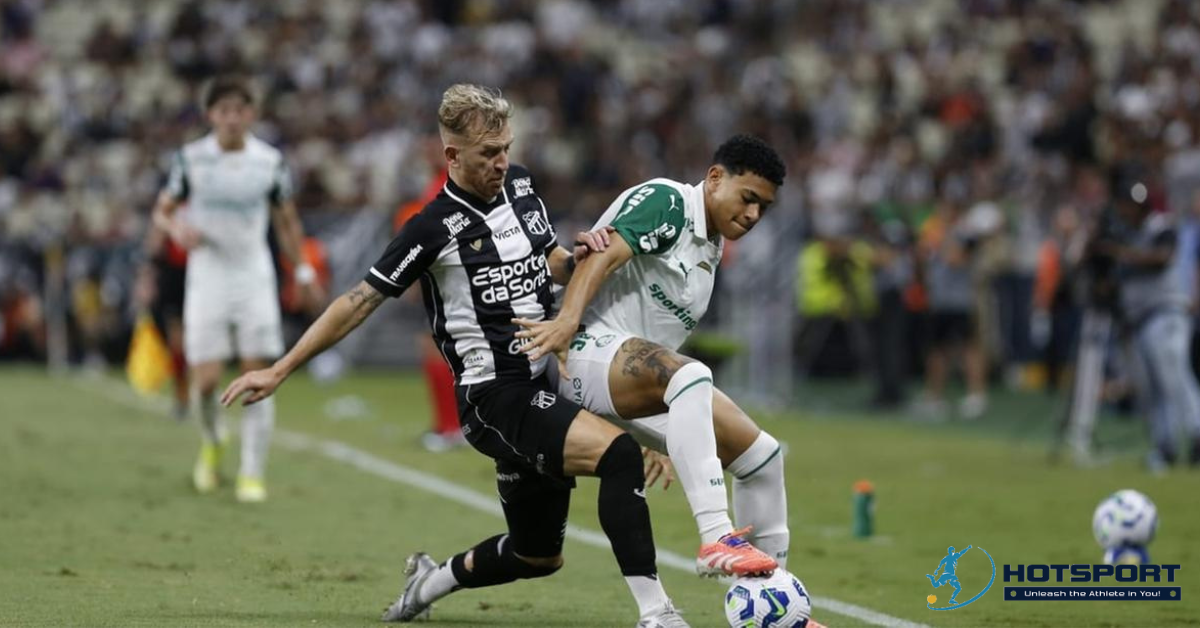
On December 7, 2025, the match between Ceará SC and Palmeiras at the Arena Castelão had all the elements of a great drama: crowd support, pressure, a last chance for salvation, and the ambition to finish the Championship on a high note. For Ceará, it was a matter of honor—and of remaining in the top division. For Palmeiras, despite already being assured of second place, it was a chance to end the season with a winning streak and extend their good campaign.
The atmosphere in the stadium was intense. The Vozão fans, even aware of the difficulty, kept their hopes alive: a victory could mean salvation, especially if combined with other favorable results. On the Palmeiras side, the team saw the game as confirmation of their good season, even with an alternative squad—a testament to their depth and professionalism.
When the ball started rolling, Ceará surprised everyone and opened the scoring with Pedro Raul. The stadium erupted, the fans believed. But Palmeiras reacted with patience and strength: they pushed forward, found spaces, turned the game around with precision, and imposed their rhythm. The 3-1 comeback, marked by pressure, nerves, and the coolness of the Palmeiras side, resulted in suffering for the home team and criticism of Ceará’s defensive structure. The final score didn’t just eliminate one game—it sealed Ceará’s relegation to Série B in 2026.
This article revisits every detail: from the pre-game context to the impact of the defeat, including goals, statistics, fan drama, and future implications for both clubs.
Pre-game – Expectations, fear and the weight of the final round: Ceará SC vs. Palmeiras
Ceará’s situation: fighting to stay in the league until the very last second.
Ceará entered the field with 43 points — a minimal margin, but still outside the relegation zone. The final stretch, however, had shaken the club’s confidence: negative results, defensive lapses, and increasing pressure. Therefore, the last round was seen as a final — a chance to finish well, to guarantee their stay in the league, and to avoid drama. The fans turned out in force, believing that home advantage could turn in their favor.
The expected strategy was bold: attack from the start, searching for a goal, applying pressure, and exploiting the flanks. The gamble was to take advantage of the opponent’s nervousness and use the crowd as fuel.
Palmeiras’ situation: second place secured, but desire to finish with a victory.
For Palmeiras, qualification as runner-up was already secured. Even so, there was motivation to seek victory—not only to finish on a high note, but to demonstrate consistency and give playing time to less-used players. The idea was to use the game as a squad test, mixing youth and experience, focusing on intensity and offensive transitions.
Palmeiras knew that a calm but efficient approach would be enough — and the team took to the field with the mentality of those who wanted to control the ball, exploit spaces, and manage the advantage when they managed to impose their rhythm.
The match – From Vozão’s hopes to Verdão’s comeback.
First half – Ceará opens the scoring, Palmeiras reacts, and the score is tied at halftime.
In the opening minutes, Ceará surprised everyone with a goal from Pedro Raul. The crowd erupted, hope was reborn, and the atmosphere at the Castelão stadium took on dramatic tones. Vozão seemed to believe that salvation could come early.
But Palmeiras — even with a reserve team — showed composure and patience. With ball circulation, patience, and organized pressure, the team reorganized. At 17 minutes into the second half (at halftime or shortly after, depending on the source), Verdão equalized with a goal from Facundo Torres, forcing Ceará to revise their plan.
With the score at 1-1 and time running out, the game opened up; Ceará lost momentum and Palmeiras gained confidence to apply pressure.
Second half – Comeback, dominance by Verdão and Vozão’s elimination confirmed.
In the second half, Palmeiras took control. More composed, more secure with the ball, and clinical in their finishing. In the 15th minute, Ramón Sosa scored the winning goal—a precise free-kick, real pressure, a concrete advantage.
A few minutes later, Flaco López sealed the score with a goal from inside the box, making it 3-1. The comeback was complete—and so was the punishment. Ceará didn’t react: defensive disorganization, growing anxiety, and mistakes that symbolize the problems of a team that culminated in relegation.
When the final whistle blew, the feeling was one of tragedy. Verdão celebrated another triumph; Vozão mourned the loss of the elite division.
Match statistics – Ceará SC vs. Palmeiras
Metric
Ceará
Palmeiras
Ball possession
46%
54%
Finishing touches
12
17
Shots on goal
4
8
Great chances
2
4
Accurate passes
417
462
Passing accuracy
83%
88%
Mistakes committed
14
11
Corner kicks
5
7
Expected goals (xG)
1.32
2.75
These numbers show that, although Ceará managed to open the scoring and had moments of pressure, Palmeiras was more efficient, controlled possession, worked the ball better and converted its chances — which in modern football is often worth more than volume.
Immediate impact – Ceará’s relegation and a historic ending for Palmeiras.
Ceará has been officially relegated to Série B for 2026 — finishing in 17th place with 43 points.
The relegation has symbolic weight: the club had practically not been in the relegation zone for the entire season, but saw its salvation slip away in the final round. The drama exposes structural weaknesses and defensive instability in the decisive stretch.
Palmeiras finishes the 2025 Brazilian Championship as runner-up with 76 points — the best campaign ever seen for a runner-up since the beginning of the round-robin system with 20 clubs.
For Palmeiras, despite the title being out of reach, the away win and consistency reaffirm their strength, versatile squad, and competitive ability even with alternative lineups.
Tactical analysis – Why Palmeiras managed to turn the game around and Ceará succumbed. Ceará SC vs. Palmeiras
Palmeiras’ forces
Adaptability with an alternative team without losing intensity. The player rotation did not affect the offensive or defensive structure.
Offensive efficiency: quick transitions, objective finishing, and maximizing the chances created.
Control of the midfield and superior possession, allowing them to manage the game even away from home.
Mental resilience: even after falling behind, he maintained focus and confidence to turn the game around.
Weaknesses of Ceará
Defense exposed after the equalizing goal: marking errors and disorganized back passes opened up spaces for infiltrations.
Reliance on moments of emotion and fan pressure — lacking the tactical consistency to withstand the opponent’s reaction.
Lack of offensive effectiveness after the first goal; inaccurate finishing, little purpose, and frayed nerves.
Lack of defensive strategies to withstand pressure from the opponent, especially in crucial phases of the match.
Game highlights – Who shone and who disappointed: Ceará SC vs. Palmeiras
Facundo Torres — with the equalizing goal, he showed quality, composure, and leadership. His performance propelled Palmeiras towards a comeback.
Ramón Sosa — with a precise free-kick, turned pressure into an advantage. He was decisive at the key moment.
Flaco López , with precision, scored the goal that sealed the result and confirmed the comeback victory.
Pedro Raul (Ceará) — opened the scoring and revived the fans’ hopes, but couldn’t hold onto the lead.
Ceará’s defense was fragile in crucial moments; individual and collective errors contributed to their defeat.
Conclusion – Ceará SC vs. Palmeiras
The Ceará SC vs. Palmeiras match symbolized two contrasting realities of Brazilian football. While Palmeiras ended the year with confidence, depth, and clear demonstrations of collective strength, Ceará saw its season unravel in a 2025 marked by instability, anxiety, and a lack of consistency.
The game at Castelão made it clear that Palmeiras is a consolidated team, even with an alternative squad, while Ceará urgently needs to redefine its course. Relegation is not just a sporting result — it’s a consequence of structural problems, misguided decisions, and failures in building a technical identity.
For Palmeiras, the 3-1 score reinforces that the club remains highly competitive, regardless of opponent, stadium, or lineup. The performance was solid, disciplined, and showed that the project for 2026 is already starting on firm foundations.
If you enjoy in-depth analysis, comprehensive statistics, and detailed coverage of major matches, keep following our national football section.
FAQs – Frequently asked questions about Ceará vs. Palmeiras 2025
What was the final score of the match? Ceará 1 × 3 Palmeiras.
Who scored the goals in the match? Pedro Raul (Ceará); Facundo Torres, Ramón Sosa and Flaco López (Palmeiras).
What did the result mean for Ceará? The team finished 17th with 43 points and was relegated to Série B in 2026.
How many wins did Palmeiras have in the championship? With this victory, they finished the season as runners-up, with 76 points — the best runner-up finish in the era of the points system.
Did Palmeiras have a clear advantage in possession? Yes. Palmeiras had approximately 55% possession compared to Ceará’s 45%.
Did Ceará have clear chances to react? Few. Despite possession and moments of pressure, they lacked objectivity and offensive organization.
Who stood out in the game? For Palmeiras: Facundo Torres, Ramón Sosa, and Flaco López. For Ceará, Pedro Raul — but the defense and the team as a whole couldn’t hold up.
Why did Palmeiras win convincingly even with a reserve team? Because they maintained intensity, dominated the midfield, capitalized on their chances, and managed the game after taking the lead.
Was this relegation expected for Ceará? No. The team had spent most of the season outside the relegation zone. The relegation was only confirmed in the final round.
What changes for Palmeiras in 2026? Increased confidence, confidence in the squad, reinforcement of the tradition of finishing among the top teams, and renewed expectations to compete for titles.
What changes for Ceará with the relegation? The need for reconstruction, financial and strategic replanning, strengthening the squad, and reviewing the structure to try for an immediate return.
What does this game show about the unpredictability of the Brazilian Championship? That nothing is guaranteed until the last minute — neither staying in the league nor winning titles. Rhythm, consistency, and efficiency are what decide the outcome.
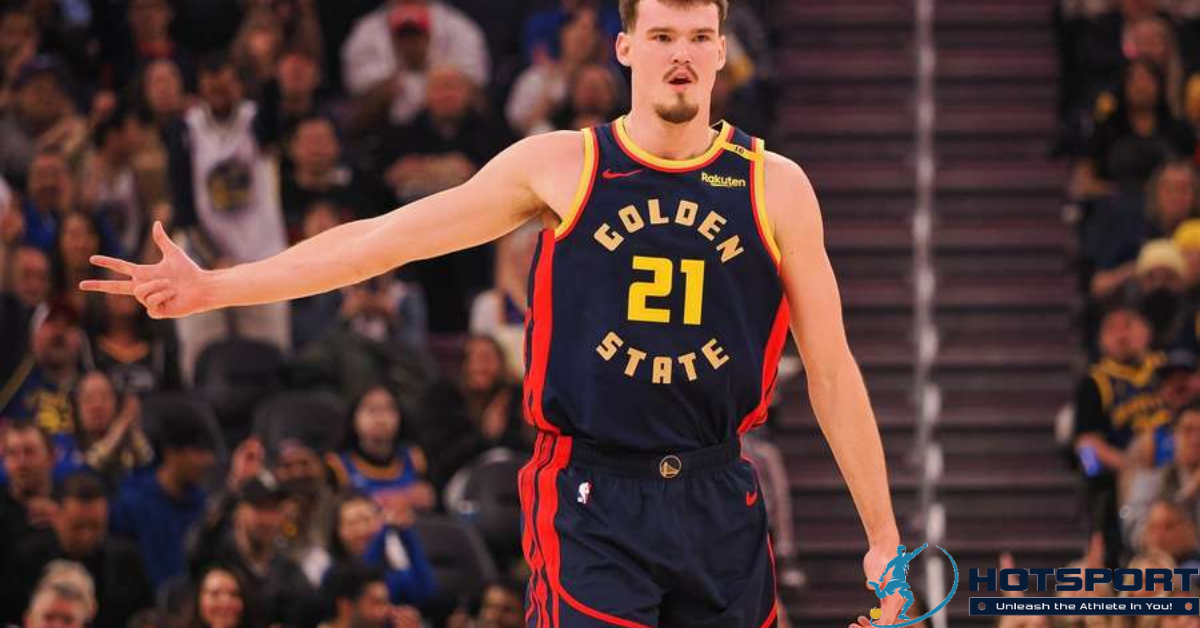
In a sport dominated by explosive and speedy athletes, Quinten Post emerges as a fascinating exception. At 2.13 meters tall with a wingspan that seems to defy gravity, the 25-year-old Dutch center is carving out space on the Golden State Warriors, one of the league’s most iconic franchises. Born on the streets of Amsterdam, Post isn’t just a product of elite academies; he represents the persistence of a talent that blossomed late but with deep roots in European basketball. His journey, marked by college transfers and a gradual adaptation to the NBA’s intensity, reflects the dream of many young athletes from Western Europe. In this article, we explore Post’s trajectory from his first steps on local courts to the spotlight of the Bay Area, with a focus on the latest updates from the 2025-26 season.
First Steps in Amsterdam: Roots in Dutch Basketball
Quinten Post came into the world on March 21, 2000, in the vibrant heart of Amsterdam, a city more known for canals and bicycles than for rims and dunks. His father, a basketball enthusiast, took him to local games from an early age, planting the seed of a passion that would only sprout at 11. It was at that age that Post joined the youth ranks of Apollo Amsterdam, a modest but talent-forming club in the Dutch league.
The early years weren’t immediate glory. Post, still skinny and awkward, faced the challenge of growing up in a country where soccer reigns supreme. However, his dedication was evident. Intense training on Amsterdam’s outdoor courts shaped his work ethic. “I watched my dad playing and thought: one day, I’ll be like him,” Post recalled in a recent interview. At 17, he was already standing out at Cartesius Lyceum, his high school, balancing studies and practices.
The turning point came in the 2017-18 season, when Apollo Amsterdam won the Dutch U-18 National Championship. Post, as a starter, contributed eight points and seven rebounds in the final—a victory that echoed like a harbinger. That title not only solidified his local reputation but also caught the eye of international scouts. At 18, he was already dreaming of the other side of the Atlantic, where American college basketball promised unlimited opportunities. His early transition to professionalism in the DBL (Dutch Basketball League) prepared him for the fast pace, with initial double-digit points and solid rebounds against adults.
From Europe to the United States: The College Adventure
The leap to the US came in 2019, when Post enrolled at Mississippi State University in the Southeastern Conference (SEC), one of college basketball’s most competitive leagues. As a freshman, he faced a cultural and athletic shock. At just 2.08 meters back then, Post struggled for minutes on a roster full of talent. His debut season yielded 2.8 points and 2.1 rebounds in 8.5 minutes per game—modest numbers, but revealing potential in mid-range shots.
His sophomore year, 2020-21, showed evolution. Post jumped to 9.4 points and 5.4 rebounds in 22.4 minutes, demonstrating versatility as a power forward. His ability to pass from the post and protect the rim (1.2 blocks per game) turned heads. However, injuries and Mississippi’s rigid tactical system limited him. Frustrated, he transferred to Boston College in the ACC for more freedom.
The change was transformative. In the 2021-22 season, as a junior, Post exploded with 9.4 points and 5.4 rebounds, earning honorable mention in the ACC Tournament. But it was in 2023-24, his senior year, that he cemented himself. With 17.0 points, 8.1 rebounds, and 2.6 assists in 31.9 minutes, Post became the pillar of the Eagles. His three-point shooting, at 41% on 4.1 attempts per game, was rare for a big man of his size. He received awards like ACC Most Improved Player, Second Team All-ACC, and All-ACC Defensive Team. In the postseason, his 29 points and 15 rebounds against Notre Dame made headlines. At 24, Post proved that time wasn’t the enemy; it was an ally.
The 2024 Draft: A Journey of Trades to the Bay Area
The 2024 NBA Draft was a whirlwind for Post. Selected 52nd overall by the Golden State Warriors, he saw his name traded in a series of deals: to the Oklahoma City Thunder for Lindy Waters III, then to the Portland Trail Blazers for Oso Ighodaro, and finally back to the Warriors for cash considerations. “It was chaotic, but exciting,” he said, watching from Puerto Rico with his girlfriend.
Signed to a two-way contract in September 2024, Post split time between the G-League (Santa Cruz Warriors) and the NBA. His league debut came in December 2024, making him the eighth Dutch player in NBA history—a milestone for a country of just 17 million people. In February 2025, the Warriors converted his contract to standard, recognizing his impact.
Rookie Season: Adaptation and Early Shine
The 2024-25 campaign was one of accelerated learning. In 42 games (14 as a starter), Post averaged 16.3 minutes per game, with 8.1 points, 4.0 rebounds, and 1.3 assists. His strength? Long-range shooting: 40.8% on 4.3 attempts, a luxury for a center. In games with over 20 minutes, he elevated to 11.8 points and 1.2 blocks, showing efficiency in pick-and-roll and post defense.
Challenges abounded. His limited mobility exposed weaknesses in defensive switches against quick wings. Still, under Steve Kerr’s tutelage, Post absorbed lessons from veterans like Draymond Green, refining his game reading. His Vegas Summer League averages of 12 points and 6 rebounds sealed his stay.
Recent Updates: The 2025-26 Season on the Rise
As of December 8, 2025, Post is experiencing a moment of ascent in his second season. The Warriors, bolstered by Al Horford, are dealing with frontcourt injuries, opening doors for the Dutchman. In 24 games, he averages 6.9 points, 4.0 rebounds, and 1.3 assists in 17.1 minutes, with 44.6% field goal shooting and 33.3% from three.
Bay Area fans cheered on December 6, when Post started against the Cleveland Cavaliers, scoring 12 points (5/14 FG, 2/6 3PT), grabbing 9 rebounds, and dishing 3 assists in 32 minutes, helping secure a 99-94 victory. It was his ninth start, with averages of 7.6 points and 4.8 rebounds in those games. A left ankle sprain left him questionable against the 76ers on December 4, but he returned strong with 10 points in 25 minutes.
Against OKC on December 2, he contributed 3 points in limited minutes, but his defense on Ja Morant stood out in another recent matchup. “I’m stronger and more confident,” Post commented after the Clippers game in October, where box-outs and rebounds against Ivica Zubac showed physical evolution. With Horford managing back pain, Post is earning crucial minutes, balancing weight for strength without losing agility. Analysts predict that if he maintains the pace, he could exceed 20 minutes per game by the All-Star Break.
Playing Style: A Modern Big with Classic Touches
Post isn’t the athletic lob-finishing big; he’s the stretch big that the modern NBA loves. His strength lies in versatility: three-point shots that stretch defenses, precise high-post passes (2.9 assists in college), and rim protection with 1.7 blocks per game in his final college year. His 2.84-meter wingspan compensates for a lack of vertical leap (just 69 cm), allowing blocks without leaving the ground.
Weaknesses? Mobility. Critics point to slow footwork in pick-and-roll defense and inadequate rebounds for his size—he loses balls to agile guards. However, improvements in upper-body strength and weight balance (108 kg) make him more competitive. Comparisons to Brook Lopez or Al Horford make sense: an offensive facilitator who punishes mismatches. In handoffs with Stephen Curry, Post shines, creating space for the Splash Brother.
Representing the Netherlands: National Pride
For the Dutch national team, Post is an emerging pillar. At the 2019 U20 EuroBasket Division B, he led with 7.4 points and 4.1 rebounds, helping promotion to Division A. Called up for the 2022 EuroBasket qualifiers, he debuted for the senior team, contributing in wins over Greece and Israel. With compatriots like Jalen Slawson in the league, Post inspires a new generation. “Representing the Netherlands in the NBA is surreal,” he said, dreaming of the 2028 Olympics.
A Bright Future in the Bay
At 25, Quinten Post is on the cusp of something big. With the Warriors eyeing the playoffs, his evolution could be the difference-maker in the frontcourt. Far from Amsterdam’s lights, he’s building a legacy: proof that European talent, patience, and hard work transcend borders. If he keeps the current momentum, Post won’t just be a bench piece; he’ll be a recurring name in rotation discussions. Dutch basketball is grateful—and the NBA is too.
Introduction – Wolves vs Manchester United: urgency, history, and favoritism
The Wolves vs. Manchester United match, scheduled for December 8, 2025, at Molineux Stadium, comes at a crucial moment in the Premier League. For Wolves, the game represents more than just three points. It’s an emotional and technical test for a team experiencing its worst period in recent years, accumulating poor results and trying to recover in front of its home crowd. The pressure is immense, mistakes are multiplying, and the internal environment is becoming increasingly unstable. The squad has tactical and physical limitations, and recent absences further complicate an already unfavorable situation.
On the other side, Manchester United arrives with more confidence, a superior squad, greater consistency, and clear tactical improvement compared to the initial rounds of the season. Even suffering from defensive fluctuations, the Old Trafford team has shown more control of the game, better offensive quality, and the ability to decide in critical moments. Bruno Fernandes takes on a leading role, Rashford is once again influencing matches, and Højlund remains an important piece in the area.
The combination of Wolves’ decline and Manchester United’s recovery makes for a duel that promises intensity, pressure from start to finish, and a high emotional charge. For Wolves, it’s about survival. For United, it’s an opportunity to climb the table and consolidate their positive run.
This article provides an in-depth, comprehensive, and optimized analysis, with updated statistics, projections, probable lineups, recent form, tactical scenarios, betting market information, and a detailed prediction for the match.
Current Team Situation – Wolves vs Manchester United
Wolves – crisis, distrust and the search for redemption
Wolves are having a disastrous season so far. According to recent projections, the team has only managed 2 points in 14 games, placing them at the bottom of the Premier League table.
The negative streak is compounded by alarming statistics: in their last six matches, Wolves have accumulated only defeats, scoring an average of 0.5 goals per game and conceding around 2.33 goals per game.
The attacking sector is practically nonexistent: in their recent home games, the team has repeatedly failed to finish accurately and convert chances — which drastically reduces any expectation of a comeback.
Furthermore, the list of absentees is long. Important players such as João Gomes (suspended), Marshall Munetsi (injured), Rodrigo Gomes, and others are out or doubtful, which further compromises the team’s structure.
The motivation is there — the fans, the home advantage, the risk of relegation — but transforming that into collective play, a solid defense, and offensive efficiency will be a gigantic challenge.
Manchester United – seeking stability and a comeback away from home
Manchester United is not going through a brilliant phase, but is showing signs of stability and some consistency when playing away from home. Despite mixed results, the club continues to have offensive capabilities and a good ability to react.
In the attacking sector, there are interesting options: players like Matheus Cunha, Bryan Mbeumo, and other forwards have the chance to exploit the opponent’s defensive weaknesses. Even with the absence of starters like Benjamin Šeško and Harry Maguire, the squad has the depth to maintain competitiveness.
Tactically, United are expected to dictate the game, try to control possession, press their opponents, and exploit the spaces left by Wolves’ defense. Defensive consistency—albeit relative—and offensive efficiency are the visitors’ strengths.
From a psychological standpoint, the team knows it can’t afford to waste matches like this: winning away against an underdog can provide momentum. The motivation for results, combined with technical quality, puts United in a position of real favoritism.
History and Direct Data – Wolves vs Manchester United
The rivalry between Wolves and Manchester United has a long history: officially, there have been around 115 matches between the two clubs.
In the overall history:
Manchester United wins: 56
Wolves wins: 39
Draws: 20
In recent years, despite United’s historical superiority, Wolves have had moments of triumph — including achieving a double against United in 2024/25, when they won both at home and away, something that hadn’t happened since 1980.
Even so, the overall advantage remains with United. The historical average of goals per game between the two is around 2.2 to 2.4 goals — which indicates a historical balance, even considering the superiority of the Red Devils.
Summary H2H Table
Indicator
Approximate value
Total confrontations
115
Manchester United victories
56
Wolves wins
39
Draws
20
Average goals per game historically
~2.2–2.4
Although history favors United, recent form and Wolves’ ability to react—however limited—keep the possibility of an upset alive, especially in games where pressure, motivation, and home advantage are paramount.
Recent form and statistical performance – Wolves vs Manchester United
Team
Last 6 games (league)
Goals scored (average)
Goals conceded (average)
Offensive situation
Defensive situation
Wolves
6 consecutive defeats
~0.5 goals per game
~2.33 goals conceded per game
Very low offensive output, limited shots on goal and chances.
Unstable defense, vulnerable to transitions and quick attacks from the opponent.
Manchester United
Alternating results: recent wins, draws, and losses both away and at home.
An average of ~1.6–1.7 goals per game this season.
They concede goals fairly frequently, but have a relatively competitive defense away from home.
Consistent offensive creation, clear chances, mobility in attack.
A more organized defense than the opponent, with a better defensive structure and collective coverage.
The data confirms the recent disparity: Wolves are experiencing a period of widespread weakness – offensively, defensively, and morally. United, even with their flaws, are showing competitiveness, attacking repertoire, and enough consistency to impose their rhythm.
Furthermore, market odds and projections support the away team’s favoritism. Most bookmakers are betting on a Manchester United victory, with odds below 2.00 for a “United win”.
Probable lineups – Wolves vs Manchester United
Based on official sources and international forecasts, these are the expected lineups for the match:
Wolves – likely 4-2-3-1
Position
Player
GOAL
José Sá
LD
Nelson Semedo
ZAG
Toti Gomes
ZAG
Santiago Bueno
LE
Rayan Aït-Nouri
VOL
Mario Lemina
VOL
Boubacar Traoré
MEI
Pablo Sarabia
MEI
Matt Doherty
MEI
Hwang Hee-chan
ATA
Matheus Cunha
Important absences: João Gomes (suspended), Marshall Munetsi (injury), Rodrigo Gomes (injury), physical variations.
Manchester United – likely 4-2-3-1 formation
Position
Player
GOAL
André Onana
LD
Diogo Dalot
ZAG
Lisandro Martínez
ZAG
Jonny Evans
LE
Luke Shaw
VOL
Casemiro
VOL
Kobbie Mainoo
MEI
Bruno Fernandes
MEI
Bryan Mbeumo
MEI
Marcus Rashford
ATA
Rasmus Højlund
Unavailable players: Benjamin Šeško (injury), Harry Maguire (muscle problem), Mason Mount (continuing recovery).
Tactical Analysis – Wolves vs Manchester United
How Wolves should play
Wolves have shown enormous difficulty in maintaining possession and building clear plays. The trend is:
lower blocks
attempt to block the center
The team relies on quick transitions down the left flank with Aït-Nouri.
Matheus Cunha as a mobile reference point, attempting to draw fouls and long balls.
The pressure from the fans might push the team forward in the first 15 minutes, but the team’s collective fragility suggests accelerated fatigue and a drop in intensity after the halfway point of the first half.
How Manchester United should play
United are coming to:
to dominate possession
luring Wolves into making a mistake.
utilize the mobility of the wingers (Rashford and Mbeumo)
Bruno Fernandes’ constant infiltrations
Long balls for Højlund
There is a clear superiority in midfield: Casemiro and Mainoo should control the tempo, while Wolves tend to struggle with marking and defensive recovery.
United should also take advantage of set pieces, a clear weakness for Wolves today.
Key Players – Wolves vs Manchester United
Player
Team
Expected impact
Bruno Fernandes
Manchester United
Creation, key passes, leadership
Marcus Rashford
Manchester United
Dribbling, speed, finishing
Casemiro
Manchester United
Defensive balance and pressure
Matheus Cunha
Wolves
The only one capable of causing discomfort to the opposing defense.
Aït-Nouri
Wolves
Offensive transition and speed down the left flank.
Advanced Indicators (xG, xGA, possession and defense)
Metric
Wolves
Manchester United
xG medium
0.68
1.72
xGA medium
2.10
1.34
Average ownership
46%
54%
Shots per game
8.1
14.3
Defensive efficiency
51%
62%
Goals conceded in the last 6 games
14
9
These numbers show the huge gap between the teams right now.
Psychological Moment – Wolves vs Manchester United
Wolves
team under pressure
unstable emotional environment
loss of confidence after a series of defeats
The need for an urgent reaction in the face of the fans.
Manchester United
more organized
more experienced cast
confidence in offensive players
motivation for a simple away win
The psychological factor weighs heavily in Manchester United’s favor.
Stadium conditions and expected attendance.
Location: Molineux Stadium
Expected attendance: 33,000 fans
Weather forecast: cold December weather, low temperatures, moderate wind.
Pitch condition: good, favors technical play and teams with short passes.
Cold weather tends to benefit United, who are more accustomed to physical intensity.
Odds and Betting Markets – Wolves vs Manchester United
Market
Average odds
Trend
Manchester United wins
1.55 – 1.70
Strong favoritism
Draw
3.80
Moderate
Wolves win
5.50 – 6.00
Extremely low probability
Both score – NO
1.72
Value option
Less than 2.5 goals
1.95
Slight trend
A goal by Rashford or Mbeumo
2.40 – 2.80
Good market analysis.
Game Projection by Minutes
Period
Expectation
0–15 min
Emotional pressure from Wolves, attempt to stifle
15–45 min
Manchester United control the game and create chances.
45–70 min
Wolves’ physical decline, United accelerates down the flanks.
70–90 min
Possible away goal, Wolves exposed.
Simulated Probabilities
Result
Chance
Manchester United win
64%
Draw
22%
Wolves Victory
14%
Main prediction – Wolves x Manchester United
Manchester United wins 2-0.
Alternatives
Less than 3.5 goals
Both score: NO
A goal by Rashford or Højlund
Recent form of the teams – Wolves vs Manchester United
Wolves – Last 6 games
Adversary
Result
Performance
Crystal Palace
Defeat 0x3
Weak defense
Tottenham
Defeat 1×2
There was a lack of creativity.
Everton
Draw 1-1
Better intensity
Chelsea
Defeat 0x4
Disorganization
Bournemouth
Defeat 0x2
Low finalization
Arsenal
Defeat 1×3
High volume suffered
Manchester United – Last 6 games
Adversary
Result
Performance
Fulham
Victory 2×1
Technical expertise
Brighton
Draw 1-1
Balance
West Ham
Victory 2-0
Good defensive form
Tottenham
Defeat 1×2
Oscillation
Aston Villa
Victory 3×1
Efficient attack
Newcastle
Draw 0x0
Tactical control
Head-to-head history – Wolves vs Manchester United
Recent games
Result
Trend
Wolves 2-1 Manchester United
2024
Surprise
Manchester United 1-0 Wolves
2024
Tough game
Wolves 0-1 Manchester United
2023
Guest domain
Manchester United 3-0 Wolves
2022
Clear superiority
Wolves 1-0 Man United
2022
High blood pressure
Historical trend: United dominates head-to-head matches, especially at Molineux.
Motivational analysis and external pressure
Wolves arrive at the match surrounded by criticism from the English press. Fan pressure is affecting performance, and the internal atmosphere is suffering from a loss of confidence. Players like Sarabia and Hee-chan are showing effort, but the lack of tactical support causes the team to struggle without the ball and make mistakes in build-up play.
For Manchester United, this is a time of rebuilding, but with clear progress. A victory away from home is seen as an obligation. The external atmosphere is positive, and the team leaders have taken on a more involved role both on and off the field.
Key matchups – Wolves v Manchester United
Rashford vs. Nelson Semedo
Rashford has the advantage in speed and 1-on-1 situations. Semedo is likely to struggle with long diagonal runs and runs behind the defense.
Bruno Fernandes vs. Lemina
Bruno has the freedom to roam. Lemina may not be able to keep up with the Portuguese writer’s creative pace.
Højlund x Toti Gomes
Højlund tends to win physically and receives more deep balls. Toti should face difficulties in anticipation.
Possible match scenarios – Wolves vs Manchester United
Scenario 1 – United dominating from the start
Higher probability. The away team controls possession, Wolves retreat too much, and chances arise early.
Scenario 2 – Wolves apply pressure early on, but then physically collapse.
Very likely. Intense initial phase, but without the consistency to maintain a standard.
Scenario 3 – A tight game, decided by the smallest detail.
Less likely, but possible if Wolves can neutralize Bruno and prevent infiltrations.
Offensive and defensive performance charts – Wolves vs Manchester United
Offensive
Indicator
Wolves
Manchester United
Goals per game
0.7
1.8
Accurate finishes
2.9
6.1
Clear chances per game
0.8
2.4
Conversion
8%
19%
Defensive
Indicator
Wolves
Manchester United
Goals conceded
2.3
1.2
Kicks suffered
14.8
10.1
Defensive errors
1.3
0.6
Taking advantage of duels
41%
56%
Conclusion – Wolves vs Manchester United
The Wolves vs. Manchester United match brings together two teams in completely opposite situations in the 2025 season. While Wolves are trying to survive amidst a turbulent period, plagued by absences, a decline in form, and recurring mistakes, Manchester United are showing better collective performance, greater consistency, and, most importantly, decisive players in good form.
Offensive, defensive, and tactical statistics show a clear difference between the teams. Wolves try to compete in the opening minutes, but they lack intensity, fail to recover possession quickly, and suffer from individual errors that frequently cost them points. A lack of creativity in attack is another worrying factor.
United, in turn, demonstrates ball control, constant creation, and visible improvement in pressing and transition mechanisms. Bruno Fernandes dictates the tempo, Rashford exploits spaces, and Højlund provides physical presence in attack. The team has volume, shoots more, and shows superior game reading.
Everything points to a scenario favorable to the visitors. The xG projection, the emotional momentum, the squad quality, the history in this matchup, and recent performance confirm the trend of Manchester United’s dominance. Even away from home, the team is capable of controlling the match, minimizing risks, and, with patience, finding openings in Wolves’ defense.
Final prediction: Manchester United 2-0 Wolves (Under 3.5 goals, Both teams not to score, Goal by Rashford or Bruno.)
Frequently Asked Questions (FAQs) – Wolves vs Manchester United
1. When is the Wolves vs Manchester United game?
December 8, 2025, in the Premier League.
2. Where will Wolves vs Manchester United be broadcast?
Sky Sports, ESPN and official Premier League streaming.
3. Who is the favorite to win?
Manchester United, with over a 60% probability.
4. What was the result of the last match?
Wolves won 2-1 in the final match of last season.
5. Could Wolves pull off an upset?
Yes, but it depends on extreme efficiency with very few chances.
6. Is “Both Teams to Score” a good bet?
The trend suggests a NO, due to Wolves’ offensive weakness.
7. Who should score?
Rashford, Højlund, or Mbeumo are the most likely names.
8. How are Wolves doing in the table?
A flashlight with only 2 points.
9. How many goals has Manchester United scored in the last few rounds?
United have averaged 1.8 goals per game in recent matches.
10. Do Wolves have a real chance of pulling off an upset?
Only if they score first and manage to withstand the pressure. Statistically, that scenario is unlikely.
11. What is Wolves’ biggest weakness today?
The defensive transition, which suffers from disorganization and slowness.
12. Do United usually do well at Molineux?
Yes, they have won most of their recent away matches.
13. Who arrives under the most pressure?
Wolves, who desperately need points.
14. Does this game influence the fight for position in the standings?
Yes, United could climb to the top of the table, while Wolves are trying to escape the relegation zone.
15. Is Rashford the best bet to score?
Yes. He’s in good form and is facing a vulnerable full-back.
Paolo Banchero is a name that resonates loudly in NBA arenas, blending Italian heritage with fierce American competitiveness. Born in Seattle, Washington, on November 12, 2002, this 6’10” (2.08 m), 250-pound (113 kg) power forward embodies the dream of countless young athletes: dominating professional basketball with versatility and charisma. As the star of the Orlando Magic, Banchero is not just a skilled player—he’s a symbol of overcoming obstacles and embracing a dual cultural identity. His journey from local courts to the brightest lights of the world’s premier league inspires generations. In this feature, we explore his path, achievements, and the latest chapters marking his meteoric rise.
Childhood and Family Roots: A Blend of Cultures
Paolo’s story begins in a sports-obsessed family. His father, Mario Banchero, comes from Italian immigrants with deep Neapolitan pride. A former college football player, Mario instilled discipline and physical toughness in his son. His mother, Rhonda Smith-Banchero, is a former professional basketball player who starred in the WNBA for the Seattle Storm. Rhonda trained Paolo from a young age and took him to community courts like the Rotary Boys & Girls Club in Seattle and elite camps such as EBC, where he shone at events like the Ballislife Jr. All-American Camp.
Even as a toddler, Paolo stood out—at 15 months old he already measured 3 feet (0.91 m) tall. In seventh grade, he grew from 6’1” to 6’5” in just a few months, instantly becoming a local phenomenon. He also tried football and track, initially dreaming of the NFL, but basketball, fueled by his mother’s influence, quickly became his true calling. His Italian-American heritage is no small detail: in 2020, Paolo obtained Italian citizenship, opening the door to the Azzurri national team. He represented Italy in EuroBasket 2022 qualifiers, telling FIBA that the senior-level opportunity from the European nation was impossible to turn down. This cultural duality enriches his identity and lets him move effortlessly between worlds.
First Steps in Basketball: High School to College
At O’Dea High School in Seattle, Paolo became a local legend. As a freshman, he already led the team in points, rebounds, and assists, earning MVP honors at the NBPA Top 100 Camp. His ability to shoot from deep, attack the rim, and dominate the paint drew national attention. To sharpen his game further, he transferred to IMG Academy in Florida—one of the country’s most competitive programs—where he faced elite competition and cemented himself as a top prospect in the class of 2021.
At Duke University, under legendary coach Mike Krzyzewski, Paolo exploded. In his one-and-done season (2021-22), he was named ACC Rookie of the Year, averaging 17.2 points, 7.8 rebounds, and 3.2 assists per game. He led the Blue Devils to the Final Four, showing poise in big moments. His playmaking and ability to guard multiple positions drew comparisons to LeBron James and Kevin Durant. After that stellar campaign, he declared for the 2022 NBA Draft, ready for the professional leap.
Arrival in the NBA: Draft and Rookie Year
June 23, 2022, became a historic day for Paolo and the state of Washington: he was selected as the No. 1 overall pick by the Orlando Magic—the first player from Washington state ever to achieve that honor in basketball. Analysts weren’t surprised; they saw him as a “unicorn”—a rare blend of size, skill, and basketball IQ. Signing a four-year, $268 million rookie contract, Banchero quickly integrated into a Magic franchise in rebuild mode.
His rookie season (2022-23) was nothing short of phenomenal. Averaging 20.0 points, 6.9 rebounds, and 3.7 assists over 72 starts, he became only the third rookie in NBA history to post 20+ points, 6+ rebounds, and 3+ assists per game—joining legends Oscar Robertson and LeBron James. In December 2022, he hit a game-winner against Toronto and dropped 28 points. His aggressive defense and on-court leadership earned him the 2023 NBA Rookie of the Year award by unanimous vote. Orlando finished with 34 wins, and Paolo emerged as the face of the franchise’s new era.
Breakout Seasons: Stardom and Accolades
The 2023-24 season confirmed Paolo as a bona fide star. Playing all 80 games as a starter, he raised his averages to 22.6 points, 6.9 rebounds, and 5.4 assists in 35 minutes per game—numbers that placed him among the Eastern Conference elite. His three-point shooting improved to 33.9%, and he became the offensive engine of a Magic team that returned to the playoffs for the first time since 2020. In April 2024, he was selected to the All-Star Game, becoming the youngest Orlando player ever to earn the honor at age 21.
At the 2024 Paris Olympics, Paolo chose to represent the United States—a decision that stirred controversy in Italy. Despite having previously played for the Azzurri, his choice of Team USA (where he scored 9 points in the gold-medal final against France) was seen by some Italian fans as a betrayal, while others celebrated it as loyalty to his American roots. On the court, he helped the U.S. claim gold. Back in the NBA, his leadership has the Magic dreaming of championships, with analysts often comparing him to icons for his vision and work ethic.
Recent Updates: Overcoming Injury in 2025
2025 brought both challenges and triumphs. In the early part of the 2025-26 NBA season, Paolo remained the cornerstone of an Orlando Magic team that has embraced a defensive identity under coach Jamahl Mosley. Through November, he was averaging around 24 points per game, excelling in transition and on offensive rebounds. Tragically, on his 23rd birthday—November 12—during a game against the New York Knicks at Madison Square Garden, he suffered a left groin strain in the first quarter. The injury sidelined him for 10 games, testing his resilience.
Without him, the Magic surprisingly thrived, winning 7 of those 10 games behind strong team play from Franz Wagner and Wendell Carter Jr. In interviews, Paolo expressed frustration but also gratitude for the recovery time: “It was only 10 games, but it felt like 50. I can’t wait to get back and compete for the rest of the year.” He returned on December 5 against the Miami Heat at Kia Center on a minutes restriction. In 20 minutes, he posted 9 points (3-8 FG), 6 rebounds, and 2 assists, helping secure a tight 106-105 win. Two days later against San Antonio, he already looked fully recovered, throwing down an impressive and-1 finish that went viral. By December 9, he was no longer on the injury report. Orlando, now 15-10 through 25 games, sits fourth in the East, and analysts believe his presence could push them toward back-to-back Southeast Division titles.
Achievements and Legacy: Beyond the Numbers
In his young career, Paolo has already collected awards that transcend stats: Rookie of the Year, All-Star, All-Rookie First Team, and All-ACC honors. His impact extends off the court—he runs basketball clinics for underprivileged kids in Orlando, inspired by his own Seattle roots. His Italian heritage makes him a cultural ambassador, promoting the sport in Europe through appearances in Milan and Rome.
Compared to players like Giannis Antetokounmpo for his versatility, Paolo stands out for his basketball IQ. His 48% mid-range efficiency and 5+ assists per game mark him as a modern “point-forward.” In 2025, he signed major endorsement deals with Nike and Gatorade, expanding his global reach.
Personal Life and Influences: Family and Mentors
Off the court, Paolo is grounded. He credits his mother Rhonda as his greatest mentor—she trained him late into the night. His father Mario taught him Italian traditions, cooking dishes like carbonara to keep the heritage alive. Paolo loves hip-hop and gaming but prioritizes philanthropy: in 2024 he donated $100,000 to youth sports programs in Seattle. His Olympic decision reflected loyalty to his American upbringing, though he maintains strong ties to Italy—he plans to host a basketball camp in Naples in the summer of 2026.
Banchero’s Future: Sky’s the Limit
At just 23, Paolo Banchero is on the cusp of a legendary career. With the Magic building around him, Franz Wagner, and Jalen Suggs, the franchise is eyeing NBA Finals appearances soon. Analysts predict he’ll be in the MVP conversation by 2026-27, especially if he tightens his pick-and-roll defense. His personal goal? “Be the best power forward in the league and bring a championship to Orlando.” Fresh off his injury comeback, Paolo looks more driven than ever, ready to lead a new dynasty in Central Florida.
Conclusion: An Icon on the Rise
Paolo Banchero is more than a basketball player—he’s the American Dream with an Italian accent. From the courts of Seattle to the sands of Orlando, his journey of resilience—from recent injury to Olympic glory—inspires millions. In a sport ruled by giants, he stands out for his humanity and pure talent. As the NBA evolves, one thing remains constant: Banchero is young, hungry, and unstoppa
Jhon Arias, the skillful Colombian winger, has been one of the most exciting figures in South American football in recent years. With sharp dribbling and game vision reminiscent of the great stars of his generation, he crossed the Atlantic in search of new challenges. His arrival at Wolverhampton Wanderers in July 2025 marked the beginning of a new era in the Premier League, where the 28-year-old seeks to establish himself among the best. But who is this young man from Quibdó who conquered Rio de Janeiro and now dreams of English pitches? In this feature, we dive into Arias’ journey, from his humble roots to the spotlight of the Club World Cup and his first months in England.
Early Steps on Colombian Soil
Born on September 21, 1997, in Quibdó, a city in the Chocó department known for its rich Afro-Colombian culture, Jhon Adolfo Arias Andrade grew up facing challenges. Football, as in so many success stories, was his escape. From an early age, he showed natural talent for dribbling and speed, traits that would later define him. His modest, close-knit family always supported the boy’s dream, who trained barefoot on the dusty streets of his hometown.
Arias’ professional career began in 2018 with Patriotas FC, a modest second-division Colombian club. There, he played his first official matches, showing versatility as a right-back. At just 20 years old, he gained valuable experience, but the big leap came with a loan to Llaneros FC, where he refined his technique. In 2020, he moved to América de Cali, one of the country’s giants. That’s when the world began to take notice. That year, Arias was instrumental in winning the Colombian Championship, scoring decisive goals and providing assists with mastery. His partnership with the team, under demanding coaches, shaped him into a complete player: fast, intelligent, and deadly in one-on-one situations.
At Independiente Santa Fe in 2021, he shone even brighter. With 22 matches and three goals, Arias caught the eye of international scouts. His ability to play both on the right and through the middle, alternating between winger and attacking midfielder, made him unique. At 23, he was already considered a gem of Colombian football, compared to names like James Rodríguez for his elegance on the pitch. Those early years weren’t just glory; minor injuries and the pressure of competitive football tested his resilience. But Arias, with his quiet personality and absolute focus, overcame everything, paving the way abroad.
Explosion at Fluminense: From Carioca Glory to the World Stage
In August 2021, Fluminense made a bold move, signing Arias for around €2.5 million. Rio de Janeiro, with its beaches and the Maracanã, became the perfect stage for his talent to flourish. Initially a substitute, he quickly became indispensable under Fernando Diniz, known for his attacking, fluid style. Arias adapted rapidly to Brazilian football with his intensity and creativity.
Over four seasons with the Tricolor, he played 164 matches and scored 32 goals, impressive numbers for a player in his position. In 2023 came the pinnacle: victory in the Copa Libertadores, the club’s first continental title in 123 years of history. Arias was the hero in the final against Boca Juniors, scoring a goal and providing an assist that sealed the 2-1 aggregate victory. His celebration, embracing fans in Laranjeiras, became iconic. He also won the 2024 Recopa Sudamericana and two Carioca Championships (2022 and 2023), cementing himself as one of the best foreign players in Série A.
What made Arias special at Fluminense was his consistency. In 2025, before his transfer, he had already played 29 matches, scoring four goals and providing 14 assists that year. His partnership with players like André and Germán Cano created unpredictable plays, and he excelled in set pieces with precise long-range shots. Off the pitch, he embraced Carioca culture, becoming fluent in Portuguese and participating in social projects in Rio. But his greatest moment came at the 2025 FIFA Club World Cup in the United States. Arias was named to the tournament’s best XI, with a goal and a decisive assist in the victory over Inter Milan. His “magical” performance, as described by the press, accelerated negotiations with European clubs.
The Colombian National Team: From Hope to Finalist
Arias debuted for Colombia in 2021, but it was under Néstor Lorenzo that he became a regular. With 31 call-ups by the end of 2025, he is a key piece in the 4-2-3-1 system, playing as an attacking midfielder or winger. His speed complements the style of Luis Díaz and James Rodríguez, forming a lethal trio.
The highlight was the 2024 Copa América, where Colombia reached the final, losing to Argentina on penalties. Arias played every match, scoring against Panama and providing assists that kept the team unbeaten until the end. In 2025, he featured in World Cup qualifiers for 2026, with solid performances against Brazil and Uruguay. His call-up for recent friendlies, including creating a hat-trick of chances against Peru, reinforces his status. For Arias, wearing the yellow shirt is more than duty: it’s pride in representing Chocó, a historically marginalized region.
The Move to Wolverhampton: A New Chapter
The summer of 2025 brought the big turning point. After the Club World Cup, Wolverhampton Wanderers paid £19 million for the Colombian, signing him to a four-year contract with an extension option. The deal, announced on July 24, reunited Arias with compatriots like Yerson Mosquera and former teammate André, easing his adaptation. Wolves manager Gary O’Neil saw him as the ideal attacking reinforcement: versatile, tireless, and with a nose for goal.
His debut came in August against Manchester United, where Arias showed fight, though the team lost 1-0. By December 2025, he had played 11 Premier League matches, starting nine, with 14 shots and two on target, yet to score or assist. A yellow card against Arsenal in November reflected his intensity, but he praised the English game’s physicality in an exclusive interview on December 9. “Fluminense taught me to create in tight spaces; here, it’s about resisting and counter-attacking,” he said, comparing the Premier League’s frantic pace to Rio’s samba.
Wolves, battling mid-table with 25 points after 16 rounds, rely on Arias to spark them. His average of 1.5 dribbles per game and 66% pass accuracy impress, but he admits: “I need patience. Goals will come.” Off the pitch, Arias is settling in Wolverhampton with his family, exploring pubs and training extra for the English cold.
Adapting to the Premier League: Challenges and Promise
The transition to England isn’t easy. At 1.68m, Arias faces taller defenders and damp weather, but his agility compensates. In October, he scored his first goal for Wolves in the League Cup against Ipswich, a volley from outside the box that echoed his Fluminense days. In the league, he contributed to wins over Brentford and Southampton with precise crosses.
Minor injuries in September sidelined him for two weeks, but he returned stronger. Analysts at The Athletic note his progress: from 60% to 72% success in aerial duels thanks to specific training. With Christmas approaching, Wolves face a tough run: Liverpool, Chelsea, and Tottenham. Wearing the No. 10 shirt, Arias dreams of his first Premier League goal before 2026, which could lift the team higher.
Personal Life: Humility Beyond the Pitch
Off the field, Arias is a family man. Married to his childhood sweetheart, he has a young daughter who travels with him. In Quibdó, he supports projects for underprivileged youth, donating boots and visiting schools. “Football got me off the streets; I want to give that back,” he says in recent profiles. A fan of reggaeton and Colombian barbecue, he balances his routine with meditation, inspired by athletes like Rafael Márquez.
A Legacy in the Making
At 28, Jhon Arias is at his peak. From Patriotas to Molineux, his journey inspires: persistence, talent, and humility. At Wolves, he could repeat his Libertadores heroics, perhaps even in the Champions League. For Colombia, he is hope for 2026. As he says: “Football is unpredictable, but I play with my heart.” And that heart, beating strong, promises more glorious chapters.
The duel between Real Madrid and Manchester City, played on December 10, 2025, at the Santiago Bernabéu Stadium in Madrid, was not just another group stage match of the 2025/26 Champions League. It was an encounter loaded with context, recent history, accumulated pressure, and a direct impact on the future of both teams in the competition.
The Bernabéu welcomed over 78,000 fans on a cold night, typical of December in the Spanish capital, but with a completely different internal atmosphere: tension. Real Madrid had been going through difficult weeks, accumulating criticism and inconsistent performances in the national league and the Champions League. The atmosphere had shifted from expectation to doubt. Xabi Alonso’s name circulated daily in the press—not as a promising player, but as a target of distrust.
The game had special significance because Real Madrid arrived under pressure after poor results. Their previous Champions League defeat had put the club in an uncomfortable position in the group. Any slip-up at the Bernabéu would mean a real risk to their qualification. It was the typical game where a victory could ease the emotional burden, while a defeat had the potential to trigger a crisis.
On the other side was Manchester City, a constant contender for the European title, who saw the match as a chance to reaffirm their strength. Pep Guardiola’s team — now in a new phase of the project, with a restructured squad — treated the trip to Spain as a test of character. City wanted to control the game from the start, impose their style of play, and make it clear that they have the ability to win in any stadium, including one of the most symbolic in world football.
The recent history between Real Madrid and Manchester City adds another layer to the rivalry. In recent years, the teams have starred in memorable knockout clashes, with high scores, historic comebacks, and matches that have become legendary. City recently eliminated Real on their way to titles and finals; Real, in turn, has already knocked City out in decisive moments of the Champions League. Each encounter seems to write another chapter in this recent, yet already weighty, rivalry.
Furthermore, the match pitted two of Europe’s most valuable squads against each other, led by stars who shape modern football: Haaland, Vinícius Júnior, Rodri, Bellingham, Bernardo Silva, Rúben Dias, Rodrygo, among others. It was more than just a game—it was a spectacle involving two styles, two philosophies, and two clubs accustomed to winning at the highest level.
The final result, City’s 2-1 comeback victory, directly affected Real Madrid’s structure and further strengthened City’s position in Europe. Understanding this game requires looking at the details: the atmosphere, the tactical plans, the phases of the match, the individual choices, the reasons for the comeback, and the emotional impact that lingered after the final whistle.
Pre-match – Expectations, Pressure and the Scenario of Real Madrid vs Manchester City
Real Madrid’s expectations
Real Madrid arrived at the match under pressure. Recent games had created a tense atmosphere: inconsistent results, criticism from the fans, and speculation about Xabi Alonso’s future. For many, the match against City would be a turning point. A victory would bring relief and breathing room. A defeat would intensify the crisis—exactly what ended up happening.
Internally, there was an expectation that Real Madrid would take advantage of the Bernabéu’s strength. The team sought to regain confidence through a great game, facing an opponent that usually raises the level of matches. The internal atmosphere was one of total accountability. Important players, such as Vinícius Júnior, Rodrygo, and Bellingham, were challenged to take on a more prominent role.
Tactically, Xabi Alonso devised a plan based on intensity down the flanks and quick transitions. The idea was to take City out of their comfort zone, forcing errors in their build-up play. But the execution alternated between good moments and notable flaws, especially in defensive recovery.
Finally, Real Madrid was dealing with the pressure of facing a rival that had recently eliminated them in the decisive stages of the Champions League. The recent history between Real Madrid and City had created a modern rivalry, and the Bernabéu knew that this game could define the club’s European path for the season.
Manchester City’s expectations
City entered the Bernabéu with a different kind of pressure — that of confirming their status as one of the strongest teams in Europe. A victory was important to secure qualification, but also to send a message: the team remains competitive, even away from Manchester.
Before the game, the message was clear: control emotions, impose possession, and capitalize on every Real Madrid mistake. The team had great confidence in Haaland’s decisiveness and the maturity of the midfield. Nico O’Reilly, who is in excellent form, was internally identified as a player who could break lines—and his influence was clear in the equalizing goal.
Mental preparation was also important. Playing at the Bernabéu demands personality, and City demonstrated that from the first minute. Even after conceding the opening goal, there was no loss of control. The team stuck to their game plan and turned the game around in the first half.
City knew that this Real Madrid vs. City clash could define not only the league table, but the narrative of the Champions League. And they treated the game as such.
Lineups & Tactics – The blueprint for the Real Madrid vs. Manchester City match
Real Madrid started with a basic formation close to a 4-3-3, but which varied to a 4-2-3-1 depending on Bellingham’s height. The objective was to create numerical superiority in midfield and free up the wingers for individual duels. Vinícius and Rodrygo alternated positions, trying to exploit gaps between City’s full-backs and centre-backs.
The problem was that Real Madrid relied too much on individual plays. The team’s collective play didn’t flow as it should have. The midfield, despite its talent, struggled to pressure City in the right areas and failed to close down the spaces between the lines. This allowed City to build up calmly.
Manchester City entered the game with their traditional structure based on possession, continuous circulation, and rational occupation of space. The team varied to a 3-2-4-1 formation with the full-back cutting inside during the attacking phase. O’Reilly, on the right wing, was key in creating imbalances.
Defensively, City pressed at the right moments and compacted the team when necessary. The plan was clear: deny depth and force Real to play with their backs to goal. This strategy worked for much of the game.
The tactical clash revealed an important difference: while Real Madrid sought intensity, City sought control. And control, in big matches, almost always wins.
First Half – City’s frantic start and comeback
The first half was marked by distinct phases. Real started better, spurred on by the crowd. In the opening minutes, they managed to pressure City’s build-up play and force unusual errors. Real’s intensity was rewarded in the 28th minute when Rodrygo pounced on a rebound, controlled the ball, and finished with precision to open the scoring. The Bernabéu erupted, believing in a night of affirmation.
But City didn’t lose their composure. The team stuck to the plan and reorganized their build-up play. Gradually, they began to find space between Real’s lines. The Madrid midfield dropped too far back, allowing City to control possession and push Real back.
The equalizer came in the 35th minute, in a well-worked move that ended with O’Reilly on the rebound, finishing with precision. This goal immediately changed the atmosphere of the game. Real lost their composure, while City gained confidence.
The turnaround came eight minutes later, in a play that defined the match. Haaland was fouled in the penalty area after a challenge and converted with power and composure. City’s 2-1 lead emotionally demoralized Real Madrid and silenced the Bernabéu.
The half-time whistle blew with a clear feeling: City seemed to be in control.
Second Half – English control, Spanish frustration
The second half was marked by City’s maturity and Real’s anxiety. The English team slowed the pace, controlled possession, and alternated between periods of pressure and periods of waiting. It was a game of management—something City executes with precision.
Real Madrid tried to react by speeding up the flanks, but lacked coordination. Vinícius had flashes of brilliance, but was isolated. Bellingham dropped too deep to help in the build-up. Rodrygo lost depth after the goal. The team seemed disorganized and emotionally unstable.
City, in turn, took advantage of Real’s desperation. They created good transitions, worked calmly, and almost extended their lead with two attacks from Haaland. The English defense performed well, neutralizing crosses and closing down spaces inside.
As time went on, Real Madrid lost intensity. City, even without extending their lead, kept the game under control. The final impression was clear: the first-half comeback decided the match, but the second half confirmed the English team’s collective superiority.
Full statistics – Real Madrid vs Manchester City
Statistic
Real Madrid
Manchester City
Goals
1
2
Finishing touches
10
17
Shots on target
4
7
Ball possession
46.7%
53.3%
Corner kicks
3
6
Passing accuracy
87%
90%
Accurate passes
520
610
xG (Expected Goals)
1.1
2.4
Absences
13
9
Cards
2
1
Goalkeeper saves
5
3
Duels won
48%
52%
The numbers reflect what was seen on the pitch: a Real Madrid that was competitive at times, and a Manchester City that was much more consistent and dominant.
Impact of the Real Madrid x Manchester City duel on the group and the future
For Real Madrid
The defeat deepens the crisis. The team is accumulating inconsistent results and losing confidence. The pressure on Xabi Alonso is mounting. The fans are questioning the intensity, organization, and choices. The team needs to react immediately or faces a real risk of early elimination.
The Real Madrid vs. City match symbolizes many of the club’s current problems: lack of consistency, defensive lapses, and emotional instability.
For Manchester City
The victory puts City in an extremely comfortable position in the group. Beyond the points, the team gains morale, confidence, and a sense of control over the season. Haaland is in excellent scoring form. The midfield is functioning well. The team seems ready to fight for the title again.
The game at the Bernabéu reinforces the image of a City team capable of dominating any opponent.
For the Champions League group
City’s victory rebalances the landscape and puts pressure on their direct rivals. Real now needs to win its next games to avoid further complicating its qualification chances.
Individual analysis – who decided the matchup
City Highlights
O’Reilly: intelligent, technical, decisive.
Rodri: master of the midfield.
Haaland: unbeatable physical presence.
Real Madrid Highlights
Rodrygo: opened the scoring and tried to create chances.
Bellingham: He fought, but was left isolated.
Lunin: prevented a bigger score.
Key points that explain the result.
City’s collective organization.
Uncontrolled emotion from Real Madrid after the draw.
Superior tactical execution by the English.
Difference between midfielders.
City’s ability to play in hostile environments.
Consequences for the group – direct impact on the table.
City are very close to securing early qualification.
Real Madrid’s dependence on results has increased, and they are on high alert.
The other games in the group also gain importance.
Psychological consequences – something changes within the clubs.
Real Madrid
Fans are losing patience.
The cast is showing signs of anxiety.
Xabi Alonso enters the danger zone.
Manchester City
Gain confidence.
It confirms maturity.
They show strength even away from home.
Conclusion – Real Madrid vs. Manchester City: comeback, control, and crisis
Manchester City’s victory at the Bernabéu was not just a result. It was a clear demonstration that, in contemporary European football, planning, stability, and emotional control make a decisive difference in high-level matches.
Real Madrid showed glimpses of its identity — especially in Rodrygo’s goal — but is going through a turbulent period. There’s a lack of consistency, a lack of tactical adjustment, and, above all, a lack of composure to manage difficult moments. The team remains competitive, but needs to rediscover its rhythm. The pressure on Xabi Alonso is growing because Real is failing to translate individual talent into collective structure.
Manchester City, on the other hand, showed something rare: total adaptation to the Bernabéu environment. External pressure, a packed stadium, a goal conceded—nothing derailed the team. City played with the maturity of champions, with patience, with good reading of the game, and with composure. This type of attitude usually separates champions from mere participants.
The tie is wide open, but Real Madrid enters the second leg needing to perform better both emotionally and athletically. City, on the other hand, holds a technical, psychological, and strategic advantage.
The duel is far from over, but one thing is clear: the return match will be a premature final.
FAQs – Real Madrid x Manchester City
1. What was the score of Real Madrid vs. Manchester City? City won 2-1.
2. Who scored the goals in the match? Rodrygo scored for Real Madrid. O’Reilly and Haaland scored for City.
3. Is Real Madrid in crisis? Yes. The defeat increases the pressure and makes Xabi Alonso’s situation more delicate.
4. Was Haaland decisive? Yes. Besides the penalty goal, he was a constant presence in attacking plays.
5. Is City practically qualified? Yes. The victory leaves the team in a very comfortable position in the group.
6. Does Real still have a chance to advance? Yes, but they need to react immediately.
7. Who dominated the match? City had more control, possession, chances, and consistency.
8. Did the first half decide the game? Yes. City’s comeback completely changed the game.
9. How was Real Madrid’s defensive performance? It was inconsistent, with positioning errors and poor compactness.
10. Is City a title contender? With the current level of football, yes.
Pascal Siakam is one of those names that echoes through NBA arenas as a synonym for dedication and versatility. Born on the hot streets of Douala, Cameroon, he crossed oceans to become one of the league’s most complete power forwards. Nicknamed “Spicy P,” Siakam isn’t just a deadly shooter or a relentless defender—he’s living proof that African talent can light up the world’s biggest basketball stage. At 31 years old, in December 2025, he continues to shine for the Indiana Pacers, carrying the team through a challenging season. This is the story of a kid who barely touched a basketball and grew into an NBA champion.
Roots in Cameroon: A Childhood Far from the Court
Pascal Siakam’s journey began far from the spotlight, in a humble family in Douala, Cameroon’s economic capital. The youngest son of Tchamo and Victorie Siakam, he grew up as the fourth brother in a home where basketball was already a passion. His father, who worked for a transportation company and once served as mayor of Makénéné, pushed his older sons—Boris, Christian, and James—to pursue the sport. All three would eventually play NCAA Division I basketball at schools like Western Kentucky and Vanderbilt.
Pascal, however, was the “different” one. At age 11, he was sent to St. Andrew’s Seminary in Bafia for a strict Catholic education. There, basketball was more of a distraction than an obsession. He preferred studying and street games, never imagining the sport would take him across the world. “I was skinny, uncoordinated, and watched my brothers train while I sat on the bench,” Siakam recalled years later. The turning point came in 2011, at 17, when fellow Cameroonian Luc Mbah a Moute—already an NBA player with the Los Angeles Clippers—held a basketball camp in Yaoundé.
Mbah a Moute saw raw potential in the teenager’s boundless energy. Pascal was selected for the NBA’s Basketball Without Borders program, which scouts global talent. His explosiveness—sky-high leaps and quick hands—stood out. With Mbah a Moute as his mentor, Siakam decided to risk everything. At 18, in 2012, he boarded a plane to the United States, leaving behind a tight-knit family and a country where basketball was still a niche sport. The transition was brutal: language barriers, homesickness, and cultural shock tested his resilience from day one.
Discovery in the U.S.: From Camps to Prep School
Upon arriving in America, Siakam didn’t sit still. He bounced between basketball camps in Texas, refining skills that barely existed before. In Lewisville, he enrolled at God’s Academy, a Christian prep school focused on international athletes. Far from a star, he learned the fundamentals: defense, positioning, and the frantic pace of American basketball. Coaches noticed his work ethic—he stayed in the gym until dark—but his body still needed muscle to compete at higher levels.
Recruitment came from New Mexico State University, thanks to coach Marvin Menzies and his African connections. In 2013, Pascal signed with the Aggies but redshirted his first year due to injury. It was a season of watching, learning the college game, and packing on muscle. When he finally debuted in 2014–15 as a freshman, he started 27 of 34 games, averaging 12.8 points, 7.7 rebounds, and 1.8 blocks—earning WAC Freshman of the Year. His 57.2% field-goal percentage showed raw efficiency.
As a sophomore the following year, Siakam exploded. Starting all 34 games, he averaged 20.2 points, 11.6 rebounds, and 2.2 blocks, sweeping WAC Player of the Year honors unanimously. His defense was elite—he blocked lanes like a moving wall. The Associated Press named him Honorable Mention All-American. In April 2016, he declared for the NBA Draft, forgoing his remaining college eligibility. At 22, the Cameroonian had become a legitimate lottery prospect—though he ultimately went 27th overall to the Toronto Raptors.
NBA Debut: From Raptors to First Championship
Toronto, a multicultural city, felt like the perfect fit. Drafted in 2016, Siakam signed his rookie deal and debuted in October against the Detroit Pistons: 4 points and 9 rebounds in 21 minutes. Progress was gradual. In the G League with Raptors 905, he led the team to the 2017 title, averaging 23 points and 9 rebounds in the finals and earning Finals MVP. That success fast-tracked his rise.
In 2017–18, he played all 81 games, averaging 7.3 points and 4.5 rebounds. Then 2018–19 became the breakthrough. Starting 79 games, Siakam jumped to 16.9 points, 6.9 rebounds, and 3.1 assists. His versatility—scoring from everywhere, guarding multiple positions—earned him the NBA’s Most Improved Player award. In the playoffs, he was instrumental in Toronto’s championship run. In Game 6 of the Finals against Golden State, he dropped 26 points and 10 rebounds to seal the 114–110 victory. Toronto lifted the trophy, and Siakam became the first Cameroonian NBA champion.
The glory continued. In 2019–20, he made his first All-Star team—as a starter, a historic feat for a former G League player—while averaging 22.9 points and earning All-NBA Second Team honors. Injuries and inconsistency hit in 2020–21, but he bounced back in 2021–22 with 22.8 points and 5.3 assists. In 2022–23, another All-Star nod with 24.2 points and 5.8 assists. Toronto, however, stagnated in the playoffs, and in January 2024 came the blockbuster trade: Siakam to the Indiana Pacers in a three-team deal.
New Chapter in Indiana: Revival and the 2025 Finals
The young, up-tempo Pacers needed a veteran leader. Siakam debuted with 21 points and 6 rebounds, fitting like a glove alongside Tyrese Haliburton. In the 2023–24 stretch run, he helped Indiana reach the Eastern Conference Finals, falling to Boston in four games. In July 2024, he signed a four-year, $189.5 million extension—the richest deal of his career.
The 2024–25 season was magical. Starting all 78 games, Siakam averaged 20.2 points, 6.9 rebounds, and 3.4 assists with 38.9% from three. His third All-Star selection came in January 2025. In the playoffs, he was unstoppable: 39 points in Game 2 of the Eastern Conference Finals against the Knicks, helping Indiana win the series 4–2. Named Eastern Conference Finals MVP (24.8 PPG), he carried the Pacers to their first NBA Finals since 2000. Against the Oklahoma City Thunder, he scored 19 in a Game 1 win (111–110), but Indiana fell in seven. Bitter, but it solidified Siakam as a star.
2025–26 Season: Team Struggles, Personal Brilliance
December 2025 paints a mixed picture for the Pacers. At 5–18, the team is reeling from injuries—Haliburton out indefinitely—and a porous defense. Yet Siakam remains the beacon. Through 22 games, he’s averaging a career-high 24.5 points, 7.1 rebounds, and 4.1 assists in 34.2 minutes. He’s shooting 48.2% from the field and 37% from three—good for 19th in the league in scoring.
Recent highlights prove his consistency. On December 5 against Chicago, he erupted for 36 points (13/24 FG, 5/7 3PT), 10 rebounds, and 2 steals in a 120–105 road win—the team’s first away victory of the season. Three days earlier, 26 points against Cleveland. On November 29, a game-winning jumper at the buzzer beat the Bulls 103–101. Against Washington, 24 points and 11 rebounds. As of the December 9 game against Sacramento, he added another 24 points, 9 rebounds, and 4 assists in a tight win.
Analysts see him as a lock for a fourth All-Star nod. “Siakam is the engine now,” wrote Sports Illustrated. His usage is sky-high, and he’s delivering complete games: locking up speedy wings, precise passing, and lethal mid-range jumpers. Despite the team’s struggles, his impact is undeniable—99.7% of fantasy teams roster him.
Achievements That Define a Legacy
Siakam’s résumé is stunning: 2019 NBA champion, 2019 Most Improved Player (first to win both title and award in the same year), three All-Star selections (2020, 2023, 2025), two All-NBA teams (Second Team 2019–20, Third Team 2021–22), and 2025 Eastern Conference Finals MVP. In the G League, 2017 Finals MVP. Career regular-season stats (651 games): 18.2 points, 6.7 rebounds, 3.6 assists on 49.8% shooting. In the playoffs (93 games): 18.1 points, 6.6 rebounds.
He was the first African-born All-Star starter and continues to inspire a continent. His versatile game—fast-break finishing, playmaking, and defense—makes him a prototype for the modern forward.
Life Off the Court: Family and Social Impact
Beyond basketball, Siakam carries deep loss. His father died in a 2014 car accident; visa issues prevented him from attending the funeral—a wound that still hurts. His siblings keep him grounded, and he dedicates every achievement to his mother, Victorie. In 2023, he launched the “Siakam Swirl McFlurry” with McDonald’s Canada—a chocolate-sauce and red Smarties dessert exclusive to Canada.
True to his roots, he created the Pascal Siakam Scholarship at the University of New Brunswick for Cameroonian students in technology. In September 2025, the university awarded him an honorary doctorate. He promotes basketball across Africa through camps and NBA partnerships, dreaming of more Africans in the league.
The Future of Spicy P: Eternal Inspiration
Pascal Siakam isn’t just a player—he’s an ambassador of what’s possible. From a Cameroonian seminary to two NBA Finals appearances, his journey inspires millions. Amid the Pacers’ early-season stumbles, he remains elevated, proving basketball transcends borders. At 31, with his contract running through 2028, time is on his side. Who knows what more “Spicy P” has in store? One thing is certain: Cameroon smiles with pride.
In a thrilling clash at La Fortaleza Stadium, Lanús defeated Universidad de Chile 1-0, securing a place in the 2025 Copa Sudamericana final. The match was marked by intensity, VAR controversies, and an atmosphere of pure tension, worthy of a continental semi-final. The lone goal came from Leandro Díaz, sealing the Argentine team’s qualification amidst a game full of strong emotions.
From the start, Lanús showed superiority in controlling the midfield, relying on quality possession and quick transitions. Universidad de Chile, in turn, demonstrated grit and tactical discipline, even while facing pressure from the opposing fans. With VAR in action and two plays disallowed for offside, the game took on dramatic proportions, reinforcing the importance of the match.
This victory was more than just a sporting result — it symbolized Lanús’ resurgence on the continental stage. The team, led by Ricardo Zielinski, showed maturity, emotional balance, and defensive solidity in a match where every detail made a difference.
Now, Lanús aims for its first-ever title in a final that promises strong emotions against Atlético Mineiro, the current Brazilian champion and favorite for the title. For Argentine fans, the dream of lifting a continental trophy again is more alive than ever.
Pre-Game Context – Expectations and Pressure in the Semifinals
Before the match began, the atmosphere was one of pure anticipation. Lanús came into the game with a solid campaign, eliminating teams like Botafogo and Defensa y Justicia, demonstrating defensive strength and offensive consistency. Universidad de Chile, on the other hand, arrived confident after eliminating Colón and surprising with mature performances away from home.
Coach Zielinski knew that facing a technically disciplined Chilean opponent would require balance. The main goal was to contain La U’s midfield, neutralizing their quick counter-attacks. Lanús opted for a compact formation (4-4-2), exploiting width and play between the lines with López and Orozco.
On the other hand, Chilean coach Gustavo Álvarez maintained his traditional 4-2-3-1 formation, relying on Leandro Fernández as the main playmaker. The strategy was clear: withstand the initial pressure and look for short transitions, exploiting the opponent’s defensive errors.
The fans packed the stadium, turning the night into a true cauldron. The Copa Sudamericana anthem echoed amidst shouts of emotion, and the players entered the field knowing that the result would define the continental future of both clubs. Every play promised to be decisive, and the atmosphere reflected the tension of a knockout duel with so much at stake.
First Half – Intensity, VAR and Argentinian dominance
The first half began at a fast pace, with Lanús pressing high and forcing Universidad de Chile into misplaced passes when building attacks. In the 8th minute, Orozco almost opened the scoring with a well-placed shot, which was spectacularly saved by Campos.
Shortly after, at the 15-minute mark, VAR intervened for the first time: Leandro Díaz scored after a cross from González, but the goal was disallowed for a marginal offside. The crowd protested, and the tension grew. The Chilean team responded with dangerous shots from Assadi and Mateos, testing Lucas Acosta’s reflexes.
The pace remained intense. Lanús maintained possession (59%) and tactical control, while La U relied on fast counter-attacks. At 35 minutes, another controversy arose: a penalty claimed by Lanús after a handball inside the area was reviewed by VAR and denied. The refereeing was constantly tested, with a heated atmosphere between the players.
In the final minutes, Argentina’s dominance turned into real pressure. Díaz and Orozco created good chances, but the Chilean defense held firm. The first half ended in a 0-0 draw, with the feeling that a Lanús goal was only a matter of time.
Second Half – Decisive Goal and Drama Until the End
The second half maintained the same dramatic tone. Lanús returned determined to settle the match, while Universidad de Chile sought to exploit the opponent’s physical exhaustion. Coach Zielinski made tactical adjustments, bringing the attacking midfielders closer together and pushing the pressing lines forward.
In the 58th minute, the goal celebration finally erupted in Fortaleza: Leandro Díaz, after a corner kick taken by Boggio, rose between the defenders and headed firmly into the net, opening the scoring. The celebration was intense, with the stadium in ecstasy. VAR reviewed the play again, confirming the legality of the goal.
After the goal, Lanús defended efficiently, relying on quick counter-attacks with López and Canale. Universidad de Chile tried to react, but ran into the solidity of the Argentine defense and the secure saves of Acosta, who had an inspired night.
The final minutes were pure tension. The Chilean team pressed with aerial balls and dangerous crosses, but Lanús maintained their concentration. In the 90+4 minute, the final whistle confirmed the qualification: Lanús 1 x 0 Universidad de Chile — and total celebration in Argentina.
Statistics – Lanús x Universidad de Chile (Copa Sudamericana 2025)
Statistic
Lanús
University of Chile
Goals
1
0
Total shots
14
11
Shots on target
6
4
Ball possession (%)
56
44
Complete passes
435
348
Pass accuracy (%)
84.7
80.1
Corner kicks
6
3
Mistakes committed
13
16
Yellow cards
3
4
Impediments
2
1
Accurate disarms
18
21
Expected goals (xG)
1.6
0.9
Goalkeeper saves
4
5
Correct intersections
9
7
Dangerous counterattacks
5
2
Touches in the opponent’s penalty area
25
19
The statistics show a dominant, efficient, and mature Lanús. Even with fewer shots on goal, the Argentinian team was more precise and tactically disciplined, transforming possession into effectiveness.
Impact on the Competition and Path to the Final
Lanús’ victory puts the club in a historic position. With this qualification, the team returns to a continental final after years of absence, consolidating its rebuilding project. Defensive consistency and the leading roles of players like Díaz and Orozco were fundamental to the success.
On the other hand, Universidad de Chile ends its journey with pride. Despite the elimination, the Chilean team regained international competitiveness and showed improvement. The defeat, although painful, will serve as a basis for planning for 2026.
Now, Lanús will face Atlético Mineiro, who eliminated Corinthians in the other semifinal. The final promises to be a battle of styles: Argentinian pragmatism against the intensity of the Minas Gerais team. Both teams are in great form and arrive motivated by continental glory.
Conclusion – Lanús vs. Universidad de Chile
The Lanús vs. Universidad de Chile victory was more than just a tactical win—it was a demonstration of character, commitment, and competitive maturity. The team knew how to control their nerves, dominate the game in crucial moments, and confirm their superiority on home soil.
For Universidad de Chile, the lesson is that competing at a high level requires composure and precision. The elimination doesn’t erase the Chilean team’s good campaign, which restores the pride of its fans and projects a promising future.
Now, with the final against Atlético Mineiro ahead, Lanús seeks to consolidate a historic season. The dream of continental glory is closer, and the Argentinian team enters the final with renewed morale and confidence.
FAQs – Frequently Asked Questions about Lanús vs. Universidad de Chile
1. What was the final score of Lanús vs. Universidad de Chile? Lanús won 1-0.
2. Who scored the winning goal? Leandro Díaz, in the 58th minute of the second half.
3. Were there any plays reviewed by VAR? Yes, two goals were disallowed and one penalty was reviewed.
4. Where was the game played? At La Fortaleza Stadium in Buenos Aires.
5. Who was the best player on the field? Leandro Díaz, scorer of the goal and offensive focal point.
6. Who will be Lanús’ opponent in the final? Atlético Mineiro.
7. Did Universidad de Chile have clear goal-scoring opportunities? Yes, mainly through Assadi and Fernández.
8. How many saves did goalkeeper Lucas Acosta make? He made four crucial saves.
9. What was Lanús’ ball possession percentage? Approximately 56%.
10. How many fouls were there in the game? There were 29 fouls in total.
11. Who officiated the game? The Uruguayan referee Esteban Ostojich.
12. How many goals were disallowed? Two, both from Lanús, for offside.
13. What was Lanús’ xG (expected goals)? 1.6 xG, demonstrating offensive efficiency.
14. What is the recent history between the teams? Before this match, they had faced each other three times, with two wins for Lanús and one draw.
15. Where can I watch the 2025 Copa Sudamericana final? The final will be broadcast on CONMEBOL TV and official partner channels.