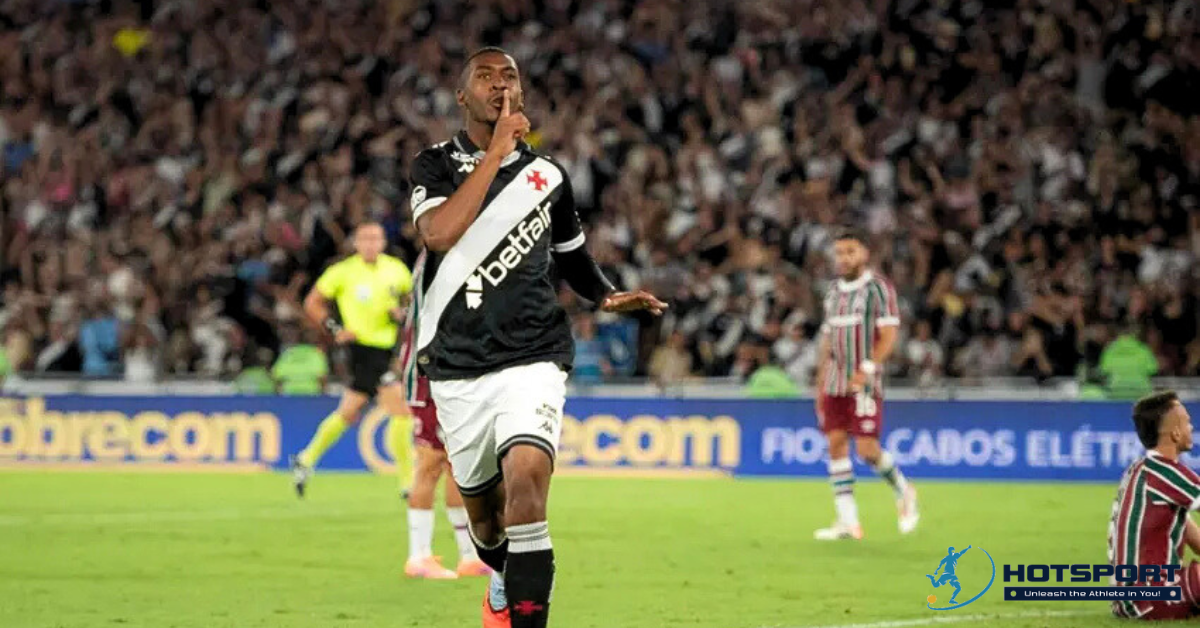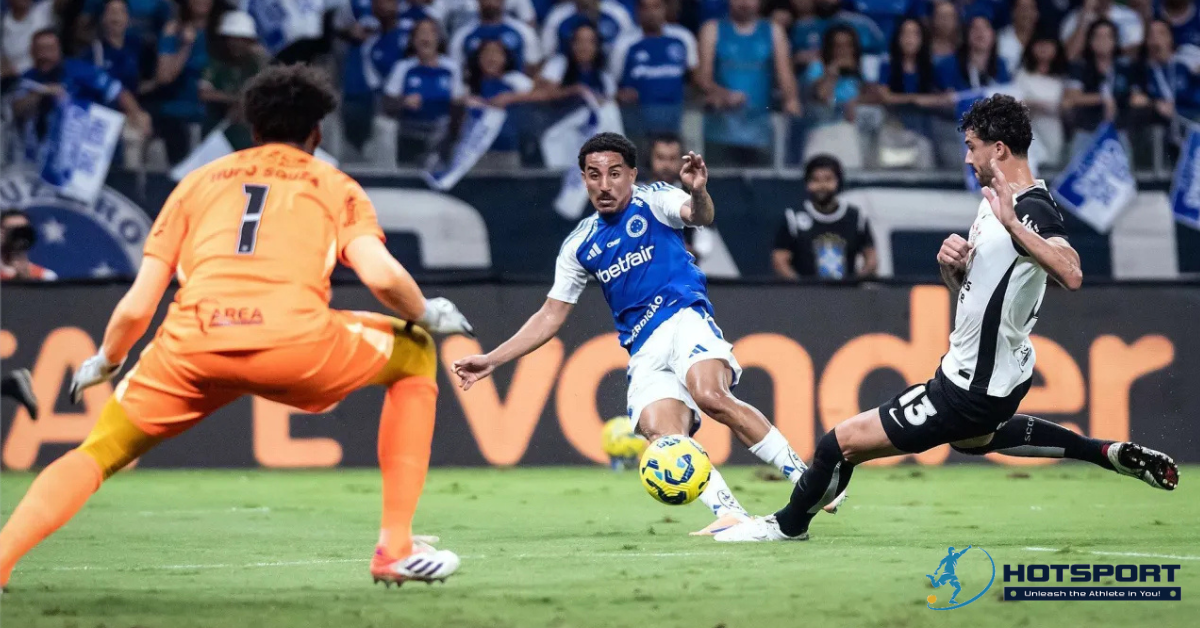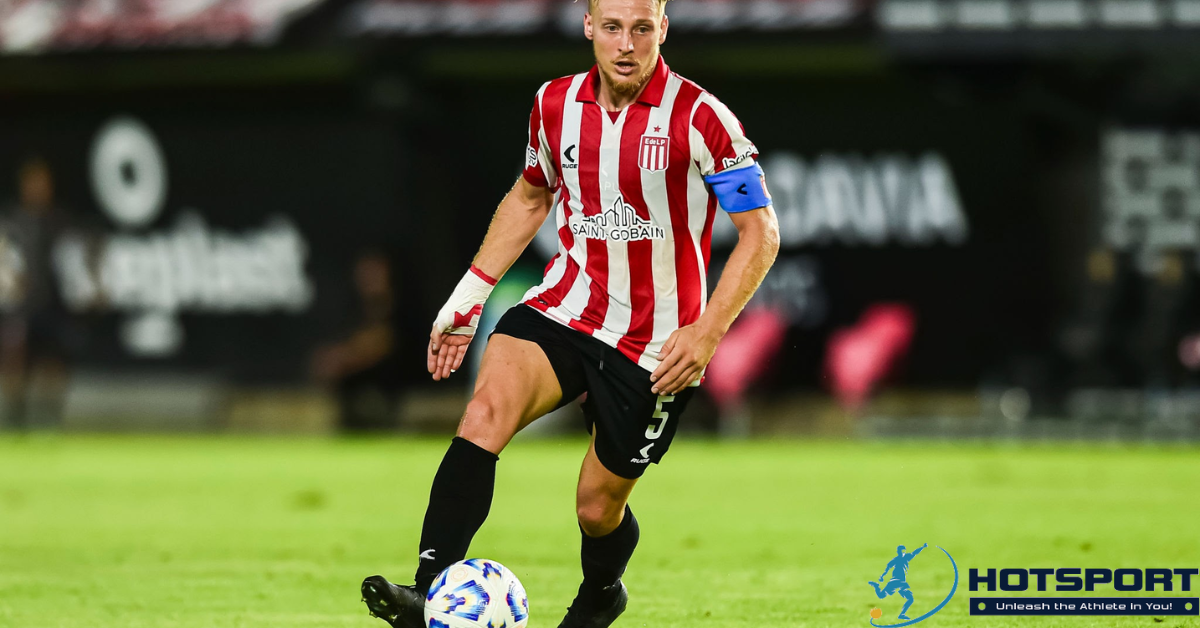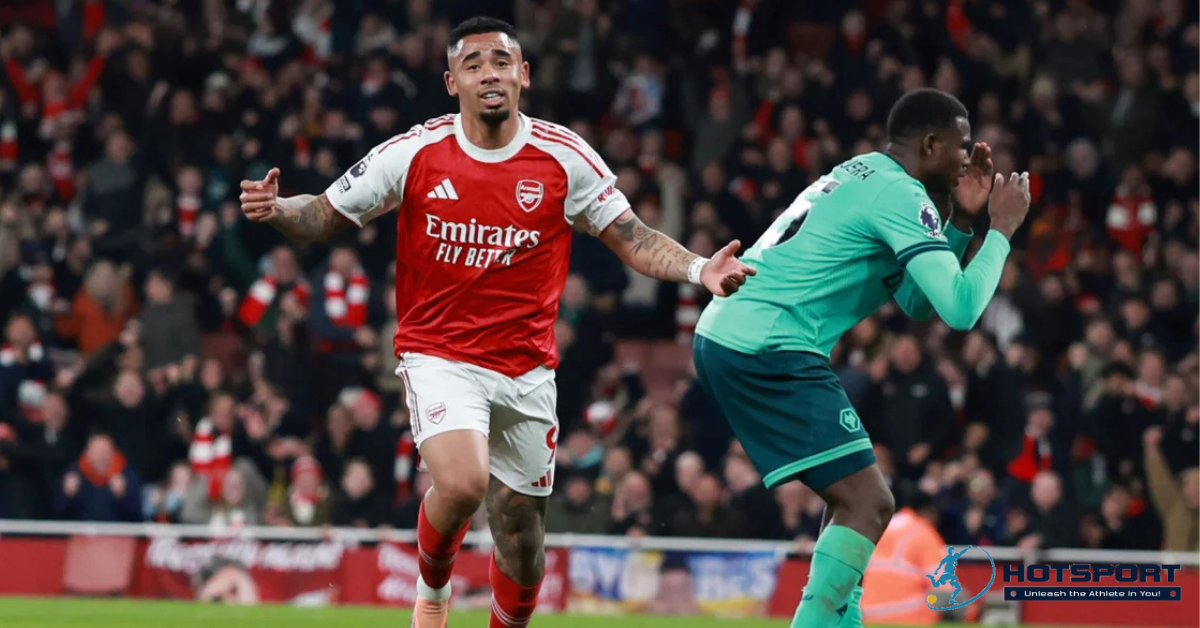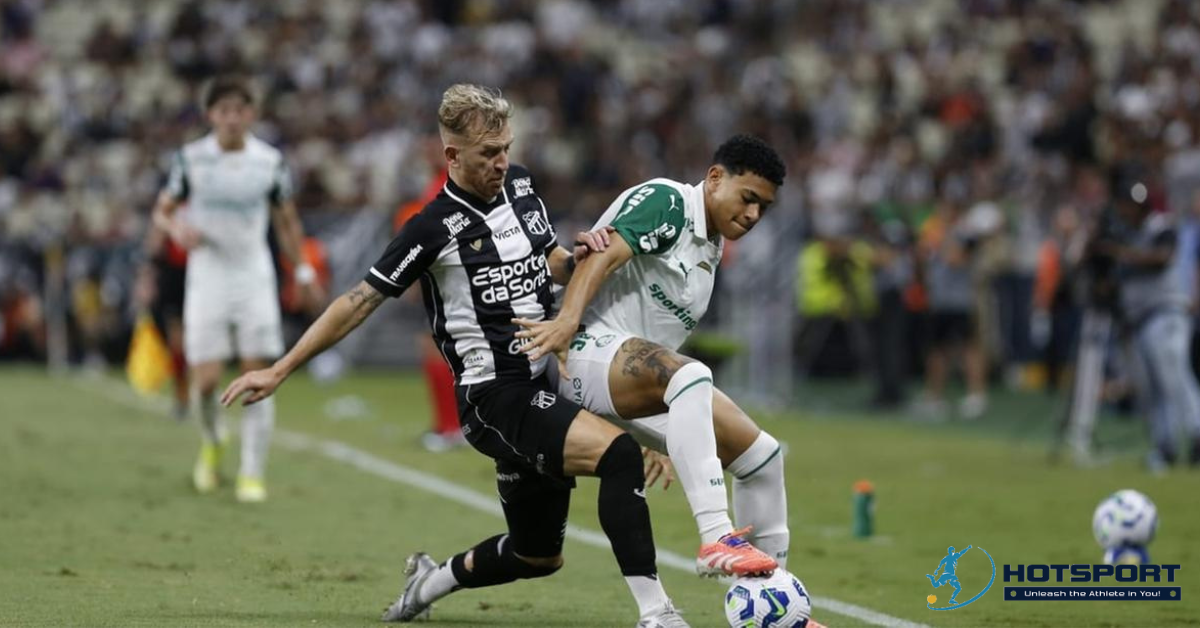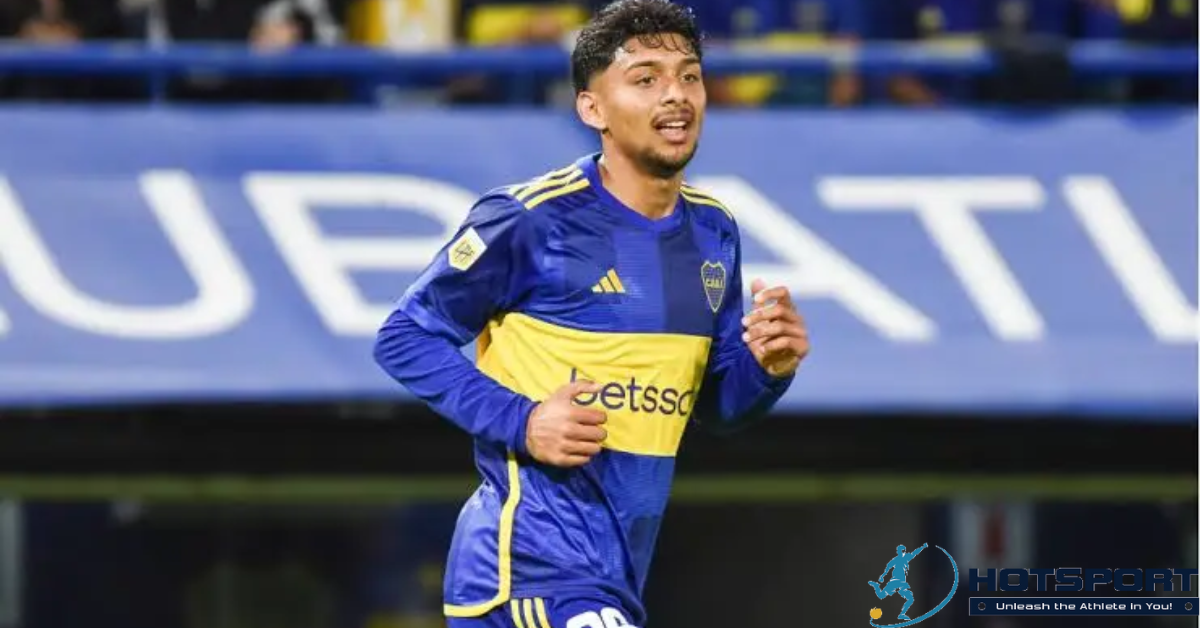
Introduction – Vasco da Gama vs. Fluminense: a dramatic derby, record attendance, and a historic comeback.

On the night of December 11, 2025, in one of the most anticipated matches of the Brazilian season, Vasco da Gama and Fluminense provided the public with one of the most electrifying games of the 2025 Copa do Brasil. The first leg of the semi-final at the mythical Maracanã Stadium ended with a dramatic 2-1 victory for Vasco, in a comeback in stoppage time of the second half that will remain in the memory of the fans.

The Rio de Janeiro derby has already begun amidst high expectations, with over 64,000 fans in attendance — the largest crowd of the competition so far, and also registering the highest revenue of the Copa do Brasil season (around R$ 7.45 million).

Fluminense took the lead with a goal in the first half, but Vasco showed resilience, equalized early in the second half, and only secured the victory in the final minutes with a decisive header from Argentinian Pablo Vegetti. This win puts Vasco in an advantageous position for the second leg and gives the team a nearly direct route to the 2025 Copa do Brasil final, putting pressure on Fluminense to win by two goals or by one to force a penalty shootout.

This article provides a complete analysis of the Vasco da Gama vs. Fluminense match, including pre-game context, confrontation tactics, detailed statistics, the impact of the victory, and projections for the return leg.

Pre-game context – rivalry, strategy and atmosphere at the Maracanã: Vasco da Gama vs. Fluminense

Vasco da Gama: the need for prominence and the pressure from the fans.

Vasco arrived for the match steeped in tradition and under intense pressure from the fans. The club had experienced periods of inconsistency throughout the season, alternating between good results and lackluster performances, especially in the Brazilian Championship. Therefore, the Copa do Brasil represented not only a chance for a title, but a real possibility to regain confidence and adopt a more assertive approach for the remainder of the season.

Inside the Maracanã, expectations were extremely high. From the start, the Vasco fans pushed the team forward, transforming every run, every pass, and every challenge into a moment of high emotional tension. The atmosphere directly influenced the team’s performance, which began nervously but grew stronger as the minutes passed and adapted to the demands of the game.

Fluminense: tactical balance and early advantage

On the other side, Fluminense delivered a solid performance, especially in the first half, building their game with patience, ball possession, and planned transitions. The coach assembled a team that sought to neutralize Vasco’s pressure and take advantage of their chances from set pieces or quick transitions.

The lead in the first 45 minutes seemed to reflect technical dominance, with Fluminense controlling the pace, exchanging passes and making subtle infiltrations — culminating in Serna’s goal. However, by retreating a bit more after opening the scoring, the Tricolor ended up conceding space to Vasco in the second half.

Lineups & Strategies – how the teams structured themselves: Vasco da Gama vs. Fluminense

Vasco da Gama’s strategy

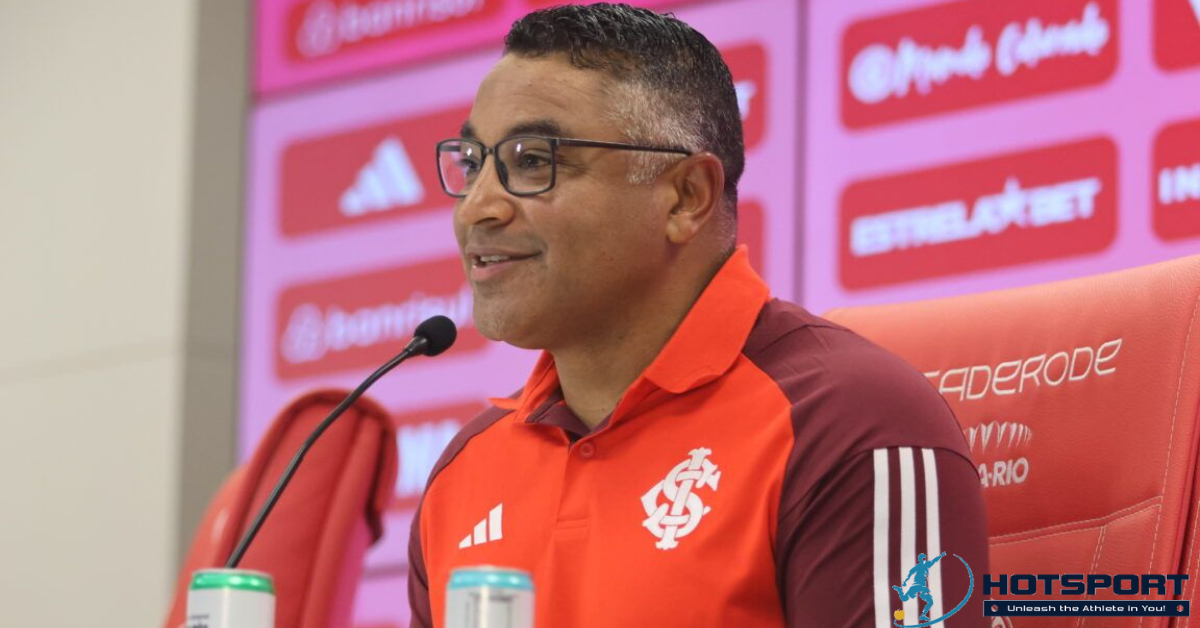
Vasco started determined to control possession and press in the final third. Coach Fernando Diniz set up a dynamic 4-3-3 formation, with Rayan constantly moving forward and Andrés Gomez creating space on the wings. The objective was to force the Fluminense defense into disarray and open up avenues for infiltrations down the flanks.

After conceding the goal, Vasco adjusted their marking in midfield and accelerated the transition, increasing verticality and looking for more direct passes to Rayan and Vegetti. This adjustment was crucial in turning the game around, especially in terms of converting plays into clear goal-scoring opportunities.

Fluminense’s tactics

Fluminense adopted a balanced 4-3-3 formation, focusing on ball circulation through the midfielders and a strong defensive presence in the midfield. The idea was to control segments of the game, win duels in the center, and launch precise attacks.

The Fluminense team showed organization in the first half, significantly limiting Vasco’s penetrations and dominating the action until taking the lead. However, after the break, with Vasco accelerating and seeking greater depth, Fluminense ended up retreating too much, making it easier for the home team to recover.

Summary by time – phases of the Vasco da Gama vs. Fluminense match

First Half – Fluminense imposes its rhythm and opens the scoring.

In the first half, Fluminense was superior in possession control and game reading. In the 22nd minute, Kevin Serna took advantage of a well-worked play through the middle and finished with precision to open the scoring, confusing Vasco’s defensive system and giving Tricolor the emotional control of the match.

This goal changed the approach of both teams: Fluminense dropped deeper to protect their lead, and Vasco needed to reorganize their structure to respond more incisively. The first half ended with Fluminense more confident and Vasco looking to make adjustments for the second half.

Second Half – Draw, Comeback, and Vasco’s Emotional Domination

In the final stage, Vasco returned more aggressive and direct. Just 4 minutes in, Rayan equalized the score after taking advantage of a defensive error by Fluminense and reacting quickly, taking the game to a new emotional level.

The remainder of the first half was balanced, with Fluminense trying to maintain their organization, while Vasco cautiously grew stronger in the attacking third. In stoppage time, at the 48th minute, Pablo Vegetti rose high after a precise cross to head the ball in and secure the comeback victory — a dramatic conclusion to such a closely contested match.

Complete statistics – Vasco da Gama vs. Fluminense

StatisticVasco da GamaFluminense
Goals21
Ball possession (%)56.8%43.2%
Shots (total)1311
Shots on target43
Corner kicks86
Yellow cards20
Goalkeeper saves22
Goals per half: 1st / 2nd0 / 21 / 0
Audience present64,99064,990
Paying public61,98361,983
Revenue collectedR$ 7,453,018.50
Headed goals10
Possession time in the final third~22%~18%

The statistics show that, although Vasco stood out more in the last 45 minutes, the game had great technical balance and emotional intensity in all sectors.

Impact of Vasco da Gama vs. Fluminense on the 2025 Copa do Brasil

Vasco – high strategic and moral advantage

With the victory, Vasco has a clear advantage in the semifinal match. The Cruz-maltino team can now advance to the final of the 2025 Copa do Brasil with a draw in the return leg, scheduled for December 14, 2025, again at the Maracanã, at 8:30 PM — a scenario that makes the dramatic triumph of this Thursday even more valuable.

The comeback also boosts the team’s confidence and reinforces the identity of a team capable of reacting under pressure. The performance in the second half and the ability to convert chances in crucial moments show emotional maturity that could be decisive for the remainder of the season.

Fluminense – tactical challenge and the need for a reaction

For Fluminense, the defeat after taking an advantage represents an emotional setback. The team will need to adjust its strategy for the return match, especially regarding defensive transitions and maintaining possession in more advanced areas.

The need to win by two goals or by one to force a penalty shootout increases the pressure on the Tricolor team, demanding a strong collective response in a derby that promises to be as tense as the first leg.

Extra Sections – Game Dynamics and Decisive Factors

Influence of added time and fan pressure

The comeback in stoppage time is not just a detail – it’s the expression of a game shaped by the atmosphere of the Maracanã. The Vasco fans, who broke attendance and revenue records for the 2025 Copa do Brasil, pushed the team forward in critical moments, creating a psychological effect that was directly reflected in the turnaround.

Collective and individual analysis: who stood out?

The highlight goes to Rayan, who scored the equalizer with precision and intelligent movement, and Pablo Vegetti, who showed excellence in aerial play to decide the game in stoppage time. Meanwhile, Fluminense showed good tactical awareness in the first half, but conceded space in the second, opening the way for Vasco’s comeback.

Conclusion – Vasco da Gama vs. Fluminense: comeback, tactical advantage, and emotional legacy.

The match between Vasco da Gama and Fluminense was one of the most intense events of the 2025 Copa do Brasil, proving that derbies can decide not only results, but also the trajectory of a season. Vasco, pressured by the fans and the need for a victory, showed resilience and growth throughout the game. The 2-1 comeback, achieved in stoppage time, symbolizes not only the team’s technical ability, but also the emotional and tactical strength that Fernando Diniz managed to extract from his players.

On the other hand, Fluminense had an efficient reading of the game at the start, establishing an advantage with Kevin Serna’s goal and controlling the pace until halftime. However, the inability to maintain this advantage in the second half exposed vulnerabilities that Vasco exploited quickly and precisely.

The combination of a massive crowd, record revenue, and a dramatic comeback reinforces the value of this match in the narrative of the 2025 Copa do Brasil. Vasco’s advantage now puts the team in a strategic position to decide the tie at home and increase their chances of reaching the final—something that sparks emotional and sporting expectations throughout the Vasco da Gama nation.

FAQs – Frequently Asked Questions about Vasco da Gama vs. Fluminense

1. What was the score of the game?
Vasco da Gama beat Fluminense 2-1 in the semi-final of the 2025 Copa do Brasil.

2. Where was the match held?
The match was held at the Maracanã Stadium in Rio de Janeiro.

3. Who scored the goals?
Kevin Serna (Fluminense), Rayan (Vasco) and Pablo Vegetti (Vasco).

4. What was the attendance?
64,990 fans, a record for the 2025 Copa do Brasil.

5. What was the revenue from the match?
R$ 7,453,018.50, the highest of the competition so far.

6. When will the second leg be?
December 14, 2025, at 8:30 PM, also at Maracanã.

7. What does Vasco need to advance?
A: With a draw in the second leg, Vasco advances to the final.

8. Does Fluminense still have a chance of reaching the final?
Yes — they need to win by two goals or by one to force a penalty shootout.

9. Did Vasco dominate possession?
Yes — 56.8% possession, reflecting greater control of the game.

10. What was the highlight of the game?
The comeback in stoppage time and the presence of the fans, which raised the emotional level of the match.

Trending Post

National Football

Introduction – Cruzeiro vs. Corinthians: tension, history, and the weight of the Copa do Brasil

On the night of December 10, 2025, the Mineirão Stadium in Belo Horizonte was the stage for a tense and decisive clash in the semi-final of the 2025 Copa do Brasil between Cruzeiro and Corinthians. In a game marked by historic rivalry and the dream of reaching the final of the most exciting competition in Brazilian football, the teams staged a nervous, balanced and emotion-filled match — the result of months of preparation and an intense schedule for both.

Cruzeiro, a traditional club from Minas Gerais with a large fan base and important titles in Brazilian football, took to the field looking to take advantage of playing at home and bounce back after recent ups and downs in the Brazilian Championship. The team was motivated by the chance to win its 7th Copa do Brasil title, a historic objective that had driven the squad since the earlier stages of the tournament.

On the other side, Corinthians, one of the biggest clubs in the country, sought to impose its experience and defensive solidity to leave Belo Horizonte with an advantage going into the decisive match. Timão had been consolidating good results and brought to Mineirão a competitive and determined team, led by standout figures like Memphis Depay, who would become the protagonist of the night.

The match, valid for the first leg of the semi-final, not only pitted two giants against each other, but also tested nerves, tactical planning and the ability to react under pressure — ingredients that make the Copa do Brasil one of the most unpredictable and intense competitions on the Brazilian calendar.

Context and Tension Before Cruzeiro vs. Corinthians

Cruzeiro: Open arms to history and mission at Mineirão

Cruzeiro arrived at the match strengthened simply by the fact that they were playing in front of their home crowd at Mineirão, a stadium with a tradition of big matches and intense atmosphere. The expectation was for a proactive team, one that would seek to dominate the game from the start and use the energy of the fans to create superiority in offensive plays.

However, Cruzeiro also faced questions. The team had been coming off mixed results in the Brazilian Championship and needed to balance physical intensity with tactical clarity to face an experienced and well-structured Corinthians. The focus was on being aggressive, taking advantage of quick transitions, and turning attacking opportunities into concrete goals.

The pressure on Cruzeiro was twofold: not only to advance, but to do so with authority in front of their fans, writing a positive page in the club’s history.

Corinthians: experience, strategy, and the mission to come out on top.

For Corinthians, the mission was to enter the Mineirão stadium with patience, composure, and the ability to withstand the initial pressure from their rival. Timão knew that, even away from home, they could impose their rhythm and wait for the right moment to attack.

Tactically, the team relied on defensive solidity, tight marking, and quick transitions with quality players in attack. Memphis Depay, with his goal-scoring instinct, would become a key player in breaking down the resistance of the Uruguayan defense.

Corinthians knew how to leverage their experience in decisive matches to build an efficient plan — focusing on defensive organization and passing that maximized every chance created.

Lineups & Strategies – Tactical Analysis of Cruzeiro vs. Corinthians

Cruzeiro started with a balanced formation, looking to exploit the flanks and create opportunities to penetrate down the wings. The idea was to take advantage of the presence of fast players on the flanks and infiltrate with crosses into the box. The team also relied on ball possession to dictate the initial pace of the match.

Corinthians, in turn, opted to compact their lines, reduce space, and work on quick counter-attacks. Their reading of the game allowed Depay, Yuri Alberto, and other forwards to receive the ball in scoring positions.

Tactically, the difference lay in Corinthians’ ability to neutralize Cruzeiro’s pressure and exploit the space conceded when the opponent became too exposed. This balanced approach ended up being decisive for the only goal of the match.

First Half – Fast pace, opportunities, and Memphis Depay’s goal.

The game started intensely from both sides. Cruzeiro, supported by the Mineirão stadium, sought to impose their game from the first moments, with quick passing and a constant presence in the attacking third. Despite this, Corinthians showed tactical discipline, maintaining a compact defensive block and waiting for the right moment to attack.

In the 21st minute of the first half, during a quick counter-attack, Memphis Depay received the ball in an open space and finished precisely into the corner, opening the scoring for Corinthians. The goal was a cold shower for Cruzeiro and highlighted the difference between the teams in the first half, transforming the technically balanced duel into a psychological advantage for Timão (Corinthians).

After the goal, Corinthians managed to control the game better, exploiting counter-attacks and maintaining a balance between defense and offensive transition. The narrow scoreline, however, filled both sides with hope for the second half.

Second Half – Control and pressure until the final whistle.

In the final stage, Cruzeiro returned even more offensively, determined to seek the equalizer and reopen the match. The team showed offensive presence and tried to break through Corinthians’ lines with infiltrations and attempted crosses. However, the solid marking of the São Paulo team prevented the chances from materializing into goals.

Corinthians, playing with balance, prioritized maintaining their lead and sought to manage possession at opportune moments to slow the pace of the game. There were still dangerous plays, changes of rhythm, and substitutions made by both teams, but the score remained 0-0 for the Minas Gerais side until the final whistle.

The 1-0 victory at Mineirão represented more than just a simple result: it was a triumph of strategy and composure against an opponent pressured by the need to find an equalizer.

Complete statistics – Cruzeiro vs. Corinthians

StatisticCruiseCorinthians
Goals01
Ball possession53%47%
Total shots106
Shots on target22
Corner kicks112
Yellow cards13
Goalkeeper saves12

Despite Cruzeiro having more possession and shots on goal, Corinthians proved more efficient in the decisive moments to secure the advantage in the first leg.

Impact of Cruzeiro vs. Corinthians on the 2025 Copa do Brasil

Cruzeiro – The challenge of overturning the away deficit.

The home defeat complicates Cruzeiro’s mission. Now, the team will need to seek a positive result in the return match, scheduled for the Neo Química Arena in São Paulo, to try and reach the final. Despite the setback, Cruzeiro still has a chance and could surprise if it maintains its intensity and organization.

Corinthians – Psychological and tactical advantage on the road to the final.

Corinthians, with a narrow advantage, emerges strengthened. Playing with composure, efficiency, and a well-organized structure, the team can now manage the home game and seek to secure a place in the final. The team’s confidence is likely to grow after a solid away performance.

This result also demonstrates Corinthians’ tactical strength in decisive matches, especially when they manage to neutralize attacks and exploit spaces at the right moments.

Context of refereeing and discipline on the field

One point that also stood out was the disciplinary control of the match. Corinthians received more yellow cards, reflecting the intensity of the confrontation and the need for interruptions to contain Cruzeiro’s quick transitions. The referee played an active role in maintaining the balance and security of the match, without major controversial incidents.

Decisive factors in Cruzeiro vs. Corinthians

Ball possession versus offensive efficiency

Although Cruzeiro controlled possession for much of the game, this statistic did not translate into a lead on the scoreboard. Corinthians showed that, in knockout matches, offensive efficiency and defensive organization can overcome territorial control.

Physical demands and wear and tear on the teams.

Both teams face an intense schedule in the second half of the season, which directly influences physical performance. The balance of time and the ability to maintain intensity for 90 minutes were key factors in this match.

Conclusion – Cruzeiro vs. Corinthians: Important advantage and pending decisions

The Cruzeiro vs. Corinthians match in the 2025 Copa do Brasil semi-final ended with a 1-0 victory for Corinthians — a result that, although narrow on the scoreboard, has a significant emotional and sporting impact on the tie.

Corinthians demonstrated a clear strategy, knowing how to efficiently take advantage of their offensive momentum and balance their defensive posture in the face of intense pressure from Cruzeiro at Mineirão. The away victory brings a psychological advantage and tactical stability, something crucial in decisive phases.

On the other hand, Cruzeiro, despite dominating possession for part of the game and balancing the play at various points, failed to convert its territorial superiority into goals—something that could prove costly in the semifinals. The team now faces a clear mission: to react in the second leg, play assertively, and take advantage of the opportunities that will surely arise in such a highly competitive match.

The Copa do Brasil, known for its twists and turns and drama, has yet to deliver its conclusion. The advantage gained by Corinthians is significant, but far from definitive. The excitement continues, the chances are still open — and the return leg promises to be one of the most hotly contested matches of the season.

FAQs – Frequently Asked Questions about Cruzeiro vs. Corinthians

1. What was the score of Cruzeiro vs. Corinthians in the 2025 Copa do Brasil?
Cruzeiro 0-1 Corinthians, goal by Memphis Depay at 22′.

2. Where was the game played?
Mineirão Stadium, in Belo Horizonte (MG).

3. When will the second leg be played?
On December 14, 2025, at 6 PM, at Neo Química Arena.

4. Who scored the winning goal of the match?
Memphis Depay scored the only goal of the match.

5. What does Cruzeiro need to do to qualify?
Win by 2 or more goals to advance in regulation time, or win by 1 goal to decide the tie on penalties.

6. Can Corinthians qualify with a draw?
Yes — with a draw in the second leg, Corinthians advances to the final.

7. What was the ball possession percentage in the game?
Cruzeiro dominated possession with approximately 62.8%, while Corinthians had around 37.2%.

8. Who was the standout player?
Memphis Depay, scorer of the goal and a key figure in Corinthians’ offensive strategy.

9. How did the refereeing influence the game?
The refereeing maintained firm control, issuing cards and penalties to manage the pace of the semi-final—with few truly controversial incidents.

10. How important is this game in the 2025 Copa do Brasil?
It’s crucial in determining who reaches the final — Corinthians has an advantage and can manage it in the second leg, while Cruzeiro will need to react under pressure.

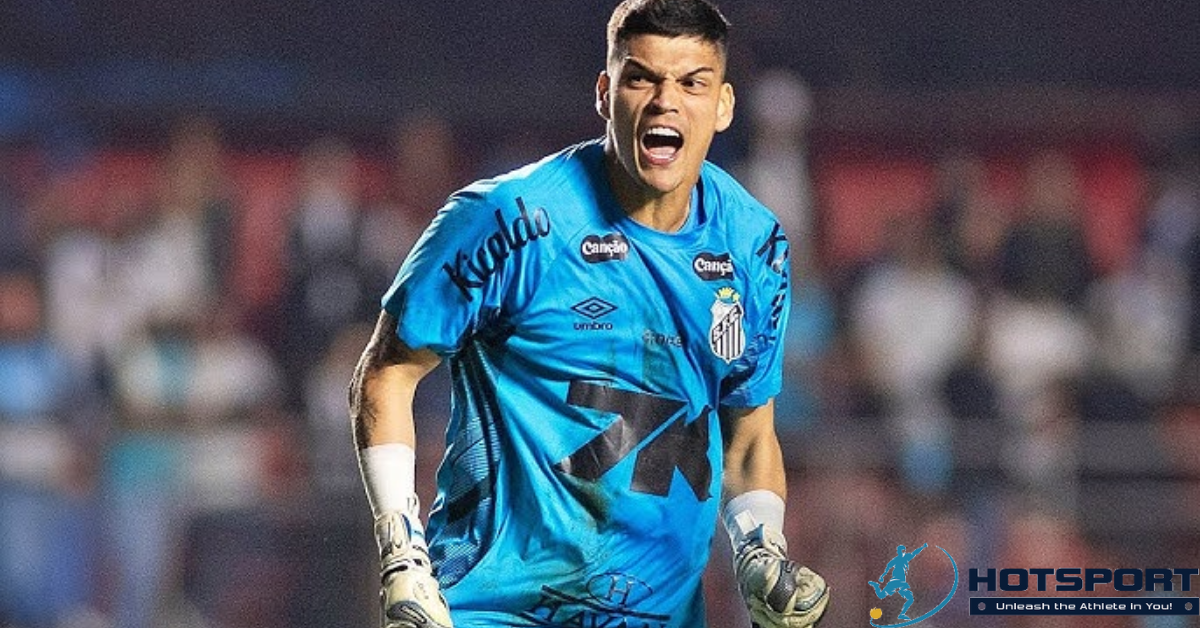
Gabriel Brazão, with his 1.92m frame and razor-sharp reflexes, has become an indispensable figure in Brazilian football. At 25 years old, the goalkeeper born in Uberlândia, Minas Gerais, carries a story of overcoming adversity that stretches from Cruzeiro’s youth academy to multi-million-euro negotiations with European giants. At Santos FC, he not only played a key role in winning the 2024 Série B title but has also stood out in the 2025 Brasileirão top flight, topping the global ranking for difficult saves. In this feature, we dive into the journey of this young talent who, in December 2025, is attracting interest from Bayern Munich while dreaming of cementing his legacy at a club steeped in tradition.

Early Days: From Uberlândia Streets to Cruzeiro

It all began in Uberlândia, a city in Minas Gerais’ Triângulo Mineiro region known for its scorching heat and for quietly producing gems. Gabriel Nascimento Rezende Brazão was born on October 5, 2000, into a humble family that saw football as a way out. From an early age, the boy stood out in street kickabouts and local tournaments with safe hands and fearless courage that caught scouts’ eyes. At 13, in March 2014, he moved to Belo Horizonte to join Cruzeiro’s youth setup, leaving behind his first club, Uberlândia Esporte Clube.

At Cruzeiro, Brazão found a highly competitive environment. The three-time Libertadores champion invested heavily in goalkeeper development, and he quickly rose above the rest. He trained alongside names like Rafael (who later became a starter) and soaked up lessons from the legendary Fábio, Cruzeiro’s eternal “Black Falcon.” In 2017, at just 16, he was called up to Brazil’s U-17 national team and shone at the World Cup in India, saving decisive penalties and being named the tournament’s best goalkeeper—a feat that put him on the international radar.

Back at Cruzeiro, his senior debut came in 2018, but opportunities were scarce with Fábio as the undisputed No. 1. Brazão racked up minutes in training and youth matches, dreaming of the day he’d wear the celestial shirt in a big game. Those years were intense learning. He dealt with the pressure of being compared to legends and early injuries that tested his resilience. “Cruzeiro taught me patience,” he would later say in a Globo Esporte interview. It was during this period that European scouts started circling, drawn to his imposing physique and rare ball-playing ability for a Brazilian goalkeeper at the time.

The European Adventure: Dreams, Loans, and Hard Lessons

The leap to Europe came in 2019 when Parma, of Italy’s Serie A, paid €2.5 million for the 18-year-old—a record fee for a goalkeeper sold by Cruzeiro at the time. He arrived in Italy as Luigi Sepe’s backup, but the off-field learning was priceless. Parma finished 14th, and though he didn’t debut, he trained intensely, absorbing Italian defensive tactics.

Just months later, in June 2019, he moved to Inter Milan, who had been tracking him since his Cruzeiro youth days and saw him as a future successor to Handanović. Competition was fierce—Sommer, Onana, and other youngsters all vying for spots. To gain experience, Brazão was loaned to Albacete in Spain’s Segunda División in December 2019. There, he finally made his professional debut in a Copa del Rey match, playing five games and showing composure in a shaky defense.

The 2020–21 season brought another loan, this time to Real Oviedo, also in Spain. Only three appearances, but invaluable lessons about the cold north and demanding crowds. Back at Inter in 2022, he wore the No. 31 shirt, but a left-knee meniscus injury changed everything—surgery, recovery, and another knee issue kept him sidelined for months. “The darkest moment of my career,” he later confided on Inter’s official website. Loans to SPAL and Ternana in 2023 yielded no playing time, reinforcing the need for a fresh start.

Those European years shaped Brazão. He became fluent in Italian, refined his positioning, and grew mentally. But Brazilian football—with its intensity and passion—was calling him home. Inter retained 40% of his economic rights, betting on a future payday.

Return to Brazil: Loan Back to Cruzeiro and More Injuries

In March 2022, Brazão returned to Cruzeiro on loan to fill the void left by Fábio’s departure to Fluminense. The Celeste fans welcomed their youth product like a hero, but fate had other plans. A pre-season knee injury, followed by surgeries, sidelined him for six months. When he returned, another goalkeeper had already claimed the spot. Still, his later numbers—38 Série A games in 2025 (with Santos, but echoing that resilience)—showed growth: 10 clean sheets and just 50 goals conceded in 3,398 minutes.

The loan ended in January 2023, and a frustrated but determined Brazão sought stability. Cruzeiro, mired in financial troubles, didn’t take up their purchase option. That’s when Santos, freshly relegated to Série B and in need of reinforcements, took a chance on him.

Rise at Santos: From Backup to Série B Hero

In February 2024, Brazão signed with Santos until December 2026, with Inter acquiring the remaining 60% of his rights. His debut came in May against América-MG after João Paulo’s injury. Immediate pressure—early mistakes drew boos—but he adapted quickly, becoming the undisputed starter and playing 30 of 31 Série B matches, helping the Peixe win the title with miraculous saves, including decisive penalties.

The demanding Santos fans embraced the Minas Gerais native. “Brazão is a wall!” they chanted at Vila Belmiro. In 2024, he played 31 Série B games, kept 14 clean sheets, and earned a 6.8 Sofascore rating. In November, his contract was extended to 2028—a sign of mutual trust. At Santos, he doesn’t just stop shots; he starts attacks with his feet, fitting perfectly into the team’s offensive style.

2025 Highlights: World Leader in Difficult Saves

2025 cemented Brazão as elite. Back in Série A, he played all 38 matches, conceding 50 goals but keeping 10 clean sheets. His 71.4% save percentage topped the Brasileirão, ahead of veterans like Fábio and Walter. In September, a head clash with Atlético-MG’s Igor Gomes left him with a huge bump, yet he stayed on and prevented a certain goal—a moment that went viral.

Voted the best goalkeeper of the 2025 Brasileirão in polls like Taquara News, Brazão recorded 94 difficult saves—more than Courtois or Sommer globally. In the Paulista championship, 13 games and 16 goals conceded. His market value soared to €8 million, and for a Santos side fighting relegation, he’s the anchor.

National Team Career: From U-17 Glory to Waiting for the Senior Call

The Canarinho has always been part of Brazão’s life. In 2017, he was pivotal in Brazil’s U-17 World Cup campaign, earning best goalkeeper honors. Two years later, he was a backup at the U-20 South American Championship. In 2018, at just 17, he earned two senior caps in friendlies against Uruguay and Cameroon—a rare honor.

Since then, call-ups have been sporadic, but coach Dorival Júnior keeps tabs on him. With Ederson and Alisson dominating, Brazão waits for his chance ahead of the 2026 World Cup. “I want to be ready when they call,” he said in a recent press conference.

International Interest and an Uncertain Future

December 2025 brings hot news: Bayern Munich have offered €12 million for 70% of Brazão’s rights—totaling €17 million including Inter’s share—as a long-term successor to Manuel Neuer, who turns 40 in March and has been injury-prone. Santos, needing funds for reinforcements, are considering it, though Brazão has expressed a desire to stay. Flamengo have also inquired, but his release clause is steep.

Rumors from October already pointed to Bayern, with journalist Ekrem Konur confirming interest at an estimated €15 million. For the goalkeeper, it’s a dilemma: Europe offers exposure, but Santos feels like home. “I’ll decide with my heart, but the club comes first,” he posted on X.

Conclusion: A Rising Talent

Gabriel Brazão is more than a goalkeeper; he’s a symbol of persistence. From Uberlândia to a potential Allianz Arena future, he has turned obstacles into stepping stones. At Santos, he fights for the team; in Brazil, he inspires the next generation. With 90 career appearances and a 6.8 average rating, his future is bright. Whether at Vila Belmiro or in the Bundesliga, Brazão will keep flying high. Football is grateful for talents like him.

Introduction – Ceará SC vs. Palmeiras

On December 7, 2025, the match between Ceará SC and Palmeiras at the Arena Castelão had all the elements of a great drama: crowd support, pressure, a last chance for salvation, and the ambition to finish the Championship on a high note. For Ceará, it was a matter of honor—and of remaining in the top division. For Palmeiras, despite already being assured of second place, it was a chance to end the season with a winning streak and extend their good campaign.

The atmosphere in the stadium was intense. The Vozão fans, even aware of the difficulty, kept their hopes alive: a victory could mean salvation, especially if combined with other favorable results. On the Palmeiras side, the team saw the game as confirmation of their good season, even with an alternative squad—a testament to their depth and professionalism.

When the ball started rolling, Ceará surprised everyone and opened the scoring with Pedro Raul. The stadium erupted, the fans believed. But Palmeiras reacted with patience and strength: they pushed forward, found spaces, turned the game around with precision, and imposed their rhythm. The 3-1 comeback, marked by pressure, nerves, and the coolness of the Palmeiras side, resulted in suffering for the home team and criticism of Ceará’s defensive structure. The final score didn’t just eliminate one game—it sealed Ceará’s relegation to Série B in 2026.

This article revisits every detail: from the pre-game context to the impact of the defeat, including goals, statistics, fan drama, and future implications for both clubs.

Pre-game – Expectations, fear and the weight of the final round: Ceará SC vs. Palmeiras

Ceará’s situation: fighting to stay in the league until the very last second.

Ceará entered the field with 43 points — a minimal margin, but still outside the relegation zone. The final stretch, however, had shaken the club’s confidence: negative results, defensive lapses, and increasing pressure. Therefore, the last round was seen as a final — a chance to finish well, to guarantee their stay in the league, and to avoid drama. The fans turned out in force, believing that home advantage could turn in their favor.

The expected strategy was bold: attack from the start, searching for a goal, applying pressure, and exploiting the flanks. The gamble was to take advantage of the opponent’s nervousness and use the crowd as fuel.

Palmeiras’ situation: second place secured, but desire to finish with a victory.

For Palmeiras, qualification as runner-up was already secured. Even so, there was motivation to seek victory—not only to finish on a high note, but to demonstrate consistency and give playing time to less-used players. The idea was to use the game as a squad test, mixing youth and experience, focusing on intensity and offensive transitions.

Palmeiras knew that a calm but efficient approach would be enough — and the team took to the field with the mentality of those who wanted to control the ball, exploit spaces, and manage the advantage when they managed to impose their rhythm.

The match – From Vozão’s hopes to Verdão’s comeback.

First half – Ceará opens the scoring, Palmeiras reacts, and the score is tied at halftime.

In the opening minutes, Ceará surprised everyone with a goal from Pedro Raul. The crowd erupted, hope was reborn, and the atmosphere at the Castelão stadium took on dramatic tones. Vozão seemed to believe that salvation could come early.

But Palmeiras — even with a reserve team — showed composure and patience. With ball circulation, patience, and organized pressure, the team reorganized. At 17 minutes into the second half (at halftime or shortly after, depending on the source), Verdão equalized with a goal from Facundo Torres, forcing Ceará to revise their plan.

With the score at 1-1 and time running out, the game opened up; Ceará lost momentum and Palmeiras gained confidence to apply pressure.

Second half – Comeback, dominance by Verdão and Vozão’s elimination confirmed.

In the second half, Palmeiras took control. More composed, more secure with the ball, and clinical in their finishing. In the 15th minute, Ramón Sosa scored the winning goal—a precise free-kick, real pressure, a concrete advantage.

A few minutes later, Flaco López sealed the score with a goal from inside the box, making it 3-1. The comeback was complete—and so was the punishment. Ceará didn’t react: defensive disorganization, growing anxiety, and mistakes that symbolize the problems of a team that culminated in relegation.

When the final whistle blew, the feeling was one of tragedy. Verdão celebrated another triumph; Vozão mourned the loss of the elite division.

Match statistics – Ceará SC vs. Palmeiras

MetricCearáPalmeiras
Ball possession46%54%
Finishing touches1217
Shots on goal48
Great chances24
Accurate passes417462
Passing accuracy83%88%
Mistakes committed1411
Corner kicks57
Expected goals (xG)1.322.75

These numbers show that, although Ceará managed to open the scoring and had moments of pressure, Palmeiras was more efficient, controlled possession, worked the ball better and converted its chances — which in modern football is often worth more than volume.

Immediate impact – Ceará’s relegation and a historic ending for Palmeiras.

  • Ceará has been officially relegated to Série B for 2026 — finishing in 17th place with 43 points.
  • The relegation has symbolic weight: the club had practically not been in the relegation zone for the entire season, but saw its salvation slip away in the final round. The drama exposes structural weaknesses and defensive instability in the decisive stretch.
  • Palmeiras finishes the 2025 Brazilian Championship as runner-up with 76 points — the best campaign ever seen for a runner-up since the beginning of the round-robin system with 20 clubs.
  • For Palmeiras, despite the title being out of reach, the away win and consistency reaffirm their strength, versatile squad, and competitive ability even with alternative lineups.

Tactical analysis – Why Palmeiras managed to turn the game around and Ceará succumbed. Ceará SC vs. Palmeiras

Palmeiras’ forces

  • Adaptability with an alternative team without losing intensity. The player rotation did not affect the offensive or defensive structure.
  • Offensive efficiency: quick transitions, objective finishing, and maximizing the chances created.
  • Control of the midfield and superior possession, allowing them to manage the game even away from home.
  • Mental resilience: even after falling behind, he maintained focus and confidence to turn the game around.

Weaknesses of Ceará

  • Defense exposed after the equalizing goal: marking errors and disorganized back passes opened up spaces for infiltrations.
  • Reliance on moments of emotion and fan pressure — lacking the tactical consistency to withstand the opponent’s reaction.
  • Lack of offensive effectiveness after the first goal; inaccurate finishing, little purpose, and frayed nerves.
  • Lack of defensive strategies to withstand pressure from the opponent, especially in crucial phases of the match.

Game highlights – Who shone and who disappointed: Ceará SC vs. Palmeiras

  • Facundo Torres — with the equalizing goal, he showed quality, composure, and leadership. His performance propelled Palmeiras towards a comeback.
  • Ramón Sosa — with a precise free-kick, turned pressure into an advantage. He was decisive at the key moment.
  • Flaco López , with precision, scored the goal that sealed the result and confirmed the comeback victory.
  • Pedro Raul (Ceará) — opened the scoring and revived the fans’ hopes, but couldn’t hold onto the lead.
  • Ceará’s defense was fragile in crucial moments; individual and collective errors contributed to their defeat.

Conclusion – Ceará SC vs. Palmeiras

The Ceará SC vs. Palmeiras match symbolized two contrasting realities of Brazilian football. While Palmeiras ended the year with confidence, depth, and clear demonstrations of collective strength, Ceará saw its season unravel in a 2025 marked by instability, anxiety, and a lack of consistency.

The game at Castelão made it clear that Palmeiras is a consolidated team, even with an alternative squad, while Ceará urgently needs to redefine its course. Relegation is not just a sporting result — it’s a consequence of structural problems, misguided decisions, and failures in building a technical identity.

For Palmeiras, the 3-1 score reinforces that the club remains highly competitive, regardless of opponent, stadium, or lineup. The performance was solid, disciplined, and showed that the project for 2026 is already starting on firm foundations.

If you enjoy in-depth analysis, comprehensive statistics, and detailed coverage of major matches, keep following our national football section.

FAQs – Frequently asked questions about Ceará vs. Palmeiras 2025

  1. What was the final score of the match?
    Ceará 1 × 3 Palmeiras.
  2. Who scored the goals in the match?
    Pedro Raul (Ceará); Facundo Torres, Ramón Sosa and Flaco López (Palmeiras).
  3. What did the result mean for Ceará?
    The team finished 17th with 43 points and was relegated to Série B in 2026.
  4. How many wins did Palmeiras have in the championship?
    With this victory, they finished the season as runners-up, with 76 points — the best runner-up finish in the era of the points system.
  5. Did Palmeiras have a clear advantage in possession?
    Yes. Palmeiras had approximately 55% possession compared to Ceará’s 45%.
  6. Did Ceará have clear chances to react?
    Few. Despite possession and moments of pressure, they lacked objectivity and offensive organization.
  7. Who stood out in the game?
    For Palmeiras: Facundo Torres, Ramón Sosa, and Flaco López. For Ceará, Pedro Raul — but the defense and the team as a whole couldn’t hold up.
  8. Why did Palmeiras win convincingly even with a reserve team?
    Because they maintained intensity, dominated the midfield, capitalized on their chances, and managed the game after taking the lead.
  9. Was this relegation expected for Ceará?
    No. The team had spent most of the season outside the relegation zone. The relegation was only confirmed in the final round.
  10. What changes for Palmeiras in 2026?
    Increased confidence, confidence in the squad, reinforcement of the tradition of finishing among the top teams, and renewed expectations to compete for titles.
  11. What changes for Ceará with the relegation?
    The need for reconstruction, financial and strategic replanning, strengthening the squad, and reviewing the structure to try for an immediate return.
  12. What does this game show about the unpredictability of the Brazilian Championship?
    That nothing is guaranteed until the last minute — neither staying in the league nor winning titles. Rhythm, consistency, and efficiency are what decide the outcome.

NBA

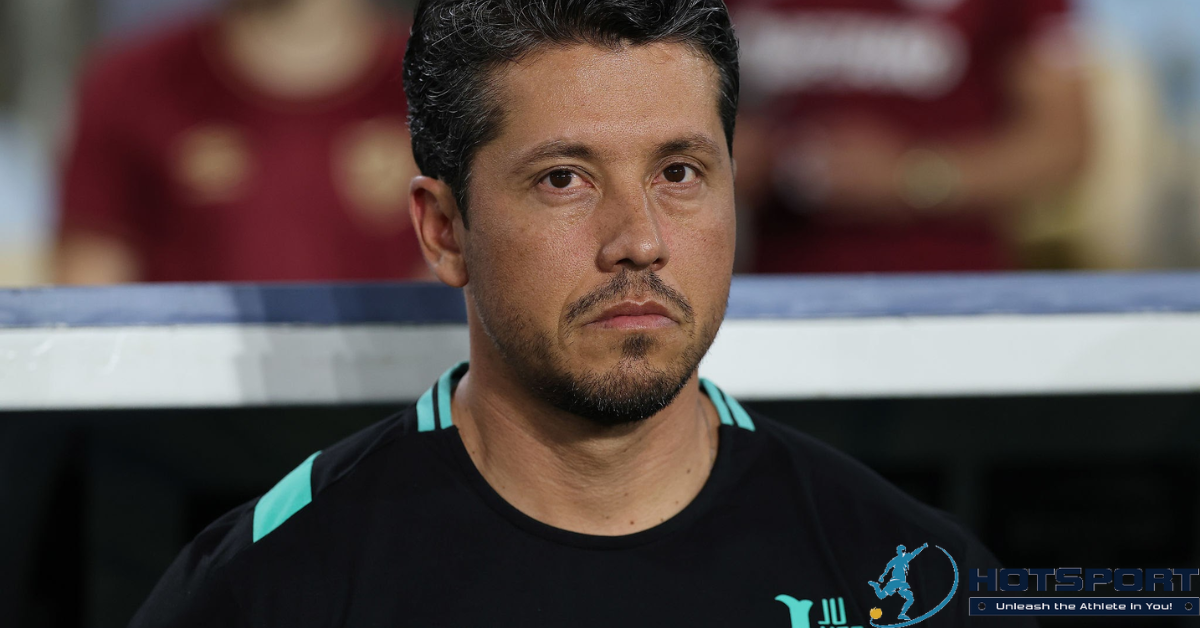
Thiago Carpini Barbosa, born on July 16, 1984, in Valinhos, in the interior of São Paulo, is a name that has been gaining increasing prominence in the Brazilian football scene. At 41 years old, the former defensive midfielder, who has transformed into one of the most promising coaches of the new generation, arrives at Fortaleza with the mission of elevating the Leão do Pici to even greater heights—now with the key objective of returning to the top flight after relegation. His journey, marked by overcoming challenges and surprising results at mid-tier clubs, reflects the resilient spirit of Paulista and Gaúcho football. In a turbulent 2025, with intense stints at Vitória and Juventude, Carpini ends the year with a new challenge in the Northeast, promising modern tactics and an attacking style of football that captivates fans.

His recent appointment to lead Fortaleza, announced on December 11, 2025, with a contract until the end of 2026, comes at a transitional moment for the Ceará-based club. After an irregular season that ended in relegation to Série B, the Tricolor seeks stability, and Carpini, with his experience in relegation battles and promotions, seems the ideal profile. But who is this professional who, in just a few years, leaped from interior teams to the elite? Let’s dive into the story of a man who combines the grit of a player with the strategic vision of a coach.

From the Pitch to the Bench: The Early Years as a Player

Thiago Carpini’s relationship with football began early, in the youth ranks of Guarani, the Campinas club that has shaped many Paulista talents. Born in Valinhos, a quiet town 100 km from the capital, Carpini grew up dreaming of a professional career. Standing at 1.85 m with an imposing physique, he excelled as a defensive midfielder—a position requiring balance between defense and playmaking. His professional debut came with Guarani itself in 2004, where he played matches in the Campeonato Paulista and Série B.

Carpini’s playing career was solid but not explosive. He moved through clubs like São Bernardo, Santo André, Inter de Limeira, and Oeste, accumulating over 200 appearances in regional and national competitions. In 2011, he defended São Caetano in Série B, showing versatility by scoring important goals in decisive moments. Injuries and fierce competition led him to retire in 2019, at age 35, with Água Santa. There, as captain, he began absorbing team management fundamentals, observing coaches and participating in tactical meetings.

Those years as a player were crucial in shaping his identity. Carpini always emphasized the importance of discipline and collective play—lessons he carries to this day. “Football is about people, not just the ball,” he said in an interview on Guarani’s official website years later. His transition to coaching wasn’t abrupt; he obtained his CBF Pro License in 2020 after courses at the Paulista Football Federation’s Coaching School. It was the kickoff for a new phase.

The Early Challenges: Building a Solid Foundation in the Paulista Interior

Carpini’s coaching debut came at Guarani in 2020, where he took over the under-20s and later the senior team on an interim basis. The Bugre was facing financial difficulties, but the 36-year-old injected new energy. In 2021, he moved to Inter de Limeira in the Paulistão, leading the team to the quarterfinals—a remarkable achievement for a modest club. His trademark was already emerging: a fluid 4-2-3-1, with box-to-box midfielders and fast wingers exploiting counter-attacks.

The turning point came in 2023 with Água Santa. Hired in February, Carpini turned the Netuno into an unlikely contender in the Campeonato Paulista. The team stunned Corinthians, Palmeiras, and São Paulo, reaching the final against Tricolor Paulista itself. Despite losing 5-4 on penalties after a 2-1 aggregate defeat, the campaign earned unanimous praise and caught the eye of Série A scouts. “It was a watershed moment. We learned to compete without fear,” Carpini reflected in a post-final press conference.

From there, he joined Ponte Preta in May 2023, coaching Macaca in Série B. Though promotion didn’t come, Carpini posted positive numbers: 12 wins in 30 games, with a solid defense (0.9 goals conceded per match average). His stint lasted until July, when a bigger offer arrived. Those interior years were a school: he dealt with limited squads, tight budgets, and passionate fan pressure, forging a pragmatic yet attacking style.

Rise to the Elite: São Paulo, Juventude, and Lessons from Pressure

In January 2024, Carpini took over São Paulo, replacing Dorival Júnior, who had left for the Brazilian national team. At 39, it was a dream come true: coaching a giant. He even won the 2024 Supercopa Rei against rivals Palmeiras. However, the stint was short and turbulent. In two months, Tricolor oscillated in the Paulistão and Libertadores, facing criticism for inconsistency. Sacked in April, Carpini used the episode as fuel. “Mistakes are teachers. At São Paulo, I learned about visibility and expectations,” he later commented.

He bounced back at Juventude in 2023 (and again in later stints), having previously promoted them to the elite in Série B. In 2024, Ju fought to stay in Série A, finishing 15th. His philosophy of quick transitions and high pressing yielded a 39% points percentage in 32 games. But the big test came in 2025.

At Vitória, hired in May 2024, Carpini led the Leão for over a year until July 2025. It included 75 games, 29 wins, 22 draws, and 24 losses—a 38.67% points percentage. The Bahian side avoided relegation for two straight seasons, thanks to an organized defense (only 74 goals conceded). Highlights included wins over Flamengo and Palmeiras, and a strong Copa do Nordeste campaign. However, early exits in the Sul-Americana and Copa do Brasil caused friction. Sacked after a poor run in July, Carpini left with his head high: “We left a legacy of unity.”

Return to Juventude and the Relegation Fight in 2025

2025 was a year of comings and goings for Carpini. In August, he returned to Juventude, taking over a team in the relegation zone of Série A. Announced on August 4, he brought initial optimism: in his first five games, he secured three wins, matching Ju’s tally from the previous 16 rounds. The 4-2-3-1 worked, with 8 goals scored and 6 conceded.

But Série A’s reality is harsh. In 22 games until December, the record was 6 wins, 6 draws, and 10 losses—a 27.27% points percentage. Juventude finished in the penultimate spot, relegated with 33 points. His farewell, on December 7, was a 1-1 draw against Corinthians at Neo Química Arena. In an emotional press conference, Carpini said goodbye: “Overcoming challenges defines this stint. I wish the successor luck; may they be as happy as I was.”

During this period, rumors swirled. In November, Sport Recife approached him for 2026, seeing a young, rising name. Days before leaving Ju, Coritiba listed him as Plan A for Série B. But Carpini chose Fortaleza, drawn to the structure and ambitious project in the Northeast.

Playing Style: Modern Tactics and a Philosophy of Overcoming

What defines Thiago Carpini? His 4-2-3-1 is versatile: midfielders advancing into attack, a creative No. 10, and wingers stretching the field. He prioritizes qualified possession (46.2% average in 2025) and shots (12.7 per game), without neglecting defense—18 clean sheets in the year. Influenced by coaches like Jorge Sampaoli and Abel Ferreira, Carpini bets on physical intensity and data analysis, using GPS tools to monitor training loads.

His philosophy goes beyond tactics. “Football is collective overcoming,” he often repeated after unlikely wins. At Água Santa, he promoted youth players; at Vitória, he integrated street football talents into the senior squad. Critics point to inconsistency in big games, but supporters highlight his ability to motivate limited rosters.

Achievements, Challenges, and the Horizon at Fortaleza

Among his highlights: runner-up in the 2023 Paulistão, Juventude’s 2023 promotion (and Supercopa win at São Paulo in 2024). Challenges? Quick sackings at São Paulo and Vitória tested his resilience. In 2025, he coached 62 games across both clubs, with 45.2% points percentage and a positive goal difference (73-68).

Now at Fortaleza, Carpini inherits a team that was Copa do Nordeste runner-up but relegated from Série A in 2025. His first training session, scheduled for December 15, already generates excitement. With reinforcements like a playmaker and an experienced defender eyed, the Leão targets the Sul-Americana (if qualified via other means) and a top spot in Série B for promotion. Rumors of interest in players like forward Moisés (ex-Corinthians) circulate.

The future? Carpini dreams of the Brazil U-20 team or a European giant, but focuses on the present. “I want titles that mark generations,” he told GE. His trajectory inspires: from Valinhos to national spotlight, he proves persistence beats isolated talent.

A Coach for Brazil’s Tomorrow

Thiago Carpini is more than a coach; he’s a symbol of Brazilian renewal. In a country dominated by foreign managers, he represents the national school, blending tradition with innovation. At Fortaleza, he begins a promising chapter—now with the clear goal of Série B success and promotion. Pici fans are already chanting his name, eager for a glorious 2026. The ball rolls, and Carpini, once again, is ready to surprise.

Related News

MLB

Introduction – Celtic vs Roma and a European night of survival and maturity

The Celtic vs. Roma duel represented much more than three points in the 2025/26 Europa League. It was a game of competitive survival, emotional maturity, and strategic reading on one of the most intimidating stages in European football: Celtic Park, known worldwide as Paradise .

Roma won away from home, enduring intense pressure, a hostile crowd, and an opponent desperately needing a result. With a solid, pragmatic, and mature performance, the Italian team showed that they are still in the fight for a direct spot in the round of 16, closing in on the top eight of the competition.

For Celtic, the night was marked by frustration. Despite their commitment, intensity, and volume of play, the Scottish team once again ran into old problems: difficulty finishing, a lack of creativity in the final third, and fragility in decisive moments.

The Celtic vs. Roma match perfectly symbolizes modern European football: it’s not always the team with more possession that wins, but rather the team that makes fewer mistakes, controls its emotions, and understands the context of the game.

Pre-match context – The weight of Celtic Park and the urgency of Roma

Celtic: all or nothing in front of the fans

Celtic entered the field under pressure. The team needed to win to maintain a real chance of qualifying. Playing at home, with more than 58,000 fans cheering them on from start to finish, was seen as the Scottish club’s main weapon.

The expectation was for an aggressive, intense, and emotionally charged Celtic. The club was counting on a high tempo, crosses into the box, and collective strength to overwhelm Roma from the opening minutes.

However, this pressure also brought anxiety. Celtic knew that any mistake could be fatal — and this influenced hasty decisions throughout the game.

Rome: a game of patience, control, and survival.

Roma arrived in Glasgow with a clear message: big games are won with a cool head. The objective was not to dominate possession, but to control space, neutralize the initial momentum, and be efficient when in possession.

The Roman team, more experienced in continental competitions, knew that surviving the first half would be crucial. A victory away from home was considered essential to keep the club competitive in the league standings.

Lineups and tactical plans for Celtic vs Roma

Roma – Compactness, experience and game reading.

Roma set up an extremely disciplined system, with:

  • Compact defensive lines
  • Steering wheels protecting the entrance to the area.
  • Sides are concealed, preventing exposure.
  • Mobile attack, exploiting counter-attacks.

The plan was to emotionally wear down Celtic, let time work in their favor, and capitalize on mistakes forced by the pressure from the fans.

Celtic – High intensity, but little offensive variation.

Celtic bet on:

  • High blood pressure in the first few minutes
  • Very offensive full-backs
  • Constant crossings

Despite the volume of play, the team struggled to vary their attacks. The predictability made the defensive job easier for Roma.

First half – Celtic vs Roma: pressure without effectiveness

In the first 20 minutes, Celtic tried to impose a suffocating pace. The crowd cheered, the team pressed high and sought to corner Roma in their own half.

The Italian team, however, showed maturity. They didn’t panic, worked the ball well when necessary, and neutralized the opponent’s main attacking routes.

The clearest chances of the first half, in fact, belonged to Roma — in quick transitions that exposed the Scottish defense. The half ended with the score at 0-0, but with a clear feeling that Celtic had expended a lot of emotional energy.

Second half – Roma is clinical in Paradise

After the break, Roma slightly raised their defensive line and began to better exploit the spaces left by Celtic. The Scottish pressure eased, and emotional control became more important.

The Italian goal came at a key moment: when Celtic were trying to increase the pace and were exposing themselves defensively. From then on, Roma controlled the game intelligently, slowed the pace when necessary, and cooled the atmosphere.

Celtic tried to fight back, but encountered:

  • well-positioned defense
  • Lack of creativity
  • Hasty decisions

The score held until the final whistle, confirming a highly valuable away win for Roma.

Full stats – Celtic v Roma

StatisticCelticPomegranate
Goals01
Ball possession (%)55%45%
Total shots1310
Shots on target34
Great opportunities created12
Corner kicks74
Intersections2111
Successful passes (%)83%86%
Mistakes committed1412
Yellow cards22
Disarms1719
Goalkeeper saves33
Errors that led to the termination.20

Celtic v Roma individual highlights

Pomegranate

  • Extremely solid defensive system
  • Midfielder with excellent emotional control.
  • An efficient attack, even with few chances.

Celtic

  • Good physical delivery
  • Lack of precision in the final third.
  • Too many predictable intersections

Impact of the result on the ranking

Pomegranate

  • It’s definitely in the fight for the G8.
  • It all depends on you in the final round.
  • Gain confidence for crucial matches.

Celtic

  • Critical situation in the group.
  • They need to win away and hope for a combination of results.
  • Campaign below European expectations.

In-depth tactical analysis – Why Roma won Celtic vs. Roma

Roma won because:

  • I knew how to suffer.
  • He controlled the emotional pace of the game.
  • He was efficient in crucial moments.
  • He made fewer defensive mistakes.

Celtic had possession, but lacked clarity. In European games of this level, that’s usually fatal.

Conclusion – Celtic vs Roma is a portrait of modern European football.

The Celtic vs. Roma match was a true reflection of contemporary European football. In a hostile environment, with maximum pressure and minimal margin for error, Roma showed maturity, discipline, and competitive intelligence.

It wasn’t a brilliant victory, but it was a necessary, strategic, and extremely valuable one. The Italian team leaves Glasgow emotionally strengthened, with real chances of qualifying and the feeling that they know how to compete when the context demands composure.

For Celtic, the lesson learned was hard. They didn’t lack effort, but European football demands more than intensity. It requires reading the game, tactical variation, and precision—points that the Scottish team still lacks in this Europa League.

FAQs – Frequently asked questions about Celtic vs Roma

1. What was the score of Celtic vs Roma?
Roma won 1-0 away from home.

2. Where was the game played?
At Celtic Park, in Glasgow.

3. Can Roma still qualify?
Yes, it depends solely on their own results.

4. Is Celtic eliminated?
Not yet, but the situation is very difficult.

5. What was Roma’s key advantage?
Experience, defensive organization, and efficiency.

6. Did Celtic have more possession?
Yes, but they created few clear chances.

7. Was the game balanced?
Yes, especially in the first half.

8. Did Roma play defensively?
They played strategically and intelligently.

9. Did Celtic miss clear chances?
They had few real goal-scoring opportunities.

10. Does this result change the group?
Yes, it leaves the competition open until the last round.

Introduction – Dinamo Zagreb vs. Betis: moment, meaning, and context of the match

The Dinamo Zagreb vs. Betis match, played this Thursday, December 11, 2025, at the Stadion Maksimir, offered a spectacle of attacking football, strategy, and efficiency that defined Real Betis’ superiority in the 2025/26 UEFA Europa League. The Spanish team won 3-1, practically guaranteeing their place among the qualifiers from the group stage with a convincing performance and important goals in the first half.

The match was very important for the standings, as Betis, with 11 points accumulated, is close to securing early qualification for the Round of 16, reinforcing the club’s good performance in this edition of the Europa League. Meanwhile, Dinamo Zagreb, a traditional Croatian team with a respected European history, saw its aspirations diminished after conceding three goals in quick succession before halftime.

For Betis, the match represented not only a victory in the group, but also confirmation of a collective evolution under Manuel Pellegrini’s leadership, highlighting their offensive power and efficient tactical awareness. Dynamo, on the other hand, despite playing in front of their home crowd and showing competitive moments, suffered a late consolation goal that had little impact on the outcome of the match.

This article provides an in-depth analysis of the game, including pre-game context, tactics, detailed statistics, and implications for the future of the tournament, as well as answering the main questions about the Dinamo Zagreb vs. Betis match.

Pre-match context – The situation of Dinamo Zagreb and Betis before the match.

Dinamo Zagreb: European tradition and the mission to score points.

Dinamo Zagreb entered the field motivated to gain points at home and keep alive their dream of qualifying for the final stages of the Europa League. The club, accustomed to major international clashes and with considerable dominance in games at the Stadion Maksimir, knew the emotional and tactical advantage of playing in front of their fans.

Despite this, the team had been coming off mixed results in the competition and needed a solid performance to fight for a spot. Historically, Dynamo has performed well at home and has successfully progressed through European group stages, but consistency in this edition of the Europa League was an unknown quantity until facing Betis.

Betis: comfortable favorites with a chance of early qualification.

Real Betis, on the other hand, arrived with a much more favorable scenario. With consistent performance throughout the group stage, the Spanish club had the chance to secure a place in the next phase without depending on other results. Their campaign had been built on a solid foundation of game control, efficient possession, and the creation of clear chances, with offensive players like Rodrigo Riquelme and Antony standing out, responsible for a large part of the team’s offensive production.

The visiting team’s strategy involved a lot of mobility, quick transitions, and midfield involvement to create numerical superiority in the final third—a tactic that proved decisive in the outcome of the match.

Lineups & Strategies – Tactical Approaches of Dinamo Zagreb vs. Betis

Dinamo Zagreb’s tactics

Dynamo lined up a formation focused on balance between defense and offensive transition, trying to maintain consistency in midfield and taking advantage of collective strength to pressure the visitors’ build-up play. The Croatian team featured players like Filipovic in goal, Mikic and Goda in defense, and Beljo and Hoxha in attack, looking for infiltrations and speed in quick transitions.

The idea was to control the midfield, conduct the game with possession-based play, and create chances without leaving too much space, but the strategy proved vulnerable to Betis’s fast transitions and high pressing in the early stages of the game.

Real Betis strategy

Betis played with a clearly offensive approach, prioritizing ball possession with the intention of verticality and intense presence in the opponent’s half. With quick structures and variations in pace between the midfielders and wingers, the team created space to shoot from different areas of the field.

Players like Rodrigo Riquelme and Antony were key not only in finishing but also in creating chances, with intelligent movement and direct involvement in the goals that decided the match in the first half.

First Half – Offensive pressure and three goals in seven minutes.

The first half was marked by Betis’ efficiency and speed in converting chances into goals. Between the 31st and 38th minutes, the Spanish team scored three times in just seven minutes, practically deciding the match before halftime.

  1. 31′ – Own goal by Sergi Domínguez (Dinamo Zagreb) after a cross that deflected and opened the scoring.
  2. 34′ – Rodrigo Riquelme (Betis) took advantage of an assist and scored with precision.
  3. 38′ – Antony (Betis) capitalized on a defensive error to make it 3-0.

This initial period of intense attacking play demonstrated Betis’ ability to convert dominance into concrete goals, reflecting a superior performance compared to their rival. The atmosphere at the Stadion Maksimir changed rapidly, with Betis taking control of the game and Dynamo trying to regroup after quickly conceding three goals in quick succession.

Second Half – Managing the lead and a late goal for Dinamo Zagreb

In the second half, Betis adopted a more calculated approach, maintaining their advantage with defensive organization and controlling possession when necessary. The team managed the game without completely abandoning attacking play, always looking to quickly recover the ball when Dynamo tried to advance.

Dinamo Zagreb’s consolation goal came only in the 89th minute, scored by Niko Galesic from a set piece after a corner kick — a late goal that added a bit more shine to the final score, but did not alter Betis’s consolidated superiority.

The remainder of the match showed a more balanced game, with few clear chances and a well-managed approach from the visitors, who knew how to protect the advantage they had built so well in the first half.

Full stats – Dinamo Zagreb vs Betis

StatisticDinamo ZagrebReal Betis
Goals13
Ball possession (%)42%58%
Total shots815
Shots on target25
Successful passes (%)86%91.2%
Passes completed380573
Corner kicks54
Yellow cards23
Goals in the first 30 minutes00
Goals 31–4503
Goals after 85 minutes10
Source: UEFA / ESPN

The statistics reinforce Betis’ territorial control, their efficiency in finishing, and their passing accuracy, especially in the first half, when they built the advantage that defined the game.

Impact of Dinamo Zagreb x Betis in the Europa League 2025/26

Betis: virtual early vacancy and increased confidence.

With 11 points after the victory, Betis is in a comfortable position in the group and very close to direct qualification for the Europa League round of 16 — an important objective for any club seeking continental success without depending on intermediate stages. The European performance reinforces the potential of the Spanish team and gives them even more confidence to face the decisive phases.

Dinamo Zagreb: a complicated task and a need for recovery.

For Dinamo Zagreb, the result represents a greater challenge in the final stretch of the group stage. The defeat increases the need to score points in the next matches if they still want to maintain chances of qualifying. Despite the late consolation goal, the Croatian team needs to adjust its offensive effectiveness and defensive solidity to return to fighting for positive results.

Additional Sections – Intensity & Context

Betis’ recent evolution in Europe.

Betis is not alone in this game — its European run has been consistent. In recent matches, the club has achieved important results away from home and closed defensive gaps that previously appeared during periods of pressure. This more mature and tactically organized approach has been a key factor in achieving high positions in the group.

Dinamo Zagreb and the challenge of playing away from home.

Although Dinamo has a solid home record and is known for the passionate support of the Croatian fans at Stadion Maksimir, the team struggled to control the game against an opponent with more recent international experience. This highlighted the need to improve their build-up play and defensive transitions for high-level European matches.

Conclusion – Dinamo Zagreb vs. Betis: a commanding victory and a path to the final stages.

The match between Dinamo Zagreb and Betis was marked by a display of Spanish superiority that translated into a convincing 3-1 away win. The visiting team showed a clear tactical plan from the start: pressure, intelligent attacking movement, and effectiveness in the final third of the pitch.

The three goals in just seven minutes in the first half were no coincidence: they reflect collective work, game reading, and the ability to capitalize on opponent’s mistakes. Betis transformed possession dominance into concrete results, something that is not always trivial in international competitions.

On the other hand, Dinamo Zagreb, despite fighting hard and managing a late consolation goal, showed that they still face challenges in matching the pace of more technically solid teams. The team still has potential, but will need adjustments if they want to maintain their aspirations in the Europa League.

This victory positions Betis as one of the favorites to advance strongly in the competition and signals that, in tactical terms, the Spanish club could be a difficult opponent in the knockout stages. For Dynamo, the lesson is clear: competing at a European level demands precision and execution in decisive moments—something Betis demonstrated throughout the 90 minutes.

FAQs – Frequently Asked Questions about Dinamo Zagreb vs Betis

1. What was the result of Dinamo Zagreb vs Betis in the 2025/26 Europa League?
Real Betis won 3-1 away from home.

2. Who scored the goals for Betis?
Own goals by Sergi Domínguez (31′), Rodrigo Riquelme (34′) and Antony (38′).

3. Who scored for Dinamo Zagreb?
Niko Galesic, in the 89th minute — a consolation goal.

4. Where was the game played?
At the Stadion Maksimir in Zagreb, Croatia.

5. What was the ball possession percentage?
Betis had around 58%, while Dynamo had 42%.

6. Is Betis close to qualifying?
Yes — with 11 points in the group, the club is close to the round of 16.

7. How was Betis’ defensive performance?
Solid, limiting Dynamo’s chances in the second half after taking the lead.

8. Does Dynamo have a chance of qualifying after this defeat?
The chances are reduced, requiring positive results in the next games.

9. What was the highlight of the match?
The collective performance of Betis, especially Antony and Riquelme.

10. Does this victory make Betis the favorite in the group?
Yes — consistency in results puts Betis in a privileged position.

Paolo Banchero is a name that resonates loudly in NBA arenas, blending Italian heritage with fierce American competitiveness. Born in Seattle, Washington, on November 12, 2002, this 6’10” (2.08 m), 250-pound (113 kg) power forward embodies the dream of countless young athletes: dominating professional basketball with versatility and charisma. As the star of the Orlando Magic, Banchero is not just a skilled player—he’s a symbol of overcoming obstacles and embracing a dual cultural identity. His journey from local courts to the brightest lights of the world’s premier league inspires generations. In this feature, we explore his path, achievements, and the latest chapters marking his meteoric rise.

Childhood and Family Roots: A Blend of Cultures

Paolo’s story begins in a sports-obsessed family. His father, Mario Banchero, comes from Italian immigrants with deep Neapolitan pride. A former college football player, Mario instilled discipline and physical toughness in his son. His mother, Rhonda Smith-Banchero, is a former professional basketball player who starred in the WNBA for the Seattle Storm. Rhonda trained Paolo from a young age and took him to community courts like the Rotary Boys & Girls Club in Seattle and elite camps such as EBC, where he shone at events like the Ballislife Jr. All-American Camp.

Even as a toddler, Paolo stood out—at 15 months old he already measured 3 feet (0.91 m) tall. In seventh grade, he grew from 6’1” to 6’5” in just a few months, instantly becoming a local phenomenon. He also tried football and track, initially dreaming of the NFL, but basketball, fueled by his mother’s influence, quickly became his true calling. His Italian-American heritage is no small detail: in 2020, Paolo obtained Italian citizenship, opening the door to the Azzurri national team. He represented Italy in EuroBasket 2022 qualifiers, telling FIBA that the senior-level opportunity from the European nation was impossible to turn down. This cultural duality enriches his identity and lets him move effortlessly between worlds.

First Steps in Basketball: High School to College

At O’Dea High School in Seattle, Paolo became a local legend. As a freshman, he already led the team in points, rebounds, and assists, earning MVP honors at the NBPA Top 100 Camp. His ability to shoot from deep, attack the rim, and dominate the paint drew national attention. To sharpen his game further, he transferred to IMG Academy in Florida—one of the country’s most competitive programs—where he faced elite competition and cemented himself as a top prospect in the class of 2021.

At Duke University, under legendary coach Mike Krzyzewski, Paolo exploded. In his one-and-done season (2021-22), he was named ACC Rookie of the Year, averaging 17.2 points, 7.8 rebounds, and 3.2 assists per game. He led the Blue Devils to the Final Four, showing poise in big moments. His playmaking and ability to guard multiple positions drew comparisons to LeBron James and Kevin Durant. After that stellar campaign, he declared for the 2022 NBA Draft, ready for the professional leap.

Arrival in the NBA: Draft and Rookie Year

June 23, 2022, became a historic day for Paolo and the state of Washington: he was selected as the No. 1 overall pick by the Orlando Magic—the first player from Washington state ever to achieve that honor in basketball. Analysts weren’t surprised; they saw him as a “unicorn”—a rare blend of size, skill, and basketball IQ. Signing a four-year, $268 million rookie contract, Banchero quickly integrated into a Magic franchise in rebuild mode.

His rookie season (2022-23) was nothing short of phenomenal. Averaging 20.0 points, 6.9 rebounds, and 3.7 assists over 72 starts, he became only the third rookie in NBA history to post 20+ points, 6+ rebounds, and 3+ assists per game—joining legends Oscar Robertson and LeBron James. In December 2022, he hit a game-winner against Toronto and dropped 28 points. His aggressive defense and on-court leadership earned him the 2023 NBA Rookie of the Year award by unanimous vote. Orlando finished with 34 wins, and Paolo emerged as the face of the franchise’s new era.

Breakout Seasons: Stardom and Accolades

The 2023-24 season confirmed Paolo as a bona fide star. Playing all 80 games as a starter, he raised his averages to 22.6 points, 6.9 rebounds, and 5.4 assists in 35 minutes per game—numbers that placed him among the Eastern Conference elite. His three-point shooting improved to 33.9%, and he became the offensive engine of a Magic team that returned to the playoffs for the first time since 2020. In April 2024, he was selected to the All-Star Game, becoming the youngest Orlando player ever to earn the honor at age 21.

At the 2024 Paris Olympics, Paolo chose to represent the United States—a decision that stirred controversy in Italy. Despite having previously played for the Azzurri, his choice of Team USA (where he scored 9 points in the gold-medal final against France) was seen by some Italian fans as a betrayal, while others celebrated it as loyalty to his American roots. On the court, he helped the U.S. claim gold. Back in the NBA, his leadership has the Magic dreaming of championships, with analysts often comparing him to icons for his vision and work ethic.

Recent Updates: Overcoming Injury in 2025

2025 brought both challenges and triumphs. In the early part of the 2025-26 NBA season, Paolo remained the cornerstone of an Orlando Magic team that has embraced a defensive identity under coach Jamahl Mosley. Through November, he was averaging around 24 points per game, excelling in transition and on offensive rebounds. Tragically, on his 23rd birthday—November 12—during a game against the New York Knicks at Madison Square Garden, he suffered a left groin strain in the first quarter. The injury sidelined him for 10 games, testing his resilience.

Without him, the Magic surprisingly thrived, winning 7 of those 10 games behind strong team play from Franz Wagner and Wendell Carter Jr. In interviews, Paolo expressed frustration but also gratitude for the recovery time: “It was only 10 games, but it felt like 50. I can’t wait to get back and compete for the rest of the year.” He returned on December 5 against the Miami Heat at Kia Center on a minutes restriction. In 20 minutes, he posted 9 points (3-8 FG), 6 rebounds, and 2 assists, helping secure a tight 106-105 win. Two days later against San Antonio, he already looked fully recovered, throwing down an impressive and-1 finish that went viral. By December 9, he was no longer on the injury report. Orlando, now 15-10 through 25 games, sits fourth in the East, and analysts believe his presence could push them toward back-to-back Southeast Division titles.

Achievements and Legacy: Beyond the Numbers

In his young career, Paolo has already collected awards that transcend stats: Rookie of the Year, All-Star, All-Rookie First Team, and All-ACC honors. His impact extends off the court—he runs basketball clinics for underprivileged kids in Orlando, inspired by his own Seattle roots. His Italian heritage makes him a cultural ambassador, promoting the sport in Europe through appearances in Milan and Rome.

Compared to players like Giannis Antetokounmpo for his versatility, Paolo stands out for his basketball IQ. His 48% mid-range efficiency and 5+ assists per game mark him as a modern “point-forward.” In 2025, he signed major endorsement deals with Nike and Gatorade, expanding his global reach.

Personal Life and Influences: Family and Mentors

Off the court, Paolo is grounded. He credits his mother Rhonda as his greatest mentor—she trained him late into the night. His father Mario taught him Italian traditions, cooking dishes like carbonara to keep the heritage alive. Paolo loves hip-hop and gaming but prioritizes philanthropy: in 2024 he donated $100,000 to youth sports programs in Seattle. His Olympic decision reflected loyalty to his American upbringing, though he maintains strong ties to Italy—he plans to host a basketball camp in Naples in the summer of 2026.

Banchero’s Future: Sky’s the Limit

At just 23, Paolo Banchero is on the cusp of a legendary career. With the Magic building around him, Franz Wagner, and Jalen Suggs, the franchise is eyeing NBA Finals appearances soon. Analysts predict he’ll be in the MVP conversation by 2026-27, especially if he tightens his pick-and-roll defense. His personal goal? “Be the best power forward in the league and bring a championship to Orlando.” Fresh off his injury comeback, Paolo looks more driven than ever, ready to lead a new dynasty in Central Florida.

Conclusion: An Icon on the Rise

Paolo Banchero is more than a basketball player—he’s the American Dream with an Italian accent. From the courts of Seattle to the sands of Orlando, his journey of resilience—from recent injury to Olympic glory—inspires millions. In a sport ruled by giants, he stands out for his humanity and pure talent. As the NBA evolves, one thing remains constant: Banchero is young, hungry, and unstoppa

TENNIS

Robert Renan Alves Barbosa is one of those names that echoes with promise in Brazilian football. At 22 years old, the center-back born in Brasília has already forged a path full of challenges and achievements, moving through traditional clubs in Brazil and Europe before arriving at Vasco da Gama in 2025. His story is one of overcoming obstacles, refined technique, and a passion that leads him to take risks in decisive moments, such as those chipped “cavadinha” penalties that have become his trademark. In this article, we delve into the journey of this young talent, from his first kicks in the federal capital to his recent performances that position him as a key piece for the Cruzmaltino.

Origins in Brasília: The First Steps of a Defender Born to Shine

Born on October 11, 2003, in Brasília, Federal District, Robert Renan grew up in an environment where football was more than a sport—it was a gateway to bigger dreams. Brazil’s capital, with its artificial pitches and local tournaments, served as the cradle for a boy who, from an early age, displayed an imposing stature and game-reading ability that caught attention. Standing at 1.86 meters and naturally left-footed, he stood out in street pickup games and informal training sessions, where his skill in reading the game and intercepting passes was already evident.

At 15, in 2018, Robert joined the youth ranks of Novorizontino, a Paulista club known for developing talents. It was there that he began shaping his style: solid in marking but always with a calibrated foot to start plays. The following year, in 2019, a bigger opportunity arose. Corinthians, a giant of Paulista football, signed him for their under-17 and under-20 teams. This transition marked the start of an intense learning phase. At Timão, Robert played in the 2022 Copa São Paulo de Futebol Júnior, a tournament that tests the limits of young athletes. His presence on the field was constant, and scouts were already whispering about the potential of a center-back who combined physical strength with tactical intelligence.

Those formative years weren’t just about glory. Minor injuries and the pressure of a club like Corinthians demanded early maturity. But Robert, with family support—who always dreamed of seeing him in big stadiums—persisted. His dedication to extra training and analyzing games from idols like Thiago Silva and Marquinhos prepared him for the professional leap. In Brasília, he left deep roots: childhood friends still comment on how the quiet boy transformed into a natural leader.

Professional Debut: Baptism at Corinthians and Initial Challenges

Robert Renan’s professional debut occurred on April 20, 2022, in a 1-1 draw against Portuguesa-RJ in the Copa do Brasil. Coming on in the second half, he showed immediate composure, helping hold the result. It was a symbolic moment: the boy from Brasília wearing the black-and-white jersey in a regional classic. A few weeks later, on June 26, came his baptism in the Campeonato Brasileiro Série A, in a goalless draw against Santos. In those first games, Robert racked up 10 appearances in the top flight, without scoring, but with performances that revealed his potential.

At Corinthians, between 2022 and 2023, he played 13 matches in total, alternating between the senior team and the youth setup. Coach Sylvinho praised his game-reading, but the club was going through an unstable phase, with early cup eliminations and relegation battles. Robert learned the hard way: in matches against rivals like Palmeiras and São Paulo, he tested his ability to handle pressure. It was during this period that his boldness began to stand out. In training, he practiced chipped penalties, a risky technique that divided opinions but which he saw as an expression of confidence.

Despite limited starting opportunities, his performance attracted international attention. In January 2023, Zenit Saint Petersburg from the Russian league made an irresistible offer: acquiring 50% of his economic rights in exchange for players and keeping Yuri Alberto at Timão. Robert signed a five-year contract until 2028, marking the end of his first stage in Brazil. At 19, he headed to Europe, leaving Corinthians with a legacy of grit and promises of return.

The European Adventure: From the Russian Cold to the Saudi Deserts

Arriving at Zenit in February 2023, Robert faced a cultural and climatic shock. Presented on February 20, he debuted soon after on March 4, in a 3-0 victory over Nizhny Novgorod. The Russian league, with its intense pace and compact defenses, tested his adaptation. In the 2022-23 season, he played nine matches, contributing to the national title—Zenit lifted the trophy in May. The following year, 2023-24, brought eight more games, including the Russian Super Cup in July 2023, where he shone by scoring the decisive chipped penalty in a 5-4 shootout win over CSKA Moscow. That image of a young Brazilian dancing with the ball went viral among Russian and Brazilian fans.

In total, 17 appearances for Zenit, no goals but valuable assists. However, fierce competition and the need for minutes to mature led to loans. In January 2024, he returned to Brazil, loaned to Internacional until August. At Beira-Rio, he debuted on January 21 in the Gauchão, in a win over Avenida. Alternating as center-back and left-back, he played 31 matches, including an assist against Cuiabá in the Brasileirão. But not everything was smooth: in March, he missed a chipped penalty against Juventude, drawing criticism and, unfortunately, racist attacks online. Inter issued a statement of repudiation, and Robert used the episode to grow, stating in an interview: “Mistakes are part of it, but racism has no place in football.”

The loan to Inter ended in August 2024, and soon came the next chapter: Al Shabab in Saudi Arabia from September 3. There, he established himself as a regular starter, playing 34 out of 35 league matches with three assists. He led the team to the King’s Cup semifinals and a respectable sixth place in the league. The scorching heat and the league’s more attacking style helped refine his ball distribution, turning him into a modern center-back capable of transitioning into midfield.

Back to Brazil: The Dream Fulfilled at Vasco da Gama

In August 2025, just turning 22, Robert Renan signed a loan with Vasco da Gama until June 2026, with a purchase option. Announced on August 25, he arrived at the Carioca club as reinforcement for the final stretch of the Brasileirão and cups. “Playing for Vasco was my family’s dream,” he said emotionally at his presentation. His debut came on September 12, in the Copa do Brasil quarterfinals against Botafogo: he came on in the second half in a 1-1 draw and scored the decisive penalty in Vasco’s advancement.

Up to December 11, 2025, Robert had accumulated 17 games for Vasco, without goals but with solid performances. In the Brasileirão, he helped a defense that conceded few goals at home, including a 2-0 win over Flamengo in November. His versatility—playing as central defender or left-back—has been crucial for coach Álvaro Pacheco (or the current manager), who praises his maturity. In a recent interview with Globo Esporte, Robert commented: “I returned to Brazil to reconnect with my roots, but with everything I learned in Europe.” The loan has been a success: Vasco is fighting for a Libertadores spot, and Robert emerges as a pillar of this campaign.

National Team Career: From Under-20 to Ambitions for the Senior Side

Robert’s international path started early. In 2021, with the under-18s, he played three games. For the under-20s, he debuted in November 2022 against Chile and became captain at the 2023 South American Championship in Colombia, where Brazil won unbeaten. 18 appearances and one goal for the youth teams. In 2023, he earned a senior team call-up in March for a friendly against Morocco but stayed on the bench.

For the under-23s, one appearance in 2023. Up to June 2023, he totaled 20 games for the Canarinho youth setups, no goals. With Dorival Júnior in charge, Robert hopes for a chance in 2026 for the World Cup qualifiers. His leadership in youth teams positions him well: “I want to honor the yellow jersey like I did with the under-20s,” he stated in a recent press conference.

Playing Style and Personal Legacy: More Than a Defender

Robert Renan is the prototype of the complete center-back: tall, strong in aerial duels, but with refined touches. His preference for chipped penalties reflects a bold personality, inspired by idols like Ronaldinho. He can play as left-back, adding attacking depth. Critics point to impulsiveness as an area for improvement, but his evolution across varied leagues—from the Russian cold to the Saudi heat—shows quick adaptation.

In his personal life, Robert keeps a low profile. Single, he dedicates time to his family in Brasília and causes against racism in sport, following the Inter episode. He’s a fan of Brazilian music and uses social media to motivate youth from the periphery. His net worth, estimated at around 60 million reais by Transfermarkt in 2025, reflects the market value of a rising talent.

Recent Updates: The Transformative Year of 2025 and a Promising Future

2025 has been transformative for Robert. After shining on loan at Al Shabab with 35 games and King’s Cup semifinals, his return to Vasco reconnected him with Brazilian football. In December, he was key in a 1-0 win over São Paulo, securing Vasco’s eighth place in the Brasileirão. Rumors of interest from Flamengo and European clubs circulate, but Robert focuses on the present: “I want titles here before thinking about the rest.”

With over 113 professional games to date (all without scoring goals but with trophies like the Russian league and under-20 South American), Robert Renan accumulates achievements beyond numbers. His journey, from Brasília to the Maracanã, inspires a generation. At 22, he is no longer just a promise—he is reality. And Brazilian football is grateful for yet another center-back raising the standard.

Thiago Mendes is one of those names that resonates on Brazilian and international pitches—a gritty defensive midfielder with vision and game-reading ability who has navigated the turbulent waters of professional football. Born on March 15, 1992, in São Luís, Maranhão, he embodies the essence of Brazilian football: technique combined with determination. With a career that took him from regional fields to elite European stadiums, Mendes has built a path marked by titles, challenges, and emotional returns home. At 33 years old, in December 2025, he remains active, wearing the Vasco da Gama jersey and contributing to decisive moments in national competitions.

His trajectory is not just about trophies but about overcoming obstacles. From a youth product at Goiás to an undisputed starter at clubs like Lyon and Lille, Thiago Mendes has always prioritized the collective. In Brazil, he is remembered for his solidity in midfield, recovering balls and distributing passes with surgical precision. This versatility—playing as a defensive midfielder or even as a center-back—makes him a valuable asset in any team. But what truly defines Mendes is his ability to adapt, whether in the heat of the Brasileirão or the rigor of the French winter.

Early Career at Goiás: The Foundations of a Future Star

It all began at Goiás Esporte Clube, where Thiago Mendes took his first professional steps. Revealed in the Verdão’s youth ranks, he debuted for the senior team in 2012, at age 20. It was an unforgettable season: Goiás won the Campeonato Goiano and, more importantly, the Campeonato Brasileiro Série B. Mendes, with his 1.77m height and sharp right foot, quickly became a key piece in the Esmeraldino midfield.

Over three years at the Goiano club, from 2012 to 2014, he played 137 matches in the Brasileirão and scored nine goals—impressive numbers for a holding midfielder. His trademark was his game-reading: precise interceptions and quick transitions to attack. In 2013, Goiás repeated the state title, and Mendes was one of the tournament’s standouts. That phase shaped his competitive character. “Football at Goiás taught me to value every opportunity,” he would say years later in interviews with local media.

His rise attracted international scouts, but Mendes opted for an intermediate step in Brazil before crossing the Atlantic. His departure from Goiás in 2014 marked the end of a victorious era and the start of a more ambitious journey.

Stint at São Paulo: Growth and Challenges at Tricolor

In 2015, Thiago Mendes signed with São Paulo FC, one of Brazilian football’s giants. The transfer was seen as an investment in the future: the club needed midfield reinforcements to compete for titles. In his early months, he faced adaptation to the frantic pace at Morumbi, but he soon imposed himself. With 112 appearances and eight goals over three seasons (2015-2017), Mendes helped Tricolor in solid Brasileirão campaigns and the Copa Libertadores.

One of the sweetest moments was winning the Florida Cup in 2017, a friendly tournament in the United States that served as preseason. São Paulo beat River Plate in the final, and Mendes was key to the victory. Off the field, he engaged in social projects at Morumbi, visiting underprivileged communities and encouraging young athletes—a reflection of his Maranhão roots.

However, injuries and internal competition limited his full shine. In 2017, with his contract nearing its end, a European opportunity arose. Lille, from France, bet on the Brazilian to bolster their defense. It was the springboard to a European chapter that would last years.

Adventure in France: Lille and Lyon, the International Peak

Ligue 1 would be the perfect stage for Thiago Mendes to shine. Arriving at Lille in 2017, he found a team in reconstruction. Over two seasons (2017-2019), he played 66 matches and scored three goals, helping the club stay in the French elite. His partnerships with players like Jonathan Ikoné and Loïc Rémy were crucial for important wins, such as against PSG. Mendes adapted quickly to the physical intensity of French football, praised by local media for his “Brazilian elegance in tackling.”

The big leap came in 2019, when Olympique Lyonnais signed him for around €14 million. At Lyon, from 2019 to 2023, he played 114 matches and contributed two goals. It was there that Mendes experienced his best years in Europe. The club won the Emirates Cup in 2019, and he started in the Coupe de la Ligue final, though the team finished as runners-up to PSG. In seasons like 2019-2020, his pass accuracy rate exceeded 90%, numbers that placed him among the league’s best midfielders.

Injuries plagued him in 2022, but Mendes returned stronger, extending his contract until 2025. His departure from Lyon in 2023 was emotional: fans filled Lyon’s airport to bid farewell to the “Brazilian warrior.” That European phase not only enriched his resume but also transformed him into a respected tactical leader.

Experiences in the Middle East and Return to Brazil

After Lyon, Thiago Mendes sought new horizons at Al-Rayyan in Qatar, from 2023 to 2025. The stint in the Middle East was more low-key—with limited official appearances recorded—but served as a period of recovery and planning. He used the time to study tactics and prepare for a return to Brazilian football, which had always been his dream.

In July 2025, Vasco da Gama announced his signing, a strategic reinforcement for the Cruzmaltino midfield. Signing until December 2027, Mendes arrived with a market value estimated at €2-3 million, bringing international experience to a team seeking stability in Série A.

Current Events in 2025: Standout at Vasco da Gama

2025 has been a year of redemption for Thiago Mendes at Vasco. Quickly integrating into the squad, he has played several matches in Série A, making a notable defensive impact. His average tackles per game is among the team’s highest, helping Vasco position itself in the mid-table.

A highlight came on the night of December 11, 2025, in the first leg of the Copa do Brasil semifinals at the Maracanã (or São Januário). Mendes started in Vasco’s 4-2-3-1 setup alongside Cauan Barros in midfield. The match against Fluminense was electrifying: the Tricolors opened the scoring with Kevin Serna in the 22nd minute, but Rayan equalized early in the second half at the 50th. The comeback came in stoppage time, with Pablo Vegetti heading in for 2-1 in the 94th minute. Mendes, playing the full 90 minutes, was crucial in containing Fluminense’s attacks, recovering vital balls and distributing play to the forwards. “It was a night of Vascaíno grit,” he commented post-match in a press conference.

With this victory, Vasco takes an advantage into the return leg, and Mendes becomes a central piece in the title fight. Off the field, he has engaged in social actions in Rio, visiting football projects in favelas, inspired by idols like Zico and Romário. His current form suggests 2026 could be one of consolidation at the Carioca club.

Achievements and Legacy: More Than Numbers, Stories

Throughout his career, Thiago Mendes has accumulated achievements that go beyond the pitch. With Goiás: two Campeonato Goianos and the Série B title. At São Paulo: the Florida Cup. In Europe: the Emirates Cup and runner-up in the Coupe de la Ligue. In total, over 350 professional league matches and 13 goals.

Though he has not worn the senior Brazil national team jersey—a gap he regrets but attributes to fierce competition—Mendes participated in under-23 call-ups and friendlies. His legacy is one of resilience: from injuries to cultural adaptations, he always returned stronger. For young midfielders, he is an example of professionalism, with rigorous training routines and family focus.

Conclusion: A Chapter Still Open

Thiago Mendes is more than a player; he is a living narrative of Brazilian football abroad and the return to roots. At 33, with a contract until 2027, he has energy for more glories at Vasco. If the Copa do Brasil semifinal is a harbinger, 2025 could end on a high note. In the end, Mendes reminds us that football is about persistence, passion, and above all, connection with the ball and the fans. May more chapters come in this inspiring story.

FOOTBALL

International Football

Introduction – France vs. Ukraine

On the night of November 13, 2025, the Parc des Princes stadium in Paris was the stage for a decisive clash: the French national team faced Ukraine in the European qualifiers for the 2026 FIFA World Cup. The score was emphatic: 4-0 for Les Bleus, who thus secured direct qualification for the World Cup.

This result in the “France vs. Ukraine” match wasn’t just about three points—it was a demonstration of superiority, collective competence, individual talent, and a winning mentality. With two goals from Kylian Mbappé, one from Michael Olise, and another from Hugo Ekitiké, France reinforced that it is ready to compete at the highest level.

Beyond the sporting performance, the game carried symbolic weight: it marked the 10th anniversary of the 2015 Paris attacks, provided a moment for tribute, and offered extra energy to the French fans. This emotional element gave even more significance to the triumph.

From the opening whistle, France took control — although Ukraine tried to resist in the first half, the technical and tactical dominance of the home team was evident. In the second half, when the score began to widen, the maturity and lethality of the French team became apparent.

This article will dissect the “France vs. Ukraine” match in depth: pre-game context, lineups, tactics, analysis of both halves, detailed statistics, player performance, impact on the group, and what changes going forward.

If you want to understand how France achieved this triumph and what it represents, follow along with this comprehensive analysis.

Pre-Game Context – Expectations, Pressure, and Scenario

Expectations from France

The French national team approached the “France vs. Ukraine” match with the clear mission of consolidating their lead in Group D and securing their place in the 2026 World Cup. Previous victories, squad stability, and natural favoritism created a responsibility: to win convincingly.

There was also the symbolic weight of playing in Paris on the tenth anniversary of the 2015 attacks. The fans, the media, and the atmosphere knew that the match was not just another knockout game—it was an opportunity to display national pride and sporting strength. This increased the pressure, but also served as a motivator.

Tactically, French coach Didier Deschamps prepared the team to impose their rhythm, control the midfield, utilize the depth of the full-backs, and prioritize Mbappé’s attacking presence. The plan aimed to secure the spot in style, leaving no room for surprises.

France had also been improving in terms of consistency: maintaining rhythm, avoiding fluctuations, finishing chances, and defending solidly. This was the moment to show that not only can they “win,” but they “win by a large margin.”

For the players, it was a chance to shine, take on responsibility, and enter the World Cup campaign with high confidence. Expectations were high—and the performance matched that.

Thus, the pre-game scenario for “France vs. Ukraine” was one of high pressure, maximum preparation, and a clear mission: to take a decisive step towards the World Cup.

Ukraine’s expectations

Ukraine entered the “France vs. Ukraine” match knowing they would be facing a powerhouse. The objective was simple in theory: resist, stay compact, take advantage of quick transitions, and extract something positive. But in practice, the challenge was enormous.

The visiting team opted for a defensive formation, attempting to neutralize France’s attacking power and threaten on the counter-attack. This required long crosses, second balls, fast players—but also discipline and collective intelligence.

Physically and mentally, Ukraine was facing fatigue: a limited squad, a series of games, pressure, and a motivated opponent in a favorable environment. The “France vs. Ukraine” match represented a high-risk moment.

The plan was to hold on until the end of the first half, perhaps score 0-0 or even 1-0, and then try to react. But the technical reality between the teams already showed a disadvantage for the Ukrainians.

Furthermore, there was an awareness that any serious mistake could cost them the game—not just in the score, but in terms of morale and ranking. So the game had a dual purpose: to compete and to learn.

Therefore, when they took to the field, Ukraine not only had France as their opponent: they had history, pressure, the opponent’s home ground — and they knew that “France vs. Ukraine” would be a huge test.

Pressure and Opportunity in Group D

In the Group D qualifying rounds, the “France vs. Ukraine” duel had a direct impact: a victory for France would practically seal their qualification; for Ukraine, it was a chance to keep the competition alive or at least even the playing field.

With each victory worth three points, and considering goal difference, the margin for error was small. France, by winning, would strengthen its advantage; Ukraine, by losing, would deepen its decline.

Furthermore, the competition evolves rapidly: teams that start poorly can lose emotional and technical rhythm — and the “France vs. Ukraine” match was one of those inflection points.

For the other teams in the group (Iceland, Azerbaijan), the result also mattered: it defined the leader, the contenders, and possible playoff spots. Therefore, the impact of “France vs. Ukraine” extended beyond the two teams themselves.

In short: winning was an obligation for France; resisting was urgent for Ukraine. And the outcome of the confrontation would influence the entire group standings.

Lineups & Tactics – France vs Ukraine

In the “France vs. Ukraine” match, France fielded a system that balanced solidity and offensive capability: a 4-2-3-1 or an adapted 4-3-3. The starting lineup included Maignan in goal; Digne, Upamecano, Saliba, and Koundé in defense; Kanté and Koné in midfield; Olise, Barcola/Cherki, and Mbappé in attack, with Ekitiké coming off the bench to provide depth. (Information based on monitored lineup)

This strategy allowed them to dictate the pace: possession control, full-backs supporting the attack, midfield covering, Mbappé as the focal point, and offensively-minded substitutes. France had three active fronts: possession, depth, and finishing.

Ukraine opted for a defensive formation: 5-3-2 or 5-4-1, with a reinforced back line, compact midfield, and two strikers for quick transitions. The plan was to absorb pressure, exploit speed, and make as few mistakes as possible.

Tactically, France prioritized quick ball circulation, attacks down the flanks, crosses, and offensive transitions after regaining possession. Ukraine sought to prevent these attacks and then counter-attack quickly—but this strategy didn’t hold up throughout the 90 minutes.

During the “France vs. Ukraine” match, Deschamps’ substitutions were strategic: Ekitiké, Akliouche, and Zaïre-Emery came on to maintain offensive freshness. Ukraine made few changes and lost control of the game as the score widened.

The tactical outcome was clear: France dominated all three pillars of the game—defense, midfield, and attack—and Ukraine was unable to react after conceding. In the “France vs. Ukraine” match, the details made the difference.

First Half – France vs Ukraine: Pace, Opportunities and Adjustments

The start of the “France vs. Ukraine” match showed France taking the initiative from the beginning. In the first 10-15 minutes, the full-backs were supporting the attack, the midfield was circulating, and possession was almost dictatorial. Ukraine, with a low block, tried to resist, but was already showing signs of fatigue.

Between the 20th and 30th minute, France intensified their offensive actions: Olise and Barcola appeared on the wings, Kanté and Koné sought the ball between the lines, and Mbappé pushed forward near the opponent’s penalty area. Ukraine retreated, waited, but conceded ground.

In the 41st minute, Barcola almost opened the scoring with a shot from outside the area that the Ukrainian goalkeeper saved for a corner. It was a warning sign that the visiting defense was vulnerable. (According to match statistics)

Even so, at halftime, the score remained 0-0. This showed that Ukraine managed to withstand some of the pressure, but physical and psychological exhaustion was inevitable. For France, the first half served to structure, apply pressure, and coordinate attacks with patience.

In the locker room, France emerged with a moral advantage: control of the game, territorial dominance, chances created—all that was missing was a goal. Ukraine knew they needed to react, but they were already showing signs of fatigue and vulnerability.

The second leg of “France vs. Ukraine” promised to be explosive — and it was.

Second Half – France vs. Ukraine: Explosion and Decision

At the start of the second half in the “France vs. Ukraine” match, France increased the pace even further, aware that their opponent was physically and confidently weakened. In the 55th minute, the penalty came: Mbappé took a Panenka-style shot and opened the scoring. This goal was the trigger.

With Ukraine shaken, France didn’t back down. Possession remained high, the switches on the flanks were constant, Olise was a nuisance, and the Ukrainian defense could no longer close down spaces. In the 76th minute, Olise scored with a shot on the turn after an assist from Kanté. The “France vs. Ukraine” match became a celebratory phrase.

In the 83rd minute, Mbappé finished off a persistent attacking move to make it 3-0, practically sealing the match. In the 88th minute, Ekitiké scored his first goal for the national team, after a pass from Mbappé, and closed the scoring at 4-0.

For the remainder of the second half, France made substitutions to maintain their energy, exchanged passes, controlled the pace, and avoided any scares. Ukraine watched, tired and unable to react. The “France vs. Ukraine” match turned into an exhibition.

The final minutes were a holiday for the French — and torment for the visitors. The result was sealed, qualification secured, and superiority demonstrated. In the “France vs. Ukraine” match, France did what it needed to do — and did it in style.

Statistics and Data for the France vs. Ukraine Match

Here is the complete and up-to-date data for the “France vs. Ukraine” match:

StatisticFranceUkraine
Score40
Ball possession (%)70.6%29.4%
Total shots251
Shots on target100
Corner kicks70
GoalsMbappé (55′ pen, 83′); Olise (76′); Ekitiké (88′)
Public41.055
Yellow cards1 (France)2 (Ukraine)
Successful passes / accuracy (%)~92%~74%
Estimated xG*~2.2~0.3 (value estimated by domain statistics)

These numbers reinforce France’s complete dominance in the match: possession control, attacking volume, finishing efficiency, and collective superiority. Ukraine only resisted for a short time, but couldn’t truly threaten the outcome.

Performance of Key Players

Kylian Mbappé

Mbappé was the symbol of success in the “France vs. Ukraine” match. Besides scoring two goals (a stylized penalty and a shot from inside the box), he created plays, provided assists, and led the team. His statistics—such as 10 shots, 66 touches, and 3 key passes—show that he didn’t just “score goals,” but was a central piece in the offensive system.

Furthermore, the first goal transformed the dynamics of the game and dismantled the Ukrainian defensive plan. Mbappé combined speed, finishing, and game reading—and that made all the difference.

His performance reinforces that he remains among the best in the world, and that France uses him as an offensive and emotional anchor. In the “France vs. Ukraine” match, he lived up to expectations.

It’s also worth noting that this was his 400th career goal (counting club and national team goals) according to reports, showing that he’s at a historic level.

If France wants to aspire to the 2026 World Cup, Mbappé needs to be at an elite level — and in this game he did.

Michael Olise

Olise was another standout in the “France vs. Ukraine” match. His goal in the 76th minute, with a turn and finish, showed that he has adapted well to the national team and possesses the profile of a decisive player. His movement between the lines, his reading of space, and his connection with Kanté were essential for France to extend their lead.

He brought freshness to the team, a valid offensive alternative, and showed that the French squad doesn’t depend solely on Mbappé. This versatility is crucial for maintaining competitiveness in long tournaments.

In the “France vs. Ukraine” match, his performance was more than just occasional—it was strategic: he moved defenders around, created space for the attack, and gave the team depth.

If France has title ambitions, players like Olise will need to repeat this type of performance. He proved he can thrive with the team.
In short, in the “France vs. Ukraine” match, Olise emerged as a sure bet and a key player.

Hugo Ekitiké

Ekitiké came on as a substitute in the “France vs. Ukraine” match to bolster the attack and ended up scoring his first goal for the national team in the 88th minute, after a pass from Mbappé. This moment is symbolic: a new talent emerging, with confidence, at a crucial moment.

His acceleration, dribbling, and finishing showed that he has the power and positioning to perform at a high level. For France, having alternatives to their main attack is vital to maintaining their rhythm.

In the “France vs. Ukraine” match, Ekitiké confirmed that he can be used intelligently in the final minutes to maintain pressure or consolidate an advantage.
The fact that he scored in such an important game adds value to his career—and makes him a player to watch for the 2026 World Cup.

He exemplifies how France combines experience and youth, and in the “France vs. Ukraine” match, this mix worked.

N’Golo Kanté

Kanté may not have scored or assisted in the “France vs. Ukraine” match, but his presence in midfield was crucial. He recovered the ball during the play that led to Olise’s goal, helped maintain midfield superiority, and allowed the forwards freedom to operate.

This type of invisible contribution is often underestimated, but in the “France vs. Ukraine” match, the importance of a defensive midfielder who covers spaces, marks, distributes the ball, and balances the team became clear.

For France, keeping Kanté or a player with a similar profile will be essential if they want to go far in the World Cup. He allows the attacking structure to function with less risk.

In the “France vs. Ukraine” match, Kanté once again showed pace, energy, and good reading of the game — demonstrating that, despite his age, he can still contribute at a high level.

French Defense

The defensive quartet (Digne, Upamecano, Saliba, Koundé) had a solid performance in the “France vs. Ukraine” match. Even when facing pressure, they didn’t concede any dangerous shots, allowed little space, and contributed to the team’s possession advantage.

The team approached the match with compactness, coverage, and anticipation—qualities that made the difference when France picked up the pace. Ukraine attempted counter-attacks, but encountered obstacles.

Furthermore, the connection between defense and midfield was efficient: short transitions, positionally correct, and with few errors. This allowed France to maintain control.

If France intends to be competitive in the World Cup, this defensive solidity will be vital. The “France vs. Ukraine” match served as a successful test in this regard.

In short: elite offense + solid defense = a formula that worked perfectly.

Impact of Victory – What Changes with “France vs. Ukraine”

For France

The 4-0 victory in the “France vs. Ukraine” match practically guarantees that France will be at the 2026 World Cup as a seeded team and a contender. Their campaign so far has been convincing, and this triumph closes part of the qualifying cycle with authority.

Psychologically, it confirms that the team knows how to win with clarity, not just through sheer determination. For Deschamps and the team, it validates their system, depth, and winning mentality.

Financially and institutionally, it guarantees that the French Federation will have at least one more World Cup appearance, which means strengthened image, sponsorships, market share, and global projection.

Planning for 2026 can now focus on squad building, experience, and tournament strategy—without the immediate pressure of qualifying. This “France vs. Ukraine” match has freed up energy for later stages.

France sends a message: “We are strong, we are ready, we count on you.” This stirs up rivals, inspires fans, and consolidates ambitions.

To Ukraine

For Ukraine, the setback in the “France vs. Ukraine” match is tough, but necessary. It shows that there is still a technical, tactical, and squad-specific gap to overcome the big teams. This requires analysis, repositioning, and investment.

The team will need to rebuild confidence, work on ball distribution, quick transitions, ball retention, and offensive support — points that were evident in the match.

Defeat also serves as a barometer: against an elite opponent, temporary resistance is not enough; quality is needed to supply the attack, vary traction, and exploit spaces.

Competitively, Ukraine falls into the fight for the second qualifying spot or the playoffs — the “France vs. Ukraine” match defines this scenario. It’s time to react or risk further setbacks.

Still, this was an opportunity for high-level competition — which can be used as a starting point for growth.

For Group D

In Group D of the qualifiers, the “France vs. Ukraine” match served as a turning point. France isolates itself, reduces uncertainty, and the rest of the group sees its goal of becoming group leader slipping further away.

The rivals now need to respond in kind — results no longer just count towards points, they now demand performance to keep pace.
The victory demonstrates that teams with structure, talent, and mentality can impose a dynamic of dominance in the group. For the others, all that remains is to catch up — and fast.

In terms of the 2026 World Cup draw, France is well-positioned to be a seeded team, bringing logistical and matchup advantages.
The “France vs. Ukraine” match was not just another qualifying game—it was an announcement of status, advancement to the next stage, and the start of a new phase.

Conclusion – France vs. Ukraine

The France vs. Ukraine match ended with a resounding 4-0 victory, but its significance goes beyond the score. France showed they are ready for the big stage: talent, squad depth, mentality, and execution. Mbappé reaffirmed his leadership, Olise and Ekitiké delivered quality performances, the defense functioned well – and the objective of qualifying was achieved with authority.

For Ukraine, the result serves as a warning and a turning point: the path to reaching the top requires more planning, higher quality action, and less room for error.

If you follow international football, qualifiers, national teams, and want high-level content, this “France vs. Ukraine” duel is a model of dominance and exhibition.

FAQs – Frequently Asked Questions about “France vs Ukraine”

  1. What was the score of the France vs. Ukraine match?
    Answer: France won 4-0 on November 13, 2025, at the Parc des Princes, Paris.
  2. Who scored the goals for France?
    Answer: Kylian Mbappé (55′ penalty, 83′), Michael Olise (76′) and Hugo Ekitiké (88′).
  3. Does this result guarantee France a place in the 2026 World Cup?
    Answer: Yes — with this victory, France secured direct qualification as leader of Group D.
  4. What was the ball possession like in the “France vs. Ukraine” match?
    Answer: Approximately 70.6% for France and 29.4% for Ukraine — highlighting the absolute control by the hosts.
  5. How many shots on goal did France have?
    Answer: Approximately 25 shots on goal, compared to only 1 by Ukraine.
  6. What was the key moment of the match?
    Answer: The penalty converted by Mbappé in the 55th minute — which broke the Ukrainian resistance and paved the way for the subsequent goals.
  7. What was France’s starting lineup?
    Answer: Maignan in goal; Digne, Upamecano, Saliba, Koundé in defense; Kanté and Koné in midfield; Olise, Barcola/Cherki and Mbappé in attack; Ekitiké among the substitutes.
  8. What are the implications for Ukraine?
    Answer: The defeat complicated the situation in the group — the team will have to react to maintain chances of qualifying or at least fight for a playoff spot.
  9. What was the emotional significance of the match?
    Answer: Held on the 10th anniversary of the 2015 Paris attacks, the match featured tributes and an intense emotional atmosphere—adding weight to the French victory.
  10. Who else stood out besides Mbappé?
    Answer: Michael Olise was decisive, scoring and moving well; Hugo Ekitiké also shone, scoring his first goal for the national team.
  11. Has France conceded any goals in this campaign so far?
    Answer: Not in this game — they kept a clean sheet in the “France vs. Ukraine” match, reinforcing their defensive solidity.
  12. What was the stadium’s attendance?
    Answer: 41,055 spectators were present at the Parc des Princes.
  13. So, what’s France’s next step?
    Answer: With qualification virtually secured, France can rotate its squad in the last two qualifying matches and focus on preparing for the World Cup.
  14. Is there a tactical lesson for the other teams from this game?
    Answer: Yes — it shows that dominating possession, maintaining offensive mobility, having key players like Mbappé, and maintaining defensive solidity are pillars for significant victories.
  15. How did Olise’s goal happen?
    Answer: After Kanté recovered the ball, Olise turned inside the area and finished with precision — it was the second goal and highlighted the French team’s control.

LATEST POST