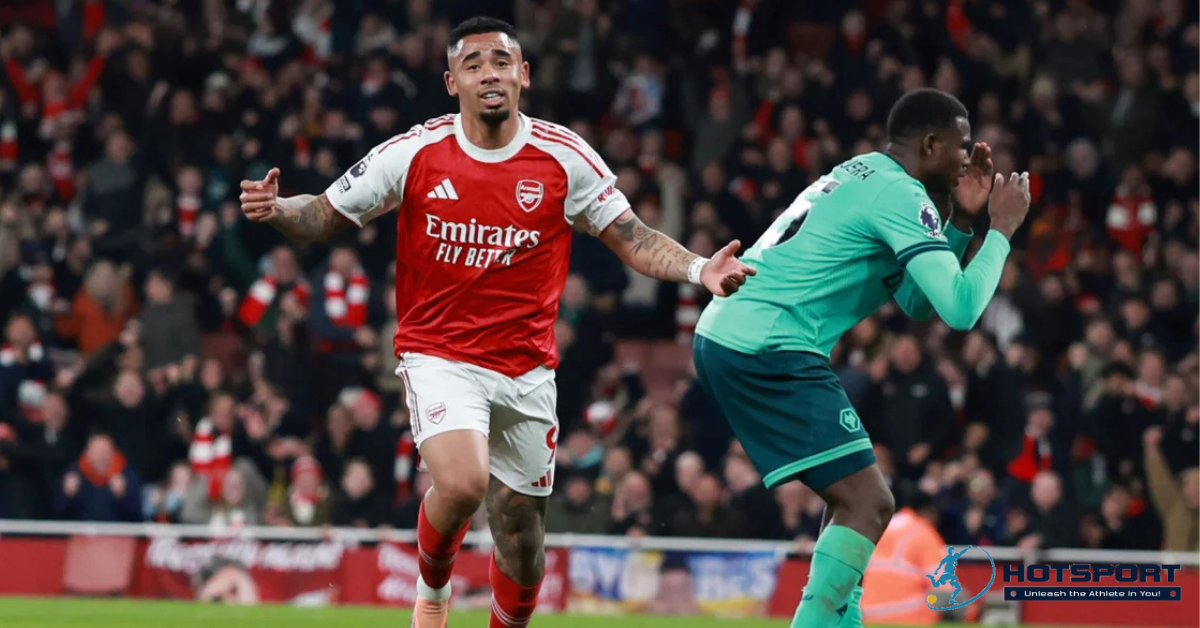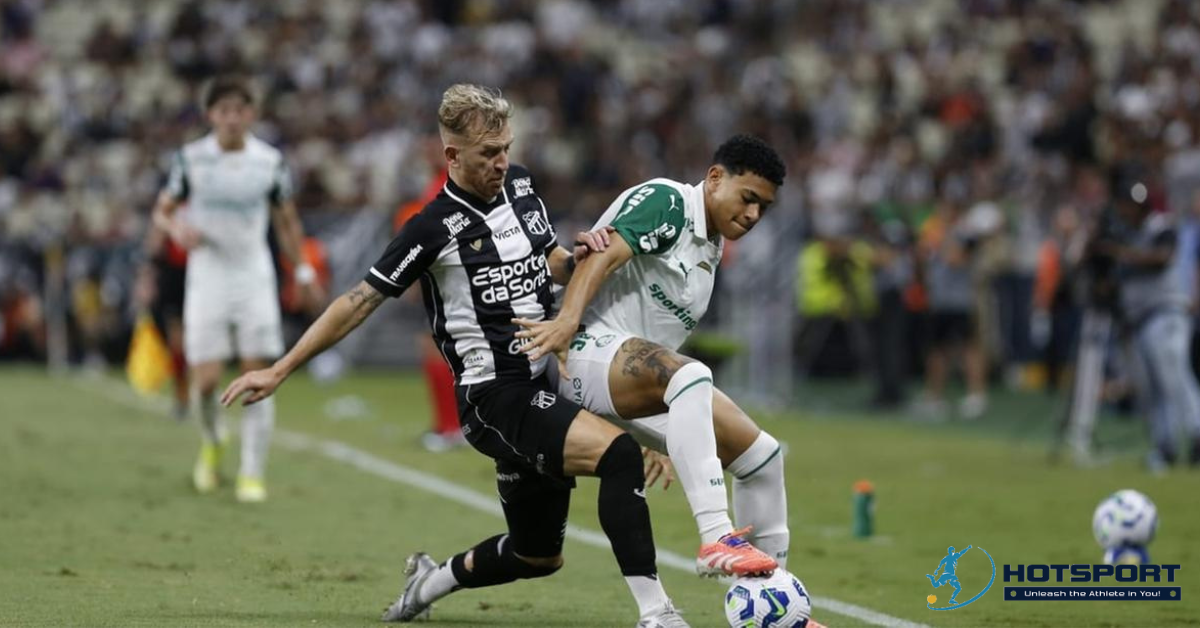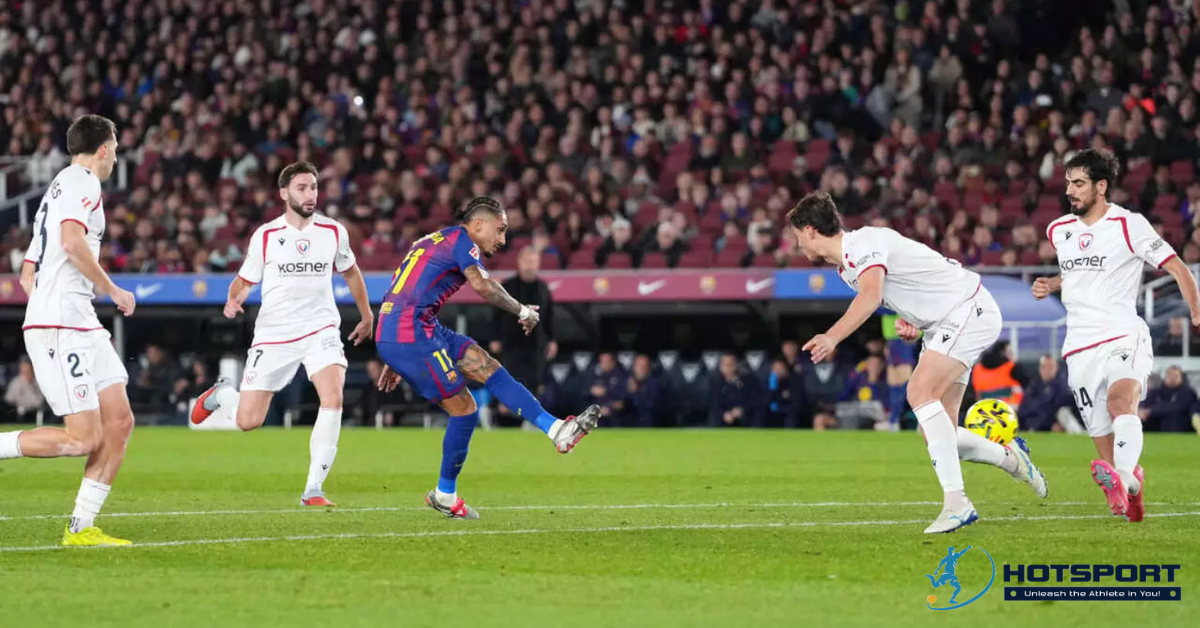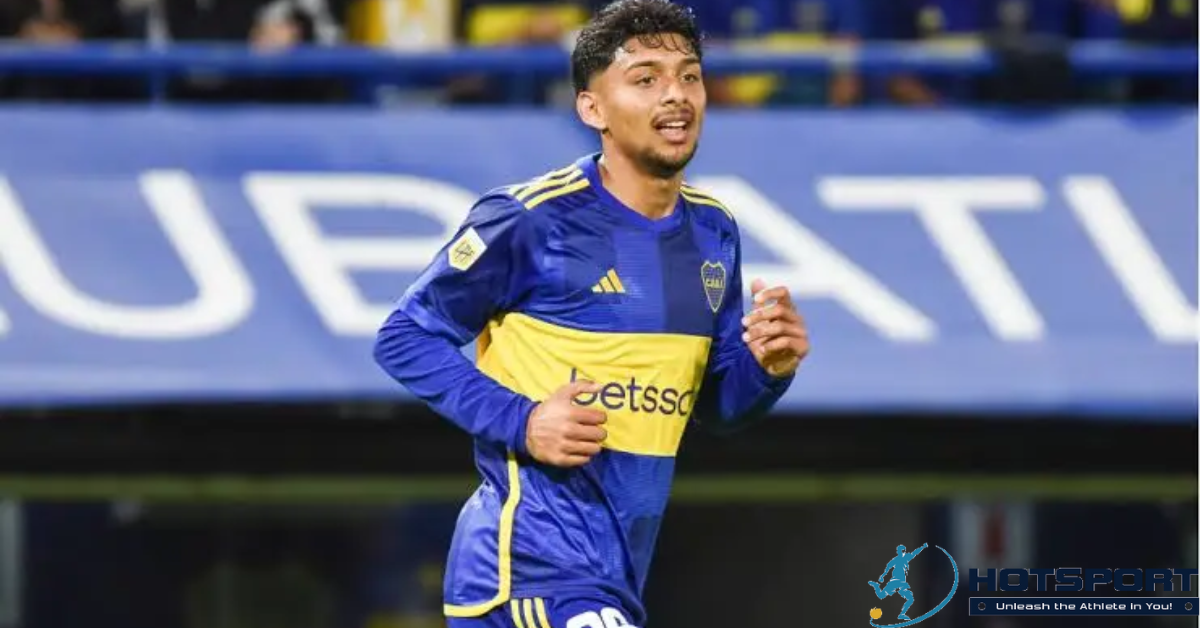
André Henrique da Silva Martins, better known simply as André Henrique, is one of the names generating the most excitement in Rio Grande do Sul football in recent years. Born on December 17, 2001, in Guanambi, deep in the interior of Bahia, the 23-year-old embodies the classic Brazilian talent that emerges from youth academies and fights for a spot at the very top. Standing 1.89 m tall with an imposing physical presence, he plays primarily as a centre-forward but is also comfortable as a second striker or even on the right wing. Naturally right-footed, André combines power, pace, and a clinical finishing instinct—qualities that have made him an important piece in the Grêmio squad since arriving in 2023 and continuing to build a story of resilience and growth.

In an increasingly competitive football landscape where pressure for instant results is relentless, André Henrique stands as an example of patience and determination. His journey—from the dusty pitches of Brazil’s Northeast, through smaller clubs in São Paulo and Santa Catarina, to landing in Porto Alegre—mirrors the dream of thousands of young Brazilian players. At Grêmio, he has already lifted state titles (the 2024 Campeonato Gaúcho and the 2025 Recopa Gaúcha) while facing challenges that have tested his character. Now, with the 2025 Brasileirão entering its final stretch, the striker finds himself at a crossroads: surrounded by transfer rumors abroad and the possibility of staying under new club management.

The Early Steps: From Bahian Roots to Professional Breakthrough André Henrique’s story began far from the spotlight in Guanambi, a town of around 90,000 inhabitants in southwest Bahia. Coming from a humble family of modest means, he grew up playing street football and in local academies, where his height and natural ability with the ball turned heads from an early age. At 14 he moved to Salvador to join Bahia’s youth system, but his real path to professionalism opened in São Paulo with Capivariano, a club renowned for developing talent.

In 2020, at just 18, André made his professional debut for Capivariano in the Paulista Série A3. He played only a handful of games but scored his first professional goals and caught scouts’ attention. In 2021 he moved to América-MG, where he continued in the youth ranks before making his first-team debut in Copa do Brasil matches. At the Coelho he learned what it takes to compete at a higher level, facing more organized defenses and handling the pressure of a rising club.

The real turning point came in 2022 when he signed with Marcílio Dias of Itajaí (Santa Catarina) for the Campeonato Catarinense Série B. There André exploded: in 15 matches he scored nine goals, finished as the competition’s top scorer, and helped the club earn promotion to the state’s top division. His performances attracted Hercílio Luz, another Santa Catarina side, who signed him for the 2022 Série C. With the Tubarão he played 22 games, scored five goals and provided key assists, cementing his status as one of Brazilian football’s brightest prospects. Those years at smaller clubs were crucial—he learned to manage minutes, deal with minor injuries, and adapt to different styles, all while keeping the dream of reaching a big club alive.

Arrival at Grêmio: From Bench Player to Key Piece 2023 marked the major turning point in André Henrique’s career. In April, freshly promoted Grêmio—still rebuilding after the traumatic 2021 relegation—signed him on loan from Hercílio Luz. The idea was to bolster the attack with a young, inexpensive player while the club restructured under Renato Gaúcho. André arrived quietly but soon showed his versatility. To date he has played 61 matches for the Tricolor, scoring nine goals and providing five assists—modest numbers, but valuable in a squad full of big names.

Initially he was the third-choice striker behind players like Diego Costa and later Luis Suárez. In 55 of those appearances he started on the bench, coming on to change the tempo or protect leads. In the 2023 Gauchão, for example, he started only two matches. His patience paid off in December 2023 when Grêmio triggered the purchase option for R$ 6.4 million, acquiring 70% of his economic rights. He signed a contract until the end of 2026, a clear vote of confidence in the Bahian’s potential.

His finest moment came in the 2024 Gauchão. With Suárez recovering from injury, André earned more minutes and played a key role in the state-title triumph, scoring in decisive games against Juventude. He also left his mark on the 2025 Recopa Gaúcha, heading the goal that sealed victory over Brasil de Pelotas. Those collective successes won over the fans, who affectionately nicknamed him the “Bahian Giant” for his physical presence and fighting spirit.

2025 Season: Surprise Rise and Brasileirão Challenges The 2025 Brasileirão has been a season of ups and downs for André Henrique. By late November he had played 34 matches and scored three goals—one a header in the August Gre-Nal that set the Arena do Grêmio alight. His five assists, however, have arguably been more impressive, showing vision beyond just finishing. In September, local media reported a surprise surge: in just 12 days he went from third-choice to undisputed starter after injuries and departures of teammates like Martin Braithwaite and Cristian Pavón.

Under Mano Menezes, André thrived in a system that favors long balls and aerial play, perfectly suiting his 1.89 m frame. He was decisive against Fortaleza and Cruzeiro with shots from distance and hold-up play for the midfielders. Yet Grêmio’s inconsistency—still fighting for a Libertadores spot—pushed him back to the bench in November. Recent games, such as the 3–2 defeat to Botafogo on November 22, saw him start but manage only one shot on target. Against Vasco he came off the bench with little impact.

ESPN stats show a player on the rise: 31 shots in the league, 13 on target, and a 72% pass-completion rate. Off the pitch he remains low-key; in interviews he speaks little but always praises veterans like Kannemann and Edenílson, who mentor him. His Instagram (@andrehenrique_11), with over 50,000 followers, is filled with training photos and family moments—he keeps the focus on football.

Latest Updates: Transfer Rumors and the Fluminense Match As the 2025 Brasileirão reaches its climax in December, André Henrique is at the center of a whirlwind of news. On the night of December 2, in the 37th-round clash against Fluminense, he had a goal disallowed by VAR in the 50th minute of the first half—a first-time finish from a Renê cross ruled out by the tightest of offside calls, leaving the fans frustrated. Grêmio lost 1–0 after conceding early, and André left the pitch visibly downcast but determined ahead of the final match against Corinthians.

The real buzz, however, is happening behind the scenes. Turkish club Göztepe, currently fourth in the Süper Lig, have made a lucrative offer, first reported by journalist Diogo Rossi. The bid is large enough to clear a Grêmio debt with Girona (Spain) that triggered a FIFA transfer ban, and it would quadruple André’s salary from roughly R$ 150,000 to nearly €100,000 per month (around R$ 600,000). Sources say the player is open to the move, seeing it as a chance to develop in a more competitive league.

However, the incoming Grêmio administration, led by newly elected president Odorico Roman for 2026, has put the brakes on the deal. In recent meetings, both the interim board and the future council decided to keep the striker, viewing him as a favorite of Mano Menezes and a cornerstone for next season. “André is our future,” a club official reportedly said, prioritizing stability after a financially turbulent year. With 80% of his rights now owned by Grêmio, the club is weighing counter-offers, but André has privately expressed frustration at being a frequent substitute and has even considered sitting out the final match if the sale progresses.

André’s Future: Europe or Loyalty to the Tricolor Looking to 2026, the coming year will be decisive for André Henrique. If he stays at Grêmio, he could become the undisputed starter as veterans depart and targeted reinforcements arrive. A Libertadores spot would be the perfect stage to showcase the goal-scoring instinct he displayed in 2024. If the Turkish offer—or rumored interest from Brazilian giants like São Paulo—materializes, he could take a major career leap and gain visibility for Brazil’s youth teams or even the senior national side.

Whatever path he takes, his journey is inspiring. From Guanambi to Porto Alegre via Itajaí and Belo Horizonte, André Henrique proves that talent combined with perseverance opens doors. In Brazilian football, where young players face fierce competition, he is a reminder that success comes in measured doses: one goal, one assist, one starting spot at a time. At 23, the Bahian has everything to become a reference—whether wearing the immortal Tricolor jersey or across the Atlantic.

As Grêmio fans pack the Arena in the coming days, chanting for him to stay, André keeps training. That disallowed goal against Fluminense? Just one chapter. The real test lies ahead: proving, goal by goal and match by match, that he belongs at the very top.

Trending Post

National Football

In a year marked by twists and turns in South American football, Jorge Carrascal has emerged as one of the most dynamic figures on the continent. Born in the sweltering streets of Cartagena, Colombia, this 27-year-old carries the tenacity of someone who grew up dreaming of the pitch. With his sharp vision and unpredictable dribbling, he has become an essential player for Flamengo, particularly in the club’s historic victory in the 2025 Copa Libertadores. But who is this midfielder who, under the scorching sun of Lima, lifted the continental trophy for the second time in his career? Let us explore the journey of a talent that blends Colombian tradition with the fast-paced rhythm of Brazilian football.

Early Steps: From Cartagena to the European Dream

Jorge Andrés Carrascal Guardo was born on May 25, 1998, in Cartagena de Indias, a port city where the Caribbean Sea sets the rhythm of life. The son of a humble family, he traded street games for the youth ranks of CD Heroicos, a local club that served as a springboard to Millonarios, a powerhouse in Colombia’s capital. At the age of 16, in 2014, Carrascal was already playing for Millonarios in the Categoría Primera A. His initial appearances were modest—only three matches with no goals—but his unmistakable spark was evident.

Destiny called him to Europe in 2016. At just 18, he signed a five-year contract with Sevilla FC in Spain and was immediately loaned to the club’s reserve team, Sevilla Atlético, in the Segunda División. His time there was limited to a single appearance, but exposure to professional European football instilled discipline in him. “It was a new world, with intense training and constant pressure,” Carrascal later recalled in an interview. This brief stint on the Iberian Peninsula served as a prelude to a journey that would take him to four different countries, proving that talent knows no borders.

The Breakthrough in Ukraine: Discovering the Taste of Victory

His true awakening came in Ukraine, where he was loaned to Karpaty Lviv in July 2017. What began as a temporary move became a longer stay. In the 2017-18 season, he played 22 matches in the Ukrainian Premier League, scoring six goals and drawing attention with his speed and creativity in the attacking midfield. In April 2018, he was named the league’s Player of the Month, a recognition that resonated even in his native Colombia.

The following season, 2018-19, saw his goal tally drop to zero in 16 appearances, but the Ukrainian period was formative nonetheless. “There, I learned to cope with the cold, homesickness, and the responsibility of being a foreigner who has to prove himself twice over,” he confided. This resilience prepared him for his next chapter: a loan to River Plate in Argentina in 2019. Under Marcelo Gallardo, Carrascal made his debut with a goal against Argentinos Juniors and, across 10 matches, contributed two goals. River Plate won the Primera División in 2021, and after becoming a permanent signing in 2020, he made 44 league appearances and scored three goals. It was at the Monumental de Núñez that he first experienced playing for a giant club with a fanbase that turns stadiums into cauldrons.

The Russian Adventure: Growth Under Pressure

Russian football presented a trial by fire. In 2022, Carrascal was loaned to CSKA Moscow, where he made 11 appearances and scored one goal in the Premier League. The club exercised its purchase option, and he remained until 2023, totaling 26 matches and six goals the following season. It was at Dynamo Moscow, where he transferred in August 2023 with a contract until 2027 (with an extension option), that he found greater stability. Over two seasons, he played 49 matches, scored seven goals, and was voted the club’s Player of the Month for March 2024 by the fans.

The harsh Russian winter and compressed schedule forged a more mature Carrascal. “Football there is physical and direct, but it helped me improve my game-reading ability,” he explained. In the 2024-25 season, he shone with seven goals in 26 matches, but his desire to return to South America grew. Rumors of dissatisfaction with the climate and distance from his family surfaced, and in June 2025, reports emerged of a preliminary agreement with Flamengo for the FIFA Club World Cup. The transfer was finalized on August 2 for €12.5 million, with a contract until June 2029. At 27, Carrascal returned to the continent where he had previously excelled, now bearing the weight of the red-and-black shirt.

Impact at Flamengo: From a Quiet Arrival to Libertadores Hero

His arrival at Flamengo was like a tropical storm. Under Filipe Luís, the former full-back turned manager, Carrascal competed for a spot in the attacking midfield alongside players like Arrascaeta and Everton Cebolinha. In his initial phase through November 2025, he accumulated 16 matches across all competitions, scoring three goals and providing four assists. In the Brasileirão, he played 12 matches, scoring two goals and delivering four assists—solid numbers for a newcomer.

His defining moment came in the 2025 Copa Libertadores. Carrascal was a key figure in the knockout stages, particularly the semifinals, where his vision dismantled opposing defenses. In the final on November 29 at Lima’s Estadio Monumental, Flamengo faced Palmeiras in an epic showdown. With the score locked at 0-0 for much of the match, Danilo headed the winning goal in the 72nd minute, securing a 1-0 victory. As an undisputed starter, Carrascal ran tirelessly across the pitch, enduring hard fouls from Veiga and Piquerez while delivering precise passes to the forwards. “He was the engine of the team, with passes that sliced through lines and dribbles that relieved pressure,” Filipe Luís praised after the match.

This triumph marked Flamengo’s fourth continental title (1981, 2019, 2022, and now 2025) and Carrascal’s second South American honor, following the 2019 Recopa Sudamericana with River Plate. In the locker room, he led an exuberant celebration—a blend of Caribbean rhythms and samba—that infected his teammates and went viral on social media. “That’s the Colombian way of celebrating: with joy and without fear,” he said as he lifted the trophy amid Peruvian fireworks.

Not everything was smooth; in November, a rib injury—an osseous edema without fracture, caused by a collision in a match against Sport—sidelined him for several weeks. However, he returned stronger, demonstrating his resilience. With two rounds remaining in the Brasileirão, Flamengo remains in contention for the title, and Carrascal dreams of a double.

Playing Style: Creativity and Versatility on the Pitch

What makes Carrascal special? Standing at 1.80 meters and predominantly right-footed, he operates as a central attacking midfielder but drifts to the flanks or even as a second striker. His strength lies in his creativity: vertical passes that break defensive lines, short dribbles in tight spaces, and a dangerous long-range shot. At Flamengo, Filipe Luís has praised his “quick decision-making near the penalty area,” a skill honed in Russia.

Frequently compared to compatriot James Rodríguez, Carrascal is more physical and less reliant on the spotlight. His assist rate—four in 12 Brasileirão matches—reflects a team-oriented player who elevates those around him. Critics have pointed to occasional inconsistencies in big matches, but his performance in the Libertadores final silenced many doubters. “He is the modern number 10: technically gifted, with the lungs to press high,” summarized an Argentine analyst.

The Colombian National Team: National Pride and a Promising Future

Carrascal made his senior debut for Colombia in September 2022 in a friendly against Guatemala (4-1). As of November 2025, he has earned 21 caps and scored two goals: one against South Korea in 2023 and another against the United States in 2024. He was a substitute in key matches as Colombia finished as runners-up in the 2024 Copa América under Néstor Lorenzo.

In youth international competitions, he shone with five appearances and one goal for the under-17 team in 2015, and seven matches with three goals for the under-23 side in 2020. “Representing Colombia is what drives me,” he says. With a Libertadores title to his name, Carrascal gains credibility ahead of the 2026 World Cup qualifiers, where Colombia seeks direct qualification.

Personal Life: Roots That Inspire

Off the pitch, Carrascal maintains a low profile. Raised in Cartagena by a mother who sold fruit in the market, alongside his siblings, he has often said, “She taught me that effort comes before talent.” Married and the father of a young son, he balances fame with regular visits to Colombia, where he supports social projects in underprivileged neighborhoods. Managed by GBG Global, he maintains partnerships such as with Adidas, maintaining a scandal-free image focused on football.

The Horizon: A Rising Star

With the Libertadores title freshly won, Carrascal sets his sights on the December 2025 FIFA Club World Cup and the Brasileirão. His market value, estimated between €5.7 million and €7.7 million, could surge with further trophies. For Colombia, he represents a link between generations: the heir to Carlos Valderrama and a partner to Luis Díaz.

Jorge Carrascal is more than just a player; he is proof that persistence and passion build legacies. From the Caribbean to the Maracanã, his story continues to inspire. And who knows? The next chapter may be written on the stage of a World Cup.

Abel Braga is one of the most respected and enduring figures in Brazilian football. Over more than five decades, he has built a career marked by significant achievements both on the field as an elite defender and off the field as a successful coach. His trajectory exemplifies dedication and deep identification with the sport, particularly with Fluminense, the club with which he shares a special and enduring relationship.

Early Steps and Career as a Player

Abel Carlos da Silva Braga was born on September 1, 1952, in Rio de Janeiro. His development as a player took place in Fluminense’s youth academy, where he quickly distinguished himself through his defensive solidity and natural leadership. He made his debut with the senior team in 1973 and, in a few years, became a fundamental piece in the club’s defense.

Abel’s primary achievement as a player was winning the Copa Libertadores in 1984, a historic milestone for Fluminense. That year, the Rio de Janeiro club reached the final against Olimpia of Paraguay and secured the title by defeating the opponent 3-1 in the return leg, after losing the first match by the same scoreline. As team captain, Abel was a central figure in the defense that ensured the championship, playing a key role in maintaining the security of the backline.

In addition to the Libertadores, Abel amassed other significant titles, including the Brazilian Championship in 1984, the Rio de Janeiro State Championship in 1983, 1984, and 1985, and the Rio-São Paulo Tournament in 1980. His tenure with Fluminense, where he played 655 matches and scored 49 goals, makes him one of the players most closely identified with the club. After retiring in 1990, following stints with Atlético Mineiro and Botafogo, Abel chose to follow in the footsteps of his father, João Braga, who was also a coach, and embarked on a career as a manager.

Transition to Coaching and Early Achievements

Abel’s early years as a coach were marked by challenges and a learning curve. He began his professional managerial career in 1990 with Botafogo, but it was with Fluminense that he achieved his first significant successes. In 1995, he led the team to the Rio de Janeiro State Championship title, overcoming a period of financial and technical crisis.

From that point onward, Abel managed various Brazilian clubs, including Internacional, Vasco da Gama, Athletico Paranaense, Cruzeiro, and Flamengo. His career as a coach has been characterized by periods of notable results interspersed with moments of inconsistency, a common feature in the highly competitive landscape of Brazilian football. However, his ability to rescue teams from difficult situations has consistently been one of his defining traits.

The Peak of His Career and Consolidation as a Coach

One of the high points of Abel Braga’s career came in 2006, when he led Internacional to victory in the Copa Libertadores. After eliminating strong opponents such as São Paulo and Chivas Guadalajara in the knockout stages, the Rio Grande do Sul club reached the final against São Paulo and won 2-1 in the decisive match in Porto Alegre. Abel, known for his calm demeanor and tactical focus, was instrumental in organizing a squad that included players such as Fernandão and Rafael Sobis.

This triumph solidified his reputation as a winning coach in continental competitions. Subsequently, in 2007, Abel returned to Fluminense during a period of severe financial and sporting crisis, with the club facing the threat of relegation in the Brazilian Championship. Under his leadership, the team avoided the drop on the final matchday, achieving a remarkable run of 16 consecutive unbeaten games. This feat, known as the “miracle of the eleven consecutive victories,” remains one of the most emblematic episodes of his career.

In 2008, Abel guided Fluminense to the Brazilian Championship title in a campaign filled with drama and efficiency. The team entered the final matchday needing a victory against Cruzeiro and a favorable result in the concurrent match between Palmeiras and Sport. A 1-0 win in Belo Horizonte, with a goal from Roger, secured the title in unexpected fashion. This championship, achieved amid a string of challenging results, further reinforced Abel’s reputation as a manager capable of overcoming adversity.

The Enduring Relationship with Fluminense

Abel Braga’s connection with Fluminense is, without question, the most defining aspect of his career. Across three stints as coach—from 1995 to 1996, 2007 to 2009, and 2011 to 2019, with a brief return in 2020—he managed the club in 662 matches, making him the longest-serving manager in its history. This relationship transcends mere statistics: Abel is regarded as an emotional and professional reference point for Fluminense.

Even after departing the club in September 2019 following an elimination in the Copa Sul-Americana, his influence persisted. In February 2020, Abel returned to Fluminense to conclude his managerial career, taking on the role of technical coordinator. This decision symbolized the end of nearly three decades managing teams and marked his transition to a strategic role within the club’s football department.

Legacy and Importance in Brazilian Football

Abel Braga’s legacy in Brazilian football is extensive and multifaceted. As a player, he was one of the standout defenders of his generation and a key member of one of Fluminense’s most successful eras. As a coach, he won three Rio de Janeiro State Championships, two Brazilian Championships, one Copa Libertadores, and one Copa dos Campeões, in addition to various other state titles with different clubs.

His approach to management is characterized by balanced leadership, with an emphasis on defensive organization and the ability to motivate players under pressure. Abel has consistently emphasized the importance of team unity and identification with the fanbase, values reflected in his major achievements. While critics have pointed to periods of inconsistency in his career, his supporters highlight that few teams can maintain a consistently high level of performance within the demanding schedule of Brazilian football.

Currently, Abel Braga serves as technical coordinator for Fluminense, where he contributes his extensive experience to the development of new coaches and the structuring of the football department. His continued presence reinforces a philosophy that values stability and the close-knit relationships among the professionals who shape the club’s history.

Conclusion

Abel Braga represents a generation of professionals who have devoted much of their lives to Brazilian football. His ability to succeed in diverse contexts—as a player on a Libertadores-winning team and as a coach who turned around seemingly hopeless situations—places him among the most significant figures in the country’s sporting history. Beyond trophies, what defines his career is resilience and loyalty, qualities that have made him a reference for players, fellow professionals, and supporters alike. In a football landscape characterized by constant upheaval and immediate pressures, Abel Braga stands as a symbol of consistency and commitment to the ideals of the sport he has chosen to pursue.

Introduction – Fluminense vs. São Paulo: a night of glory for one, a nightmare for the other.

The clash between Fluminense and São Paulo, held on November 27, 2025, at the Maracanã, was not just another Brasileirão game—it was a historic milestone that redefined expectations, exposed weaknesses, and opened new narratives for both clubs in the final stretch of the competition. On a night that surprised even the most experienced analysts, Fluminense delivered one of the most dominant performances in recent years, thrashing São Paulo 6-0, a result that will be recorded among the biggest wins in modern Brazilian football.

From the very first minutes, it was evident that we were witnessing an atypical match. Fluminense displayed above-average intensity, impeccable tactical organization, and surgical precision in their finishing, contrasting sharply with a São Paulo side that was out of control, emotionally vulnerable, and incapable of responding to any phase of the game. They lacked reaction, compactness, and even leadership on the field—and the embarrassing scoreline ultimately reflected what seemed inevitable: the biggest defeat for Fluminense in 24 years.

More than goals, statistics, and territorial dominance, this game exposes the psychological and emotional impact on two giant institutions. While Fluminense is experiencing a moment of ascension and consolidation on its way to the Libertadores Cup, São Paulo is facing a technical and mental collapse, needing to revisit its planning, its choices, and its identity as a club.

This analysis delves deeply into the performance, sporting consequences, statistics, and historical significance of this thrashing, offering the reader a complete overview of what Fluminense vs. São Paulo 2025 represented for the national scene.

The match – Goals, pace, dominance and mistakes by São Paulo

First half – Fluminense completely dominated and São Paulo offered no response.

Fluminense dominated the match from the first minute. With high pressure, intense movement, and offensive aggression, the Rio de Janeiro team gave São Paulo no chance to breathe. In the 9th minute, Agustín Canobbio converted a penalty awarded after a handball in the area, opening the scoring.

Shortly after, in the 16th minute, Martinelli took advantage of a cross and extended the lead with a precise touch into the back of the net. Three minutes into the first quarter of an hour — in the 24th minute — Nonato increased the advantage with a finish inside the area after good teamwork.

In less than 25 minutes, Fluminense was already winning 3-0. São Paulo was practically nonexistent offensively: their only shot on target up to that point was far from posing a real threat. The São Paulo defense proved fragile, disorganized in its marking, and vulnerable to aerial balls and quick transitions.

From that moment on, the feeling that the game was decided took hold. Fluminense maintained the rhythm, dominated possession, exchanged passes patiently, and prepared the ground to finish off the duel in the final stage. The first half—intense, vertical, and with absolute dominance—served as a rehearsal for the massacre that would follow.

Second half – Complete massacre, surgical precision, and utter collapse of the opponent.

After the break, Fluminense returned with the same intensity. In the 69th minute, John Kennedy scored the fourth goal, the result of a quick transition and a well-coordinated attack. Shortly after, in the 77th minute, Canobbio scored his second goal of the match, consolidating the Carioca team’s dominance.

To seal what can only be called a humiliation — or a football lesson — Kevin Serna found the net in the 87th minute, making the final score 6-0.

São Paulo offered no resistance. The team couldn’t build plays, lacked possession, had few shots on goal, made passing errors, and became disorganized defensively. Fluminense, on the other hand, showed why they’ve been touted as one of the Libertadores contenders in Brazil: under pressure, they maintained their composure, exploited mistakes, played intelligently, and finished the game with authority.

Statistics for the match – Fluminense vs. São Paulo

StatisticFluminenseSão Paulo
Final score60
Ball possession (%)56.3%43.7%
Total shots165
Shots on target111
Corner kicks34
Save by the opposing goalkeeper.15
Goals – first half30
Goals – second half30
Offensive rhythm and pressureHighest, constantInefficient, inconsistent
Offensive efficiency68% shots on target / goals~20% offensive effectiveness

These numbers reflect what was seen on the field: complete dominance by Fluminense, lethal precision, and a performance that will be remembered — while for São Paulo, the defeat exposes structural weaknesses and urgent needs that go beyond individual errors.

Impact of the thrashing — Immediate and long-term consequences of Fluminense vs. São Paulo

For Fluminense — a guaranteed spot, high morale, and the prospect of Libertadores.

With the six goals, Fluminense secured their place in the 2026 Copa Libertadores. The team reached 58 points and opened a comfortable lead over their pursuers in the fight for a direct spot in the group stage.

The resounding victory also serves as a morale boost, restoring the team’s confidence and demonstrating strength at home — factors that weigh heavily in future decisions, especially in knockout rounds. The fans breathe a sigh of relief, the club reaffirms its ambition, and the calendar takes on a positive outlook for 2026.

For São Paulo — crisis exposed, need for reconstruction, and pressure for answers.

For São Paulo, the impact is devastating. The 6-0 defeat represents their worst in 24 years, shows technical and strategic fragility, and jeopardizes the entire season’s planning. The club leaves the match without the strength to dream of the Libertadores Cup, distances itself from high ambitions, and depends on immediate rebuilding.

Players, coaching staff, and management will have to answer for it. Morale is damaged, the internal environment will be criticized, and the fans will demand a reaction—but they will have to deal with structural limitations and the urgent need to regain credibility.

Tactical analysis – What Fluminense did differently and how São Paulo floundered.

Fluminense’s strategy

  • High pressure from the start, forcing errors and quick recoveries.
  • Frequent use of the flanks and crosses, exploiting the opponent’s vulnerability in aerial balls and marking.
  • Quick and purposeful transitions: little possession-to-possession play, but speed and depth.
  • Offensive mobility and constant positional changes, confusing the opposing defense.

São Paulo’s mistakes

  • Disorganized defense, especially on aerial balls and in the defensive lines.
  • Midfielders unable to control the tempo or sustain a build-up play under pressure.
  • Lack of collective coordination — isolated players, without support in transitions and attacks.
  • Leadership problems: lack of leadership on the ground, lack of effective key players, lack of energy to react.

Conclusion – Fluminense vs. São Paulo

The 6-0 thrashing of Fluminense by São Paulo goes far beyond the pitch and the impressive result. It symbolizes two completely opposite paths taken by the clubs in the 2025 Brazilian Championship. On one side, we see a mature, disciplined, confident Fluminense, aware of its own potential — a team that knew how to transform the Maracanã into a stage for affirmation, securing not only three points, but a clear declaration to the country: the club is prepared for greater things, especially the coveted Libertadores Cup.

On the other hand, São Paulo is going through a moment that demands deep reflection. The worst defeat in 24 years exposes not only technical flaws, but also structural, emotional, and strategic problems that have accumulated throughout the season. This game will be remembered not only for the score, but for the collective collapse of the team at one of the most decisive moments of the tournament. Reconstruction becomes mandatory—both on and off the field—if the club wants to prevent this episode from becoming a symbol of an even greater crisis.

In the end, the duel reveals a truth that football frequently reminds us of: there are no shortcuts to success. Clubs that work well, plan, and reinvent themselves reap the rewards. Clubs that ignore their own warnings end up surprised by the consequences.

For Fluminense, this is a positive and historic turning point. For São Paulo, a painful reminder that greatness needs to be sustained daily.

FAQs – Frequently Asked Questions about Fluminense vs. São Paulo

  1. What was the final score of the match?Fluminense 6 x 0 São Paulo.
  2. Who scored the goals for Fluminense?Agustín Canobbio (penalty and another goal), Martinelli, Nonato, John Kennedy and Kevin Serna.
  3. Is this defeat historic for São Paulo?Yes. It’s the club’s worst defeat in 24 years.
  4. What does this result mean for Fluminense?It guarantees a spot in the 2026 Libertadores Cup, boosts morale, and restores confidence.
  5. And what about São Paulo?It requires urgent restructuring; weaknesses exposed; technical and emotional crisis.
  6. What was the ball possession?Fluminense 56.3% / São Paulo 43.7%.
  7. How many shots on goal did Fluminense have? And São Paulo?Fluminense: 16 shots (11 on target). São Paulo: only 5 shots (1 on target).
  8. Does the thrashing put Fluminense among the favorites for the title?It certainly strengthens his candidacy, especially by combining efficiency, collective action, and conviction.
  9. What changes for São Paulo for the remainder of the season?There is an extreme urgency to regain credibility, correct defensive weaknesses, and reorganize the internal structure.
  10. Does this result signal change in Brazilian football?This demonstrates that well-structured clubs, with focus, teamwork, and planning, can overcome crises — and that instability can exact a high price.

NBA

Related News

MLB

Sebastián Villa is one of those names that echoes across the pitches with an irresistible mix of pure talent and controversies that mark an era. Born in Bello, Colombia, on May 19, 1996, the 29-year-old forward stands out for his impressive speed, sharp dribbles, and game-deciding ability that made him an idol at one of South America’s most traditional clubs: Boca Juniors. At 1.79 meters tall and with his right foot as his main weapon, Villa plays preferably on the left, cutting inside and surprising goalkeepers with precise shots. His career, full of titles and twists, reflects the essence of South American football: passion, glory, and inevitable controversies.

But who is this Colombian who, in 2025, is once again the target of speculation in markets like Argentina, Brazil, and even Saudi Arabia? In this report, we dive into Villa’s career, from his humble roots to the hot negotiations that could define his future. With fresh updates from November and December 2025, we explore not only the numbers but the human impact of a player who dreams of the 2026 World Cup.

Colombian Roots: From Envigado to Tolima Sebastián Villa’s story begins on the streets of Bello, an industrial city in the Antioquia department where football is more than a sport—it’s an escape and an identity. Son of a modest family, Villa grew up kicking a ball on makeshift fields, inspired by idols like James Rodríguez and Falcao García. At 15, he joined the youth ranks of Envigado FC, a Colombian talent factory that has already produced names like James himself.

His professional debut came in 2015, but it was at Deportes Tolima, where he transferred in 2016, that Villa truly began to shine. At just 20 years old, the young forward played 47 matches, scoring eight goals and providing assists that caught the eye of international scouts. His highlight in Colombia was winning the Copa Colombia in 2014—yes, he made it in time to participate in the victorious campaign, even as a newcomer to the squad. “Tolima gave me the confidence to dream big,” Villa would say years later in an interview with the newspaper El Colombiano.

In that period, Villa wasn’t just speed; he had game vision. His high-speed dribbles and precise crosses earned him the nickname “Colombian arrow,” which stuck with him. In 2017, at 21, he was already worth about €2 million on the market, attracting looks from Europe and Argentina. It was Boca Juniors, however, that bet big: $4.7 million to take him from Tolima. A move that would change the destiny of both.

The Golden Era at Boca Juniors: Titles and Instant Idol Arriving at Boca is like stepping into a boiling cauldron. Villa landed in Buenos Aires in January 2018 and, under Guillermo Barros Schelotto, it didn’t take long to fit in. His official debut came against River Plate in the Superclásico—irony of fate, his potential future rival. But it was in the 2018 Libertadores that he exploded: decisive goals against Libertad and Palmeiras turned him into a xeneize hero.

Between 2018 and 2023, Villa built an enviable resume: two Argentine titles (2019-20 and 2020), two Copa Argentinas (2019 and 2021), two Copa de la Liga Profesional (2020 and 2022), and one Supercopa Argentina (2018). In 138 games for Boca, he scored 25 goals and provided 18 assists. His speed was lethal on counterattacks, and he became the ideal partner for strikers like Benedetto and Ábila. “Sebastián is a lightning bolt down the wing,” praised coach Russo in 2019.

Internationally, Villa debuted for the Colombian national team in September 2018 against Venezuela, scoring in a 2-1 win. He played in the 2019 and 2021 Copa Américas, but injuries and controversies kept him out of the 2022 World Cup cycle. Still, with 12 caps and three goals for La Tricolor, he dreams of the 2026 World Cup in the US, Mexico, and Canada—a goal guiding his current choices.

At Boca, Villa wasn’t just numbers; he was passion. Fans chanted his name at La Bombonera, and he repaid with dazzling plays. But paradise feared didn’t last long.

Controversies: The Turbulent End at Boca and the Search for Justice What elevates stars also brings them down. In 2021, Villa was involved in a gender violence allegation by his ex-girlfriend, Daniela Cortés. The case gained worldwide attention, dividing opinions in Argentina and Colombia. In 2023, Argentine justice sentenced him to two years and one month in suspended prison for minor injury and threats. Villa has always denied the more serious accusations, alleging manipulation, and appealed the decision.

The controversy soured his relationship with Boca. In 2023, he was sidelined from the first team, training separately while negotiating an exit. Accusing the club of “constructive dismissal,” Villa sued Boca in July 2025, seeking over 236 million Argentine pesos and $2 million in compensation. “They marginalized me without reason,” he declared in an interview with TyC Sports. The litigation is still ongoing, but it marked the end of an era: Villa left Boca without playing again. Boca, in turn, countersued him in late 2024 for breach of contract.

Seeking a fresh start, he signed with Beroe in Bulgaria in August 2023—a short and discreet stint, with just five games. He returned to Argentina in July 2024 with Independiente Rivadavia of the Primera División, on loan with an option to buy. There, away from the spotlight, Villa rebuilt his image.

Renaissance at Independiente Rivadavia: Goals, Assists, and Gratitude Independiente Rivadavia, from Mendoza, is a modest club compared to Boca, but Villa turned the “Leproso” into a surprise in Argentine football. Arriving in July 2024, he played 60 matches until November 2025, scoring 10 goals and providing 16 assists. His speed helped the team avoid relegation and even dream of cups. A highlight was the 2025 Copa Argentina victory, where Villa was decisive in the round of 16 against Talleres and scored the winning penalty in the final against Argentinos Juniors on November 5, 2025, securing the club’s first major title and a spot in the 2026 Copa Libertadores. He was named the tournament’s best player.

“I gave everything for these colors,” he said upon bidding farewell to president Daniel Vila in November 2025. Despite a contract until June 2026, Villa confirmed his departure on November 26, prioritizing a bigger leap. The club is asking between $5 and $15 million for his pass—recent reports specify $8 million—a value reflecting his current form: 29 years old, experienced, and hungry.

On the pitch, Villa showed maturity. His dribbles remain sharp—averaging 2.5 per game, per Opta—and he adapted to a more collective style. Off it, he invested in philanthropy in Colombia, visiting communities in Bello to encourage young athletes. “Football took me off the streets; now, I give back,” he told El Espectador.

2025 Updates: Confirmed Exit and Transfer Frenzy December 2025 brings Villa back into the spotlight. After confirming his exit from Rivadavia on November 26, the Colombian traveled to Medellín to evaluate proposals. His agent, Go Pro Sport, is managing a varied slate: Flamengo and Grêmio from Brazil lead the race, attracted by his playmaking for the Libertadores. “Brazilian football opens doors for me to the national team,” Villa admitted in an interview with Rádio Nihuil, citing the 2026 World Cup as motivation.

Rumors of River Plate stirred Buenos Aires in November—Marcelo Gallardo, El Millonario‘s coach, reportedly asked for info, with Mendoza’s club demanding $8 million. But sources close to the player denied it: “Nothing with River; focus on Brazil,” an advisor leaked. Other interests come from Saudi Arabia, promising fortunes, and from Atlético Nacional and Millonarios in Colombia for a return to his roots.

On X (formerly Twitter), the buzz is intense. November posts mention “Flamengo eyeing the Colombian convicted of gender violence,” echoing the 2023 conviction. But Villa hits back: “Past mistakes made me stronger; today, I’m just football.” His goal? Return to Néstor Lorenzo’s Tricolor, which called him sporadically in 2025. With the 2024 Copa América behind him, he knows he needs to shine at a big club.

Legacy and Horizon: From Controversial to Example of Resilience Sebastián Villa divides opinions: for some, a talent wasted by scandals; for others, a warrior rising from the ashes. His legacy at Boca is undeniable—goals at La Bombonera that still move hearts. At Rivadavia, he proved versatility, helping an underdog compete with giants.

Looking ahead, 2026 could be the year of redemption. A deal with Flamengo or Grêmio would put him in the Conmebol spotlight, paving the way for Colombia at the World Cup. At 29, Villa has gas for another decade. “I want to be remembered as the guy who never gave up,” he confided recently.

In a football where heroes fall and rise, Sebastián Villa is a living reminder that speed isn’t just in the feet—it’s in life. His next chapter? Only time will tell, but one thing is certain: wherever he goes, he’ll carry his hunger for the ball and for overcoming. South America thanks him.

Cristian Romero, the Argentine centre-back who has become synonymous with grit and technical quality in European football, continues to impress fans and analysts with his constant evolution. At 27 years old, he is not only a rock-solid defender but a born leader who carries the weight of historic achievements for both club and country. Born in Córdoba, Argentina, Romero embodies the archetype of the South American player who arrives in Europe hungry for success and imposes himself through sheer intensity on the pitch. His journey – marked by strategic loans and major trophies – reflects a determination that took him from humble fields to packed Premier League stadiums.

In this article, we explore Romero’s path from his first steps in football to the most recent moments that cement him as one of the best in his position. With a blend of aerial dominance, sharp game reading, and team spirit, he stands out in an era when centre-backs must be versatile. Let’s dive into the chapters of his sporting life.

Early Steps in Córdoba: Roots at Belgrano Everything began on 27 April 1998 in Córdoba, a city renowned for its football passion and for producing talents that echo around the world. Cristian Gabriel Romero grew up in an environment where the sport was more than just fun – it was a ticket to bigger dreams. At 16, in 2014, he joined the youth ranks of Belgrano, a traditional club from the region then competing in Argentina’s Primera División.

His senior debut came in 2016, at age 18, against Talleres. From the very start, Romero displayed what would become his trademark: an imposing physical presence at 1.85 m, combined with surprising speed for a central defender. Over the next two seasons until 2018, he made 16 league appearances, helping Belgrano stay in the top flight. The numbers weren’t spectacular, but they were enough to catch the eye of European scouts. In July 2018, Genoa of Italy’s Serie A signed him for around €2 million – his first leap outside Argentina, a test of resilience in a league famous for its tactical rigidity.

In Italy, Romero had to adapt quickly. Genoa were a mid-table side, and the 20-year-old faced injuries and the demands of a more physical game. Still, across two seasons (2018–2020) he played 57 matches and scored three goals – statistics that revealed not only defensive solidity but also a rare attacking threat for his position.

Rise in Serie A: From Genoa to Atalanta The real turning point came in July 2019 when Juventus paid €26 million for him. However, to gain experience, he was loaned back to Genoa for the 2019–20 season. There he established himself as a starter, playing 28 games and helping the team narrowly avoid relegation.

In September 2020 came the loan to Atalanta, a club on the rise under Gian Piero Gasperini. It was in Bergamo that Romero exploded. In the 2020–21 Serie A season he made 31 appearances, scored two goals and became a cornerstone of a defence that, paradoxically, was aggressively attacking. His game reading, precise tackling and flawless aerial ability turned heads. At season’s end he was named Serie A Defender of the Year – an award that crowned his adaptation to Italian football.

Atalanta wasted no time and bought him outright for €16 million in August 2021. But destiny had bigger plans. Almost immediately afterwards came the loan to Tottenham Hotspur in the Premier League, with an obligation to buy. At 23, Romero swapped Italy’s tactical rhythm for England’s chaotic intensity. His debut on 15 August 2021 was against Manchester City: a 1–0 victory that silenced the doubters. That year he played 22 league games and scored his first Spurs goal against Brighton.

Success in London: Captain and Trophy Winner The permanent move to Tottenham was sealed in August 2022 with a contract until 2027. Since then, Romero has become a cornerstone. As of December 2025, he has 139 appearances for the club and 10 goals – remarkable numbers for a centre-back. His partnership with players like Dutchman Micky van de Ven has been vital for a defence that, despite ups and downs, shows consistency.

The 2023–24 season was one of consolidation: 33 Premier League games, five goals and a controversial red card against Chelsea that briefly took him out of the spotlight. But he returned stronger, scoring against West Ham. In 2024–25, Spurs won the UEFA Europa League – their first European trophy in 41 years and first major silverware in 17. In the final against Manchester United (1–0), Romero was named Man of the Match with decisive interceptions and vocal leadership.

For 2025–26, big changes: after Son Heung-min’s departure, new manager Thomas Frank appointed Romero captain. In August 2025 he signed an extension until 2029, underlining his commitment. So far this season he has 11 league appearances and two goals, plus three Champions League games with one goal. His versatility allows him to play as a sweeper or in a back three, adapting perfectly to Frank’s Danish-inspired style.

Glory with the Albiceleste: Hero of the Argentine National Team If at club level Romero is a leader, for Argentina he is heir to a legendary line of centre-backs like Daniel Passarella and Roberto Ayala. His senior debut came in June 2021 in a World Cup qualifier against Chile. Days later, against Colombia, he scored the fastest goal in Argentine history in friendlies or qualifiers: 1 minute 30 seconds, with a header.

He was a key piece in the 2021 Copa América, ending Argentina’s 28-year drought – Romero was named in the Team of the Tournament. At the 2022 World Cup in Qatar he started six of seven matches, including the final against France, helping a defence that conceded only two goals all tournament. His tackle on Mbappé in extra time of the final is already iconic.

In 2023 he scored against Indonesia in a friendly, and in 2024 against El Salvador. The 2024 Copa América brought another title as Argentina became back-to-back champions. As of November 2025 he has 47 caps and three goals, plus the 2022 Finalissima against Italy. Training alongside Lionel Messi, as he has mentioned in recent interviews, is daily inspiration. “I train every day with Leo in the national team and I watch him. My second goal against Newcastle was beautiful, inspired by that,” Romero said after the December game.

Personal Life: Family and Passions Off the Pitch Away from the pitch, Romero keeps a low profile. Married and a family man, he treasures time with loved ones in Córdoba or London. His tattoo of the Argentine flag on his arm symbolises pride in his roots. He is known for his humility – in interviews he always credits success to the team. Recently he has recently been involved in social projects in Argentina, visiting football initiatives for underprivileged children in his hometown.

Romero is also a music lover – he listens to tango and Argentine rock to unwind. His adaptation to life in London includes homemade asados (barbecues), an Argentine tradition he shares with teammates. Despite rumours of interest from Atlético Madrid in November 2025, he reaffirmed his loyalty to Tottenham, turning down offers to focus on the Premier League and the national team.

Latest Updates: Hero of the Epic Draw Against Newcastle As the December 2025 calendar rolls on, Romero remains in the spotlight. On 2 December at St. James’ Park, Spurs faced Newcastle in a tense Premier League clash. Twice behind – first to a Bruno Guimarães goal in the 71st minute, then to an Anthony Gordon penalty in the 93rd –, Thomas Frank’s side looked destined for defeat. But captain Romero rewrote the script.

In the 78th minute he equalised with a header. Then, in added time at 90+5, came the magical moment: an acrobatic bicycle-kick volley to make it 2–2 and rescue a vital point. It was his second goal of the game and his eighth in the league this season. The assist came from a precise cross, and the strike instantly went viral, with analysts like Jamie Carragher admitting they had underestimated the Argentine.

That performance not only eased pressure on Frank but strengthened Romero’s case for Premier League Player of the Season. Already on six yellow cards, he must be careful to avoid suspension, but at 27 his physical condition suggests his peak is still ahead. In the Champions League, his goal against Bayern Munich in October was another highlight.

Looking forward, Romero has his sights set on the 2026 World Cup, where Argentina will defend their title. With Messi possibly in his final major tournament, the Córdoba defender carries the mantle of renewal. His impact goes beyond statistics: he inspires a whole generation of defenders to dream big.

In summary, Cristian Romero is not just a player; he is the personification of Argentine persistence in global football. From Córdoba to London, his story continues to be written in sweat and glory. With more than 215 games in European leagues and trophies that swell the chest with pride, he proves that true success comes from solid foundations – both on and off the pitch.

Introduction – Fenerbahçe vs. Galatasaray: the rivalry, the rhythm, and the weight of the standings

The Fenerbahçe vs. Galatasaray derby is more than just a game in Turkey. It’s culture, identity, politics, history, and pressure. Each match carries something beyond tactical schemes. It carries pride. In this round, the duel appeared even stronger because the fight for the lead was still alive. Galatasaray arrived at the field with 32 points, in temporary first place. Fenerbahçe was right behind with 31. The math was simple: a victory for the home team would change the top of the table. A victory for the visitors would create an advantage. A draw would keep the flame alive.

The atmosphere was already heated even before the ball started rolling. Kadıköy was pulsating. The Fenerbahçe stands treated the game as if it were a final. The players knew that any mistake would be amplified. For Galatasaray, defending their lead away from home meant testing their resilience and maturity. For Fenerbahçe, regaining the top spot meant proving that their offensive strength was not a fluke.

The game delivered everything expected of a classic of this magnitude. Running, clashes, strategy, nerves, and a draw that only came in the final moments. The final score of 1-1 showed balance, but also revealed the distinct paths each team took. Galatasaray was efficient in the first half. Fenerbahçe reacted with sheer determination in the second. The combination of styles created a tense, lively, honest, and unpredictable match.

Next, the full account of the derby: how the game went, who decided it, who failed, why the game was divided into two stories, and how this result affected the top of the 2025-26 Süper Lig.

First half – Sané opens the scoring, the match comes alive and Galatasaray takes a partial lead.

In the 27th minute, a stroke of efficiency: Leroy Sané received the ball outside the area, advanced with confidence and finished calmly to beat the opposing goalkeeper — 1-0 to Galatasaray.

The goal ignited the stadium and changed the dynamic. Fenerbahçe felt the blow, sought possession and organization, but found a Galatasaray well positioned defensively. The visiting team prioritized defensive compactness and quick transitions, without exposing themselves. The first half ended with the visiting team in the lead, having managed to balance the game without dominating possession.

Despite being behind, Fenerbahçe showed signs of a comeback: they pressed high up the pitch and played in the opponent’s half in the final minutes, raising expectations for the second half.

Second half – Pressure, persistence, and Jhon Durán’s goal in stoppage time secures a draw.

After the break, Fenerbahçe picked up the pace. Their search for a comeback involved quicker substitutions, more intense attacking pressure, and more frequent shots on goal. The ball circulated, the team created dangerous opportunities, and Galatasaray retreated to protect their lead.

Despite their offensive superiority, they lacked the decisive finishing touch. The visitors’ organized defense blocked spaces, and time was running out for the home team’s pressure.

Until, in the final moments — at 90+5 minutes — Colombian Jhon Durán picked up a rebound inside the area and scored the equalizing goal: 1-1.

The goal ignited the stadium and quelled the rivals’ anger. Galatasaray tried to respond, but time ran out. The draw ended up being the final score — justice for those who knew how to react.

Statistics for the classic match – Fenerbahçe vs Galatasaray

StatisticFenerbahçeGalatasaray
Goals11
Total shots95
Shots on target02
Ball possession (%)50%50%
Corner kicks42
Yellow cards32
Goalkeeper saves10

Interpretation: The match was balanced — possession was split, chances were rare, and the winning goal came only in the decisive moments. Efficiency made the difference: Galatasaray took advantage in the first half; Fenerbahçe persisted and kept trying until the end.

Tactical analysis – What each team did right (and wrong) Fenerbahçe vs. Galatasaray

Galatasaray: compaction, transition, and emotional control

  • A well-positioned defensive line, effectively covering the spaces.
  • Effectiveness in set pieces and during transition moments — Sané’s goal demonstrates this.
  • Controlled his anxiety even under intense pressure from the opposition at the end—he held on until the final minutes.

Fenerbahçe: persistence, continuous pressure, but lack of decisiveness.

  • They picked up the pace after the break and dominated the offensive play.
  • Shots on goal came close to reaching the penalty area, but precision and presence in the final third were lacking.
  • Persistence paid off, but execution faltered at crucial moments—until they managed to equalize in stoppage time.

Individual highlights

  • Leroy Sané (Galatasaray): opened the scoring with quality and composure, showing that he can be decisive even in close matches.
  • Jhon Durán (Fenerbahçe): came on in the final stretch and scored the game-saving equalizer — presence in the box, composure, and good game reading.
  • Galatasaray’s defense: well positioned, contained crosses, and effectively blocked the opponent’s final third.
  • Fenerbahçe’s attacking midfield: maintained a high volume of play, insisted on quick switches of play, and looked for opportunities to penetrate the defense, even under intense marking.

Impact of the result – What changes after the Fenerbahçe x Galatasaray derby

For Fenerbahçe

  • The draw keeps the team alive in the fight for the top spot, but delays the lead — it points to a need for more offensive efficiency.
  • It demonstrates responsiveness and mental commitment — valuable for the crucial games ahead.

For Galatasaray

  • The away draw maintains consistency, defensive solidity, and the league lead.
  • It shows that the team has the maturity to withstand pressure and avoid defeats in derbies.

For the Süper Lig 2025/26

  • The competition is getting even more intense: leaders are trading points and showing vulnerabilities.
  • The unpredictability of the championship increases — each round gains importance, and the rivalry continues to define the pace of the title race.

Conclusion – Fenerbahçe vs. Galatasaray: unpredictable, balanced, and a vibrant title race.

The 1-1 draw between Fenerbahçe and Galatasaray was not just another chapter in the biggest rivalry in Turkish football. It was a true reflection of the current season. Both teams entered the game under pressure, played with maximum tension, and made it clear that neither is willing to give ground in the title race. The derby revealed important qualities, exposed flaws that need to be corrected, and showed that the fight for the lead will be decided by the details.

Galatasaray left the match with mixed feelings. They earned a point away from home in one of the toughest stadiums in Europe, saw Sané once again take on the offensive leadership role, and demonstrated the strength of their defensive block, which held firm for much of the game. However, the team’s difficulty in maintaining an offensive presence under intense pressure was also evident. The team retreated too much in the second half and allowed Fenerbahçe to grow more than they should have. This behavior could prove costly in future matches.

Fenerbahçe, on the other hand, finishes the derby with the feeling that they could have won. They created more chances, pushed their opponents back into their own area, and remained emotionally strong even after conceding a goal. The draw in the final moments rewards their persistence, but also highlights a recurring problem: a lack of precision in the final third. In a league where every point counts, converting possession into goals is essential. And this still fluctuates.

The match also reinforces the larger picture of the Süper Lig. The difference between the leaders is minimal. The strengths and weaknesses of both sides are clear, but complementary. Galatasaray offers stability and competitive maturity. Fenerbahçe offers intensity, rhythm, and the ability to react. When these forces collide, the result tends to be balanced, hard-fought, and decided in isolated moments. Exactly as happened in this derby.

More than the score, the match showed that the title will not be decided by who plays better in a single game, but by who best controls the pressure, avoids mistakes, and maintains consistency against all opponents. Fenerbahçe realized they can fight until the end. Galatasaray realized they cannot become complacent, even when they take the lead.

If there’s one thing this draw makes clear, it’s that the 2025-26 Süper Lig will remain unpredictable, intense, and marked by direct duels like this one. And when the season reaches its final stretch, this 1-1 draw will be remembered as the game that rekindled doubts, strengthened forces, and kept the suspense of the championship alive.

FAQs – Frequently asked questions about Fenerbahçe vs Galatasaray 2025

  1. What was the score in the Fenerbahçe vs Galatasaray derby?
    A 1-1 draw.
  2. Who scored the goals?
    Leroy Sané opened the scoring for Galatasaray (27′); Jhon Durán equalized for Fenerbahçe in the 90+5th minute.
  3. What was the ball possession and shot count?
    Possession split 50/50; 9 shots for Fenerbahçe, 5 for Galatasaray.
  4. Who stood out in the match?
    Sané (decisive in the goal), Durán (goal at the end), and Galatasaray’s defense for its solidity.
  5. What is the impact of the result on the standings?
    It keeps the battle for the top of the Süper Lig tight: the lead and the chase remain close.
  6. Did the match have clear chances and attacking dominance?
    Yes. Both teams created opportunities, but lacked precision and composure to finish before the end.
  7. Who benefits more from this draw?
    It depends: Galatasaray for maintaining their unbeaten away record, Fenerbahçe for securing a comeback point — both remain in contention.
  8. What does Fenerbahçe need to improve?
    Offensive efficiency, composure in finishing, and patience in finding spaces.
  9. And Galatasaray?
    They remain very strong defensively; now they need to find offensive consistency even under pressure.
  10. Was this classic worth watching?
    Yes. It delivered emotion, a change of scenery, and tactical lessons — typical of a great derby.

International Football

Raúl Jiménez: The Journey of a Mexican Football Icon

Raúl Alonso Jiménez Rodríguez, known simply as Raúl Jiménez, is one of the greatest names in Mexican football today. Born on May 5, 1991, in Tepeji del Río, Hidalgo, Mexico, Jiménez has won the hearts of fans worldwide with his skill, resilience, and passion for the sport. As a forward for Fulham FC in the Premier League and the Mexican national team, he has established himself as an elite player, overcoming adversity and leaving a lasting legacy. This article explores Raúl Jiménez’s journey, from his early days in football to his rise as one of Mexico’s greatest strikers in Europe.

Childhood and First Steps in Football

A Passion from an Early Age

Raúl Jiménez was born into a football-loving family. Even before he could walk, he showed a fascination with a ball, kicking it with childlike enthusiasm. Growing up in Tepeji, a small town in Hidalgo, provided Jiménez with a close-knit community where sport was a shared passion. His family supported him from the start, recognizing his talent and encouraging him to pursue his dream of becoming a professional footballer.

Joining Club América

At age 10, Jiménez began playing at the Cooperativa Cruz Azul football school, where he stood out for his goal-scoring prowess. After his family moved to Mexico City, he joined the youth academy of Club América, one of Mexico’s most prestigious clubs, in 2008. His dedication and skill saw him rise quickly through the ranks, catching the attention of coaches with his finishing ability and physical presence on the pitch.

Professional Debut and Success in Mexico

First Matches with Club América

Jiménez made his professional debut for Club América on October 9, 2011, against Monarcas Morelia in a 1-1 draw. At just 20 years old, he displayed maturity, earning the trust of coach Alfredo Tena. Later that month, he scored his first professional goal against Puebla, solidifying his status as a promising talent in Mexican football.

In the 2012-13 season, Jiménez became a regular starter in América’s 5-3-2 formation. During the Apertura tournament, he made 16 appearances and scored four goals. In the Clausura 2013, his performance was even more impressive, with eight goals in 16 matches. His contributions were crucial to América’s Clausura title win, his first professional championship. With 38 goals and 16 assists in 103 matches for América, Jiménez established himself as the team’s second-highest scorer during his tenure.

European Adventure: Atlético de Madrid and Benfica

Challenge at Atlético de Madrid

In August 2014, Jiménez took a major step in his career by signing with Atlético de Madrid in Spain’s La Liga for €10.5 million, making him the most expensive Mexican player coming from Mexico at the time. However, his stint in Spain was challenging. Under Diego Simeone, Jiménez faced stiff competition in the attack and scored just one goal in 28 appearances. Despite limited playing time, the experience exposed him to high-level European football, serving as valuable learning.

Success at Benfica

In 2015, Jiménez moved to Benfica in Portugal’s Primeira Liga on loan, with the club later purchasing his rights for €22 million in 2016, making him the most expensive Mexican player in history at the time. At Benfica, Jiménez found his footing, playing 120 matches and scoring 31 goals over three seasons. He won six titles, including two consecutive Primeira Liga titles (2016 and 2017) and a Portuguese Cup. His combination of physicality, agility, and precision finishing made him one of the league’s most respected forwards.

A standout moment was his substitute appearance in the 2017 Portuguese Cup final, where he scored the decisive goal in a 2-1 victory over Vitória de Guimarães. On December 17, 2016, Jiménez celebrated his 100th appearance for Benfica, cementing his importance to the club.

Shining in the Premier League: Wolverhampton Wanderers

Arrival at Wolves

In June 2018, Jiménez joined Wolverhampton Wanderers, newly promoted to the Premier League, on loan. Under manager Nuno Espírito Santo, he quickly became a key figure in the attack. In the 2018-19 season, Jiménez was Wolves’ top scorer, netting 17 goals across all competitions, including 13 in the Premier League. His ability to score crucial goals and create chances for teammates made him a fan favorite.

In 2019, Wolves exercised their €38 million purchase option, and Jiménez continued to excel. He scored 57 goals over five seasons with the club, becoming the highest-scoring Mexican in Premier League history with 55 goals by January 2025, surpassing Javier “Chicharito” Hernández. His popularity with fans was evident, with chants like “Si señor, give the ball to Raúl, and he will score” ringing through stadiums.

The Serious Injury

On November 29, 2020, Jiménez’s career faced a dramatic setback. During a match against Arsenal, he collided heads with defender David Luiz, suffering a fractured skull and brain hemorrhage. The incident, which occurred in an empty stadium due to the COVID-19 pandemic, was shocking, requiring emergency surgery. Jiménez was sidelined for nine months, facing a grueling recovery process. His family, particularly his wife Daniela Basso and newborn daughter Arya, provided crucial support during this time.

Despite doubts about his return to football, Jiménez showed remarkable resilience. He returned to action in August 2021, wearing a protective headband that became his trademark. Though his form was initially inconsistent, he gradually regained his confidence and skill, proving he could compete at the highest level again.

New Chapter at Fulham

Transfer and Immediate Impact

In July 2023, Jiménez signed with Fulham FC for £5.5 million, with a contract until 2025 and an option for an additional year. He became the second Mexican player to represent the club, following Carlos Salcido. His official debut came on August 12, 2023, in a 1-0 win over Everton. In November 2023, he scored his first goal for Fulham, ending a nearly two-year Premier League goal drought.

In the 2024-25 season, Jiménez experienced a renaissance. He scored in three consecutive Premier League matches in September, including his 50th Premier League goal and his 100th club goal in Europe, joining an elite group of Mexicans alongside Hugo Sánchez and Javier Hernández. By July 2025, Jiménez had scored 21 goals for Fulham, significantly contributing to the club’s push for a European competition spot. For detailed stats, see the sports card above.

Playing Style and Legacy at Fulham

At Fulham, Jiménez combines his 1.87m frame with agility and tactical intelligence. He is not just a finisher but also a playmaker, creating chances for teammates. His proficiency in penalties and headers makes him a constant threat in the box. His leadership on the pitch and connection with fans solidify his role as a veteran guiding the club’s younger talents.

International Career with Mexico

Olympic Gold and World Cups

Jiménez debuted for Mexico on January 31, 2013, against Denmark in a friendly. He played a key role in Mexico’s gold medal win at the 2012 London Olympics, appearing in five matches and contributing to the 2-1 victory over Brazil in the final. One of his most memorable moments for Mexico was a stunning bicycle kick goal against Panama in October 2013, securing Mexico’s place in the 2014 World Cup play-off.

Jiménez participated in the 2014, 2018, and 2022 World Cups, though his 2022 appearance was limited due to his injury recovery. In 2019, he was named the CONCACAF Gold Cup’s best player, helping Mexico win the title. In 2025, Jiménez shone in the CONCACAF Nations League, scoring four goals, including two in the semifinal against Canada and two in the final against Panama, securing Mexico’s first title in the competition.

With 42 goals for Mexico by July 2025, Jiménez is the third-highest scorer in the nation’s history, behind Jared Borgetti and Javier Hernández. His consistency, scoring in 13 consecutive years for the national team, is a unique achievement among Mexican players.

Personal Life and Cultural Impact

Family and Interests

Off the pitch, Jiménez is a devoted family man. He has been in a relationship with Mexican actress Daniela Basso since 2017, and the couple has two children: Arya, born in 2020, and Santiago, born in 2022. Jiménez often shares family moments on social media, revealing his human side. He is passionate about music, particularly rock and heavy metal, and enjoys exploring different cuisines, describing himself as a self-proclaimed “foodie.”

Influence in Mexico and Beyond

Jiménez is an icon in Mexico, inspiring young athletes with his story of overcoming adversity. His popularity extends globally, particularly in Wolverhampton, where his connection with fans forged cultural ties between Mexico and England. His signature celebration, donning a lucha libre mask after goals, has become a symbol of his Mexican identity, celebrated by fans worldwide.

Conclusion

Raúl Jiménez is more than a footballer; he is a testament to determination and talent. From his humble beginnings in Tepeji to stardom in the Premier League, he has faced challenges, including a career-threatening injury, and emerged stronger. With 190 career goals, including 55 in the Premier League, Jiménez is the highest-scoring Mexican in the competition’s history. His journey through Club América, Atlético de Madrid, Benfica, Wolverhampton, and now Fulham, combined with his impact for Mexico, cements his place as one of the greatest Mexican players of all time. At 34, Jiménez continues to write his story, proving that with faith and hard work, any obstacle can be overcome.

LATEST POST