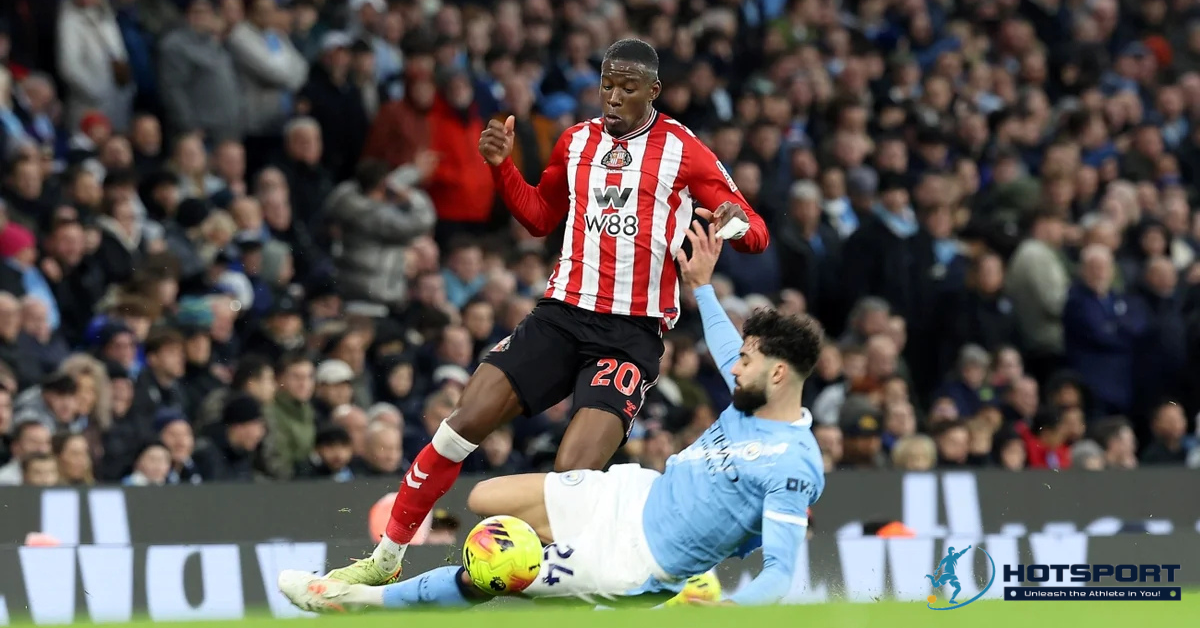
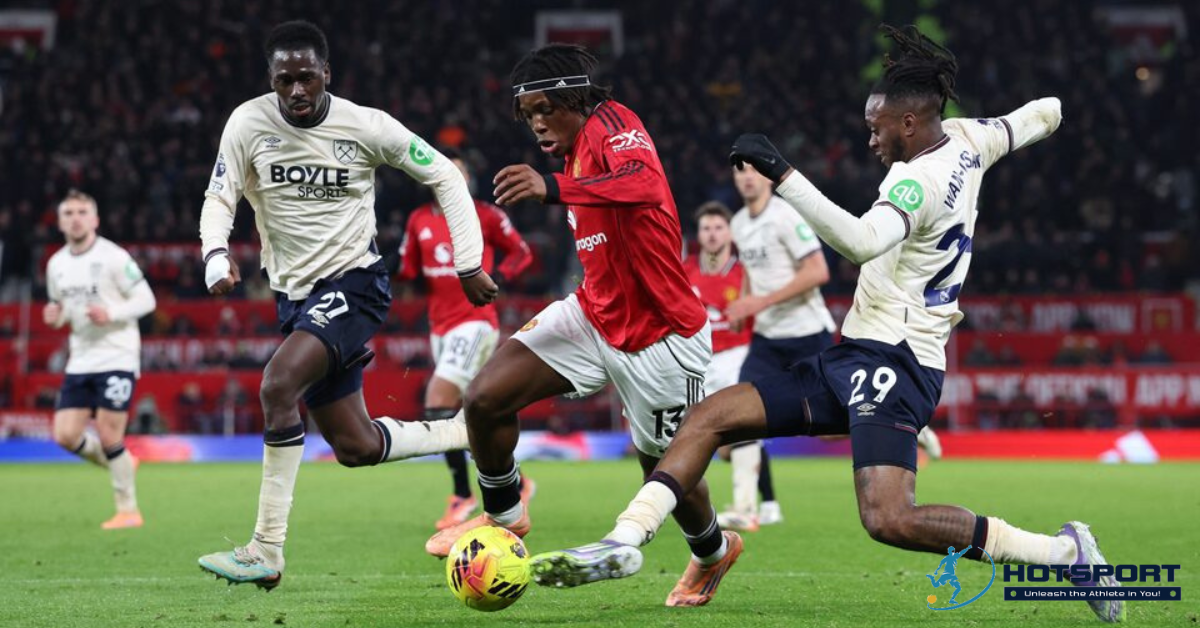
The Manchester City vs. Sunderland match, held on December 6, 2025, was much more than a simple Premier League clash. It was a game loaded with context, pressure, expectation, and a direct impact on the fight for the top spot. Manchester City, accustomed to the most intense battles in English football, knew that any slip-up could cost them the top of the table—therefore, they took to the field with an aggressive posture, a solid strategy, and a desire to show their strength at home.
Sunderland, on the other hand, despite having a competitive season, knew they would be facing one of the most talented squads in the league. Their tactic was clear: resist, defend well, look for counter-attacks, and exploit any defensive weaknesses in City. However, in a vibrant and pulsating Etihad, the Citizens’ technical and tactical superiority prevailed from the start.
The 3-0 victory, built with organization, talent, and intensity, not only secured three important points—it sent a message to the entire Premier League: City is alive, focused, and ready to turn the title race around. This match became emblematic because it represents exactly what the Premier League is: unpredictable, exciting, and full of competitive significance.
In the following paragraphs, you will find the most complete analysis available: context, in-depth statistics, tactical impact, individual highlights, specific analyses, and projections for the future of the season.
Pre-match – Maximum pressure on City and expectation of resistance from Sunderland
Manchester City’s situation before the match.
City entered the game under pressure. After weeks of squandering important points, the team needed to regain confidence—and quickly. Beyond the need for a win, there was also the concern of preventing the Premier League leaders from pulling away in the standings. The fans demanded intensity, precision, and a game that reflected the squad’s firepower.
For this match, the idea was clear: territorial dominance from the first minutes, quick ball circulation, width on the flanks, and aggressive finishing. The focus was on breaking down Sunderland’s tight defense with speed and alternating plays.
Sunderland’s previous stance
On the visiting side, the strategy was classic: low defensive lines, total compactness in the final third, quick transitions, and attempts to surprise with long balls. It was a plan dependent on patience and defensive discipline—something difficult to sustain against City, but which still offered some resistance for a few minutes.
The game – City’s absolute dominance with goals, control and maturity: Manchester City vs Sunderland
First half – Two quick goals and emotional control
The first half was almost entirely dominated by Manchester City. Rúben Dias’ goal, in the 31st minute, came from a well-placed shot from medium range — an unusual move for a defender, but one that showcased his confidence and game reading.
Just four minutes later, Gvardiol extended the lead with a header from a corner. City not only scored early but also imposed constant pressure, with solid possession, pressing after losing the ball, and intelligent occupation of the attacking half.
Sunderland could barely breathe — and when they recovered the ball, they were forced to give it back because of City’s coordinated pressure.
Second half – Administration, technique and the final blow
In the final stage, the pace remained high. City maintained their organization, avoiding unnecessary risks and looking for intelligent transitions. The third goal, scored by Phil Foden in the 65th minute, came from a patiently constructed play, a quick change of flank, and a precise cross.
Sunderland tried to fight back in the final minutes, but City’s defense was relentless. To make matters worse, the visiting team suffered a sending-off at the end, ending the match with a feeling of frustration and helplessness in the face of their opponent’s superiority.
Full match statistics – Manchester City vs Sunderland
Statistic
Manchester City
Sunderland
Final score
3
0
Ball possession (%)
63.9%
36.1%
Total shots
18
8
Shots on target
6
1
Blocked shots
5
3
Goalkeeper saves
1
4
Corner kicks
6
5
Accurate passes
568
287
Pass accuracy (%)
90%
78%
Yellow cards
1
0
Red cards
0
1
Expected goals (xG)
2.37
0.41
Disarms
15
10
Loss of possession
9
22
Tactical analysis – Why City dominated and Sunderland didn’t threaten Manchester City vs Sunderland
Manchester City’s strengths
Taking advantage of opportunities : even with few clear chances in the first half, he converted two; then, he secured the lead with ease.
Defensive balance + offensive aggression : the defense marked well, the midfield held firm, and the attack finished with precision — the ideal combination.
Control of pace and possession : with over 60% possession, they dictated the tempo, tired out their opponents, and avoided any scares.
Variety in build-up play : wing play, crosses, long-range shots and set pieces — versatility that disrupted Sunderland’s defensive plan.
Limitations and shortcomings of Sunderland
The defense is exposed, vulnerable to shots from outside the box and crosses.
Lack of offensive depth and poor precision in transitions.
Difficulty in maintaining possession and reacting to intense pressure.
Lack of intensity in the second half and inability to capitalize on set-piece opportunities.
Individual highlights – Who shone at the Etihad Manchester City vs Sunderland
Phil Foden – The conductor of the night
Besides scoring one of the goals, Foden was the most creative player in the match. He dribbled, shot, passed, and orchestrated the play. His reading of the spaces between the lines destabilized the opposing defense.
Gvardiol – Goalscoring and flawless defender
Besides the goal, Gvardiol was a monster in defense: he won duels, blocked shots, and offered clean passes down the left flank.
Rúben Dias – Leadership and precision
A defender who scores goals and commands the defense with authority. His presence was decisive in the defensive phase and in building the game.
Cherki – Efficiency and maturity
Responsible for providing assists and creating numerical superiority on the flanks. An important player in both short and long transitions.
Impact of victory – Rivalry at the top, high morale and renewed pressure.
With the three points, Manchester City reduced the gap to the top of the Premier League — they are now just two points behind the leader.
The team regained confidence and reaffirmed that, even with difficult matches, it is ready to fight until the end. The defensive and offensive consistency was a clear message to the competitors.
For Sunderland, the defeat reinforces defensive weaknesses and the difficulty of containing attacking powerhouses away from home — despite a good campaign, there are still clear limitations.
The result reignites the title race, puts City in direct contention at the top, and transforms the next few rounds into a battle of nerves, strategy, and precision.
What does this victory reveal about City this season?
The consistency shown by City reinforces the idea that the team is at its competitive peak. The team has learned to deal with bad spells, found solutions within its own squad, and regained the confidence needed to compete at the highest level.
How does this game affect morale, rivalries, and future expectations?
With this result, City demonstrates that they are still the team to beat in the Premier League. The internal atmosphere improves, the fans regain faith, and their direct rivals begin to feel the pressure.
What to expect from City in the upcoming games
The trend points towards more intensity, more dominance, and more confidence. City is shooting more, creating more chances, and is getting closer and closer to a dominant run.
Conclusion – Manchester City vs Sunderland
Manchester City’s 3-0 victory over Sunderland was not just another chapter in the Premier League calendar. It represented a narrative shift, a reaffirmation of identity, and an undeniable display of strength. In a league where every detail matters and any slip-up can redefine the standings, City showed competitive maturity, emotional solidity, and a tactical ability worthy of a team constantly fighting for top European positions.
The Citizens won not only through technical superiority, but also through initiative, territorial control, collective intelligence, and efficiency in decisive moments. This type of performance—dominance with intensity, creation of varied opportunities, and defensive stability—is exactly the pattern that transforms a strong team into a championship team.
From a psychological point of view, this result is also symbolic. It puts City back at the center of the title race, increases internal confidence, strengthens the atmosphere in the locker room, and rekindles the enthusiasm of a fanbase accustomed to victories. Wins like this act as fuel for the following rounds, directly influencing the team’s mental attitude in the more difficult matches to come.
For Sunderland, the game serves as an important wake-up call: the team needs to adjust its defensive model and find more efficient ways to compete against higher-level opponents. Even so, the defeat doesn’t diminish the value of their work; it merely highlights the gap that still exists between clubs with different levels of squad depth.
In short, this 3-0 victory is not just an impressive result, but a testament to what Manchester City can—and probably will—still offer this season. The title race is alive, wide open, and now more intense than ever.
FAQs – Frequently Asked Questions Manchester City vs Sunderland
1. What was the result of Manchester City vs. Sunderland?
City won convincingly 3-0.
2. Who scored the goals?
Rúben Dias, Gvardiol and Phil Foden.
3. Did City dominate the game?
Yes. The team controlled possession, shots on goal, pressure, and territory.
4. How did Sunderland try to play?
With low pressing, compact defense, and counter-attacking attempts.
5. Who was the best player in the game?
Phil Foden, for his combination of creativity, goal-scoring ability, and technical control.
6. Did City move up the table with this result?
Yes. He closed the gap on the leader and reduced the difference to just two points.
7. What was City’s defensive approach like?
Extremely solid, with coordinated pressures and few risks involved.
8. Did City make few technical errors?
Yes. The team had very high passing accuracy and emotional control.
9. Does this result change the course of the Premier League?
Yes, it changes things — it reinforces City as a direct contender for the title.
10. How did the fans react to the performance?
With enthusiasm. The team returned to delivering a high-level performance.
Gui Santos, the 23-year-old Brazilian forward, has become one of the most inspiring figures for basketball fans in Brazil. With his on-court versatility and off-court determination, he represents not only national talent but also the relentless drive of someone who dares to dream big. Born in Brasília, Gui forged a path that took him from local courts to stardom in the National Basketball Association (NBA), where he now plays for the Golden State Warriors. His story is one of overcoming obstacles, family, and pure love for the game—and in 2025, he continues to evolve, proving that Brazilian basketball has plenty to offer the world.
This article traces Gui Santos’ steps from childhood to his most recent career highlights. From a kid raised in a family of athletes to a fully established professional in the planet’s most competitive league, his journey motivates young athletes across Brazil.
Childhood and Early Days: Family Roots in Brasília
Guilherme Carvalho dos Santos, known as Gui, was born on June 22, 2002, in Brazil’s federal capital. Growing up in Brasília meant being surrounded by a vibrant sports culture, but it was his family legacy that truly planted the seeds of his passion for basketball. His father, Deivisson Santos, played professionally for five seasons in the Novo Basquete Brasil (NBB) with teams like Brasília and Uberlândia. His mother, Lucineide, was also a basketball player. It’s no surprise that Gui’s younger brother, Eduardo, is following the same path—he started at Minas Tênis Clube, moved to Corinthians, and has already represented Brazil’s youth national teams.
From an early age, Gui absorbed basketball values. “My dad taught me the importance of training hard, even on bad days,” he recalled years later. At age 10, he was already practicing on courts in Gama, a working-class neighborhood in Brasília where equipment was scarce but the hunger to learn was huge. He stood out for his agility and court vision—traits that set him apart from his peers. At 14, he joined the youth academy of Minas Tênis Clube in Belo Horizonte, a move that marked the beginning of his professional development.
Those early years weren’t all glory. Gui dealt with minor injuries and the pressure of adapting to a new city far from family. But it was at Minas that he learned the value of discipline. Daily training sessions, gym work, and school alongside basketball shaped not only his 2.02 m, 100 kg frame but also his mindset. “Basketball taught me resilience,” he reflects. That family foundation and the early challenges at Minas were crucial for what came next.
Rise in Brazilian Basketball: From NBB to the National Team
In 2018, at just 16, Gui made his professional debut with Minas during the 2018-19 NBB season. In his very first year, he became a starter, displaying remarkable maturity. His early numbers—averaging 10 points and 5 rebounds per game—caught the eye of international scouts. Minas, one of Brazil’s most traditional clubs, proved the perfect platform for his growth. In two years, Gui went from prospect to key piece, helping the team reach the playoffs.
A major milestone came in April 2021 when he was selected to the World Team at the Nike Hoop Summit, an event showcasing the best young global talents. Playing alongside future stars, Gui dropped 15 points and dished out precise assists, proving his versatile style—capable of shooting from deep or driving to the rim—could compete anywhere.
At the same time, Gui represented Brazil in youth international competitions. In 2019, at the FIBA South American U17 Championship in Chile, he dominated the final against Argentina with 27 points to secure gold. That title wasn’t just a team achievement; it was the moment Gui realized he could compete at the highest level. His senior national team debut came during qualifiers for the 2022 AmeriCup, where he brought defensive energy and timely shooting.
In the NBB, Gui racked up individual awards and helped Minas reach semifinals. His ability to play multiple positions—small forward or power forward—made him unpredictable. But Brazil was still a springboard. Gui dreamed of the NBA, and in 2022, that dream began to take shape.
The American Dream: NBA Draft and Arrival at the Warriors
2022 was a transformative year. In the NBA Draft held in July, Gui was selected by the Golden State Warriors with the 55th overall pick, becoming the 19th Brazilian ever drafted. It was a moment of national pride: after legends like Oscar Schmidt and Leandro Barbosa, Gui represented a new generation. “Being here is a dream I’ve chased since I was a kid,” he said upon being drafted.
Right after the draft, Gui played in the Las Vegas Summer League with the Warriors, averaging 12 points and 6 rebounds while impressing with his defense and fast-break play. To gain rhythm, he was assigned to the Santa Cruz Warriors in the G League. There, he immediately stood out: in the 2022-23 season, he was selected for the Next Up Game, the G League’s all-star showcase.
His official NBA debut came in November 2023 against the Oklahoma City Thunder. In just 4 minutes, Gui scored 2 points, grabbed 3 rebounds, and recorded 1 assist—a modest but symbolic start. He shuttled between the G League (where he averaged 13.7 points, 6.6 rebounds, and 2.5 assists over 43 career games) and the main roster. On November 6, 2023, he signed a guaranteed three-year contract with the Warriors, securing the 14th roster spot and becoming the only Brazilian in the league that season.
The recent four-time champion Warriors saw Gui as a versatile bench piece. Under Steve Kerr, he learned the nuances of the modern game: spacing, team defense, and three-point shooting. Despite limited minutes in 2023-24 (23 games, 3.6 PPG), he flashed brilliance, including a monster dunk against the Lakers.
2024-25 Season: Growth and Breakout Moments
The 2024-25 season marked Gui’s consolidation in the NBA. With growing confidence, he appeared in 56 regular-season games, averaging 4.1 points, 3.1 rebounds, and 1.4 assists. His first career start came on January 15, 2025, in a tight 116-115 win over the Minnesota Timberwolves. In 21 minutes, he posted 5 points, 7 rebounds, and 3 assists, showing his all-around game.
Days later, on January 22, he set a career-high with 16 points against the Sacramento Kings. In the next game against the Chicago Bulls, he exploded for 19 points and 7 rebounds, including five made threes, in a 131-106 blowout that lit up league highlights. Those performances proved Gui was no longer just a rookie—he was a reliable option.
In the playoffs, he played 10 games, averaging 2.6 points, contributing to a strong Warriors run. Off the court, a February 2024 knee injury sidelined him for weeks, but he returned stronger thanks to a rigorous rehab program. In June 2025, the Warriors exercised their team option, keeping him for the 2025-26 season at a fully guaranteed $2.2 million (roughly R$12 million) starting January 2026.
Gui also shone for Brazil at the 2023 FIBA World Cup after being called up in August, reaffirming his commitment to the national team.
Latest Updates: 2025-26 Season Performance
The 2025-26 season started busy for Gui. In November, he was briefly sent to Santa Cruz for minutes but quickly recalled to the main squad. On November 27, he returned to the Warriors’ rotation, playing 12 minutes against the Philadelphia 76ers and scoring 4 points.
The highlight came on December 6, 2025, in a hard-fought 99-94 win over the Cleveland Cavaliers. With the team short-handed due to injuries, Gui came off the bench and dropped 14 points, including clutch free throws in the final minutes that sealed the victory. It was his best recent performance, standing out for defense and timely shooting. “Gui was huge for us in the fourth quarter,” coach Steve Kerr said post-game. The performance came in a game where all 10 active Warriors contributed in a deep rotation.
Gui has also adapted to a hybrid role: G League minutes to sharpen his game, but consistent NBA presence. On November 20, he returned to the bench after a brief starting stint, yet his impact remains undeniable. Brazilian fans follow eagerly, especially with potential national team call-ups looming for 2026.
Personal Life and Legacy: Beyond the Court
Off the court, Gui is a grounded young man. In June 2025, he proposed to his girlfriend of four years, Júlia Lawrenz. Júlia, a volleyball player at the University of Hawaii and former Brazil junior beach volleyball representative, shares the couple’s nomadic life between San Francisco and travel. “She supports me in everything,” Gui says. He uses social media to motivate kids, posting workouts and messages of perseverance.
His legacy goes beyond stats. As the only Brazilian currently in the NBA, Gui is inspiring a new wave of talent. Basketball academies in Brasília and Belo Horizonte are packed with kids wearing his Warriors No. 15 jersey. He hosts clinics in Brazil during the off-season, teaching fundamentals while stressing the importance of education.
Conclusion: The Bright Future of Gui Santos
Gui Santos is more than a player—he is an ambassador for Brazilian basketball. From Brasília to NBA arenas, his journey—of thousands of practices and dribbles—shows that talent, backed by family and persistence, opens doors. With a secure contract and growing performances like his 14-point night against the Cavaliers in December 2025, Gui is ready for more. Brazil cheers him on, knowing every bucket is a collective victory. Let the next chapters of this inspiring story keep coming.
Jalen Johnson has become one of the most exciting figures in the National Basketball Association in recent years. At just 23 years old, the 6’8″ (2.03 m) forward for the Atlanta Hawks displays a rare combination of athletic power, court vision, and versatility that has put him firmly in the spotlight. Born on December 18, 2001, in Milwaukee, Wisconsin, Johnson embodies the American basketball dream: from a talented kid on local courts to a rising star on the world’s biggest stage. His journey, marked by challenges and explosive flashes of brilliance, reflects the competitive essence of the NBA, where relentless effort can turn prospects into legends.
In this article, we explore Johnson’s path from humble beginnings to the recent achievements that project him as one of the most promising players of his generation. Updated through December 2025, we dive into the details that define not only his career but also the impact he’s having on the sport.
Origins and Early Steps in Basketball
Jalen Johnson’s story begins on the cold streets of Wisconsin, where basketball is woven into the local identity. Raised by parents who valued discipline and sport, Johnson grew up immersed in a culture that reveres athletes like Giannis Antetokounmpo—the Greek Freak who also shines in Atlanta. From an early age, he showed a natural gift for the game, dribbling in driveways and competing in youth leagues.
In high school, Johnson attended Nicolet High School in Glendale, where he quickly stood out. His imposing size and agility made him a five-star recruit, ranked among the top wings in the class of 2020. To further hone his skills, he transferred to IMG Academy in Florida—one of the elite basketball factories that produced names like Ben Simmons and RJ Hampton. There, Johnson led his team to an outstanding record, averaging 17.3 points, 7.6 rebounds, and 3.4 assists per game while earning McDonald’s All-American honors.
Those formative years were crucial. Johnson wasn’t just a scorer; he learned to read defenses, distribute the ball, and lead quietly. Coaches described him as a “complete athlete” capable of finishing powerfully at the rim or shooting from deep. That solid foundation prepared him for the leap to college basketball, where the professional world was already watching.
A Quick Stint at Duke and the 2021 NBA Draft
In 2020, Johnson chose Duke University, a college basketball powerhouse under legendary coach Mike Krzyzewski. As a freshman, he joined a loaded roster that included Wendell Moore Jr. and Matthew Hurt. However, his season was short and challenging: in just 13 games, Johnson averaged 11.2 points, 6.2 rebounds, and 2 assists while shooting 45.1% from the field.
Injuries and tactical adjustments limited his minutes, but flashes of brilliance—like a 22-point outburst against Boston College—showed his potential. In February 2021, he made the bold decision to leave Duke early for the NBA Draft, a move that paid off. His choice reflected the modern era of college basketball, where top talents trust their instincts and the eyes of scouts.
In the 2021 NBA Draft, Johnson was selected 20th overall by the Atlanta Hawks, a franchise in rebuild mode after moving on from veterans like Danilo Gallinari. The Hawks saw him as the perfect complement to star point guard Trae Young—someone who could space the floor and finish plays. He signed a four-year rookie contract worth approximately $17 million and arrived in the league with moderate expectations but a fierce determination to prove himself.
Adaptation and Growth with the Atlanta Hawks
Johnson’s 2021-22 rookie season was one of intense learning. Playing in just 22 games and averaging 5.5 minutes, he posted 2.4 points and 1.2 rebounds. The NBA’s frenetic pace tested him, but he used G-League time with the College Park Skyhawks to sharpen his three-point shot and defense. In 2022-23, opportunities grew: 39 games, 14.4 minutes, 6.4 points, and 3.8 rebounds, including standout playoff moments that helped Atlanta upset the Boston Celtics in the first round.
The real breakout came in 2023-24. With injuries to teammates like John Collins, Johnson became a full-time starter, playing 33.7 minutes per game and averaging 16.0 points, 8.7 rebounds, 3.6 assists, 1.2 steals, and 0.9 blocks. Shooting 51.1% from the field and 35.5% from three, he became one of the league’s most efficient players. Despite missing time with wrist and ankle issues, he finished the season as one of Atlanta’s brightest spots as the Hawks returned to the playoffs.
In 2024-25, Johnson solidified his status, averaging 18.9 points, 10.0 rebounds, and 5.0 assists in 36 starts. His pick-and-roll chemistry with Trae Young became lethal, and he led the team in rebounding. Persistent injuries—including left-shoulder surgery in January—tested him, but his resilience impressed everyone. In the offseason, Atlanta added Kristaps Porziņģis and Dyson Daniels, creating an ideal supporting cast so Johnson wouldn’t have to carry the entire load.
The Explosion in the 2025-26 Season: Unforgettable Numbers and Moments
The 2025-26 season has been Jalen Johnson’s coming-out party. Through 20 games as of December 2025, he’s averaging a jaw-dropping 23.2 points, 10.0 rebounds, 7.3 assists, 1.6 steals, and 0.4 blocks in 34.9 minutes. His shooting splits? 53.9% from the field, 41.2% from three, and 78.9% from the free-throw line. Those numbers place him in the top-20 in scoring and rebounding, and top-10 in assists among forwards.
November was electric. On November 30 against the Philadelphia 76ers, Johnson set a new career high with 41 points, 14 rebounds, 7 assists, 1 steal, and 1 block in a wild 142-134 double-overtime victory—one of the most complete performances of his career. Days later, on December 1 against the Detroit Pistons, he posted 29 points, 13 rebounds, and 7 assists despite a 99-98 loss.
The pinnacle came on December 5 at home against the Denver Nuggets. Listed as questionable with a right calf strain that had kept him out of the previous game against the Clippers, Johnson came out possessed. In the first half alone, he recorded a historic triple-double: 11 points, 10 rebounds, and 12 assists in just 16 minutes. That made him only the fifth player since 1997-98 to notch a triple-double in a half and the second-fastest in NBA history (behind a 15-minute mark). Fans and analysts lost their minds; social media exploded with comparisons to prime Russell Westbrook.
These games aren’t flukes. Over his last 11 contests, Johnson has averaged 25.7 points, 11.2 rebounds, 8.9 assists, and 1.7 steals in 37 minutes. His versatility—guarding guards to centers, elite shooting, and elite playmaking—has thrust him into the MVP conversation, or at the very least, the Most Improved Player race. With the Hawks surging in the East thanks to Porziņģis and company, Johnson is the offensive engine alongside Trae Young.
Playing Style: Versatility and Basketball IQ
What makes Johnson special is his adaptability. As a modern power forward, he seamlessly slides between the 3 and 4 positions, exploiting mismatches. His athletic explosion produces highlight-reel dunks and voracious offensive rebounds—he leads the league in rebounds per game among players under 25. His passing vision, reminiscent of facilitators like LeBron James, creates easy looks for teammates at a 7.3-assist clip.
Defensively, he’s a hound: 1.6 steals per game reflect elite reading of passing lanes. His now-elite 41.2% three-point shooting stretches defenses and opens driving lanes. Critics point to occasional foul trouble (3.3 per game) and inconsistency in low-usage nights, but his work ethic—extra shooting sessions and film study—continues to smooth those edges. In a league of specialists, Johnson is a throwback generalist, valuable in any system.
A Bright Future and a Legacy in the Making
With his rookie contract running through 2025 and extension talks looming, Johnson is on the superstar track. Rumors of a massive new deal have intensified after his Nuggets masterpiece made global headlines. Off the court, he’s active in Atlanta community programs—running basketball camps for underprivileged youth—and has endorsement deals with Nike and Gatorade.
Looking ahead, the goal is deep playoff runs with the Hawks. With young talents like Zaccharie Risacher and Onyeka Okongwu maturing, Johnson could anchor a new era in the Southeast. His calf injury, while manageable, serves as a reminder that health remains the only real obstacle. If he stays on this trajectory, 2026 could be the year he makes his first All-Star team.
Conclusion: A Name to Etch in History
Jalen Johnson is no longer just a prospect—he is a thrilling reality in the NBA. From the courts of Wisconsin to the bright lights of State Farm Arena, his journey inspires millions. As of December 2025, with that lightning-fast triple-double still fresh in everyone’s mind, Johnson represents everything basketball has to offer: overcoming odds, spectacle, and unity. The Hawks and their fans are lucky—and the basketball world has a talent to celebrate for many years to come.
Antoine Griezmann is one of those players who seem made for football. With a sharp game vision, precise dribbles, and a goal-scoring instinct that defies the years, the 34-year-old Frenchman continues to shine on the pitches. Born in Mâcon, in the heart of France, Griezmann is not just a scorer, but a true maestro on the field, capable of creating plays out of nothing and deciding matches with a touch of class. His trajectory, full of ups and downs, reflects the passion he carries for the sport. In a world where European football renews itself every season, Griezmann remains a reference for dedication and pure talent. Let’s dive into the story of this star who, even at 34, dreams of new horizons.
The First Steps: From Mâcon to the Youth Academies
It all began in a small French town called Mâcon, on March 21, 1991. The son of Alain, a former amateur player with Germanic roots, and Isabelle, of Portuguese descent—with a grandfather who played for Paços de Ferreira—Griezmann grew up in an environment where football was more than a game: it was family. Vacations in Portugal at his grandparents’ house planted the seeds of love for the sport. But the initial path wasn’t easy. At the local club UF Mâcon, the skinny and light boy faced rejections. Clubs like Metz and Lyon turned him away because of his stature. “I was too small,” he recalls in old interviews, with a smile that hides his determination.
The turning point came at age 14. In a friendly against the Paris Saint-Germain juniors, Griezmann caught the eye of Real Sociedad scouts. The family took a risk: they moved to San Sebastián, Spain, where he joined the Basque academy. There, far from home, the boy transformed. He learned Spanish, absorbed the local culture, and above all, refined his game. “Real Sociedad gave me wings,” he once said. From the youth team to the senior squad, it was a quick leap. In 2009, at 18, he debuted in Spain’s Segunda División. His speed, peripheral vision, and placed finishes began to emerge. In the 2009-10 season, he helped the team win the division title, scoring six goals in 37 games. It was the harbinger of a talent that would soon explode in the elite.
Rise at Real Sociedad: The Birth of a Star
Real Sociedad, with its passionate fans and the boiling Anoeta stadium, was the perfect crucible for Griezmann to forge his style. In La Liga, starting in 2010, he evolved from prospect to key piece. He played as a left winger, but his versatility allowed him to float across the attack, confusing defenses. Over five years (2010-2014), he accumulated 201 matches and 52 goals—impressive numbers for a 23-year-old.
Iconic moments defined this phase. In 2013, a hat-trick against Celta de Vigo put him on the map. But it was the volley goal against Athletic Bilbao in the 2014 Basque derby that sealed his farewell to the club. The txuri-urdin fans, as the Sociedad supporters are called, still mourn his departure. Offers poured in: Lyon, Saint-Étienne, Manchester United, Arsenal. In the end, Atlético de Madrid, coached by Diego Simeone, won the race for 30 million euros. Griezmann left with a heavy heart, but ready for the big stage. “San Sebastián taught me to be a man,” he confided years later. This stage shaped not only his football but his character: humble, resilient, and always grateful.
The Colchonero Heart: Glories and Challenges at Atlético de Madrid
Arriving at Atlético in 2014 was like entering a demanding family. Simeone, the Cholo, saw in Griezmann the ideal partner for Álvaro Morata and company. In his debut, against Barcelona in the Spanish Supercopa, he scored and lifted the trophy—the first of many. In the 2014-15 season, 22 goals in 54 games. But the peak came in 2018: the UEFA Europa League, with a brace in the final against Olympique de Marseille (3-0). The UEFA and Spanish Supercopas completed the cycle. Griezmann became an idol, with his rochiblanca grit—the warrior soul of the club.
In 2019, however, came the controversy. After a months-long saga, he signed with Barcelona for 120 million euros, the fifth-largest transfer in history at the time. The farewell to Atlético was bitter; fans felt betrayed. At Barça, alongside Messi and Suárez, the world was expected. But things didn’t flow. 35 goals in 103 games, a Copa del Rey title in 2021, but criticism for not fitting into Koeman and Xavi’s schemes. Griezmann, always elegant, admitted: “It wasn’t the right place for me.” In 2021, his return to Atlético on loan—and subsequent purchase for 20 million—was like a reunion of soulmates. Today, with a contract until 2027, he is the club’s all-time leading scorer: 197 goals, surpassing Luis Aragonés in 2024. His partnership with Simeone yielded magical moments, like the goal against Real Madrid in the 2024 Supercopa, which crowned him as the record holder.
The French National Team: From Runner-Up to World Champion
For France, Griezmann is synonymous with consistency. He debuted in 2014 against the Netherlands, in a friendly mixing talent and pressure. At the 2014 World Cup, he was a substitute, but at Euro 2016, he exploded: six goals, Golden Boot, and runner-up after a final loss to Portugal. “It was painful, but it strengthened me,” he said. The peak? The 2018 World Cup. In Deschamps’ France, he scored four goals, including in the final against Croatia (4-2), and took home the Bronze Ball. World champion at 27—the dream of any boy from Mâcon.
The 2021 Nations League and the 2022 World Cup runner-up, with a missed penalty in the shootout against Argentina, completed a cycle of glories and lessons. In September 2024, after 137 games and 44 goals, Griezmann retired from the national team. “I left everything on the field,” he declared in an emotional press conference. His absence leaves a void, but his legacy—Olympic gold in the youth ranks in 2010 and leadership in majors—is eternal.
Life Off the Field: Family, Controversies, and Passions
Griezmann is more than football. Married since 2017 to Erika Choperena, a child psychologist, the couple has three children: Mia (2016), Amaro (2019), and Alba (2021). Family is his safe harbor; Erika, Colombian, brings balance to the star’s hectic life. Off the four lines, he is a fan of video games—FIFA is his vice—mangas like One Piece, and basketball, influenced by his friendship with Tony Parker.
Not everything was perfect. In 2017, a blackface photo as a tribute to the Harlem Globetrotters sparked controversy. Griezmann issued a public apology: “I didn’t mean to offend anyone; I learned from the mistake.” His sister Maude survived the 2015 Bataclan attacks, which marked him deeply. Today, he uses his voice for social causes, like inclusion in sports. Nicknames like “Little Prince” or “Grizi” capture his essence: charming, but grounded.
The Current Moment: Renewal, Goals, and American Dreams
In December 2025, Griezmann is living a transition phase at Atlético. At 34, he renewed until 2027 in June, but with a reduced salary to help the club’s finances under La Liga rules. The 2024-25 season ended with an 18-game goal drought, overshadowed by Julian Álvarez (17 goals) and Alexander Sørloth (20). But the Frenchman responded: in September 2025, he scored the first goal of the 2025-26 season in stoppage time against Real Madrid (5-2), ending a 22-match dry spell and handing the rivals their worst derby loss since 1950. Three days later, his 200th goal for Atlético came against Eintracht Frankfurt in the Champions League (5-1).
In March, he surpassed Messi as the foreigner with the most La Liga games (521). Recently, he came off the bench against Levante, scoring two goals in a 3-1 comeback. Against Inter Milan in the Champions League, he was on the bench, but his mentality impresses: “I have to be professional and an example for my teammates,” he said in November.
Rumors of departure swirl. Griezmann dreams of the MLS: “It’s my goal, but I’m under contract and want more trophies here.” Speculation links him to an “unexpected club” to reunite with former teammates, but he focuses on the present. With 53 games in the last season (16 goals, 9 assists), Griezmann proves that age is just a number. Atlético prepares for the Club World Cup in the US, and he, always smiling, assures: “I’ll give everything on the field.”
Eternal Legacy: Why Griezmann Still Captivates
Antoine Griezmann transcends statistics. His 262 goals in 672 club games, the World Cups, the versatility from winger to false 9—all this places him among the greats. But it’s the heart that wins over: loyalty to Atlético, humility after mistakes, family as an anchor. In a football world of inflated egos, he is the perfect anti-hero—the guy who runs, smiles, and delivers. At 34, with MLS on the horizon, Griezmann reminds us: football is about moments, not endings. And his, still under construction, promise more glorious pages.
Introduction – tension, ambition and the classic match that was worth the top spot: Betis vs Barcelona
On December 6, 2025, the match between Betis and Barcelona brought together more than just two teams trying to score points: it brought together ambitions, histories, pressures, and the expectation of an offensive spectacle. Playing in Seville, Betis had home advantage and the strength of their fans as trump cards to seek a convincing result. They wanted to use the clásico as a boost to climb the table and envision European competitions. Barcelona, with its history of aiming for the top of La Liga, entered the match under pressure to regain consistency and prove that their season could withstand any stage.
The atmosphere before the game was filled with nervousness and hope. The stands, tense yet vibrant, hinted at the expectation of an open game, full of goals and twists. On the field, it was understood that no imbalance in the squad would guarantee tranquility: everything would depend on focus, execution, and the ability to react.
And that’s exactly what the fans saw. An overwhelming start from Betis, an immediate response from Barça, a stunning comeback, and an offensive show—a Clásico dominated by uncertainty and decided by details. The final 5-3 score reflects more than just offensive prowess: it reflects courage, adaptation, and the mentality of a team that understands that, in La Liga 2025/26, every game can change history.
This text delves into each moment: pre-game context, match dynamics, detailed statistics, impact on the standings, tactical analysis, and what this game means for the rest of the season.
Pre-match analysis – Pressures, motivations and the scenario for Betis vs Barcelona
Betis’ ambition and the power of command.
Betis entered the field with high confidence. The team was on a positive run, with good recent results and high morale. Playing at home offered the chance to turn expectations into points — and the clásico against Barcelona was the perfect opportunity. For the fans, a victory represented not only three points, but an affirmation of seriousness, ambition, and respect in the Spanish elite. The management and players knew that a significant result could rekindle dreams of qualifying for continental tournaments.
In preparation, the strategy relied on speed on the wings, quick infiltrations, and transitions to surprise the opponent. Defensively, the plan demanded heightened vigilance: containing the Catalan attack and maintaining compactness—without sacrificing bold attacking tactics.
The blue-and-red ambition and the search for consistency.
For Barcelona, the Clásico was more than just another match: it was a test of strength. The team had been inconsistent in its performances, and the need for a convincing away win—especially in a high-pressure game—was urgent. The club needed to reinforce its title aspirations, to show that the squad has talent and conviction.
Furthermore, the coaching staff was betting on a blend of youth and attacking prowess. With names like Marcus Rashford, Lamine Yamal, and Roony Bardghji gaining prominence, the team aimed for agility, unpredictability, and intensity—essential attributes for imposing rhythm in a derby away from home.
The order was clear: pressure, verticality, objectivity, and taking advantage of every counter-attack opportunity without giving the opponent a break.
The game – frenetic pace, comebacks and offensive spectacle: Betis vs Barcelona
Thrilling start — Betis opens the scoring, Barça responds within minutes.
Six minutes in, Betis surprised everyone. Striker Antony scored after a mix-up in the Catalan defense, putting the home side ahead. But the joy didn’t last: five minutes later, Barcelona responded strongly.
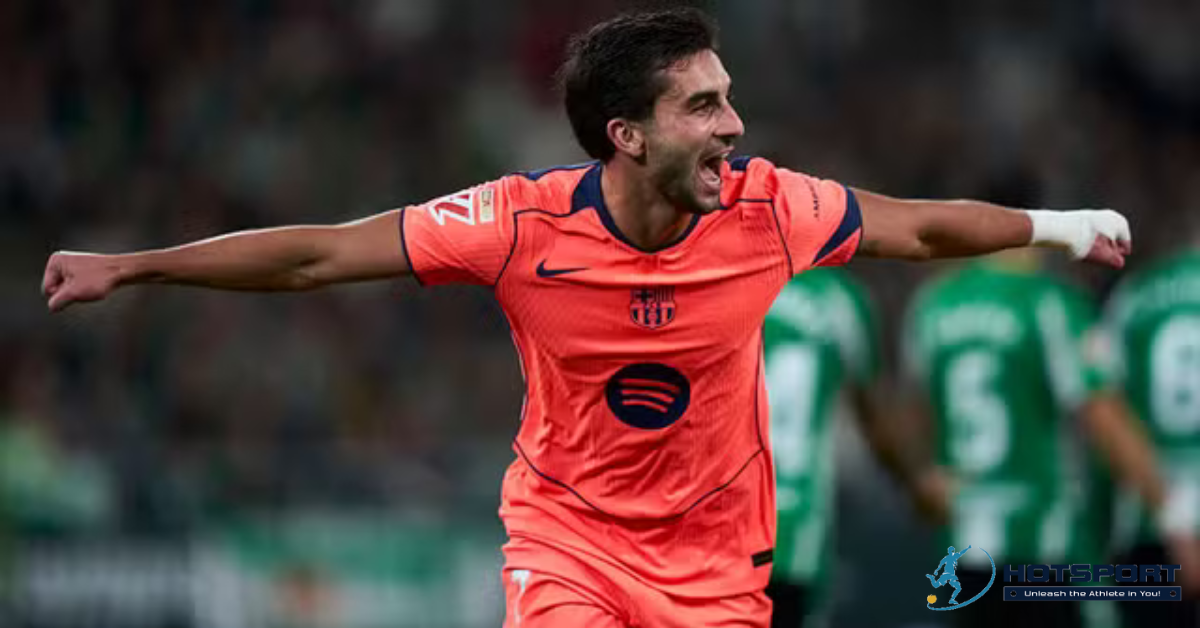
At 11 minutes, Ferran Torres finished with precision from close range, after an assist from Jules Koundé, equalizing the match. At 13 minutes, another attack and again Torres — this time with a precise volley — turned the game around for the visitors. Two goals in two minutes, an impressive comeback, and the classic open for a spectacle.
In the 31st minute, young Bardghji extended the lead: his first LaLiga goal, a powerful shot from inside the box, made it 3-1. The advantage seemed solid.
But that wasn’t the end of the avalanche. In the 40th minute, Torres completed his hat-trick with a shot from outside the box that deflected off a defender — 4-1 before halftime. Barça transformed the deficit into a commanding lead, and the first half ended with a panorama of dominance and efficiency.
Second half – Control, penalty, final drama and resistance.
In the final stage, Barça maintained their consistency. In the 59th minute, a penalty confirmed by VAR was converted by Lamine Yamal. 5-1 — it seemed the game was over.
But Betis didn’t give up. In the 85th minute, Diego Llorente reduced the deficit from a corner. In the 90th minute, a penalty was awarded to the home side, converted by Cucho Hernández — 3-5. A final-like atmosphere, tension in stoppage time, and hopeful fans.
In the final minutes, Barça held on. A solid defense, concentration, and nerves in check: the final whistle confirmed victory, a Blaugrana celebration, and a Clásico to go down in history.
Match statistics – Data that tells the story of Betis vs. Barcelona
Statistic
Betis
Barcelona
Total shots
16
17
Shots on target
5
8
Ball possession (%)
~38
~62
Accurate passes
347
580
Pass accuracy (%)
~79%
~89%
Corner kicks
7
7
Goals
3
5
Big chances created
2
5
These numbers reinforce the fact that Barcelona knew how to dominate the game, create chances, and be more efficient. Betis had an offensive presence, but lacked precision and defensive control in crucial moments.
Impact of the victory – What changes for LaLiga and for the clubs
Barcelona consolidates its lead: with 40 points in 16 games, it opens up a four-point advantage over second place.
High morale: a five-goal away win, a comeback victory, and offensive prowess rekindles the confidence of the squad and the fans, as well as reaffirming the strength of the attack.
Betis leaves with clear warnings: the offensive boldness is there, but the defensive fragility and lack of maturity in transitions are taking their toll. The team needs to adjust its marking and competitive maturity.
Youth valued: players like Bardghji and Yamal reinforce that Barcelona is strongly committed to young talent, renewal, and a versatile attack — ingredients that have been yielding results.
Tactical analysis – Why Barça were clinical and Betis couldn’t resist
Barcelona’s strength
Immediate response capability: reacted to the goal early in an organized and offensive manner.
Offensive efficiency and lethality in clear chances — Ferran Torres’ hat trick, Bardghji’s goal, converted penalty: maximum efficiency.
Youthful versatility: using Yamal in midfield, Bardghji on the wing, a mix of speed and technique — surprised Betis.
Emotional and defensive control at the end — he knew how to withstand the pressure, maintain compactness, and avoid surprises.
Limitations of Betis
An early defensive display allowed for an immediate turnaround.
Lack of attacking purpose, despite shots on goal. Lack of precision in the final third.
Lack of tactical consistency under pressure: the offensive strategy was not balanced by an organized defense.
Dependence on opponent’s mistakes — when Barça didn’t make mistakes, Betis had no answers.
Conclusion – A comeback, an offensive display, and strong lessons for LaLiga and the clubs.
The match between Betis and Barcelona on December 6, 2025, will be remembered not only for the lopsided score, but for what it represented: clear proof that talent, audacity, and efficiency are worth more than possession or expectation. Barça showed that, even after conceding an early goal, they have maturity, an attacking character, and the ability to react intensely. The 5-3 victory was not just a win: it was a message—of strength, ambition, and that this team is willing to fight aggressively for the LaLiga title.
Ferran Torres reaffirmed his goal-scoring instinct, Bardghji and Yamal showed that youth can be decisive, and the Blaugrana team demonstrated cohesion and confidence. On the other side, Betis learned—the hard way—that attacking play must go hand in hand with defensive balance, and that individual and organizational errors are costly in high-stakes derbies.
For the 2025/26 LaLiga season, the result reinforces the unpredictability and excitement. The fight for the top spot gains new elements — pace, nerves, goals, and the certainty that each matchday is more important than ever.
If you follow European football and want more in-depth analysis, context, statistics, and excitement—stay with us. Our coverage continues strong, with quality content, passion, and a critical eye for every play.
FAQs – Frequently asked questions about Betis vs Barcelona 2025
What was the final score of the game between Betis and Barcelona? Betis 3 × 5 Barcelona.
Who scored the goals for Barcelona? Ferran Torres (11′, 13′, 40′), Roony Bardghji (31′) and Lamine Yamal (59′, penalty).
Who opened the scoring for Betis? Antony, in the 6th minute.
How many shots on goal did each team have? Betis: 16 shots; Barcelona: 17.
What was the ball possession rate? Barcelona dominated with around 62%; Betis had around 38%.
How did Barça manage to turn the game around and dominate? With offensive efficiency, quick transitions, midfield control, and capitalizing on chances — all combined with an immediate reaction after conceding a goal.
Why did Betis’ defense fail so badly? Lack of organization, exposure in transitions, inattention to the flanks, and vulnerability to quick counter-attacks.
Does this result solidify Barcelona’s position as title favorites? Yes — the victory reinforces their leadership, morale, and the conviction that the team has the offensive power and maturity to compete for the title.
What does Betis need to change to regain its rhythm? Improve its defensive organization, be more clinical in attack, avoid overconfidence, and adjust its transitions.
Does this classic match confirm that LaLiga 2025/26 will be unpredictable? Yes — with explosive results, comebacks, and an attacking pace, any team can surprise; each round is crucial.
Jalen Williams is one of those players who enters the league as a pleasant surprise and quickly becomes indispensable. With his on-court versatility, rock-solid defense, and ability to impact every facet of the game, he has shaped the future of the Oklahoma City Thunder. Born in 2001, Williams represents the new generation of athletes who combine tactical intelligence with explosive physical gifts. In an era where basketball demands constant adaptation, his journey inspires young players worldwide. This article dives into the life and career of this American wing, showing how he evolved from a modest recruit into a cornerstone of a championship team.
Family Roots and First Steps in Basketball
Jalen Devonte Williams was born on April 14, 2001, in Denver, Colorado, but his childhood was forged under the blazing Arizona sun. At age seven, his family moved to Gilbert, a suburb near Phoenix, where basketball instantly became his passion. Raised by parents who valued education and athletics, Williams grew up in an environment that prized discipline. His father worked various jobs, while his mother focused on the family, always pushing him to chase limitless dreams.
Sports were part of daily life from the start. At eight, he joined the local Sting team, training at the Boys & Girls Club in Guadalupe. On those makeshift courts and in regional tournaments, Williams learned the fundamentals. He was skinny, barely 5’7″, and played point guard—dribbling with agility and dishing precise passes. Then came the growth spurt: between his sophomore and senior years of high school, he shot up six inches, turning into a 6’6″ wing. That physical transformation was pivotal, allowing him to add mid-range jumpers and powerful drives to his arsenal.
The Williams family always emphasized balance. Beyond basketball, Jalen played football and competed in track, building coordination and endurance. “I never thought I couldn’t make it big,” he said recently, reflecting on those early years. That resilient mindset would become the foundation for bigger challenges.
High School Breakthrough: From Point Guard to Prospect
At Perry High School in Gilbert, Arizona, Williams found the perfect stage to shine. As a freshman standing only 5’11”, he was viewed as a promising guard but not a phenom. His coach noticed his ferocious defense—he guarded the opponent’s best player every night, forcing turnovers and stealing balls relentlessly. As his body caught up to his skill, he became an undisputed starter by junior year.
The numbers spoke for themselves: over 20 points per game as a senior, with efficient shooting and plenty of assists. Perry reached the state semifinals thanks in large part to his leadership. Off the court, he was the quiet kid who stayed focused on academics—he kept a high GPA and volunteered at community events. College recruiters took notice, but not as a five-star talent. He received offers from mid-major programs, and choosing Santa Clara University in California felt like the right fit. “It was a place I could grow without overwhelming pressure,” he later recalled.
College: Growth at Santa Clara
Arriving at Santa Clara in 2019, Williams faced the typical freshman transition: faster pace, tougher competition. Playing as a wing-guard hybrid, he started on the bench, but his defense quickly earned him minutes. In his tenth game, coach Jason Ludwig tasked him with guarding the opponent’s best guard—and Williams locked him down.
Over three seasons, he appeared in 84 games, averaging 12.6 points, 3.7 rebounds, and 2.9 assists. His efficiency stood out: 46.9% from the field and 35.2% from three. He earned All-WCC honors twice. In his final 2021-22 season, he exploded for 17.9 points per game, leading the Broncos to a rare NCAA Tournament berth. His mentor Ludwig praised his obsession with improvement: “He put in extra work, studied film, and was always the first in the gym.”
Williams surpassed 1,000 career college points—a rare feat for a mid-major player. His perimeter defense was elite, and his offense flowed naturally. Eligible for the 2022 NBA Draft, he declared, confident his ceiling was sky-high. Scouts compared him to versatile, undervalued wings like Mikal Bridges.
2022 NBA Draft and Immediate Impact with the Thunder
The 2022 Draft changed everything. Selected 12th overall by the Oklahoma City Thunder, Williams joined a promising rebuild alongside Chet Holmgren and Shai Gilgeous-Alexander. OKC saw him as a “connector”—someone who could guard multiple positions and contribute without forcing shots. His Summer League debut was quiet, but preseason practices revealed his potential.
In his 2022-23 rookie year, he played 75 games, averaging 14.1 points, 4.5 rebounds, and 3.3 assists. He earned All-Rookie First Team honors and adapted quickly to coach Mark Daigneault’s defensive system. He guarded wings and bigs alike, using his 6’10” wingspan. The Thunder finished with 40 wins, and Williams was the glue holding the young core together.
Evolution in Subsequent Seasons: From Prospect to Star
In 2023-24, Williams took another leap: 19.1 points per game with improved three-point shooting (34.4%). OKC reached the playoffs, and he shined in the postseason with 18-point averages. His chemistry with Gilgeous-Alexander was electric—perfectly timed passes and blistering transition play. Minor injuries tested him, but resilience won out.
The peak arrived in 2024-25. Averaging 21.6 points, 5.3 rebounds, and 5.1 assists over 69 games, Williams earned his first All-Star selection in January 2025. By season’s end, he added All-NBA Third Team and All-Defensive Second Team honors. In the playoffs, despite criticism for offensive efficiency in the Western Conference semis against Denver, he redeemed himself in the Finals. OKC won its first NBA title since 2012, with Williams as a cornerstone—averaging 20 points while guarding superstars like LeBron James. The championship ring at age 24 cemented his arrival.
Playing Style: Versatility in Action
What makes Williams special is his adaptability. As a small forward, he seamlessly slides between the 2 and 3 spots, mobile enough to chase quick guards or battle stronger forwards. His defense is instinctive—1.6 steals per game last season, plus more blocks than many centers. On offense, he’s highly efficient (48.4% FG in 2024-25), preferring drives and pull-ups over forced shots. His court vision makes him an underrated passer who creates space for teammates.
Critics point to three-point inconsistency (36.5%), but his work ethic fixes flaws fast. “I study the game like chess,” he says. In a high-pace Thunder system, Williams is the balance: he scores, defends, and leads.
Life Off the Court: Family and Legacy
Away from the spotlight, Williams is low-key. Single, he spends free time with family and visits Gilbert whenever possible. He supports basketball programs for underprivileged kids in Arizona and has become a community fixture in OKC through clinics and charity events. His five-year, $241 million extension signed in July 2025 provides long-term security—despite missing out on a bonus clause due to games missed.
2025-26 Season Updates: Triumphant Return
The current season began with a setback: right-wrist surgery (from a 2025 playoff injury) sidelined him for the first 19 games. Even without him, OKC started scorching hot—21 wins in their first 22 games through December 6, posting the best point differential in league history (+16.5). Williams made his season debut on November 28 against the Phoenix Suns: 11 points, 8 assists, 4 rebounds, 2 steals, and 1 block in 29 minutes of a 123-119 win.
He quickly found his rhythm. Against Portland: 16 points, 8 rebounds, 5 assists, 3 blocks. Against Golden State: 22 points on 16 shots plus 6 assists. Though he’s ineligible for postseason awards (having missed 18 games, falling short of All-NBA and extra All-Star criteria), his impact is immediate. With OKC’s payroll swollen by extensions for Gilgeous-Alexander and Holmgren, Williams remains the future. Injuries test the roster’s depth, but his mindset—“correct course at the end,” as he said after the Warriors game—inspires everyone. With OKC eyeing a title repeat, Williams is on pace to eclipse 20 points per game by season’s end.
Jalen Williams’ Bright Future
Jalen Williams isn’t just a player—he’s a symbol of perseverance. From a skinny kid in Gilbert to NBA champion, his journey proves the mid-major path can lead to the very top. At 24, he has years ahead to stack more rings and accolades. Alongside OKC’s unbeatable core, he’s ready to dominate the West for a decade. For basketball fans worldwide, especially in Brazil, Williams represents an achievable dream: talent, hard work, and perfect timing. His impact goes beyond stats—he builds legacies. And as 2025 rolls on, the basketball world can’t wait for the next chapter of this rising star’s story.
Matko Miljevic is a name that has been gaining massive attention in the soccer world. Born in the United States but with deep Argentine and Croatian roots, this 24-year-old attacking midfielder embodies the modern player: versatile, technically gifted, and full of grit. As of December 2025, Miljevic is enjoying a breakout moment at Club Atlético Huracán in Argentina, where he has become a key piece in unforgettable campaigns. His journey—spanning continents and personal challenges—inspires a new generation of bilingual, multicultural athletes. In this article, we trace his path from his first kicks in Miami to the electric pitches of Buenos Aires.
Childhood and Early Development: Roots Between Two Worlds
Matko Mijael Miljevic was born on May 9, 2001, in Miami, Florida—a city pulsing with Latin energy in the heart of the United States. His parents, both Argentine natives, had moved to the U.S. in the late 1990s to escape the severe economic crisis that ravaged Argentina from 1998 to 2002. That temporary relocation shaped Matko’s early years, growing up surrounded by a blend of American culture and Buenos Aires traditions. His paternal grandfather, born in Banja Luka (now Bosnia and Herzegovina, then part of the Kingdom of Yugoslavia), had emigrated to Argentina in the 1940s, bringing the family’s Croatian heritage with him.
When Matko was still very young, the family returned to Argentina to reconnect with their roots. It was in Buenos Aires that soccer became his true passion. At age nine, he joined the Boca Juniors academy—one of the giants of Argentine soccer—where he learned the game’s fundamentals with the intensity only Argentine youth soccer can provide. His time there was short-lived, however. In 2011, he moved to Argentinos Juniors, the club that produced legends like Diego Maradona. There, Matko blossomed as a versatile midfielder who could play centrally or on the left, showcasing refined touch and excellent vision.
As a teenager, Miljevic faced the dilemmas common to dual-nationality prospects. Eligible to represent the United States, Argentina, Croatia, and even Bosnia and Herzegovina, he initially chose the U.S. youth national teams. In 2017, he played five matches for the U.S. U-16s without scoring but gaining invaluable experience. His Croatian passport (still in process at the time) opened doors to European soccer, yet Matko always prioritized development in South America.
First Professional Steps: Debut with Argentinos Juniors
The jump to professional soccer came early. In 2018, at just 17, Matko made his senior debut for Argentinos Juniors in Argentina’s Primera División against Talleres de Córdoba. Though the team lost 1-0, the kid from Miami flashed potential with quick dribbling and precise passing. Over three seasons, he appeared in six matches and scored one goal—modest numbers, but enough to catch international eyes.
His first professional goal, scored in 2019 against Patronato, was iconic: a long-range rocket that silenced the stadium and celebrated his multicultural heritage. Off the field, Matko stood out for his discipline. A black-belt in taekwondo, he brought martial-arts focus and injury-prevention habits into soccer. In interviews from that era, he often cited his Croatian grandfather as inspiration: “He fled war to build a new life; I play to honor that.”
Those early years were all about learning. Argentinos Juniors, famous for its youth academy, prepared him for the next big leap. In 2021, at age 20, the opportunity came to head north—back to the United States and Major League Soccer.
MLS Adventure: Challenges and Growth at CF Montréal
In August 2021, CF Montréal announced Miljevic’s signing as a free agent on a contract through 2024 with an option for 2025. The Canadian MLS club saw him as a creative midfield reinforcement. “We’re excited about the project, especially knowing several MLS clubs were interested,” said sporting director Olivier Renard at the time.
Back in North America, Matko reconnected with his Miami roots. In 35 appearances for Montréal, he scored two goals and provided assists that lit up key matches. His debut, ironically, came against Inter Miami. He quickly adapted to the physical pace of MLS, though injuries and competition limited his minutes. In 2023, knee surgery sidelined him for 8–12 weeks, testing his resilience.
Off the pitch, controversy struck. In 2024, Montréal terminated his contract after he participated (under a pseudonym) in an amateur indoor futsal league in Quebec, breaching the standard player agreement. An on-field altercation worsened the situation. Despite the setback, Matko framed it as a lesson: “Mistakes happen; what matters is growing from them.”
Return to Argentina: From Newell’s to Huracán
Released as a free agent in February 2024, Miljevic returned to Argentina and signed with Newell’s Old Boys. In 22 appearances, he scored twice and showed consistency. His short-dribbling, peripheral vision, and accurate finishing fit perfectly into Rosario’s tactical style. But destiny had more in store: on January 1, 2025, he left Newell’s and, ten days later, was unveiled at Huracán.
The three-year deal with El Globo (until December 2027) included the purchase of 50% of his economic rights. His market value hovered around €5 million, according to Transfermarkt. In 2025, Matko exploded: 34 matches, seven goals, and decisive assists. Highlights include a stunning long-range “golazo” against Boca Juniors in July that sealed a 1-0 win at La Bombonera, and two assists in a 3-1 Copa Sudamericana victory over Racing de Montevideo in May that helped Huracán top Group C with 10 points.
His impact under coach Frank Kudelka has been undeniable. In November, he earned a 7.1 Sofascore rating for an assist in a 1-1 draw with Barracas Central. Against his former club Newell’s on November 3, he scored the winner in a 3-1 victory.
International Career: Answering the USMNT Call
National-team allegiance remained an open chapter. After years in the U.S. youth setup, Miljevic earned his senior U.S. debut in January 2025 under Mauricio Pochettino. In a friendly against Venezuela on January 19, he came off the bench and scored the third goal in a 3-1 win alongside Jack McGlynn and Patrick Agyemang. “It felt surreal to come home and represent the country where I was born,” he said afterward.
In February against Costa Rica, he picked up a yellow card in the 73rd minute of a 1-0 victory but solidified his place. With two caps and one goal, the press sees him as an unpredictable “wildcard” thanks to his taekwondo background and fearless style. In April, Bosnia explored a possible switch using his grandfather’s roots, but Matko stayed loyal to the Stars and Stripes.
Playing Style and Personal Achievements
Miljevic, a right-footed 5’9″ (1.76 m) attacking midfielder, wears the iconic No. 10 at Huracán. His strengths are creativity—killer passes, mid-range shots, and the ability to unbalance defenses. Achievements include topping Copa Sudamericana Group C and earning Pochettino’s praise for his character during penalty discussions.
Off the pitch, he’s reserved. He speaks English, Spanish, and basic Croatian, and supports immigrant causes in Argentina.
2025 Updates: Rumors and a Bright Future
2025 has been Matko’s year. In June, Brazilian club Santos offered $1.8 million, but Huracán rejected it. Al Wahda (UAE) and RC Lens (France) made inquiries in October. His transfer value now ranges from €3.2–4.8 million.
In the USMNT, some compare him to Diego Luna, with heated takes flying on social media. With the 2026 World Cup—co-hosted by the United States—on the horizon, Miljevic could be a key piece. His November performance against Newell’s (four shots, one goal, high ESPN rating) showed exactly why he’s indispensable.
Conclusion: A Player Without Borders
Matko Miljevic transcends borders. From Miami to Buenos Aires, from injuries to glory, his story is one of perseverance. At Huracán, he doesn’t just play—he inspires: an American conquering South America. At 24, the sky is the limit. Whether in MLS, Argentina, or with the national team, Miljevic proves that talent needs no passport. In 2025, he is not just a player; he is a global symbol of overcoming odds.
Bogdan Guskov, the Uzbek mixed martial artist known as “Hitman,” has been making waves on the global MMA stage with a rare blend of brute power and surgical precision. Born in a small village in the heart of Central Asia, Guskov turned humble beginnings into fuel for a career that has taken him to the bright lights of the Ultimate Fighting Championship. At 33 years old, he is more than just a fighter—he is a symbol of resilience for MMA fans worldwide. With an impressive record of 18 wins and only 3 losses, Guskov continues to evolve, proving that dedication can lift anyone to the top of the light heavyweight division.
In this article, we explore Guskov’s journey from his first steps in the sport to the latest moments that are shaping his legacy. From electrifying victories to challenges that push human limits, follow how this Uzbek athlete is rewriting his story inside the Octagon.
Early Life: Roots in Dukent and the Call of Combat
Bogdan Vladimirovich Guskov was born on September 12, 1992, in the quiet village of Dukent, Uzbekistan. The son of an ethnic Russian family in a predominantly Muslim country, he grew up in an environment where simplicity ruled daily life. Dukent, a rural area surrounded by vast plains and distant mountains, offered little in the way of modern sports facilities. Yet it was precisely that scarcity that forged Guskov’s character.
From a young age, Bogdan was drawn to combat sports. His father, a boxing enthusiast, encouraged him to train at the few local gyms. By age 10, he was already training seriously in boxing and earned the title of Master of Sports in the discipline. But Guskov didn’t stop there. He branched out into kickboxing, winning a silver medal at the prestigious K-1 Moscow tournament in Eastern Europe. That rock-solid striking foundation—devastating punches and pinpoint kicks—would become the cornerstone of his transition to MMA.
At 18, Guskov moved to Tashkent, Uzbekistan’s capital, in search of bigger opportunities. There he joined the Gor MMA team, a gym that became his second home. Training alongside other rising talents, he learned to incorporate grappling and Brazilian jiu-jitsu into his boxer’s arsenal. “MMA is like life: adapt or be eliminated,” Guskov said in a recent interview. That philosophy propelled him beyond national borders, where he became Uzbekistan’s national MMA champion—a milestone that opened doors to the international pro circuit.
First Steps as a Pro: Building an Undefeated Record
Bogdan Guskov made his professional debut on December 20, 2015, against Biksultan Saburzhanov. A quick first-round knockout announced to the world what was coming: a relentless finisher. Over the following years, he racked up an unbeaten streak of 14 wins, 12 by KO or TKO—numbers that impress even the most skeptical analysts.
On the regional circuits of Asia and Eastern Europe, Guskov faced tough opponents in promotions such as Absolute Championship Berkut (ACB) and M-1 Global. One memorable fight came in 2018 against Magomed Gadzhiev, where he defended his light heavyweight title with a second-round choke. Those battles not only padded his résumé but exposed him to diverse styles: Russian wrestlers, Georgian strikers, and Armenian grapplers. Each victory was a lesson, sharpening his takedown defense—he rarely allows any, averaging zero takedowns absorbed per fight.
In 2020, Guskov signed with the Professional Fighters League (PFL), an up-and-coming American promotion. He shone in the 2021 season, eliminating opponents with devastating knockouts. A unanimous-decision loss to American Antônio Carlos Jr. in 2022 served as a humbling reminder. “Losing made me stronger,” Guskov reflected. That resilience prepared him for the big leap: the UFC.
Arrival in the UFC: Impactful Debut and Early Wins
The UFC contract came in 2023, and Guskov wasted no time. His debut in September of that year was against Brazil’s Kennedy Nzechukwu at UFC Fight Night: Gane vs. Spivak. In a dominant performance, he submitted Nzechukwu with a triangle choke in the second round, earning Performance of the Night honors. At 31, Guskov was instantly viewed as an immediate threat in the light heavyweight division—a weight class ruled by giants like Jon Jones and Glover Teixeira.
In the following months, he kept the momentum. In December 2023, he TKO’d Maxim Grishin in the first round. The real test came in March 2024 against American Dustin Jacoby. After a tough start, Guskov knocked Jacoby out with a flurry of punches in the third round, solidifying his spot in the top 15. Those wins earned him the #11 ranking by September 2025—an impressive feat for a newcomer.
What sets Guskov apart in the UFC is his adaptability. At 6’3” (1.90 m) with a 76-inch (1.93 m) reach, he uses his length to control distance, firing sharp jabs and leg kicks that wear opponents down. His significant-strike accuracy sits at 55%, and he absorbs only 3.3 strikes per minute—stats that place him among the division’s most efficient fighters.
Lightning Rise: A Four-Fight KO Streak That Shook the Division
From 2024 to 2025, Guskov went on a four-fight knockout streak that launched him into stardom. First, in February 2024, he dispatched Zac Pauga with a brutal uppercut in the opening round. Months later, Ryan Spann fell to a guillotine choke on the ground, showcasing Guskov’s versatility in transitions.
In September 2024, skilled striker Billy Elekana couldn’t withstand a barrage of knees in the clinch. The pinnacle came on July 26, 2025, at UFC on ABC 9 against veteran Nikita Krylov. At 4:18 of the first round, Guskov landed a punch combination that left Krylov unconscious, earning another Performance bonus. That win improved his record to 18-3 and positioned him as a contender for high-stakes matchups.
Analysts praised his growth: “Guskov is no longer just a puncher; he’s a complete predator,” wrote an ESPN columnist. With 15 KOs in 18 victories, he joins an elite group of finishers alongside names like Alex Pereira and Jiří Procházka.
The Draw Against Jan Błachowicz: A Defining Chapter in 2025
2025 brought Guskov’s toughest test yet: a showdown with former champion Jan Błachowicz at UFC 323 in Las Vegas on December 6. Błachowicz, the Polish veteran with wins over Israel Adesanya and Luke Rockhold, was the ultimate proving ground. The co-main event of the Dvalishvili vs. Yan 2 card was seen as a title-eliminator.
The three-round war was brutal. Guskov dominated the first with precise striking, but Błachowicz answered with veteran grappling in the second, surviving a knockdown. In the third, the judges scored it a majority draw—a controversial outcome that split opinions. Guskov landed 47 significant strikes to Błachowicz’s 20, yet the Pole’s experience neutralized ground threats.
In the post-fight press conference, Guskov was philosophical: “Draw or win, I come out stronger. That’s MMA.” The result kept him at #11 but reignited calls for a rematch. For Uzbek and Russian fans, it was a display of heart, proving Guskov belongs at the very top.
Fighting Style, Achievements, and Influences
What makes Guskov unique is his fusion of Uzbek boxing with modern MMA tactics. Trained at Gor MMA in Tashkent, he emphasizes conditioning: mountain runs and intense sparring sessions. His accolades include Master of Sports in MMA and the Uzbek national championship. Outside the Octagon, he serves as an ambassador for the sport in his country, inspiring kids in rural gyms.
Influenced by legends like Fedor Emelianenko and Khabib Nurmagomedov, Guskov balances aggression with patience. His 83% KO finish rate sets him apart in a division full of grapplers.
Personal Life: Family, Motivation, and the Future
Away from the spotlight, Guskov is a family man. Married with two children, he splits time between Tashkent and training camps in Russia. “My wife and kids are my anchor,” he has said. Driven to overcome his childhood hardships, Guskov uses his platform to grow MMA in Uzbekistan, where the sport is gaining serious momentum.
Looking ahead, 2026 looks promising. Rumors swirl of a Błachowicz rematch or a clash with Magomed Ankalaev. At 33, Guskov knows time is limited, but his hunger is insatiable.
Conclusion: Bogdan Guskov’s Legacy in the Making
Bogdan Guskov is more than a fighter—he embodies the Uzbek dream on the global MMA stage. From Dukent to the UFC, his journey inspires generations. With the recent draw against Błachowicz as fuel, Guskov is ready for more glory. In the Octagon where heroes rise and fall, the “Hitman” keeps hunting his crown. Stay tuned: the next chapter of this saga promises to be epic.
The clash between Girona FC and Real Madrid promises to be one of the most intense games of the 2025 La Liga round. Girona arrives under pressure from the relegation zone and seeks to recover playing at home, in the Municipal de Montilivi stadium. Real Madrid, on the other hand, comes in as the absolute favorite, with the best attack in the competition and the mission of consolidating its lead or regaining the top spot after recent stumbles.
The match presents stark contrasts: on one side, a defensively vulnerable team that relies on offensive inspiration to achieve results; on the other, an organized, offensive team with the repertoire to decide games through individual talent or collective dominance. This imbalance makes the game a test: Girona tries to use the home advantage and urgency; Real, its offensive strength and consistency.
The atmosphere in Montilivi should be intense — the tense crowd, the feeling of being “near relegation,” and the chance to pull off an upset are fueling the adrenaline. For Real Madrid, the challenge is to control their anxiety, maintain focus, and avoid the mistakes that often occur against pressured opponents.
This article brings together tactical analysis, recent data, history, projections, and predictions—all aimed at giving the reader a complete overview of how the match might unfold. The goal is to offer robust content, suitable for ranking well and catering to both those who enjoy statistics and those seeking clear forecasts.
Target keyword: “Girona vs Real Madrid” — repeated sparingly throughout the text to favor organic ranking.
Current Situation of the Teams – Girona vs Real Madrid
Girona FC – defensive vulnerability and the search for recovery
Girona is having a turbulent season. After 13 rounds of La Liga, the club has only 11 points, with 2 wins, 5 draws and 6 losses — an alarming situation for a team fighting to stay in the first division.
Offensively, the team does not inspire confidence: the attack averages around 0.92 goals per game, while the defense concedes an average of 1.92 goals per game — data that clearly shows defensive fragility and poor offensive efficiency.
Despite this, there have been glimpses of a recent reaction: in the last four home games, Girona have remained unbeaten (two wins and two draws), which shows that the atmosphere and the fans make a difference.
The problem, however, lies in consistency. Marking errors, especially in defensive transitions and aerial balls, have been costly. The team suffers from repeated mistakes and a lack of consistency in the defensive system — a serious risk against a powerful attack.
Internally, Girona knows that to have a chance against Real Madrid, they need to balance their approach: strong marking, compactness, and taking advantage of counter-attack opportunities or set pieces. Their strategy will rely on courage, the support of their fans, and the hope of exploiting openings in the opponent’s defense.
Real Madrid – favoritism, attacking style, and the quest for a comeback.
Real Madrid is in the opposite situation: with 28 goals scored so far, they have the most productive attack in La Liga. Their offensive efficiency, combined with a defense that has shown good consistency—with few serious errors—paints the profile of a balanced team with a varied repertoire.
Despite recent ups and downs — draws and some below-par performances — the Real Madrid squad demonstrates resilience and individual talent capable of deciding matches. Top players, quick transitions, and quality finishing make the team a difficult opponent even for solid defenses.
Away from home, Real Madrid usually maintains a consistent level of play. Their consistency as visitors gives them confidence to face opponents in any situation — including teams that are motivated by need or pressure.
The main weapon will be the balance between possession, ball circulation, and offensive pressure. If they can impose their rhythm from the start, maintaining defensive focus and efficiently capitalizing on their chances, Real can dominate the game.
But the challenge is far from trivial: playing against a team under pressure, at home, with an engaged crowd and intense atmosphere demands concentration and focus, especially in defensive transitions and set pieces.
Head-to-head history – Girona vs Real Madrid
Data / Indicators
Value / Detail
Recent total clashes
12 (La Liga + Copa del Rey)
Real Madrid victories
8
Girona’s victories
3
Draws
1
Games in Montilivi (Girona’s home stadium)
6 matches — 2 wins for Girona, 4 for Real Madrid
Average goals per game (H2H)
High — historically many matches with more than 2.5 goals.
Summary of the story: Real Madrid holds a clear advantage in the historical record, demonstrating technical superiority and consistency. Even so, Girona has already achieved important victories at home – which maintains the element of unpredictability.
In recent encounters, the pattern tends to be high-scoring games, with space for both teams to score, especially when Real Madrid dominates but seeks to extend their lead — and Girona is forced to take more risks.
Recent Form and Performance Statistics – Girona vs Real Madrid
Girona FC
In their last 6 matches, the team scored an average of 1.67 goals per game, with 2 wins, 2 losses, and 2 draws. In 4 of those 6 matches, there were Over 2.5 goals.
At home, the team tries to take advantage of the home advantage: in the last three games in Montilivi, they won two and drew one — showing that the atmosphere and the fans can provide encouragement.
Defensively, however, the balance is negative: an average of almost 2 goals conceded per game this season. This exposes the system to counter-attacks and serious errors, especially against offensive teams.
Offensively, the team tends to rely on limited finishing and quick transitions. Offensive productivity is low — the challenge will be to convert chances into goals and prevent inefficiency from compromising the game.
Real Madrid
This season, Real Madrid averages 2.20 goals per game and maintains a high frequency of Over 2.5 goals in matches — both at home and away.
Away from home, the team shows consistency: they have a recent history of victories away from the Bernabéu and manage to impose their rhythm even in opposing stadiums.
The offensive play is intense: the team relies on players with speed, technique, and finishing ability to generate chances. When they manage to control the midfield, the volume of shots increases and the chance of goals grows.
Defensively, Real has managed to maintain its solidity: mistakes are rare, and the team performs well both in possession and in defensive transitions — which tends to be a differentiating factor against Girona’s unstable attack.
Betting Odds and Predictions – Girona vs Real Madrid
Based on historical data, recent form, and statistical indicators, markets and bookmakers project the following scenarios for Girona vs. Real Madrid:
Betting / Market
Probability / Trend
Real Madrid victory
Favorite — low odds (≈ 1.43), high chance of success.
Over 2.5 goals
High probability — both teams tend to have an offensive tendency / weak defense.
Both teams score (BTTS: Yes)
Likely — Girona usually plays offensively, Real Madrid creates chances.
Draw or upset (home team upset)
Low probability, but not impossible — it depends on a defensive error from Real Madrid and inspiration from Girona.
Main prediction: Real Madrid wins 3-1. This is the most likely scenario according to recent trends and forecasts. Alternative (moderate) prediction: 2-2 or 2-1, with goals from both sides — betting on BTTS and Over.
Predictions and Game Strategies – Girona vs Real Madrid
Real Madrid to win + Over 2.5 goals — a value bet, considering Girona’s superior technical ability and defensive instability.
Real Madrid win + Both teams to score (BTTS) — if Girona manages to unleash their attacking play.
Asian Handicap Real -1.5 — if you bet on the consistency of Merengue (for those who accept a higher risk).
Draw (value bet) — if you think Girona can hold on for a while and keep the score level in the first half, exploiting mistakes or set pieces.
Expectations of the crowd, atmosphere and mood of the game – Girona vs Real Madrid
Stadium: Municipal de Montilivi, home of Girona — the stands are expected to be packed, driven by the team’s urgency. This could generate strong pressure on Real, especially in the first 20 minutes.
Climate and energy: Playing in Montilivi presents a physical challenge for the visiting team — Real will have to deal with anxiety, opposing fans, and an intense pace from start to finish.
Broadcast and visibility: The game is likely to have extensive international coverage and multiple streaming platforms, which increases the digital reach and exposure of the match.
Psychological impact: For Girona, winning or getting points would be crucial to revitalize the team. For Real Madrid, losing or drawing could mean renewed pressure and uncertainty.
Detailed Tactical Analysis – Girona vs. Real Madrid
How Girona should play
Girona knows that against Real Madrid they cannot adopt a completely open game. The team must play with more compact lines and a strategy based on two pillars: central protection and attempts to accelerate transitions. The coach will likely instruct the team not to constantly press high, because Real Madrid can break through pressure easily, especially when they have fast players in midfield and attack.
However, Girona should opt for specific moments of pressure. These moments usually occur after opponent errors or short passes from the Real Madrid defense. The idea will be to try to force passing errors between the first and second thirds of the field, seeking to recover the ball in productive zones and attack quickly with crosses or infiltrations.
Another important point is the use of the flanks. Girona knows that Real Madrid, even though strong defensively, is vulnerable when it needs to quickly recover possession after losing the ball on the wings. The team should exploit short passing combinations, 1-on-1 situations, and crosses to the far post, taking advantage of specific weaknesses in Real Madrid’s defensive coverage.
Without the ball, Girona tends to set up a medium-low defensive block, marking zonally, closing down central lines and forcing Real Madrid towards the flanks. This doesn’t completely neutralize Real Madrid, but it forces the visitors to circulate the ball more and find less comfortable alternatives.
How Real Madrid should play
Real Madrid must take complete control of possession, varying the tempo to confuse the Catalan defense. The team usually works with quick circulation between full-backs and midfielders to open gaps in the opponent’s block. The objective is to generate numerical superiority in midfield and activate short triangulations, taking advantage of the individual technique of their key players.
Real Madrid should also utilize offensive width, especially with wingers or full-backs pushing high up the pitch. This pattern forces Girona’s lines to stretch, creating space in the inside corridor for vertical progressions. Players like the playmaker will play a central role in speeding up or slowing down the game.
Real Madrid’s offensive transition must be lethal. Whenever they recover the ball, the team has the potential to create numerically advantageous situations, with speed, dribbling, and finishing. This can lead to goals, especially if Girona pushes their lines too high at any point in the match.
Without the ball, Real Madrid should apply early pressure to prevent Girona from having easy counter-attacks. The team usually intensifies this pressure in the first 15 minutes, aiming to score early and control the game. If they fail to recover possession quickly, they should compact their defense in midfield and defend in an organized manner, something that has been a recent hallmark of the team.
Individual Matchups (Who Can Decide the Game) – Girona vs. Real Madrid
Midfield: intensity and control
The midfield will be the tactical heart of the match. Girona tends to field physically strong players with good marking ability and a willingness to cover long distances. Even with technical limitations, the team will seek to disrupt Real Madrid’s build-up play and prevent them from creating numerical superiority between the lines.
On Real Madrid’s side, the midfield boasts technically gifted, intelligent players capable of controlling the pace of the game without sacrificing defensive intensity. This balance is vital for Real to dominate not only possession but also the most important area of the pitch.
This match sets the pace for the game. If Real Madrid dominates the central area, Girona will have to retreat and try to survive. If Girona manages to close down space and force errors, they will have more dangerous opportunities to counter-attack.
Catalan defense vs. Real Madrid attack
Girona’s defense has struggled with balls played behind their defense and poor positioning. Against Real Madrid’s attack, this becomes even more worrying. Fast players with sharp game reading skills and a high finishing rate tend to find spaces and punish them.
Real Madrid’s attack is varied: aerial play, infiltrations, long-range shots, and quick triangulations. Girona will need ABSOLUTE focus to avoid a thrashing.
Real Madrid’s right wing vs. Girona’s left wing
This is a critical area. Real Madrid often exploits this with depth and dribbling, and Girona has shown difficulty in neutralizing technically skilled opponents. If Real Madrid dominates this side, they should create several dangerous plays.
The xG statistic highlights the chasm between the teams. Real Madrid generates twice as many clear-cut chances per game, while Girona concedes almost two expected goals per game, demonstrating an extremely vulnerable defense.
PPDA (Passes Allowed by Defensive Action)
Girona: 15.8 (low pressure, team drops deeper)
Real Madrid: 9.7 (medium-high pressure, controlled aggression)
The lower the PPDA (Percentage of Players Against Drug Abuse), the greater the intensity of the pressure. Real Madrid presses more, recovers possession higher up the pitch, and creates more counter-attacks.
Finishing Efficiency
Real: about 40 percent of shots are on target.
Girona: approximately 28 percent of shots are on target.
Real Madrid finishes more often and better. That weighs HEAVILY in the prediction.
Probable Lineups – Girona vs Real Madrid
Probable Girona
Goalkeeper: regular starter
Defensive line: four players, with full-backs offering little support.
Midfield: two physically strong defensive midfielders and an attacking midfielder.
Attack: two mobile attackers, looking for openings and counter-attacks.
Girona tends to adopt a conservative approach, marking tightly and trying to exploit Real’s mistakes.
Likely Real Madrid
Goalkeeper: starting reference
Defense: back four with an attacking full-back
Medium: creative construction + protective steering wheel
Attack: mobile, aggressive and fast trio
Real Madrid should dictate the game, control possession, and create numerous opportunities.
Set-piece situations – Girona vs Real Madrid
Girona relies heavily on offensive set pieces. Real Madrid has a strong aerial defense, but has struggled with zonal marking recently.
Tendencies:
Girona looks for a direct ball to the far post.
Real Madrid usually wins the first ball but sometimes loses the second.
This could lead to a goal for Girona IF the team takes corner kicks accurately.
Likely Tactical Adjustments During the Game – Girona vs Real Madrid
If Girona scores first:
It should retreat in a low block.
Try to transition quickly.
Betting on Real’s nervousness
If Real Madrid scores first:
The game could turn into a massacre.
Girona will have to open up.
Real Madrid gains ground, rhythm, and offensive volume.
If the score is 0-0 after 60 minutes:
Girona will believe more
Real increases pressure
The match is likely to remain open.
Advanced Tactical Analysis of Girona vs Real Madrid
How should Girona behave with the ball?
Girona likes to circulate the ball patiently, maintaining possession in the attacking half and only accelerating when they find a clean vertical pass. The team usually builds with three players inside, distributing width with the wingers and full-backs advancing simultaneously. This creates a kind of trap for the opponent: when the marking tightens, Girona quickly switches play and finds the opposite side open. Against Real Madrid, this dynamic tends to be maintained, but with more control, because any mistake in midfield can generate deadly counter-attacks.
Girona’s structure favors short triangulations, support routines, and fluid movement between the lines. The midfielders move closer to the central area to push the opponent back and create space for second-line infiltrations. Against Real Madrid, the team should slow down the tempo and rely on patience, prioritizing longer attacks. Positional play will be essential to prevent Real Madrid from winning the ball back in dangerous areas.
One of Girona’s defining characteristics is their ability to find progressive passing lanes in areas that are usually congested. The team isn’t intimidated by strong marking and effectively uses their attackers as target men, dropping back to draw the opposing defense out of position. Real Madrid, however, is a team that presses with more intelligence than intensity, which could lead Girona to hold onto the ball more and try to draw the defense out before accelerating.
Another point is the offensive set piece. Girona has a well-rehearsed repertoire, with movements to create space, blocks, and diagonal runs. Against Real Madrid, any opportunity from a free kick or corner can be decisive, since the Real Madrid defense usually struggles when there is a lot of pressure in the box and a lot of simultaneous movement.
Finally, Girona should try to avoid risky passes near their own area, because Real Madrid are masters at punishing individual errors. The ability to maintain possession will be important, but the timing of accelerations will determine whether Girona will have real control of the game or be exposed to Madrid’s quick transitions.
How Real Madrid should behave with the ball.
Real Madrid tends to dominate this type of match with more aggressive ball possession and a focus on creating individual opportunities. The team plays with natural width on the wings and a central midfielder who organizes circulation and acceleration. Against Girona, who are well-positioned, Real should alternate between direct attacks and patience, using quick switches of play to open up space in the Catalan defense.
Real Madrid’s midfield is capable of controlling different rhythms. When it needs to accelerate, Real finds diagonal runs and infiltrations with enormous speed; when it needs to slow down, it rotates the ball until it finds the most vulnerable side. This dynamic adjustment is crucial in duels against well-trained teams like Girona, who don’t offer space early on. Real Madrid should force Girona to retreat, pushing their defensive line back and creating scoring opportunities at the edge of the box.
Another important point is aerial play. Real Madrid has historically been strong in crosses, set pieces, and physical attacking play. Girona struggles when facing attackers who tackle the ball forcefully, especially on crosses to the far post. Real can exploit this with full-backs who get to the byline and midfielders who make runs forward to collect rebounds.
Furthermore, Real Madrid makes excellent use of a striker who floats between the lines to create doubt in the opposing defense. This player pulls defenders out of their comfort zone, opening up corridors for wingers to infiltrate. Against Girona, this tactic could be decisive, because the Catalan team defends in a compact block.
Finally, Real Madrid should aim for a high tempo in the first 20 minutes. This period is usually Girona’s most vulnerable when facing elite opponents. If Real Madrid scores an early goal, the game changes completely, forcing Girona to relinquish positional control and attack with more risk.
Girona without the ball
When not in possession, Girona tries to press high, but against Real Madrid this strategy can be dangerous. The team will likely alternate between pressing and a mid-block, choosing specific moments to push up the pitch. Man-marking in midfield can work, but it requires absolute discipline to avoid leaving gaps that Real would easily exploit.
Girona uses horizontal compactness very well, with close lines and little space between sectors. This prevents opponents from progressing through the middle, but forces the game to the wings. Real Madrid can take advantage of this, switching the ball and exploiting individual duels on the flanks. Girona will need to maintain quick cover to prevent Real’s wingers from creating an advantage.
Another important element is the reaction time after losing possession. Girona excels at immediately pressing the ball carrier, but against Real Madrid the team tends to be more cautious. The defensive transition will be one of the keys to the game, because Real Madrid accelerates lethally when they find open space.
Defensive aerial balls are also a concern. Girona has already shown difficulties in neutralizing corner kicks against more physical teams, and Real Madrid has one of the strongest squads in the world in this aspect. The Catalan defense will need to be impeccable on set pieces to avoid conceding a preventable goal.
Finally, Girona will have to accept long periods without the ball. Real Madrid controls possession naturally, and Girona will need to be patient, avoiding pushing their defensive line too far forward. The team will only have a real chance of competing if they maintain their concentration for the entire 90 minutes.
Real Madrid without the ball
Real Madrid usually defends with moderate intensity, but absolute intelligence. Instead of pressing all the time, the team selects the exact moments to pressure the opponent and recover the ball in favorable zones. Against Girona, Real should alternate between pressure in midfield and vigilance over the players who create the most danger with vertical passes.
Real Madrid’s defense tends to allow some space on the flanks, but closes down the center well, forcing the opponent to cross balls that are often neutralized by the high defensive line and strength in aerial play. Girona, however, has enough technical quality to exploit quick offensive transitions, and this could force Real to retreat a little further.
Another point is the defensive transition. Real Madrid is often vulnerable when they lose possession with the team too far forward. Girona is excellent at short attacks and quick combinations, so Real cannot expose themselves more than necessary. If Real controls the tempo, they will hardly suffer any scares; if they accelerate too much unnecessarily, they could be caught off guard.
Real Madrid also needs to deal with the constant movement of Girona’s attack. The Catalan team frequently switches positions, creating doubts for the defenders. Real Madrid’s marking will need to be very well coordinated to prevent players from freely entering the penalty area.
Finally, Real Madrid’s approach without the ball depends heavily on how the game unfolds. If they are winning, they drop back and control the game. If they are tied or behind, they press high and look for mistakes. This tactical flexibility is one of the Spanish club’s greatest strengths.
A psychological and mental duel between the teams.
Girona and Real Madrid are experiencing different moments, but both carry heavy expectations. Girona enters the field with the ambition of proving that it is not just an “intruder” at the top of La Liga, while Real plays with the constant pressure of always having to win. This clash of mentalities creates a tense and emotionally charged atmosphere.
Girona tends to perform better when they are not the favorites, because they play with more freedom and tactical flexibility. Against Real Madrid, the Catalan team seeks to transform this freedom into competitive confidence. If they can control their anxiety in the opening minutes, they can grow into the game.
Real Madrid, on the other hand, handles hostile environments and maximum pressure well. The team has the strongest mentality in world football, capable of turning improbable games around in a matter of minutes. Girona needs to understand that even when dominating parts of the game, Real always has the ability to decide it in a single moment.
The emotional factor also weighs heavily on defensive behavior. Teams facing Real Madrid often retreat too much and lose their identity, but Girona knows how to play with personality. The psychological key will be maintaining this posture even when Real Madrid presses.
Finally, the impact of the fans will be significant. The stadium will be full, and Girona thrives on that atmosphere. If the Catalan team starts well, Real will face a more difficult mental challenge than they imagine.
Critical minutes of the match (risk statistics)
Real Madrid usually scores many goals between the 20th and 35th minutes, when they adjust their rhythm and find spaces after “reading” the opposing defense. This period will be dangerous for Girona, who tend to lose intensity in their marking precisely during this phase.
Girona, on the other hand, is stronger between the 55th and 70th minute, when they return from halftime with extra energy and seek positional advantage through quick triangulations. This stretch could be the moment when Girona poses the greatest threat to Real.
Real Madrid also tends to decide many games in the final minutes, especially between the 80th and 90th minutes, a period in which they maintain constant offensive pressure. Girona will have to maintain total concentration until the very last second.
Another important fact is that Girona concedes few early goals, but their performance drops significantly in big games after 60 minutes. This pattern repeats itself against opponents with great squad depth, such as Real Madrid.
Finally, the opening minutes will be crucial for emotional control. If Real Madrid opens the scoring early, the game could slip away quickly. If Girona holds on, the match could become much more balanced than expected.
Recent Form of the Teams – Girona vs Real Madrid
Girona’s recent form (last few games)
Girona comes into this match with a competitive performance throughout the season, maintaining the characteristic that has made them a surprise in La Liga in recent years: a balance between organization and intensity. The team has alternated results, but has rarely been dominated, which reinforces their collective strength and well-executed tactical work. Even when the result doesn’t come, Girona usually creates chances and maintains a high level of competitiveness.
In recent games, the Catalan team has improved its offensive output, especially when playing at home. The attacking sector has been able to create a high volume of shots and open up spaces with good movement from the midfielders. The challenge has been to transform this volume into goals in matches against big teams, where the level of precision needs to be higher to take advantage of the few chances that arise.
In defense, Girona displays solid behavior in mid-block defenses, but loses strength when facing explosive attacks, something Real Madrid does better than any other team in the league. Even so, the team has managed to minimize the goals conceded at home, where the atmosphere helps and the team feels comfortable pressing and alternating rhythms.
One positive aspect of Girona’s recent form is their physical performance. The team has shown energy until the final minutes, allowing them to press high even after the 70th minute. This type of resilience is essential in matches against Real Madrid, as Los Blancos tend to improve significantly towards the end of the game.
Finally, Girona maintains a clear identity. Even with fluctuating results, they maintain consistency, courage, and tactical discipline. This makes them dangerous in any match, including against giants like Real Madrid.
Real Madrid’s recent form (recent matches)
Real Madrid comes into this match with the confidence of a team that maintains one of the best runs of results in Europe. The team is experiencing an excellent competitive moment, with high offensive efficiency and a midfield that dictates the pace of the game like few others. In recent matches, Real has alternated between high-scoring games, controlled victories, and performances of absolute dominance, reinforcing why it remains the favorite in almost every La Liga match.
The attack has been the most decisive aspect of the team’s game. They manage to create chances even when they’re not having their best day, largely due to the individual skill of their players. Real Madrid doesn’t rely on a single offensive formation: they can attack quickly, work the ball around possession, cross it, or exploit through balls. This flexibility makes the match even more challenging for Girona.
Defensively, Real Madrid has improved in recent weeks, conceding fewer goals and reducing spaces between the lines. The team has managed to neutralize dangerous shots, forcing opponents to attempt long-range shots. This should be a point of concern for Girona, who tend to shoot more from outside the box when facing compact defenses.
Another highlight of Real’s recent form is their emotional control. Even when they fall behind, the team remains calm, reorganizes the midfield, and recovers the game through simple adjustments. This competitive maturity is a great advantage in away games against well-trained teams like Girona.
Finally, squad depth remains one of Real Madrid’s greatest assets. The team can change games with strategic substitutions, something that is crucial in the final minutes and can decide a close match like this one.
History of the Girona vs Real Madrid matchup
General overview
The rivalry between Girona and Real Madrid is recent, but it has already produced memorable matches and surprising results. Real Madrid historically dominates, as expected, but Girona has also delivered unexpected victories and performances that have marked the league. Girona’s aggressive style and courage have always made things difficult for Real, especially in games at the Estadi Montilivi.
History shows matches with many goals and a high tempo. Girona usually faces Real Madrid on equal terms, without abandoning its playing style. This pattern increases the chance of an open game with a large number of shots on goal, a trend that repeats itself season after season.
In recent encounters, Real Madrid still holds the advantage, but Girona is not a comfortable opponent. There have been games where the Catalan team pressured Real Madrid, created clear chances, and even dominated parts of the match. For this duel, history reinforces that Girona is more competitive than most mid-table opponents.
Furthermore, matches between the two teams are full of emotional moments. Real Madrid usually reacts quickly after conceding a goal, and Girona grows significantly when they score first. This characteristic makes the game tense and unpredictable.
Overall, history points to a duel that is usually balanced in practice, even when Real Madrid starts as the clear favorite on paper.
Recent matches (detailed table)
Season
Game
Score
Local
Observations
2024/25
Girona vs Real Madrid
1–3
Montilivi
Real accelerated in the second half.
2023/24
Real Madrid vs Girona
4–0
Bernabéu
Total dominance of the Real
2023/24
Girona vs Real Madrid
0–3
Montilivi
Girona pressed hard, but failed to capitalize.
2022/23
Girona vs Real Madrid
4–2
Montilivi
One of the most surprising games of the matchup.
2022/23
Real Madrid vs Girona
1–1
Bernabéu
A truncated and balanced game.
What the table makes clear is that Girona, even when losing, is rarely easily dominated playing at home. Real Madrid, on the other hand, tends to be more dominant playing at the Bernabéu, but in Montilivi, they always face tactical and emotional difficulties.
Offensive and Defensive Statistics (Direct Comparison)
Offensive production
Real Madrid is statistically superior in most offensive indicators. They shoot more, create more clear chances, and have a higher goal conversion rate per game. Girona, however, has solid numbers and improves significantly at home, where they can accelerate and generate danger with triangular passing combinations.
Statistic
Girona
Real Madrid
Goals per game
Average
High
Shots per game
High at home
High
Clear opportunities created
Average
Very high
Efficiency in finishing
Average
High
Dangerous counterattacks
Average
Very high
Real Madrid has the advantage due to its technical depth and decisiveness. Girona competes with organization and precision in its plays.
Defensive consistency
Real Madrid once again stands out, conceding fewer goals per game and allowing fewer clear chances. Girona has good organization, but relies heavily on defensive coordination. Against Real, any mistake can be costly.
Statistic
Girona
Real Madrid
Goals conceded per game
Average
Low
Opportunities given
Average
Low
Defensive efficiency
Average
High
Vulnerability in transitions
High
Low
Strength in aerial play
Average
Very high
Advanced statistics table (estimated xG and xGA)
Indicator
Girona
Real Madrid
xG (medium)
1.40
2.05
xGA (medium)
1.25
0.90
xG at home
1.55
—
xG away from home
—
1.80
“Danger created” per minute
High
Very high
The statistics show that Real Madrid generates more consistent danger, while Girona is less inconsistent at home, especially in big games.
Predictions for the Girona vs. Real Madrid match
Scenario if Girona gains possession.
If Girona manages to control possession, the game tends to slow down and become more positional. The Catalan team usually plays patiently, drawing pressure to find short diagonal runs between the lines. This scenario benefits Girona because it reduces the number of dangerous transitions from Real Madrid, which is deadly when it finds open space. Controlling the tempo also helps keep the team closer to the attacking half, where Girona usually creates chances through short triangulations and second-line infiltrations.
Even so, dominating possession against Real Madrid doesn’t guarantee safety. Real has one of the most dangerous trademarks in European football: recovering the ball and immediately turning the play into a direct attack. If Girona makes mistakes in through passes, they can be punished with speed and precision. Therefore, any attempt to maintain possession will have to be accompanied by total tactical discipline and careful selection of the moments to accelerate.
Another point in this scenario is physical exhaustion. Girona cannot manage a long game with pure possession if they cannot transform that into real chances. The workload is high, and Real Madrid usually grows in the second half, especially between the 60th and 75th minutes. If Girona keeps possession for many minutes without threatening, they risk opening the door for a decisive counter-attack.
On the other hand, controlling possession strengthens Girona’s emotional environment. The crowd tends to get excited when they see their team dictating the pace, and this generates confidence to risk more impactful plays. This atmosphere can balance a match that, on paper, favors Real Madrid.
Finally, if Girona controls possession and scores the first goal, the game changes completely. Real Madrid would have to go on the attack, leaving spaces that Girona loves to exploit. This scenario could create a much more open game than Real would like.
Scenario if Real Madrid dominates possession.
If Real Madrid dominates possession, the pace of the game tends to increase, with more direct attacks and offensive volume. Real controls games naturally and often converts possession into clear chances. This dominance forces Girona to retreat and defend spaces closer to their own area, reducing their ability to press high and breaking part of their identity.
When Real Madrid dictates the pace, the opponent usually suffers from quick switches of play and coordinated infiltrations. Girona will have difficulty keeping up with the technical quality of the Real Madrid midfielders, who manage to create danger even with limited space. Real Madrid tends to create shots from medium range and dangerous crosses, requiring constant attention from the Catalan defenders.
Another aspect of this scenario is the emotional strain. Defending against Real Madrid is exhausting because the team presses until they turn every mistake into an opportunity. Girona would have to maintain compact lines and avoid fouls near the penalty area, since Real is excellent at set pieces. If Girona retreats too much, they could become suffocated, opening the way for a goal in the first half.
On the other hand, allowing Real Madrid possession doesn’t mean abandoning the attack. Girona is dangerous on short transitions and can punish Madrid’s mistakes when they recover the ball. However, this type of build-up play requires absolute precision. If Girona doesn’t take advantage of the few chances they will have, Real Madrid will naturally dominate the game.
Finally, if Real Madrid scores first while controlling possession, the match will likely head towards a low-intensity duel with a clear Real Madrid advantage.
Truncated game scenario (mid-block versus mid-block)
One possible scenario is that the game becomes bogged down, with both teams showing excessive respect for each other and avoiding mistakes. In these situations, the duel usually comes down to details. Girona would try to maintain an organized defensive block and avoid risks, while Real Madrid would patiently look for openings, only accelerating when they find a gap in the Catalan lines.
This type of game favors Real Madrid because of their technical quality. When space is tight, Real Madrid players can find improbable passes or create individual plays that break the rhythm and generate clear chances. Girona may control part of the game, but they need to translate organization into minutes of real dominance to even the playing field.
Another aspect of a truncated game is the emotional impact. The team that scores first gains a huge psychological advantage. Girona would grow stronger if they opened the scoring; Real Madrid would become practically irresistible if they made it 1-0. This type of match is usually decided by a set piece or an individual action outside the direct context of the game.
The referee’s decisions also influence the duels. Constant interruptions favor Girona because they break Real’s rhythm, but they can harm the Catalan team if they cause unnecessary fouls that lead to dangerous corner kicks or crosses.
Finally, a tight game can benefit the team with more depth on the bench. In this aspect, Real Madrid has an advantage. Impactful substitutions in the final minutes usually change a difficult game, and Real Madrid excels in this type of scenario.
Fast-paced gameplay (constant transitions)
This is the most dangerous scenario for Girona. When the game speeds up, with transitions from side to side, Real Madrid is practically unstoppable. The Merengue team feels comfortable when they have space to run and when they encounter opponents who play in a disorganized manner. In transition games, Real creates chances with few passes and high speed.
Girona struggles in this type of match because they rely on organization to defend well. If the game becomes a constant exchange of quick attacks, Girona will be punished for individual errors and a lack of control over the tempo. Furthermore, Real Madrid has players with quick reading of the game, who can exploit any physical or tactical lapse.
On the other hand, Girona can also create danger in short transitions when they recover the ball, especially if Real Madrid pushes their defense too far forward. This type of attack usually finds space behind Real Madrid’s full-backs. However, for this scenario to work, Girona would need absolute precision in the final pass.
The problem is that Real Madrid has much more experience in chaotic games. Even when they concede a goal on the counter-attack, they respond quickly and regain emotional control. Girona would need to play flawlessly to compete at such a high tempo.
In short, if the game speeds up, Real Madrid gains a significant tactical, emotional, and technical advantage.
Likely pace of the game
The game is likely to start at a moderate pace, with Real Madrid trying to impose a high tempo in the first 15 minutes. Girona should control this initial phase, working possession and trying to keep the ball to slow Real down. After 20 minutes, the match will probably settle into a game of patience, with Girona trying to find spaces and Real waiting for the right moment to accelerate.
In the latter part of the first half, Real Madrid usually becomes more incisive. This period can define the dynamics for the rest of the match. If Real Madrid finds a goal, Girona will have to expose themselves more, opening up space for quick transitions. If Girona holds on until halftime, the game tends to become more balanced.
In the second half, the pace should pick up. This is the part of the match where Real Madrid usually grows stronger, using physical strength, technical depth, and strategic substitutions. Girona also speeds up after the 60-minute mark, but needs precision to avoid overexposing themselves.
The final minutes should be intense. Even with the lead, Real Madrid will continue attacking until the end, and Girona will always find the energy to try for an equalizer. The pace of the game will be high in the last 15 minutes, with clear chances for both sides.
Probable lineups – Girona vs Real Madrid
The likely starting lineups for Girona vs. Real Madrid help visualize how the game should unfold from the beginning. Both coaches tend to maintain a stable structure, but may adjust players based on physical fatigue and their assessment of the opponent.
Girona (4-3-3)
Goalkeeper: Starting goalkeeper. Defense: More restrained right-back, physically strong center-back pairing, and a left-back with moderate attacking support. Midfield: Two defensive midfielders and one creative midfielder. Attack: Mobile trio, with an aggressive winger and a center forward who drops back to build play. Idea: Protect the center, shorten lines, and look for quick transitions.
Real Madrid (4-3-3 or 4-2-3-1)
Goalkeeper: Established starter. Defense: Two center-backs with good passing ability, an attacking full-back, and another more balanced full-back. Midfield: A defensive midfielder who dictates the pace, a creative attacking midfielder, and another who alternates between penetrating runs and marking. Attack: A fast trio, focused on dribbling, diagonal runs, and finishing. Idea: Dominant possession, constant width, and long-range shots.
These formations reinforce how the game tends to have Real Madrid with greater attacking volume and Girona waiting to counter-attack.
Injured and suspended players – Girona vs Real Madrid
The list of casualties always influences the final assessment of the matchup. Even without specific names released at the time of this projection, the patterns are clear.
Girona
Possible absences due to minor muscle problems and fatigue. If they lose defensive midfielders, the team loses intensity in their pressing. Any absence in the defense also weighs heavily, because the defense already fluctuates quite a bit.
Real Madrid
Real Madrid usually has at least one or two players out due to physical rotation. Even so, the squad is deep. An absence in attack can alter the dynamics of diagonal runs. A loss in midfield could give Girona more freedom, but without changing their status as favorites.
Overall, Real Madrid suffers less from absences. Girona relies more on its starting players to maintain a competitive level.
Advantage by sector – Girona vs Real Madrid
The sector-by-sector analysis clearly shows where the imbalance lies in the Girona vs. Real Madrid match.
Defense
Clear advantage: Real Madrid
Real Madrid concedes few goals, is well-organized, and rarely loses direct duels. Girona improves at home, but leaves too much space behind their defense.
Midfield
Strong advantage: Real Madrid
Real Madrid controls the game, the pace, and the pressure. Girona compensates with physical effort, but lacks the quality to dictate the rhythm for long periods.
Attack
Advantage: Real Madrid
Real Madrid shoots more often, shoots better, and has a wider variety of shots on goal. Girona creates chances at home, but relies on rare precision to capitalize on them.
Transitions
A huge advantage: Real Madrid
Here’s the point that could decide the outcome. If the game opens up, Real is almost unstoppable.
Set piece
Girona has a slight balance in attack, while Real Madrid has the advantage in defense.
Girona is dangerous on corner kicks and free kicks from the sidelines. Real defends well, but has already faltered this season.
Final prediction with predicted score – Girona vs Real Madrid
The Girona vs. Real Madrid match is likely to follow the pattern of recent seasons: initial balance, Real controlling the midfield, Girona scrambling for an opening, and the game decided by efficiency.
Girona must compete, especially in the first 25 minutes, spurred on by the crowd. At home, the team improves and finds chances when there is space on the flanks. However, Real’s technical superiority and decisiveness usually prove decisive at the right moment.
If Real Madrid scores first, the game opens up and the scoreline could become high. If Girona holds on until halftime, the game becomes more tense and could have a more balanced outcome. Even so, Real Madrid has more options to change the game.
Final prediction:
Real Madrid 3–1 Girona
Likely scenario: Real Madrid dominates possession, suffers a scare, but wins comfortably.
Alternative tip for those seeking a more conservative bet:
Real Madrid 2-1 or both teams to score, given Girona’s strong attacking presence at home.
Conclusion – What to expect from Girona vs Real Madrid
The Girona vs. Real Madrid match has all the elements of a game that could defy expectations, but on paper, Girona is the clear favorite. Girona plays at home, is in a state of urgency, and usually thrives in Montilivi. The team presses, causes problems, and finds ways to turn big matches into complex battles. But defensive instability weighs heavily, and against such a precise attack, one mistake is enough to turn the game around.
Real Madrid arrives with more resources, more depth, and more ways to win a match. They have possession, they have transitions, they have set pieces, and they have a squad capable of deciding games even on difficult nights. If they control the tempo and exploit the spaces, they should maintain dominance for a good part of the game.
The most logical scenario points to a Real Madrid victory with goals from both sides. Girona should have strong moments, but tends to falter when Real Madrid picks up the pace. The final projection combines statistics, recent form, and psychological context: Real Madrid is more organized, more efficient, and more consistent.
Probable score: Real Madrid 3-1.
Alternative options: 2-1 or 2-2, if Girona manages to take advantage of transitions.
Ultimately, Girona vs. Real Madrid should deliver a high-paced match, clear chances, and a tense duel that goes into the second half. The game carries weight, a heated atmosphere, and a direct impact on the standings, but it pits two teams of very different levels of consistency against each other. Real Madrid are deserved favorites. Girona will have to be perfect to change the outcome.
Frequently Asked Questions (FAQs) – Girona vs Real Madrid
1. When does the Girona vs. Real Madrid match take place?
The date varies according to the league calendar. Check the current La Liga schedule to confirm the official day and time.
2. Where can I watch Girona vs Real Madrid live?
The broadcast is usually available through pay-TV services and streaming platforms that show La Liga. Availability depends on the country.
3. Who is the favorite to win Girona vs. Real Madrid?
Real Madrid enters as the favorite due to its consistency, stronger squad, and greater decisiveness. Girona thrives at home, but faces a technically superior opponent.
4. Does Girona usually surprise Real Madrid?
Yes. In some recent seasons, Girona has taken points from and even beaten Real Madrid. The team usually performs well at home.
5. Does Girona score many goals at home?
Girona’s attacking performance is above average when they play at home. They manage to create chances even against big opponents.
6. Does Real Madrid have difficulties against teams that play with quick transitions?
Sometimes. Real Madrid dominates possession, but can suffer when they lose the ball in midfield and need to chase the ball back. Even so, they usually control big games well.
7. Which betting markets are most popular in Girona vs Real Madrid?
Real Madrid win, both teams to score, over 10 goals, and bets on the main strikers.
8. Does Girona vs. Real Madrid usually have a lot of goals?
Yes. They are open games, with a high pace and space for transitions. It’s common to see scores with more than two goals.
9. Does Girona have a real chance of winning?
They have it, especially at home. But they need maximum efficiency. Real Madrid is stronger and punishes any mistake.
10. What is the most likely score prediction for Girona vs Real Madrid?
The most likely scenario points to a Real Madrid victory, either 3-1 or 2-1, considering the offensive form of both teams.