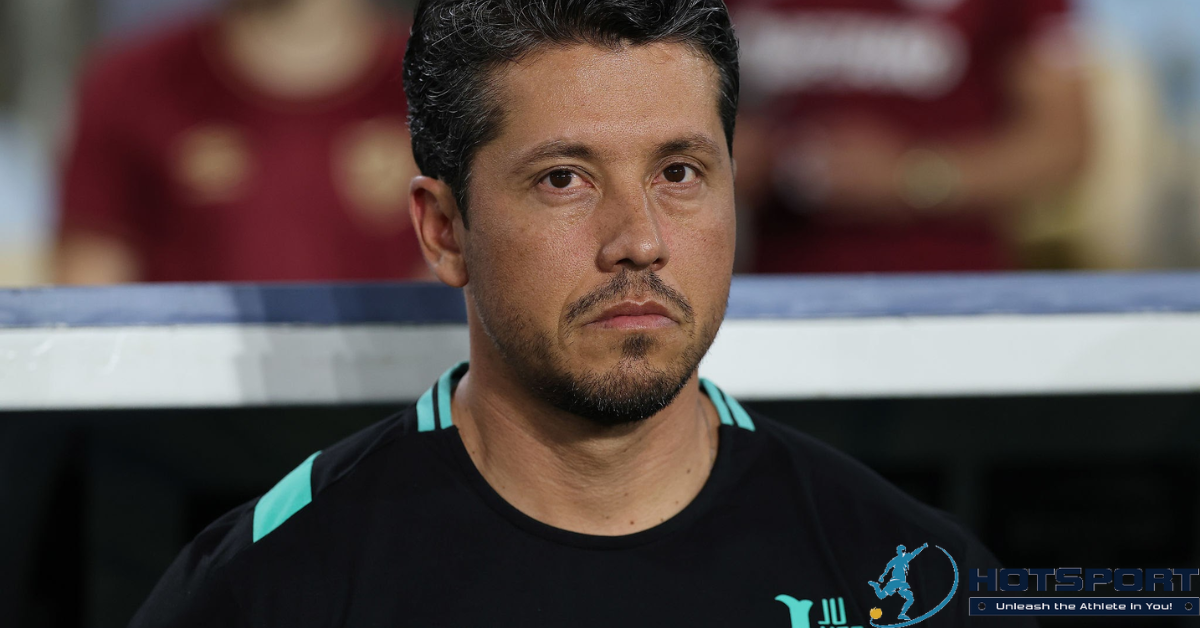
Thiago Carpini Barbosa, born on July 16, 1984, in Valinhos, in the interior of São Paulo, is a name that has been gaining increasing prominence in the Brazilian football scene. At 41 years old, the former defensive midfielder, who has transformed into one of the most promising coaches of the new generation, arrives at Fortaleza with the mission of elevating the Leão do Pici to even greater heights—now with the key objective of returning to the top flight after relegation. His journey, marked by overcoming challenges and surprising results at mid-tier clubs, reflects the resilient spirit of Paulista and Gaúcho football. In a turbulent 2025, with intense stints at Vitória and Juventude, Carpini ends the year with a new challenge in the Northeast, promising modern tactics and an attacking style of football that captivates fans.
His recent appointment to lead Fortaleza, announced on December 11, 2025, with a contract until the end of 2026, comes at a transitional moment for the Ceará-based club. After an irregular season that ended in relegation to Série B, the Tricolor seeks stability, and Carpini, with his experience in relegation battles and promotions, seems the ideal profile. But who is this professional who, in just a few years, leaped from interior teams to the elite? Let’s dive into the story of a man who combines the grit of a player with the strategic vision of a coach.
From the Pitch to the Bench: The Early Years as a Player
Thiago Carpini’s relationship with football began early, in the youth ranks of Guarani, the Campinas club that has shaped many Paulista talents. Born in Valinhos, a quiet town 100 km from the capital, Carpini grew up dreaming of a professional career. Standing at 1.85 m with an imposing physique, he excelled as a defensive midfielder—a position requiring balance between defense and playmaking. His professional debut came with Guarani itself in 2004, where he played matches in the Campeonato Paulista and Série B.
Carpini’s playing career was solid but not explosive. He moved through clubs like São Bernardo, Santo André, Inter de Limeira, and Oeste, accumulating over 200 appearances in regional and national competitions. In 2011, he defended São Caetano in Série B, showing versatility by scoring important goals in decisive moments. Injuries and fierce competition led him to retire in 2019, at age 35, with Água Santa. There, as captain, he began absorbing team management fundamentals, observing coaches and participating in tactical meetings.
Those years as a player were crucial in shaping his identity. Carpini always emphasized the importance of discipline and collective play—lessons he carries to this day. “Football is about people, not just the ball,” he said in an interview on Guarani’s official website years later. His transition to coaching wasn’t abrupt; he obtained his CBF Pro License in 2020 after courses at the Paulista Football Federation’s Coaching School. It was the kickoff for a new phase.
The Early Challenges: Building a Solid Foundation in the Paulista Interior
Carpini’s coaching debut came at Guarani in 2020, where he took over the under-20s and later the senior team on an interim basis. The Bugre was facing financial difficulties, but the 36-year-old injected new energy. In 2021, he moved to Inter de Limeira in the Paulistão, leading the team to the quarterfinals—a remarkable achievement for a modest club. His trademark was already emerging: a fluid 4-2-3-1, with box-to-box midfielders and fast wingers exploiting counter-attacks.
The turning point came in 2023 with Água Santa. Hired in February, Carpini turned the Netuno into an unlikely contender in the Campeonato Paulista. The team stunned Corinthians, Palmeiras, and São Paulo, reaching the final against Tricolor Paulista itself. Despite losing 5-4 on penalties after a 2-1 aggregate defeat, the campaign earned unanimous praise and caught the eye of Série A scouts. “It was a watershed moment. We learned to compete without fear,” Carpini reflected in a post-final press conference.
From there, he joined Ponte Preta in May 2023, coaching Macaca in Série B. Though promotion didn’t come, Carpini posted positive numbers: 12 wins in 30 games, with a solid defense (0.9 goals conceded per match average). His stint lasted until July, when a bigger offer arrived. Those interior years were a school: he dealt with limited squads, tight budgets, and passionate fan pressure, forging a pragmatic yet attacking style.
Rise to the Elite: São Paulo, Juventude, and Lessons from Pressure
In January 2024, Carpini took over São Paulo, replacing Dorival Júnior, who had left for the Brazilian national team. At 39, it was a dream come true: coaching a giant. He even won the 2024 Supercopa Rei against rivals Palmeiras. However, the stint was short and turbulent. In two months, Tricolor oscillated in the Paulistão and Libertadores, facing criticism for inconsistency. Sacked in April, Carpini used the episode as fuel. “Mistakes are teachers. At São Paulo, I learned about visibility and expectations,” he later commented.
He bounced back at Juventude in 2023 (and again in later stints), having previously promoted them to the elite in Série B. In 2024, Ju fought to stay in Série A, finishing 15th. His philosophy of quick transitions and high pressing yielded a 39% points percentage in 32 games. But the big test came in 2025.
At Vitória, hired in May 2024, Carpini led the Leão for over a year until July 2025. It included 75 games, 29 wins, 22 draws, and 24 losses—a 38.67% points percentage. The Bahian side avoided relegation for two straight seasons, thanks to an organized defense (only 74 goals conceded). Highlights included wins over Flamengo and Palmeiras, and a strong Copa do Nordeste campaign. However, early exits in the Sul-Americana and Copa do Brasil caused friction. Sacked after a poor run in July, Carpini left with his head high: “We left a legacy of unity.”
Return to Juventude and the Relegation Fight in 2025
2025 was a year of comings and goings for Carpini. In August, he returned to Juventude, taking over a team in the relegation zone of Série A. Announced on August 4, he brought initial optimism: in his first five games, he secured three wins, matching Ju’s tally from the previous 16 rounds. The 4-2-3-1 worked, with 8 goals scored and 6 conceded.
But Série A’s reality is harsh. In 22 games until December, the record was 6 wins, 6 draws, and 10 losses—a 27.27% points percentage. Juventude finished in the penultimate spot, relegated with 33 points. His farewell, on December 7, was a 1-1 draw against Corinthians at Neo Química Arena. In an emotional press conference, Carpini said goodbye: “Overcoming challenges defines this stint. I wish the successor luck; may they be as happy as I was.”
During this period, rumors swirled. In November, Sport Recife approached him for 2026, seeing a young, rising name. Days before leaving Ju, Coritiba listed him as Plan A for Série B. But Carpini chose Fortaleza, drawn to the structure and ambitious project in the Northeast.
Playing Style: Modern Tactics and a Philosophy of Overcoming
What defines Thiago Carpini? His 4-2-3-1 is versatile: midfielders advancing into attack, a creative No. 10, and wingers stretching the field. He prioritizes qualified possession (46.2% average in 2025) and shots (12.7 per game), without neglecting defense—18 clean sheets in the year. Influenced by coaches like Jorge Sampaoli and Abel Ferreira, Carpini bets on physical intensity and data analysis, using GPS tools to monitor training loads.
His philosophy goes beyond tactics. “Football is collective overcoming,” he often repeated after unlikely wins. At Água Santa, he promoted youth players; at Vitória, he integrated street football talents into the senior squad. Critics point to inconsistency in big games, but supporters highlight his ability to motivate limited rosters.
Achievements, Challenges, and the Horizon at Fortaleza
Among his highlights: runner-up in the 2023 Paulistão, Juventude’s 2023 promotion (and Supercopa win at São Paulo in 2024). Challenges? Quick sackings at São Paulo and Vitória tested his resilience. In 2025, he coached 62 games across both clubs, with 45.2% points percentage and a positive goal difference (73-68).
Now at Fortaleza, Carpini inherits a team that was Copa do Nordeste runner-up but relegated from Série A in 2025. His first training session, scheduled for December 15, already generates excitement. With reinforcements like a playmaker and an experienced defender eyed, the Leão targets the Sul-Americana (if qualified via other means) and a top spot in Série B for promotion. Rumors of interest in players like forward Moisés (ex-Corinthians) circulate.
The future? Carpini dreams of the Brazil U-20 team or a European giant, but focuses on the present. “I want titles that mark generations,” he told GE. His trajectory inspires: from Valinhos to national spotlight, he proves persistence beats isolated talent.
A Coach for Brazil’s Tomorrow
Thiago Carpini is more than a coach; he’s a symbol of Brazilian renewal. In a country dominated by foreign managers, he represents the national school, blending tradition with innovation. At Fortaleza, he begins a promising chapter—now with the clear goal of Série B success and promotion. Pici fans are already chanting his name, eager for a glorious 2026. The ball rolls, and Carpini, once again, is ready to surprise.